
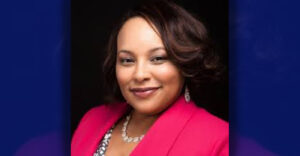




By Wayne Campbell, The AFRO
Despite strong teacher appraisals, Jamaica’s education system remains crippled by deep structural failures. According to the Jamaica Teachers’ Association, 93 percent of the nation’s teachers are rated satisfactory or above in their appraisals, yet, Jamaica’s education system continues to face significant challenges.
In many societies, classroom teachers are not accorded the respect they deserve within the education system. Unfortunately, this pervasive culture of disrespect often extends to other stakeholders. Ultimately, students’ outcomes suffer as a result of an education system steeped in the legacies of colonialism, with a central axis of underperformance driven by an over-reliance on external educational practices. The problems in Jamaica’s education system are rooted in deep structural issues: under-resourced schools, unequal access, poor working conditions, ineffective oversight mechanisms such as the school boards, weak and biased school leadership, the absence of fair and balanced opportunities for teacher promotion, inadequate parental guidance, curriculum reform, low literacy and numeracy outcomes. Unfortunately, teacher appraisal continues to be used as a masking agent for the systemic challenges in the education system.
Resource inequalities
Many educational institutions remain under-resourced, lacking adequate infrastructure, teaching materials and technological support. This resource gap disproportionately impacts students from marginalized communities as well as schools located in marginalized areas, thus perpetuating the cycle of inequality. This area of concern ultimately fosters a culture of unequal access. In a recent interview, Linvern Wright, president of the Jamaica Association of Principals of Secondary Schools noted that high school administrators continue to struggle to operate on an annual allocation of approximately $17,000 per student. He pointed out that this figure has remained unchanged for nearly a decade. Undoubtedly, this one size approach regarding funding cannot adequately address the unique circumstances of each school and must be revisited.
Unequal access
The United Nations states that despite modest improvements in literacy, hundreds of millions of people remain illiterate and women are disproportionately affected. Access to education remains uneven across the region and socioeconomic groups. Disturbing regional disparities exist in early childhood development, and sub-Saharan Africa is at a particular disadvantage. Sadly, schools in rural areas tend to struggle more with teacher shortages in the STEM (science, technology, engineering and mathematics) areas. On the other hand, urban schools are often overcrowded where unequal access is still a problem.
Weak oversight mechanisms
Oversight bodies, such as school boards, frequently lack the human capacity, skills and impartiality to enforce accountability within the education system. This area of concern is both intentional and by design. As a result, ineffective governance contributes greatly to weak institutional performance and serves as a barrier to reform.
Leadership deficits
Too often we discount the role and impact of school leadership. Sadly, many of our schools suffer from a lack of transformational, instructional, ethical and compassionate leadership.
School leadership is often characterized by biased and weak management practices. This culture of leadership deficits undermines teacher morale, reduces trust in the system, negatively impacts students’ outcomes and compromises the implementation of effective educational strategies.
Parental involvement
Parental guidance and engagement remains inconsistent. Education is a partnership and without the strong support of parents and guardians students will face additional barriers to achieving mastery and proficiency in their academic pursuits. Too many parents have abandoned their roles in the hope that the school will fill the void. Global education systems must revisit how to re-engage parents so as to create a culture of stakeholder involvement which is necessary to predict a better educational outcome for all.
Curriculum implementation leadership
Carmel Roofe, professor of curriculum studies at the University of the West Indies has repeatedly called for reform regarding curriculum implementation in the education system. She stressed that those who are tasked to lead the process of curriculum implementation must demonstrate a number of key transformative curriculum skills. Among these are: knowledge of curriculum stages and models, intimate knowledge of the people, place and orality of specific context where the new curriculum is being implemented, basic research skills especially as it relates to previously implemented curricula and knowledgeable implementation leadership and practices.
Professor Roofe argues that orality is central to the lived curriculum. She added that Caribbean orality speaks to the everyday knowledge, language, actions and the Caribbean’s geopolitical context. Professor Roofe is of the view that curriculum implementation leadership underpinned by orality will encourage education stakeholders to move away from a one-size fit approach in implementing curriculum reform. It is quite evident that school leadership must be intentional and strategic in their selection regarding who is tasked to carry out the process of curriculum implementation in our schools.
Society should not be alarmed that curriculum implementation leadership is problematic across all layers of the education system. This duality concerning Jamaica’s education system is also transferred to the Curriculum Implementation Leadership. Those who are tasked with implementing curriculum leadership must be passionate to begin with. Those individuals must also be intimately familiar with the National Standards Curriculum (NSC) as well as other alternative pathways. Regrettably, in a significant number of times curriculum implementation leadership is grounded in a culture of preferential treatment. In order for curriculum implementation leadership to be successful, the stakeholders must share the collective vision and purpose.
Misuse of teacher appraisal
Teacher appraisal mechanisms are often punitive and subjective. Such mechanisms often are used as superficial solutions, masking deeper structural problems. The continuation along this pathway is problematic and does more harm to the human resources in the education system.
The way forward
Addressing Jamaica’s educational challenges requires political will as well as comprehensive reform that goes beyond teacher appraisal. Undoubtedly, there is a leadership crisis in the education system. So while society celebrates the achievements of a significant number of our students, we are mindful of the inequities within the education system. Professor Orlando Patterson, chair of the Jamaica Education Transformation Commission (JETC), characterized the Jamaican education system through a fundamental duality: a deep-seated structural divide between a high-performing elite tier and a vastly under-resourced public tier. All hands are required to truly build an inclusive education system.
Education remains a critical enabler for sustainable development. Inclusive, equitable and quality education for all speaks to the United Nations Sustainable Development Goal #4, and as such governments must put in more effort to attain this. Without a doubt, more investments in resources, stronger governance mechanisms, leadership development including curriculum implementation leadership and parental involvement are essential ingredients to improving literacy and numeracy outcomes.
The opinions expressed in this commentary are those of the writer and not necessarily those of the AFRO or the National Newspaper Publishers Association.