





Photo
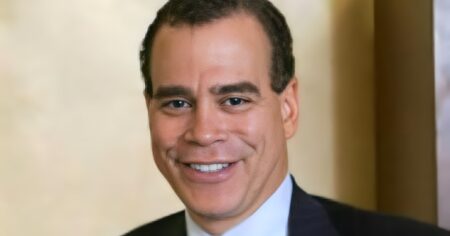
Kris Benz, a disabled Black veteran, is no stranger to cancer. In 2012, he was diagnosed with salivary duct carcinoma, a cancer so rare it strikes only about 1 in a million people each year.” But he beat it after six weeks of radiation and removal of his right salivary gland.
“I was cancer-free after six months,” he said.
Now, a new concerning mass has appeared in his neck despite months of scans. His doctor suspects it is cancerous, but Benz, who lives near Palm Springs, will not know for certain until a biopsy.
Compounding that uncertainty is a gap in his coverage. Benz is two work credits short of qualifying for Medicare, but returning to work could jeopardize his Department of Veterans Affairs (VA) disability status and funding. Buying Medicare Part A would cost $568 a month, leaving him “winging it.”
Benz is also frustrated that the VA will not schedule his scan and biopsy before his consultation, which will require another round of appointments afterward.
“It’s about money,” he said. “Doctor’s appointments, they get the money. There’s no preventive medicine here anymore.”
Although he calls the VA “a great organization,” he believes it is hampered by bureaucracy. For now, he remains “in limbo” waiting to complete his appointments.
His experience reflects one of the most persistent health equity challenges facing Black communities: access to care.
According to a UC Davis study, “The Burden of Cancer Among Black/African Americans in California,” Black cancer patients were more likely than White patients to be diagnosed at a later stage and to have multiple health conditions, making treatment more difficult. They were also far more likely to live in low-income communities and rely on public insurance—evidence that economic inequality and barriers to care are helping drive disparities in the state’s cancer crisis.
That same study reports that between 2014 and 2018, the ten cancers most frequently diagnosed among Black/African American women in California were, from one to ten, breast, lung, colorectal, uterine, pancreatic, kidney, non-Hodgkin lymphoma, thyroid, myeloma, and ovarian cancers. During the same period, the ten most commonly occurring cancers among Black/African American men in California were, from one to ten, prostate, lung, colorectal, kidney, bladder, liver, non-Hodgkin lymphoma, pancreatic, myeloma, and oropharyngeal cancers.
Researchers attribute the gaps not to biology but to social and economic inequality connected to structural racism. An American Cancer Society analysis found educational attainment was a stronger predictor of the mortality gap than race alone.
“These disparities are not because Black people are inherently less healthy,” said Rhonda Smith, executive director of the California Black Health Network. “They are the result of decades of inequitable policies, structural racism, unequal access to quality care, and chronic underinvestment in our communities.”
Dr. Flojaune Cofer, an epidemiologist and public health policy expert, said health outcomes are shaped as much by circumstances as by biology. She traced her understanding of disparities to her father’s death from heart disease at age 47. He began smoking as a child when tobacco companies marketed cigarettes aggressively and disproportionately to Black communities.
“My father’s story is not about individual choices,” Cofer said. “My father’s story speaks to institutional and systemic harm.”
“Health is not just what happens in the doctor’s office,” she added. Social determinants include neighborhood conditions, housing stability, nutritious food, transportation, and the ability to take time off work for care.
At federally qualified health centers, tight appointment schedules can make it difficult for medical providers to detect cancer early and earn the trust patients need to discuss troubling symptoms.
“We have only 15 minutes when you are working in a federally qualified health center — you have 15 minutes to assess, diagnose, treat, and write your note per patient,” said Jamie Garcia, a registered nurse who has been certified in oncology nursing for more than a decade and works at AdventHealth White Memorial in East Los Angeles.
Garcia said the rushed pace, driven partly by billing requirements tied to federal funding, leaves little time for providers to build relationships with patients. It can also allow health care professionals’ implicit biases to go unrecognized and unchallenged.
For Garcia’s patients, who are predominantly Black and Latino residents of surrounding communities, the consequences can be immediate and alarming. Many arrive with visibly advanced tumors after going without insurance, adequate coverage, a primary care physician or routine screenings.
Garcia recalled treating one patient whose tumor had grown large enough to be visible through the skin.
“The fact that I even got to see that is a failure and an atrocity,” she said.
Assemblymember Lori D. Wilson (D-Suisun City) sought to reduce another barrier through Assembly Bill 1570, which would have eliminated out-of-pocket costs for medically necessary diagnostic and supplemental breast imaging. It passed the Assembly Health Committee 16-0 but died in the Appropriations Committee. Wilson plans to reintroduce it during the next legislative session without biopsy coverage.
Wilson announced her breast cancer diagnosis in April 2023. She received timely, quality care but “saw others with similar diagnoses face different outcomes.”
“Some people who got diagnosed at the same time as me — their timing of their surgeries and treatment was delayed in comparison to my own,” she said. “Watching people go through and suffering unnecessarily was heartbreaking to me.”
Her follow-up imaging required only a $10 copay. “I’ve had friends have to pay $1,000 to get that secondary screening,” Wilson said.
Smith warned that policy changes could further erode access. California’s Every Woman Counts screening program is losing funding and being scaled back, she said. About one in three Black Californians relies on Medi-Cal, according to the state.
Smith also cited federal Medi-Cal work requirements projected to cause 1.1 million Californians to lose coverage by 2029-30. “Health equity is no longer simply about improving outcomes,” she said. “It’s about protecting access.”
Californians seeking low-cost cancer screening can contact a local federally qualified health center or the California Department of Public Health’s Every Woman Counts program. The California Black Health Network also offers referrals and advocacy resources.
The post Closing the Gap: What the Data and Frontline Experiences Reveal About Cancer in Black California appeared first on BlackPressUSA.