



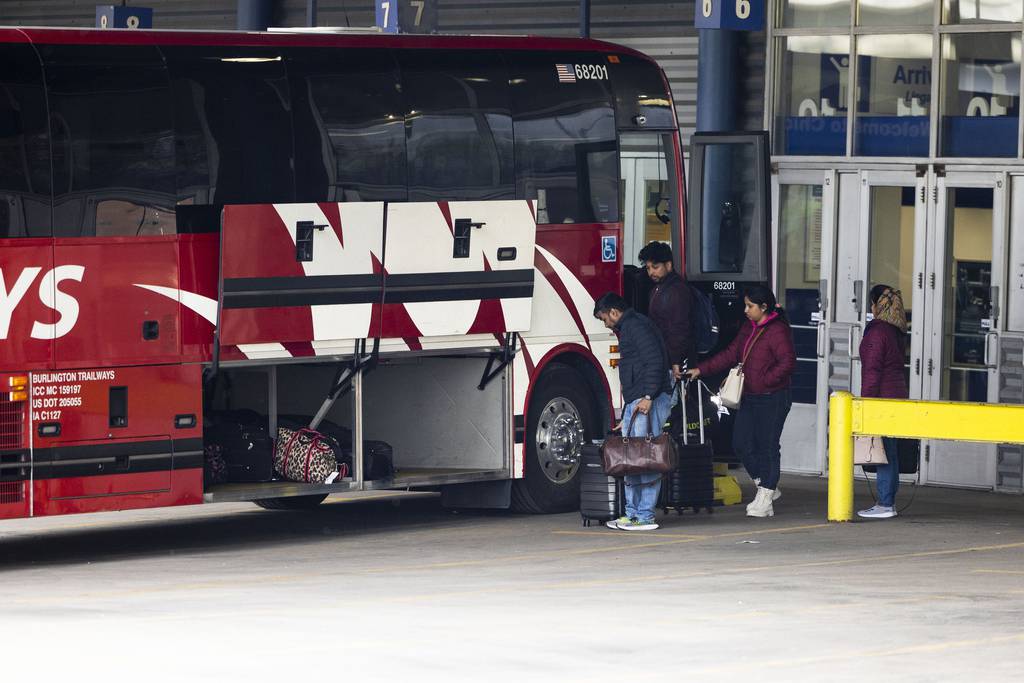
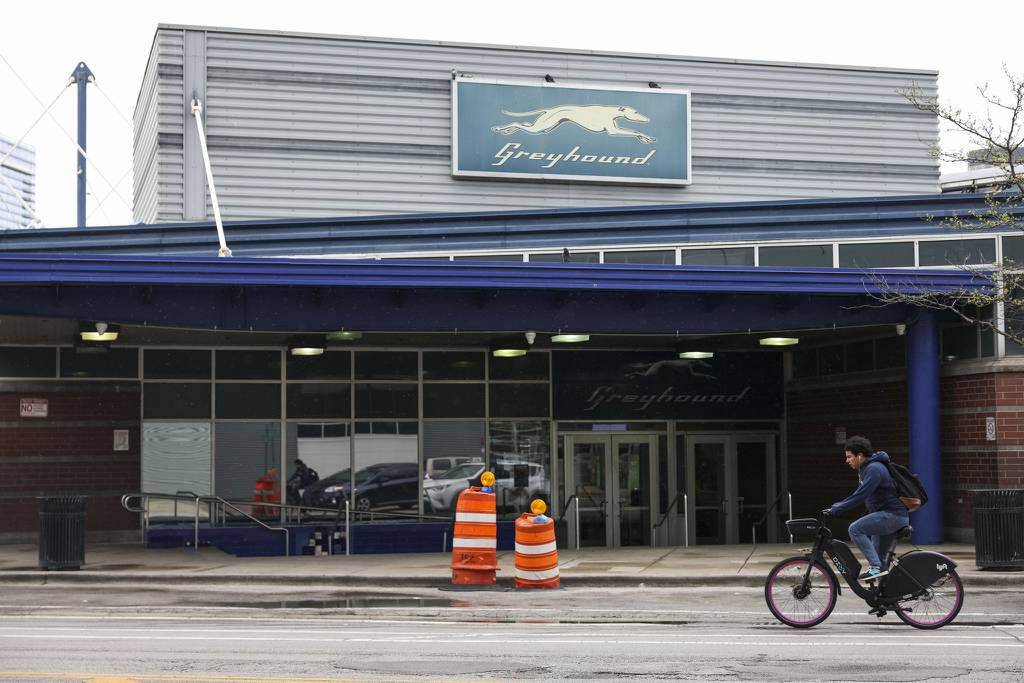
Chicago’s downtown Greyhound bus station is at risk of closing, and that could have repercussions for low-income travelers and the city’s status as a transportation hub, according to a new report from DePaul University’s Chaddick Institute for Metropolitan Development.
Real estate services firm CBRE was hired to sell the bus station earlier in 2023, leading the DePaul report to deem the station at risk of closure. The station was sold to Twenty Lake Holdings, a real estate investment and management firm, after Greyhound was acquired by a new parent company in 2021 that did not purchase much of Greyhound’s real estate as part of the sale, according to the report.
But the station serves some 500,000 passengers annually, more than airports in Champaign and Rockford, according to estimates in the report. It serves low-income travelers, those who are disabled or those who don’t have access to a car, who cannot easily shift travel to other types of transportation. And it is a key connecting point for bus lines across the country, the report found.
The potential sale of Chicago’s downtown bus station follows the relocation of Greyhound stations in other cities. In some cases, stations were moved miles outside the city center or instead became only curbside pickup and drop-off locations, with no indoor waiting area, said Joseph Schwieterman, one of the report’s authors and director of the Chaddick Institute.
Both options would be untenable in Chicago, Schwieterman said. Instead, the report calls for a public agency to ensure the station’s preservation, which could include eventually buying and operating it.
“It’s hard to imagine the city providing a high-quality station anytime soon if this opportunity slips away,” Schwieterman said.
The downtown Greyhound station, near the Jane Byrne Interchange, handles about 55 scheduled buses daily, plus additional buses from other lines. Greyhound also picks up passengers curbside at other sites in the city, including two near Chicago Union Station, blocks away from the main bus station.
Greyhound riders tend to be younger and lower-income than other types of travelers, the report found, citing studies published by four Midwest states. They are more likely to be unemployed and to travel alone, and less likely to have access to a car. More than a quarter of survey respondents said they would not have made their trip if bus service were not available.
“Intercity bus is the most economical form of travel, which makes it hugely important to marginalized groups or low income groups,” Schwieterman said. “People or households that can’t afford cars rely on the bus for everyday travel needs. Buses go many places Amtrak doesn’t serve, so there’s simply no other option for a lot of people.”
Options that have replaced stations elsewhere, such as curbside pickup and drop-off, make little sense, Schwieterman said. With no indoor waiting area, Chicago’s frigid winters and sweltering summers create hardship and health risks. Curbside pickup often doesn’t include seating or monitors to track bus arrival times, which is especially problematic for travelers making long trips or waiting hours for connecting buses, he said.
Union Station hosts some curbside bus pickups, but likely would be unable to absorb the entire intercity bus network because of congestion and traffic around the station, Schwieterman said.
Other cities, like Cincinnati, have relocated bus stations outside downtown, Schwieterman said. But moving operations far from downtown would be “embarrassing” for a city of Chicago’s size, he said.
Chicago represents itself as a transportation hub, and maintaining a dedicated bus station downtown is a key part of that, said Audrey Wennink, director of transportation at the Metropolitan Planning Council. Keeping the bus stop downtown removes financial constraints travelers might face getting from a distant station into the center of the city, she said. A dedicated station prevents pickup locations from being scattered on curbsides throughout downtown, causing confusion and chaos.
“(Travelers are) coming to Chicago, they likely want to go to things downtown,” she said. “Or they might want to connect with any of our other transportation.”
News reports noted the station could accommodate buildings catering to a strong residential apartment market, according to the DePaul report. The building’s owner, Twenty Lake, is a subsidiary of Alden Global Capital, which also owns the Chicago Tribune.
But Wennink said there are plenty of other sites that can be developed into residential space downtown. If the station were an empty lot redevelopment might make sense, but because the station is already there, it is more efficient to retain it, she said.
Greyhound representatives said the company is “exploring all opportunities for relocation at this time.”
Instead of developing the station, Schwieterman said, an agency like Cook County, the city of Chicago or a group that could include the region’s transit agencies should seek to preserve the station. Opening the station to other bus lines could drive up demand for the space, the report found.
Closing the bus station without providing another indoor, centrally located alternative would leave Chicago as the largest metropolitan area without a publicly provided downtown bus terminal, according to the report.
“There’s social value to a bus station that’s not reflected in the revenues being generated through ticket sales,” Schwieterman said.
sfreishtat@chicagotribune.com