


Author: staff


A 73-year-old man and a 75-year-old woman were injured after a fire broke out Saturday around 11 p.m. in a residence in the 10800 block of…

Good morning, Chicago.When the Chicago Tribune celebrated its 150th birthday in 1997, the paper boasted that “you can find the Tribune on city street corners, suburban…
NewsOne Featured Video Source: Hulton Archive / Getty A collective of Philadelphia residents is rallying together to conserve a storied piece of Black history nestled in…

NewsOne Featured Video Source: FG Trade / Getty While there is an array of experiences interwoven into the tapestry of Black fatherhood, there are often perpetuated…

Long before the movie version, Arch Ward created a field of dreams. His was called “The Game of the Century,” and the Tribune’s sports editor based…

Chicago was known as the “city of losers” in 1976.Not by outsiders but by ourselves.AdvertisementIn the year of the nation’s bicentennial, the last local team to win a championship was the 1963 Bears. The Cubs hadn’t won since 1908, the White Sox since 1917.Every time a Chicago team tried to break the mold, a collapse of monumental proportions would unfold, and fans here grew to expect nothing less.AdvertisementBut the next 25 years would bring massive changes to the local sports scene, including the arrival of Michael Jordan, who would go on to become the greatest basketball player of all time and bring six titles to Chicago with the Bulls.The Bears won their only Super Bowl in the 1985 season behind a fiery coach and a collection of fun-loving characters who ruled the city like no team before or since. New baseball ownership on the North and South sides attempted to end the droughts of the Cubs and White Sox, which ultimately bled into the 21st century. It was also the end of the line for two beloved stadiums, Comiskey Park and the Chicago Stadium, and for the time-honored tradition of day-only baseball at Wrigley Field.[Follow along with all of our 175th anniversary coverage and sign up to receive a special edition of Daywatch in your inbox with anniversary coverage]Workers high atop the new Comiskey Park look far down on the old one on July 10, 1990. (Frank Hanes / Chicago Tribune)And for those who loved reading about their favorite teams and athletes through thick and thin, 1976-2000 was a golden era for Chicago sports writing — and the Tribune was graced by some of the finest writers in history.AdvertisementFrom “In the Wake of the News” columnists Bob Verdi, Bernie Lincicome and Steve Daley to Hall of Fame baseball writer Jerome Holtzman to specialists including Don Pierson (football), Sam Smith (basketball), John Husar (outdoors) and Fred Mitchell (multiple sports), the idea of a slow news day on the Chicago sports front was virtually unthinkable.DePaul coach Ray Meyer is mobbed by fans upon his team’s arrival at O’Hare after they beat UCLA to advance to the Final Four in 1979. (Don Casper / Chicago Tribune)It’s hard for some to believe now, but DePaul men’s basketball was bigger than the Bulls before Jordan’s arrival from North Carolina in 1984. Legendary coach Ray Meyer’s Blue Demons started out as a Cinderella in 1979 and wound up dancing all the way to the Final Four while playing their home games in tiny Alumni Hall on Belden Avenue.They never made it back, despite highly ranked teams, and moving to the Rosemont Horizon in 1980 removed the narrative of the lovable little school under the “L” tracks.Chicagoans didn’t expect much from their teams in the 1970s and early ‘80s and thus were seldom disappointed. Fans could overlook the flaws on a team that was entertaining, such as the “South Side Hit Men” of 1977.In July of that season, Verdi, then the White Sox beat writer, wrote that the players “gamble so wantonly on the basepaths you would think they failed to visit the john before leaving the clubhouse.” The Hit Men faded on cue, like a pair of well-worn blue jeans. But 45 years later they remain a treasured part of Sox lore.The Bears were an afterthought for most of the 1979 season after starting out 3-5. But running back Walter Payton, linebacker Doug Buffone and a resilient bunch won six of seven leading into the season finale at Soldier Field. They needed a win over the St. Louis Cardinals and a Washington Redskins loss — and to make up a 33-point differential with the Redskins — for a wild-card spot.AdvertisementThe players awoke on Dec. 17 to the news that Bears President George “Mugs” Halas Jr. — the 54-year-old heir apparent to team founder George “Papa Bear” Halas — had died. But the Bears went on to trounce the Cardinals 42-6 before the Redskins lost by one point to the Dallas Cowboys, giving Payton & Co. a playoff berth.“From dawn to dusk the Bears were involved in perhaps the most unbelievable day in their 60-year history,” Pierson wrote.The Bears lost to the Philadelphia Eagles in the 1979 playoffs, but Halas hired coach Mike Ditka in January 1982, and the ‘85 Bears not only won the Super Bowl and brought Chicago its first championship since 1963, but also changed the way athletes marketed themselves with their “Super Bowl Shuffle” video.ExpandAutoplayImage 1 of 14With an escort from Otis Wilson (55), Bears’ Wilber Marshall (58) steams into the endzone in the fourth quarter after scooping up a fumble 52 yards upfield during the NFC Championship game with the Los Angeles Rams at Soldier Field on Jan. 12, 1986. (Bob Langer / Chicago Tribune)Halas was not alive to see it, and daughter Virginia McCaskey inherited the team. In a front-page article, Tribune sports writer Phil Hersh wrote: “The Bears, once hoisted aloft, can simply put one foot on the Picasso, another on the Sears Tower, and step right up to the Chicago cloud, where team founder George Halas will be waiting.”For decades the names Halas, Wrigley and Wirtz were synonymous with the word “frugal” in the minds of many fans. Others preferred the generic term “cheapskates.” Verdi nicknamed Blackhawks owner Bill Wirtz “Dollar Bill” in a Tribune column for his inability to part with money to pay his players.Reputations are difficult to erase. Just ask the Cubs.AdvertisementDuring a baseball strike in the summer of 1981, Tribune Co. — at that time, the owner of the newspaper, WGN-TV, WGN-AM 720 and other entities — pulled off a shocking deal with William Wrigley to purchase the Cubs for $20.5 million, or $1.5 million less than current Cubs outfielder Jason Heyward’s 2022 salary.The Wrigley family had owned the team for three generations and stamped its name on the iconic ballpark. But on June 17, 1981, the day after the sale was announced, the Tribune reported Cubs fans were ecstatic over the possibility of the team finally spending money, installing lights at Wrigley Field and dismissing general manager Herman Franks.“It was clear the general attitude would have been positive even if Bozo the Clown had taken over,” read one report in the Tribune sports section.In spite of new management, nothing changed immediately. Cubs gotta Cub. Early in the 1983 season, manager Lee Elia unleashed a profanity-laden tirade against Cubs fans, calling them the “dumb 15 (bleeping) percent that come out to day baseball (while) the other 85 percent are earning a living.” Radio reporter Les Grobstein saved the tape for posterity, and every year Cubs fans relive the memory of the rant heard around the world.The White Sox, however, would be the bigger story in ‘83. Manager Tony La Russa’s club shook off a lethargic first half to run away with the American League West title and dominate the headlines. “The Miracle on 35th Street,” Holtzman wrote on Aug. 29, 1983, after Greg “The Bull” Luzinski cranked his third rooftop home run of the season at Comiskey Park.The miracle ended with a loss to the Baltimore Orioles in the American League Championship Series, and La Russa was fired in 1986 — only to return 34 years later. When the Sox flopped in ‘84, the Cubs stole the city back.AdvertisementUnder manager Jim Frey and new stars Ryne Sandberg, Rick Sutcliffe and Gary “Sarge” Matthews, the Cubs ended a 39-year playoff drought. Tribune Co. took a premature bow, and Tribune columnist Mike Royko mocked San Diego fans as bandwagon jumpers. Royko reveled in the Cubs’ 13-0 win over the Padres in Game 1 of the National League Championship Series at Wrigley Field.“Bullies, that’s what we’ve become,” Royko wrote. “Big, bad, mean bullies. And, oh boy, does it feel great. Why didn’t we think of this years ago?”The bullies blew a 2-0 lead in the best-of-five series, an epic collapse that somehow trumped the misery of 1969.But Wrigleyville — or Lakeview, as the neighborhood was more commonly known in the early ‘80s — would never be the same. Lights arrived at Wrigley Field on Aug. 8, 1988, and the formerly run-down neighborhood turned into a yuppie paradise. Rooftops became big business and real estate values climbed.On Aug. 8, 1988, Wrigley Field was lit up for the first night game in the park’s 74-year history. The weather, however, didn’t cooperate. The Cubs and the Phillies were rained out in the fourth inning. (Frank Hanes / Chicago Tribune)The Cubs soon resorted to their old ways, but the Harry Caray effect and the fans’ love affair with Wrigley made the team a gold mine for Tribune Co., which mirrored the Wrigley ownership in its reluctance to spend. After a surprising division title in 1989 under Don Zimmer, the Cubs didn’t return to the postseason until Sammy Sosa and Kerry Wood led them to a wild-card spot in 1998.During the ‘98 playoff race, Cubs radio analyst Ron Santo made one of the most famous calls in franchise history, shouting “Oh, noooooo!” after a dropped fly ball by outfielder Brant Brown led to a ninth-inning loss in Milwaukee.Advertisement“It was the kind of despair you’d associate with someone losing a member of their family,” Santo’s broadcast partner, Pat Hughes, later told the Tribune. “His call will live on in Cubs lore — in infamy, you could say, because it was such a tough loss.”Pittsburgh’s Tom Barrasso touches the helmet of Blackhawks Jeremy Roenick after the Penguins beat the Blackhawks in four games to win the Stanley Cup, on June 1, 1992, at the Chicago Stadium. (Jim Prisching / Chicago Tribune)The Blackhawks went through an array of ineffective and overmatched coaches from 1976-2000, including Bob Pulford’s three stints from 1977-87. Pulford also served as general manager, where he was equally clueless.The only time the Hawks were relevant was during the Mike Keenan era, when the feisty coach led them to the Stanley Cup Finals in 1992. But the Hawks were promptly swept in four games by the Pittsburgh Penguins, and Keenan lost a power struggle with Wirtz six months later and was let go.“Keenan wanted to be king,” Verdi wrote. “The power freak craved too much of a fix, and the real boss declared, game over.”It wasn’t until 1991 that Chicago sports fans got a real taste of excellence. Jordan and Scottie Pippen led the Bulls to their first title, beating Magic Johnson and the Los Angeles Lakers in five games in the NBA Finals. After a third straight championship in 1993, Jordan retired to play minor-league baseball for the White Sox, only to return in ‘95 and team up with Pippen and Dennis Rodman for another three-peat from 1996-98.Jordan’s winning shot in Game 6 of the 1998 NBA Finals in Utah clinched the sixth Bulls title, capping a reign that seemed to make up for all the disappointing endings Chicago teams suffered the previous three decades.Advertisement“And there was Michael Jordan, after hitting what could have been his final and biggest basket as a Bull, hugging coach Phil Jackson,” Tribune beat writer Terry Armour wrote. “Both had tears in their eyes, realizing that this might be the end of the road.”Jordan’s shot would provide Chicago with a memory to last a lifetime, like the championships this century for the White Sox (2005), Cubs (2016) and Blackhawks (2010, ‘13 and ‘15). But Santo’s call, Elia’s rant, the South Side Hit Men and the “unbelievable day” of the ‘79 Bears won’t be forgotten soon either.If there’s one thing we’ve come to accept in Chicago, it’s that the journey still matters.Sign up to receive the Vintage Chicago Tribune newsletter at chicagotribune.com/newsletters for more photos and stories from the Tribune’s archives.Have an idea for Vintage Chicago Tribune? Share it with Ron Grossman and Marianne Mather at rgrossman@chicagotribune.com and mmather@chicagotribune.com.
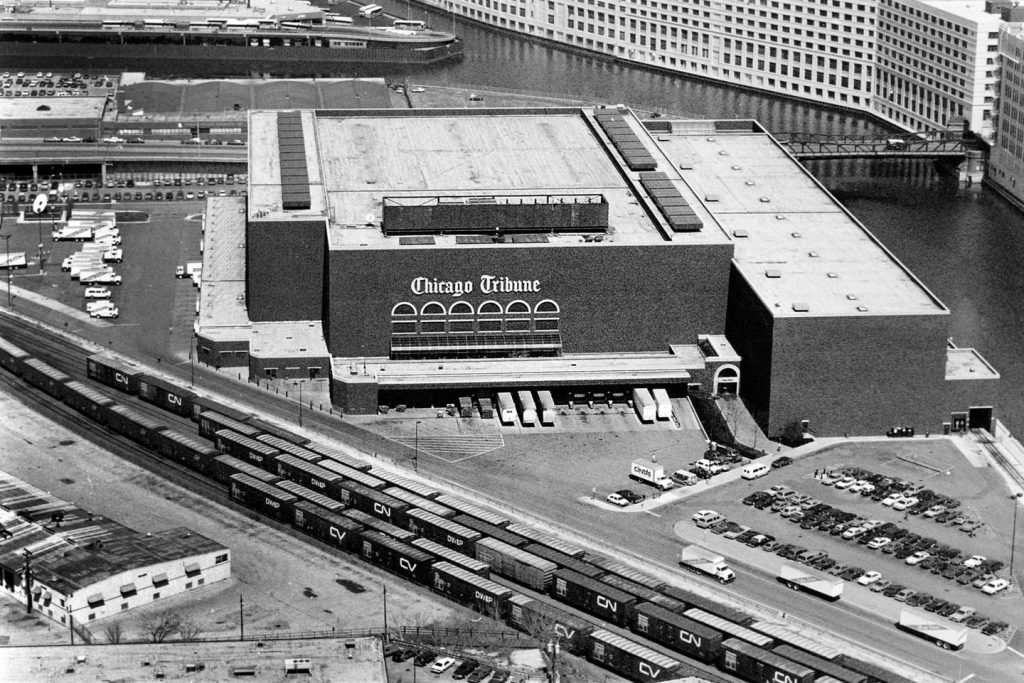
One of the most momentous changes in the long history of the Tribune took place on Sept. 19, 1982, and almost none of the paper’s more…

Q. I am on the board of a midsize condominium association. We are considering renting a portion of the common area to unit owners to park…

“I bought my home last fall and was pleasantly surprised by lots of flowering bulbs this spring and would like some tips on how to best care for them and choose more to plant this fall. Can I cut back the ugly foliage now?”— Tracy Patterson, Morton GroveAdvertisementBulbs do not require much maintenance. They will generally perform best in a location that is moist in spring and fall, and dry in summer. Most bulbs will not perform well in beds that are consistently moist or watered heavily throughout the summer. An important consideration for being successful with bulbs, like other plants, is choosing ones that are well-suited to the growing conditions in your garden. Plant daffodils and ornamental onions if you have rabbits and deer browsing in your garden. Tulips and crocuses are routinely eaten by deer and rabbits, but you can grow them by diligently spraying repellents in spring as they are growing. I have also seen plantings of crocus dug up by squirrels and chipmunks this spring as the foliage was going dormant.AdvertisementIt is tempting to cut back the bulb foliage before it should be trimmed, as the weather warms and the foliage looks increasingly worse. It is best to wait until the bulb foliage has gone dormant before cutting it back. The leaves will turn yellow to brown. Once the leaves have all turned yellow, it is OK to cut them back. The bulbs need their leaves to photosynthesize and make food that is stored to produce foliage and flowers next year. Cutting the foliage back too soon can reduce the vigor of the bulbs and flowering the next year. Tying up the leaves, bending them over and braiding the leaves are not good practices either as it reduces the leaf surface for photosynthesis. If you plant bulbs in the lawn, then you need to hold off on mowing the lawn in these areas to give the bulbs time to go dormant. You will probably need to cut the grass before the bulbs are completely dormant so set the mower at the highest setting to save as much of the bulb foliage as possible.Daffodils, above, and ornamental onions are good flowering bulbs to plant if you have rabbits and deer browsing in your garden. (RJ Carlson/Chicago Botanic Garden )I generally do not fertilize my bulbs, though they end up getting fertilized when the shrubs and perennials planted around them do. Phosphorus is often recommended for bulbs, but this nutrient does not readily move through the soil, so surface applications of it will do little good for any of the plants in your garden. Many garden soils already have adequate levels of phosphorus for plants to perform well. Test your soil if you want to know for sure.If an established patch of bulbs starts to bloom less or begins blooming sparsely, the bulbs may have become overcrowded, or the planting site too shady as adjacent trees have grown. That’s the signal to dig and divide or move them to another location. The first step is to lift the bulbs from the ground, being careful to dig the bulbs and not pull them up by the foliage. Take care when digging that you don’t damage the bulbs themselves. Start digging a few inches away from the plants and wait until the bulbs are loosened up before trying to pull them up. The best time to move or divide bulbs is when the foliage has gone dormant, meaning the leaves have finished producing food for next year’s flowers and you can still see their location.To divide bulbs, carefully pull the small bulbs from the base of the plant to increase plant numbers and gently separate them so that they can be planted with more spacing in their new location. The larger the small offset bulbs are, the sooner they will flower. Check the original bulb for firmness. If it appears in good health, go ahead and replant it; you may still get several years of flowering. If it appears shriveled or damaged, toss it.For more plant advice, contact the Plant Information Service at the Chicago Botanic Garden at plantinfo@chicagobotanic.org. Tim Johnson is senior director of horticulture at the Chicago Botanic Garden.
Chicago was known as the “city of losers” in 1976.Not by outsiders but by ourselves.AdvertisementIn the year of the nation’s bicentennial, the last local team to…