



Author: staff


A 1-year-old girl was hurt in a South Side vehicle crash after a hit-and-run Sunday night, according to Chicago police.A red Dodge utility van was heading…
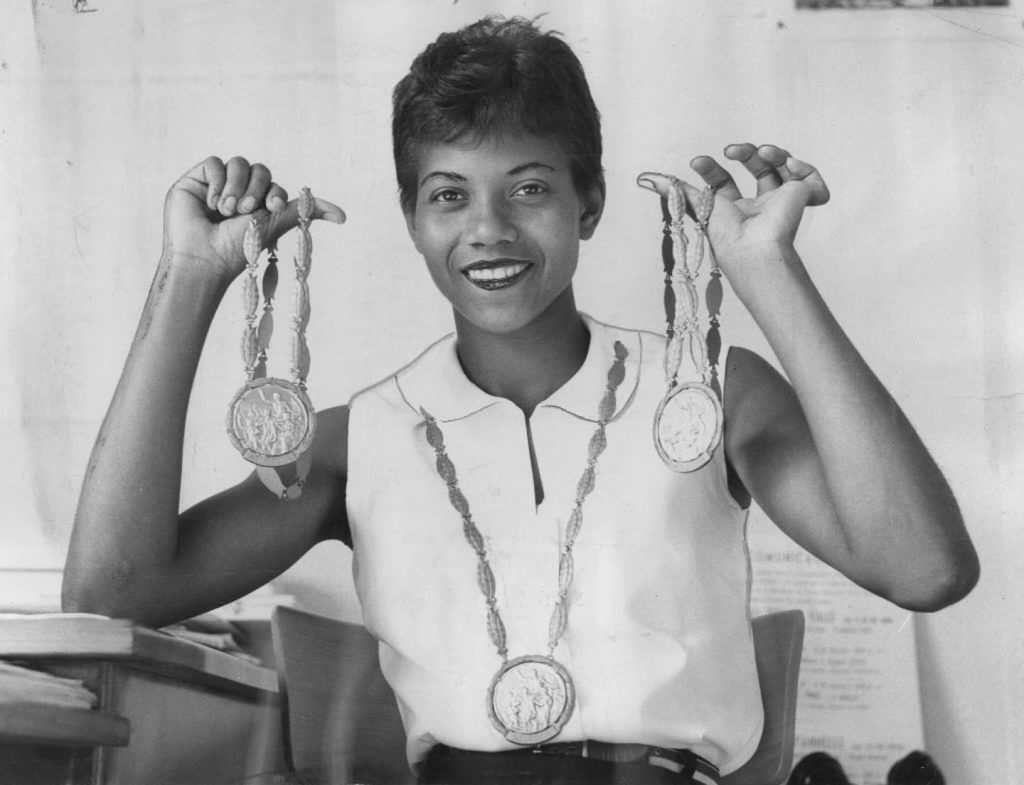
It has been 50 years since Title IX was signed into law by President Nixon. The measure barred discrimination against women when it came to programs that receive federal assistance. It has a broad and extraordinary impact on everything from the safety of college campuses to athletics to education at public schools. The progress has been halting at times.A timeline of key events before, during after after the 1972 passage of the landmark U.S. law known as Title IX.Advertisement1836: Georgia Female College is the first women’s college to open in the U.S.1917: Jeannette Rankin of Montana becomes the first woman elected to Congress.Advertisement1920: U.S. women gain the right to vote.1936: A federal appeals court effectively says doctors can prescribe women birth control.1947: The first Truman Commission report pushes for more equal access to higher education, including ending race and religious discrimination.1953: Toni Stone becomes the first woman to regularly play professional baseball (Negro Leagues).1954: U.S. Supreme Court rules “separate educational facilities are inherently unequal” in landmark Brown v. Board of Education of Topeka decision.1960: Wilma Rudolph becomes the first American woman to win three gold medals in an Olympics. The star Black sprinter becomes a prominent advocate for civil rights.Wilma Rudolph with the three gold medals she won in the 1960 Olympics. (Tribune file)1963: The Commission on the Status of Women, headed by Eleanor Roosevelt, finds widespread discrimination against women in the U.S. and urges federal courts that “the principle of equality become firmly established in constitutional doctrine.” Congress passes the Equal Pay Act.1964: The Civil Rights Act includes sex as one of the things that employers can’t discriminate against. It also establishes the Equal Employment Opportunity Commission. Patsy Mink of Hawaii becomes the first woman of color elected to the U.S. House; she later co-authors Title IX, the Early Childhood Education Act and the Women’s Educational Equality Act.Advertisement1965: The Elementary and Secondary Education Act gives federal funding to K-12 schools with low-income student populations. President Lyndon Johnson also signs the Higher Education Act of 1965 that gives college students access to loans, grants and other programs.1966: The National Organization for Women is established, calling for women to have “full participation in the mainstream of American society … in truly equal partnership with men.”1967: Aretha Franklin covers Otis Redding’s 1965 hit, “Respect, ” and it quickly becomes a feminist anthem.1969: New York Democrat Shirley Chisholm becomes the first Black woman in Congress. She later becomes the first woman to seek nomination for president.Rep. Shirley Chisholm addresses the women’s caucus at the Democratic National Convention in Miami in 1972. (James Garrett/New York Daily News)1971: The Association for Intercollegiate Athletics for Women (AIAW) founded to govern collegiate women’s athletics and administer national championships.1972: Congress passes Title IX, which is signed into law by President Richard Nixon. Title IX states: “No person in the United States shall, on the basis of sex, be excluded from participation in, be denied the benefits of, or be subjected to discrimination under any education program or activity receiving Federal financial assistance.” Congress also passes the Equal Rights Amendment, but it never gets approval from the 38 states needed to become law.Advertisement1973: The Supreme Court issues its Roe v. Wade opinion establishing the right to an abortion. Billie Jean King beats Bobby Riggs in straight sets in the “The Battle of the Sexes” tennis exhibition match.1974: The Women’s Educational Equity Act provides grants and contracts to help with “nonsexist curricula,” as well as to help institutions meet Title IX requirements.1975: President Gerald Ford signs Title IX athletics regulations, which gives athletic departments up to three years to implement, after noting “it was the intent of Congress under any reason of interpretation to include athletics.”1976: NCAA challenges the legality of Title IX regarding athletics in a lawsuit that is dismissed two years later.1977: Three female students at Yale, two graduates and a male faculty member become the first to sue over sexual harassment under Title IX (Alexander v. Yale). It would fail on appeal.1979: Ann Meyers becomes the first woman to sign an NBA contract (Indiana Pacers, $500,000). She had been the first woman to receive a UCLA basketball scholarship.AdvertisementHall of Fame finalist Jamaal Wilkes, center, is greeted by George Gervin, from left, Elgin Baylor, James Worthy, Ann Meyers Drysdale, Bill Walton and David Robinson during a news conference on Feb. 18, 2011. (Jae C. Hong/AP)1979: U.S. officials put into effect the important three-prong test for Title IX compliance when it comes to athletics.1980: Title IX oversight is given to the Office of Civil Rights in the Education Department.1981: Sandra Day O’Connor becomes the first woman appointed to the U.S. Supreme Court.1982: Louisiana Tech beats Cheyney State for the first NCAA women’s basketball title. Two months later, the AIAW folds, putting top women’s collegiate sports fully under the NCAA umbrella. Cheryl Miller scores 105 points in a high school game to kick off one of the greatest careers in basketball history.1984: Democrat Geraldine Ferraro becomes first woman to earn a vice presidential nomination from a major political party. The U.S. wins its first Olympic gold medal in women’s basketball.1987: Pat Summitt wins the first of her eight women’s basketball national titles at Tennessee.AdvertisementTennessee coach Pat Summitt waves as she leaves the court on March 19, 2012. (Nam Y. Huh / AP)1988: Congress overrides President Ronald Reagan’s veto of the Civil Rights Restoration Act of 1987, making it mandatory that Title IX apply to any school that receives federal money.1994: The Equity in Athletics Disclosure Act is passed. Under Title IX, schools with federal financial aid programs and athletics must provide annual information regarding gender equity, including roster sizes and certain budgets.1995: Connecticut wins the first of its 11 national titles under coach Geno Auriemma.1996: Female athletes win a lawsuit and force Brown to restore funding for women’s gymnastics and volleyball after the saying the school violated Title IX when it turned both teams into donor-funded entities. The NBA clears the way for the Women’s National Basketball Association to begin play the following year.Brandi Chastain celebrates by taking off her jersey after making the clinching kick in penalty shootout goal against China in the 1999 Women’s World Cup final at the Rose Bowl in Pasadena. (Lacy Atkins / AP)1999: Brandi Chastain’s penalty kick gives the United States a win over China in the World Cup final, invigorating women’s sports in the U.S.2001: Ashley Martin becomes the first woman to play and score in a Division I football game as a placekicker for Jacksonville State.Advertisement2008: Danica Patrick wins the Japan 300 to become the first female victor in the top level of American open-wheel racing.2014: Becky Hammon becomes the first full-time female assistant coach in NBA history.2015: The United States’ 5-2 win over Japan in the Women’s World Cup final becomes the most viewed soccer game in the history of American television.2016: Citing Title IX, the Obama administration says transgender students at public schools must be allowed to use the bathroom or locker room that matches their gender identity. Hillary Clinton becomes the first woman to win a major party nomination for president.2017: Serena Williams wins her 23rd Grand Slam title, second-most of all time., Serena Williams holds up a finger and her trophy after defeating her sister, Venus, in the final at the Australian Open on Jan. 28, 2017. (Aaron Favila/AP)2020: New Title IX amendments take effect, largely regarding sexual harassment.Advertisement2021: Report rips NCAA for failing to uphold its commitment to gender equity by prioritizing its lucrative Division I men’s basketball tournament “over everything else,” including women’s championship events.2022: South Carolina’s Dawn Staley becomes the first Black Division I basketball coach, male or female, to win more than one national championship. The U.S. women’s national soccer team reaches a milestone agreement to be paid equally to the men’s national team.

It was a beautiful afternoon for baseball Saturday, so I ventured out to the Wrigley Field bleachers to see how Chicago Cubs fans were coping with the rebuild that can’t be called a rebuild.The bleachers were packed for the game against the Atlanta Braves as fans stood behind the last rows in left and right field and congregated behind the concessions to socialize without the obligation of watching the actual game.AdvertisementIn other words, business as usual at the corner of Waveland and Sheffield avenues.Cubs owners throughout the years have counted on fans being oblivious to the failures of the team on the field, knowing that no matter how bad it gets there always will be young fans looking for a party atmosphere at Wrigley.AdvertisementThe bleachers have been a prime spot for tanning, beer drinking and people watching forever, which is why tickets are so expensive for seats so far away from the action. Even former Cubs President Theo Epstein made a trip out to the left-field section Friday afternoon to soak in the sun and have a few cold ones with friends.After selling the White Sox in 1981 to a group led by Jerry Reinsdorf, Hall of Fame owner Bill Veeck spent his summer days sitting in the front row of upper center field at Wrigley, which he called the “best seats in the house.” In an interview from his perch in 1983, Veeck told me: “It’s one of those rare places where people of my generation can get along with young people.”Cubs fans make a beer snake in the bleachers on May 22, 2022, at Wrigley Field. (Brian Cassella / Chicago Tribune)Back in the days when bleacher tickets went on sale only on the day of the game, regulars would line up early along Sheffield to ensure their favored spots. But the former owner, Tribune Co., did away with that long-standing policy in 1985 in a money grab that changed the bleacher vibe.Veeck, who helped plant the ivy on the outfield walls in 1937, began his celebrated boycott of the bleachers because of that policy change.Every generation of Bleacher Bums decries the younger generation encroaching their territory at least since I was a 20-something sitting in right field in the 1980s before heading to work on the Chicago Tribune city desk. Years later, after becoming the Cubs beat writer, I spoke with longtime Cubs fan and rock star Billy Corgan about the trendiness of celebrities attending games.“The emphasis has to be on the people who support the team — day in, day out — and I always defer to that,” Corgan said in a 2004 interview. “I’m a common Cubs fan. I was a common Cubs fan long before I became famous. I’ll never forgive the yuppies for moving in back in ‘84. I’m still mad about that.“When the Cubs stopped selling bleacher tickets the day of the game, that was the end of that old Bleacher Bums culture. Now it’s just fake Bleacher Bums.”[ [Don’t miss] Vintage Chicago Tribune: No more ‘city of losers’ — A look at Chicago’s golden era of sports writing ]The yuppies may have caused the demise of the bleacher culture four decades ago, but now it’s the “Cuppies” who’ve taken center stage. You may have caught them on recent national TV broadcasts, including Fox Sports and ESPN telecasts of the Cubs-Cardinals series two weeks ago.AdvertisementThe Cuppies are young fans who spend a significant part of the game collecting empty beer cups to stack high enough to cover several rows. These are usually referred to as beer snakes or cup snakes. It has been going on for at least five years but lately has become a nuisance to some.The regulars I spoke to Saturday in the left-field bleachers were adamant: The Cuppies are ruining the bleacher experience. But they also agreed there was nothing anyone could do to stop them.Fans in the bleachers stack cups to create a “cup snake” on opening day at Wrigley Field on April 7, 2022. (Erin Hooley / Chicago Tribune)A security guard I spoke to said orders from on high were to stop the Cuppies from going section to section collecting cups and to remove those tossing cups for beer snakes from one section to another. When I mentioned that beer snakes received obsessive coverage on both Fox and ESPN, the guard said the Cubs couldn’t do anything about the national telecasts but that Marquee Sports Network won’t allow shots of cup stacking during its telecasts.The security guard asked not to be named to avoid being reprimanded by the Cubs.At least Cubs security bosses have their priorities in order. As someone once ejected from Wrigley Field for accidentally spritzing a fan with a water mist from a spray bottle on a sweltering afternoon in 1983, I can attest that bleacher high jinks can lead to a life of crime. Fortunately, I turned my life around by moving from the bleachers to the press box, where I’m no longer a threat to the organization.I asked some of the Baby Boomer bleacherites if the current Gen Z and Millennial inhabitants really are any worse than the Boomers were during their heyday. In case anyone had forgotten, I reminded them the Cubs installed the baskets at the bleacher wall in 1970 because fans had been jumping onto the field after wins, a deed far worse than stacking beer cups.Advertisement[ [Don’t miss] StubHub site upgrade causes problems for Chicago Cubs and MLB fans looking to sell and buy tickets ]Chicago Tribune SportsWeekdaysA daily sports newsletter delivered to your inbox for your morning commute.They assured me the original Bleacher Bums were there only to root for the Cubs and have some fun, while the Cuppies are a blot on bleacher society and not even “real” Cubs fans. Someone pointed out that one fan caught a Manny Machado home run during the Cubs-San Diego Padres game Wednesday and refused to throw it back. Oh, the horror!I have no quarrel with the Cuppies. They have the right to be oblivious to the Cubs’ plight, just like the generations that came before them. If someone wants to pay $100 or more to not watch the Cubs from the bleachers, that’s their prerogative.Back in the summer of 1987, for an article on the 50th anniversary of the construction of the bleachers, I interviewed 57-year-old fan Marv Rich, a Bleacher Bum since 1943. Rich insisted the yuppies had taken over the bleachers and spoiled the vibe for everyone else.“They don’t care about watching the game,” he said. “All they care about is getting a good tan and being able to tell everyone later that they got it in the bleachers.”The Cuppies have taken over from the yuppies, but the song remains the same. The bleachers are part of Wrigley Field, but watching the game isn’t mandatory.It’s going to be a long, hot summer. The Boomers and the Cuppies will have to coexist.AdvertisementCan’t we all just get along?

As Peg Kopec got deeper into her career as the volleyball coach at St. Francis High School in Wheaton, she sometimes wondered how much to reveal…
As Peg Kopec got deeper into her career as the volleyball coach at St. Francis High School in Wheaton, she sometimes wondered how much to reveal to her players and students about the old days of girls sports in Illinois.Kopec grew up before the passage of Title IX of the Education Amendments of 1972, which pushed the Illinois High School Association into adding more girls sports and state tournaments. Her playing experiences came in the Girls Athletic Association, which offered occasional “play days” with other schools.AdvertisementIn the decades before Title IX, when some people fretted about sports being too strenuous or not ladylike, girls played six-on-six basketball, which basically reduced it to a half-court game so they didn’t overexert themselves. There were postal tournaments, in which girls recorded individual results in things such as basketball shooting or swimming and mailed them in, so they didn’t fall under the wicked spell of in-person competition.And there were play days, which consisted of girls from multiple schools on one team so as to avoid rivalries.Advertisement“I never knew whether to set the girls down and tell them how awful it used to be — or never say anything because why would you assume that you’re less than anybody else?” Kopec said. “I always had trouble with, do I tell them anything and then that might feed into how they’re (viewed as) second-class citizens? But they need to know a little bit how it was fought for — so you appreciate it.”With the 50th anniversary of Title IX this week, the inequities between women’s and men’s sports in the past — and the present — are again in the spotlight. Kopec and others who led area sports programs through major changes in the 1970s reflected recently to the Tribune on their teams’ journeys and challenges — but also the remaining spaces for improvement.DePaul athletic director Jean Lenti Ponsetto attends a game against Chicago State at Allstate Arena on Dec. 5, 2015, in Rosemont. (John J. Kim / Chicago Tribune)“I’m excited for the next chapter of Title IX, what’s going to happen in the next 50 years,” former DePaul athletic director Jean Lenti Ponsetto said. “Because we’ve grown from infancy to our adolescent years, and now I think we’re about to emerge into our adult years of Title IX and really see a lot more progress hopefully happen at a pretty rapid pace. Because I think the foundation has been laid.“It’s so encouraging to me as I talk to young fathers of daughters to see the incredible amount of support and energy and enthusiasm they have for their daughters playing sports, for them to be afforded the same opportunity to grow their self-confidence and self-awareness and develop their leadership skills.”Of course, that wasn’t always the case.Former IHSA executive director Marty Hickman counted Ola Bundy as one of his mentors.He worked with Bundy in the final stages of her 29-year career as assistant executive director, but they spent time together long after, talking over weekday lunches about Bundy’s mission to increase girls’ opportunities in high school sports — and the struggles she encountered on that journey.Ola Bundy graduated from the University of Illinois in 1958. (Illinois High School Association)Ola Bundy, shown in 1996, was appointed to administer girls sports for the IHSA in August 1967. (Illinois High School Association)“This wasn’t a super hard sale,” Hickman said, “but she really wanted me to understand that the same values and benefits that boys had for many, many years before girls from participating in high school sports were the same things girls were going to benefit from.Advertisement“They were going to learn to be good teammates. They were going to enhance their lives through participation. They were going to learn all the things that come with being on a sports team, that were naturally assumed to be good for the guys. She knew exactly the same thing was going to be good for female participants.”Those positive attitudes about girls sports — common now — had to be promoted and pushed when Bundy began at the IHSA in 1967.The odd thing about looking at the history of women’s sports in Illinois is one of the biggest modern-day sports — girls basketball — was gaining popularity in the late 1800s and early 1900s. Games featuring teams such as Lake Forest University, University of Chicago, Hull House and Austin and Oak Park high schools received attention and sometimes were covered — occasionally smugly but not always — by the Tribune.But by 1907, Chicago Public Schools and the former IHSAA moved to ban interscholastic girls games.According to a Tribune story from 1907, an IHSAA report stated that girls “should not appear before the public promiscuously in interscholastic basketball games. The game is altogether too masculine and has met with much opposition on the part of parents. The committee finds that roughness is not foreign to the game, and that the exercise in public is immodest and not altogether ladylike.”So girls basketball and other sports were stifled for decades until Title IX pushed the IHSA to begin expanding them, starting with state tournaments in tennis, bowling and track and field during the 1972-73 school year. Bundy was a one-person organizing committee at the IHSA in those years.AdvertisementHickman recalled Bundy telling him how she had trouble getting volunteers for the girls state track and field meet. She believed it could be as big a showcase as the boys meet, which first was held in 1893, so she worked hard to recruit and prepare every detail, Hickman said. In 2022, 16 years after Bundy’s death, the state meet program thanked more than 200 volunteers who helped run a three-class meet with hundreds of participants.“She wanted to make sure every race went off without a hitch because she felt there was going to be more scrutiny on her and the girls side of things because not everybody wanted it to be successful,” Hickman said. “So she was relentless in preparing because she knew how important it was for those events to be successful. That really came with any event she ran.”[ [Don’t miss] Title IX timeline: 50 years progress — at times — across the US ]Bundy developed a reputation as a tough, sometimes stubborn administrator who was a stickler for the rules, but Hickman said she built that exterior to help her get things done. She was, he said, compassionate and good-hearted underneath the persona.“She was constantly fighting battles in the late ‘60s and the early ‘70s as she was trying to push the association and schools toward a more inclusive environment for girls in sports, and so she felt like she had to be that way just to get things done,” Hickman said. “And she could do it. She could be a real hard-nosed, tough lady, and I say it in the nicest of ways, but it was because she felt she had to be that way to be accepted. She felt like there was more pressure on her … because of the fact that not everybody was on board.”As Bundy was pushing for change at a statewide level, the first girls coaches in Illinois were in charge of building programs — and new attitudes — at their schools.The uniforms. That’s what former Fremd coach Carol Plodzien lamented first when thinking back to the early years of her 34-year stint as girls basketball coach at the Palatine high school.AdvertisementBeing a girls coach or sports leader in the 1970s meant fighting the big fights — from pushing for a sport to be recognized and having state tournaments to arguing for gym time and better coaching salaries, something boys coaches sometimes fought against, Plodzien said.Former Fremd girls basketball coach Carol Plodzien in 2006, after coaching for 34 years. ( Joel Wintermantle/for the Chicago Tribune)But it also meant battling a long stream of smaller inequities.When Title IX passed, Fremd girls athletes had one set of uniforms shared among three sports, Plodzien said, so the basketball team would wait for the volleyball team to complete a match and then take the uniforms for its game. Plodzien said she also didn’t have enough softball uniforms for an entire team, so if she wanted to put in a new pitcher, she had players form a circle on the field as the starter passed along her uniform top to the reliever.The facilities and resources also left something to be desired. Plodzien’s basketball teams sometimes had to share a locker room with opponents. She was given just two VHS tapes to record games, so she taped over old ones. And she said her softball team used a wooden snow fence for a backstop.“But the problem is once you had a passed ball, it broke right through the fence and rolled down the hill,” Plodzien said.Kopec has other memories of unequal treatment.AdvertisementShe questioned why St. Francis’ big and small gyms casually were called the “Boys Gym” and “Girls Gym.” And she and her assistant wrote letters to school leaders to plead for a freshman girls team when the boys had one.“And after a while, I’m sure they were like, ‘Let’s get rid of these two. Give them the team. Let’s set these two up,’” Kopec said. “That’s fine. I don’t care what you call me. We got a third team and that was merely fair. Nothing special. Merely fair.”[ [Sign up now] Get the latest Chicago sports news in your inbox each morning ]Plodzien and Kopec still can’t comprehend the idea that cheerleaders cheered only for boys teams.“You are subliminally saying that (the girls) are not worth cheering for,” Kopec said. “And they’ll say, ‘Frankly, the girls don’t want to cheer for the girls.’ And I say, ‘And frankly, I’m not interested. Then don’t be on the team. Don’t be in that group. This is who you’re cheering for.’ I think that’s a big deal.”Amid the sexist attitudes and policies, the coaches went to work building programs from the ground up.Kopec tried to make her players feel special and proud of their team — “Remember, at that time, it was all about the boys. It just was.” — so she began instilling a long list of team traditions, including an overnight retreat. They became a hallmark of her program — along with 12 state titles over four decades.AdvertisementPlodzien watched videos, went to opponents’ games and sought advice from the boys coach as she built up her skills. Parents would get impatient with girls who were new to the sport.“Thank God I was successful,” said Plodzien, whose team was third in the first girls basketball state tournament in 1977. “So that killed the flames.”Kopec and Plodzien have since retired after Hall of Fame coaching careers, but they still watch the progress with interest. They see the need for more female coaches and officials, but many areas still are lacking.The Women’s Sports Foundation put out a detailed Title IX report in May showing participation in girls sports at the high school level rose from 294,000 participants in 1972 to 3.4 million in 2018-19, the last reporting year. At the college level, women’s participation rose from 29,977 athletes in 1972 to 215,486 in 2020-21.But multiple reports in recent months showed inequities still exist in the number of opportunities, funding and leadership for women’s sports nationwide.A recent AP-NORC survey found women are much less likely than men to say significant progress has been made in achieving equal treatment in the U.S. According to the poll, 61% of men say the country has made a great deal or a lot of progress, while 37% of women said the same.AdvertisementA USA Today investigation on Title IX at the NCAA Division I level found 87% of colleges and universities in the Football Bowl Subdivision don’t offer athletic opportunities to women proportionate to the number of women attending them. (Proportionality is one of three ways schools can comply with Title IX.)And according to the NCAA demographics database from 2020-21, women made up just 25% of head coaches at all levels, 14% of Division I athletic directors and 24% of ADs at all levels.It’s those last two numbers that Lenti Ponsetto points to when thinking about the biggest areas that still need to be addressed.Lenti Ponsetto was among the first generation of Title IX athletes, playing multiple sports at Elizabeth Seton High School and DePaul in the 1970s. She watched — and then led — as the Blue Demons added more women’s sports, hired part-time and then full-time head coaches and offered their first women’s scholarships.Jean Lenti drives for a basket during her playing days at DePaul in the late 1970s. (DePaul University)After her playing career and a brief stint as an assistant women’s basketball coach, she climbed the ranks in the athletic department for more than 20 years before she was offered the AD position in 2002. At the time, she was one of 21 female ADs in Division I. Last year, there were 50.Since she had been entrenched at DePaul for so long and was a fixture on multiple NCAA committees, Lenti Ponsetto said she felt support from the school and her NCAA peers. But she said there was some pushback from fans — “always just a handful of people who have a difficult time accepting that kind of a change.”AdvertisementShe wondered if decision makers wanting to avoid such pushback — especially at schools with big-money football programs and donors — plays into the unequal numbers.“There’s probably a little bit of a lack of courage in really wanting to make that move,” Lenti Ponsetto said. “It’s having the mindset that you’re going to place a woman in that position because it’s either time or it’s the right thing to do. There’s certainly not a shortage of qualified women. It’s more of a mindset that you’ve got a football program — how is that going to go over with our donors and our alumni?“It’s really an important message for all of our student-athletes to see institutions support women at the highest level. And it’s probably the last place in all of higher education that has such a low number of women in that leadership position.”Conceivably, more women in leadership positions who are cognizant of the ongoing inequities could result in more opportunities and better funding for women’s sports.But that’s a fight that must continue.Plodzien recently accepted an award from the Illinois Basketball Coaches Association and delivered a speech about her efforts to push for the changes started by Title IX.AdvertisementAfterward, listeners told her to keep fighting.“Look, I’ve been doing this for 51 years,” Plodzien told them. “I’m getting tired. We need you. You are the people who have to start standing up.”

The state’s wealthiest man, Citadel CEO Ken Griffin, is again exerting influence in a race for an Illinois Supreme Court seat during an election cycle that…

Chicago Election Board Chair Marisel Hernandez recently included an unusual warm weather addendum to her regular pre-election pitch encouraging voters to cast ballots in the upcoming…

One year after a tornado tore a three block-wide strip of devastation through Chicago’s western suburbs, a hard-hit neighborhood in Woodridge remains a work in progress.The…

Dear Amy: After 36 years, I found out via a DNA test that the father of my daughter was the product of a one-night stand, and that she is not the daughter of the man I married.All those years ago, when I found out I was pregnant I married the man I was dating and in love with. I’ve had no contact with the one-night stand man since the morning after.AdvertisementDo I tell my daughter?I’m mostly concerned about this because she knows that the man I married (her non-DNA dad, who I later divorced) is an alcoholic. His mother and two aunts each died of genetic cancers.AdvertisementIf she learns about her DNA, my daughter will no longer believe she carries those potentially life-ending traits, but I still wonder if she should be told.I certainly don’t want to tell my ex-husband – and won’t.– Mama’s Baby, Daddy’s maybeDear Mama: Yes, you should tell your daughter.If you can’t justify telling her the truth about her genetic history simply because it is the truth (and medically important to her), consider this: She’s going to find out, anyway.The ubiquity of DNA testing is quickly blowing the lid off of family secrets, and the speed of this huge and sweeping change also gives you an out.You don’t actually have to spend years sitting on this knowledge and wrestling with this dilemma.Because she’s going to find out, anyway. So tell her now.AdvertisementPeople should know the truth about their DNA heritage, if at all possible. Sometimes the truth carries tremendous surprises or huge challenges. Oftentimes it answers deep-seated questions people have held but never expressed – about hair or eye color, posture, preferences and personality.Your daughter might be truly shocked by this revelation.She might blame or judge you for your long-ago one-night-stand. Given the genetic history you cite, she might also feel a sense of relief.Regardless of how she greets this news, you are ethically bound to deliver it.Dear Amy: My husband had a vasectomy 15 years ago – after having two children in his previous marriage.I was 18 when we married and assured him (and myself) that I was OK not having a baby of our own and that I was fine with the little family we had.AdvertisementFast-forward a few years. We’ve now been married for six years.I’m now 24, and brought up the topic of wanting a baby to my husband.(It’s weird how you change from 18 to 24).We started going to consultations, found a doctor we loved, and got a credit card just to pay for the procedure.Last night, he admitted to me that he never wanted to have another baby, and that he was just going through the motions to make me happy.He said he does not want to raise another baby in his 40s.AdvertisementI am heartbroken and I just want to move on and stop crying over a child I never had.Your advice?– Childless NOT by ChoiceDear Childless: The choice to have a vasectomy is a pretty solid indicator that your husband had made up his mind about not fathering more children; you obviously discussed this before marrying, and it sounds as if he has done his best to be honest with you.However, you were still a teenager when you and he married, and he – as the far older person – should have anticipated that you would continue to mature and change.This is the most important issue you will face as a couple, and whatever choice you make will affect the rest of your lives in a primary and deeply important way.AdvertisementIt is extremely unlikely that your desire for a child will lessen with time – instead, this yearning will grow.You and your husband should see an experienced couples counselor who could help you to navigate through this extremely thorny issue. You would also benefit from individual counseling.Dear Amy: May I suggest what we do with unsolicited cards? We donate them to a local women’s prison. The ladies are unable to purchase birthday and other cards for their loved ones but still like to remember their folks on special days.Ask AmyDailyNo-nonsense advice for better living delivered to your inbox every morning. For a limited time, sign up for the Ask Amy newsletter and get the book “Ask Amy: Essential Wisdom from America’s Favorite Advice Columnist” for $5.Perhaps other towns have similar programs. Hope this helps!– AlisonDear Alison: I love this idea!AdvertisementMany prisons have extreme restrictions about material that can be donated. Obviously men as well as women would benefit from receiving blank cards (and stamps).Got a question for Amy? Enter it here and we’ll send it to her.Sign up here to receive the Ask Amy newsletter to get advice e-mailed to your inbox every morning, and for a limited time — get the book “Ask Amy: Essential Wisdom from America’s Favorite Advice Columnist” for $5.©2021 Amy Dickinson.

Michael Kopech was back on the mound one week after leaving his previous start for the Chicago White Sox after two-thirds of an inning with right knee discomfort.While Sunday’s outing didn’t go as he hoped, it was pretty astonishing considering what at first glance appeared to be a major setback on June 12.AdvertisementKopech allowed four runs on seven hits in five innings in Sunday’s 4-3 loss to the Houston Astros in front of 37,709 at Minute Maid Park.“I’ve just got to make better pitches and keep us in the game and I didn’t do that,” Kopech said.AdvertisementKopech said the knee, which led to the early exit against the Texas Rangers, was “good” after the game.“I’m going to feel, I think, a little bit different for a little bit,” he said. “But there’s no pain. I was able to compete with it.”Kopech struck out four and walked one in the 75-pitch performance. The Astros did most of their damage with the long ball as J.J. Matijevic hit a solo home run in the fourth and Mauricio Dubón hit a two-run homer an inning later.“Overall, he pitched well and we pushed him as far as we could,” Sox manager Tony La Russa said.[ [Don’t miss] ‘At the end of the day, it’s on us’: As White Sox hover around .500, José Abreu dismisses criticism of Tony La Russa ]The Astros struck first when Kyle Tucker drove in Jose Altuve with a single in the first. Tucker moved to second on a throwing error, giving the Astros runners on second and third with one out. Kopech limited the damage, getting Yuli Gurriel to pop out to second and striking out Matijevic.“There’s positives to take away,” Kopech said. “I was pretty efficient for the most part. I was able to work out of some jams. But overall it was not good enough.”The Sox had a chance in the second, placing runners on second and third with one out. Josh Harrison popped out and Adam Haseley struck out looking.Matijevic’s opposite-field homer in the fourth — his first major-league hit — made it 2-0.AdvertisementLuis Robert drove in a run with a double in the fifth, but Dubón answered with the two-run homer in the bottom of the inning.“It happens. It got out and I’ve got to live with it,” Kopech said of Matijevic’s homer.“The pitch to Dubón was a mistake. He took advantage of it. There were a few other ones in there and they took advantage of mistakes. That’s what a good hitting team does.”An ESPN replay showed Kopech using his right elbow area to knock an object in the dugout after the inning.“The truth is I care a lot about this game and I want to play to the best of my ability and be the best competitor I can be every time I go out there,” he said. “I wasn’t any of those things (Sunday). I had to kind of be challenged with a little bit of adversity and a little bit of an emotional challenge. That got the better of me. It happens, I guess.”Robert singled and scored on a triple by AJ Pollock in the eighth. Pollock scored on Jake Burger’s grounder to second, cutting the deficit to one run.AdvertisementHarrison drew a leadoff walk in the ninth, but Haseley struck out and Danny Mendick and Andrew Vaughn flied out as the rally came up short.The Astros took two of three in the series, but the Sox went 4-2 on the trip.“If you go 4-2 every trip, you’ll have a good year,” La Russa said. “I said at the beginning, it’s how you go after it. If you go after it and they beat you, you tip your cap and get ready for the next one.”