



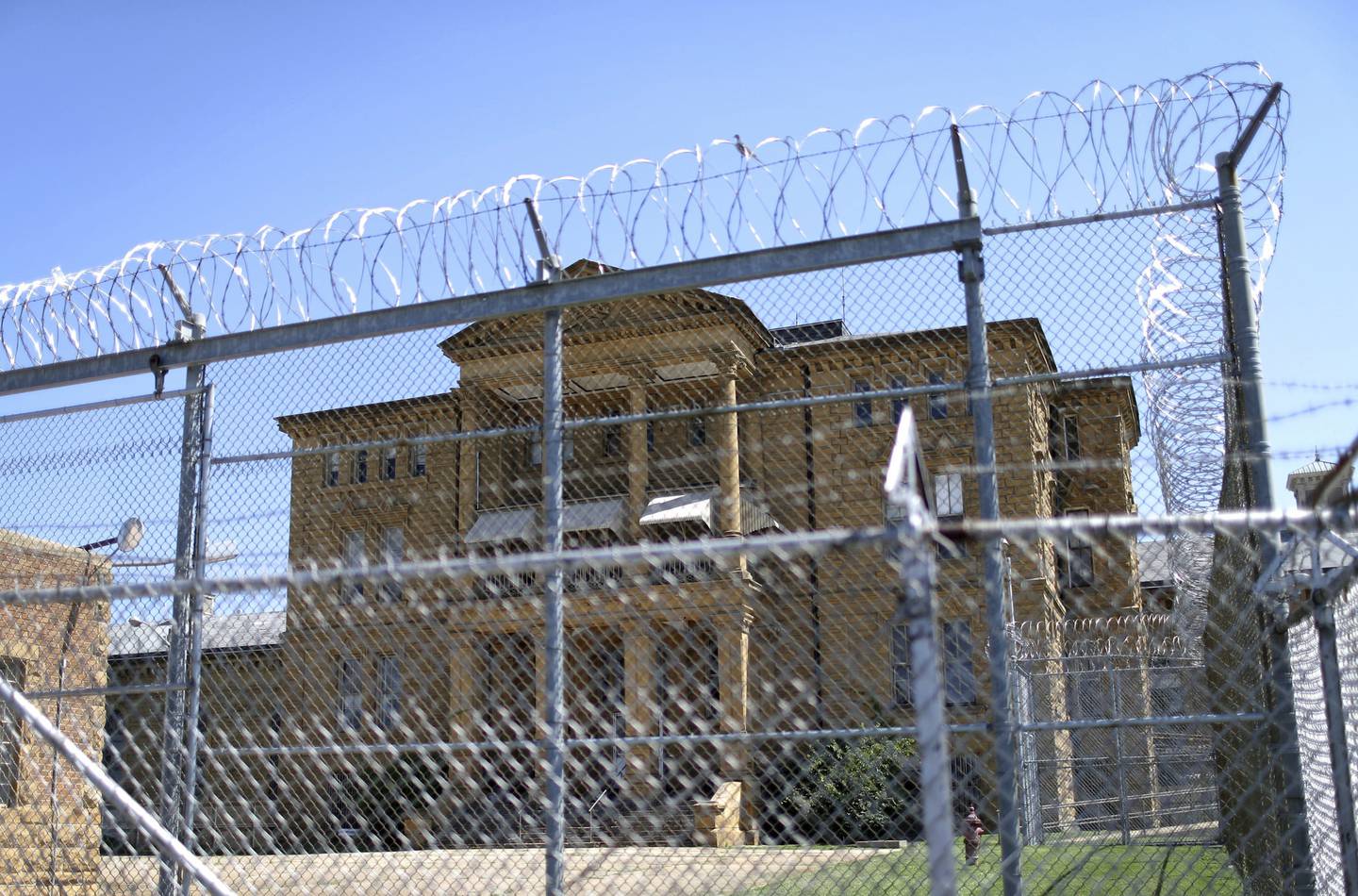
Michael Lightfoot is 66 years old. He survived prostate cancer. He has grandchildren and great-grandchildren who love him. He has health problems and doesn’t think he has that much time left.
But without a pardon from the governor, Lightfoot will die in prison because he was caught with 6 grams of crack cocaine in his home.
Advertisement
Lightfoot received a mandatory life sentence in 2005 on the low-level drug charge under Illinois’ habitual offender law, also called the three strikes law, which allows prosecutors to seek a life sentence when someone is convicted of their third serious felony.
In Lightfoot’s case, his home where police found a small amount of drugs was located near a park, bumping the charge up to a Class X felony.
Advertisement
He is one of at least five people in Illinois serving life sentences for a drug offense, according to Illinois Department of Corrections records. All are Black or Hispanic.
“For me to have a small amount of drugs and have as much time as a serial killer, I think that is unbelievable,” Lightfoot said, speaking from Menard Correctional Center in Chester.
Lightfoot’s brother, Henry, is also serving a life sentence under the habitual offender statute for armed robbery, records show. Henry Lightfoot is also fighting for his freedom in a clemency petition filed last year.
Advocates for criminal justice reform say habitual offender laws are draconian measures that increase incarceration rates, amplify racial inequities in the justice system and have no proven benefit to public safety. They are often used by prosecutors as a cudgel to scare people into plea deals, experts say.
“There has never been any evidence to show these laws have any positive impact on public safety,” said Alexa Van Brunt, director of the MacArthur Justice Center Clinic at Northwestern Pritzker School of Law.
Though Illinois’ habitual offender was revised — as part of a broader criminal justice reform law passed in 2021 — to narrow the circumstances in which someone could receive a life sentence, there is no mechanism for people sentenced under older versions of the law to seek resentencing, leaving people such as the Lightfoots languishing in prison.
The only recourse is asking for a gubernatorial pardon, a process that, though important in the justice system, can be long and uncertain, especially when politicians are often hesitant to grant clemency during election years, experts say.
“Frankly, these laws should be removed from books entirely,” Van Brunt said.
Advertisement
Michael Lightfoot was born and raised on Chicago’s South Side to a family that owned a flower shop, he told the Tribune. His father worked in a factory while freelancing as a certified public accountant and his mother ran the shop. He had one brother, Henry.
His father raised Lightfoot and his brother alone after his mother died of cirrhosis of the liver, Lightfoot said.
Lightfoot remembers his father as a hardworking man juggling multiple jobs to support his children while contending with physical difficulties: He suffered from polio as a child and walked with a crutch.
But as a working single father, he was often away from the home, his clemency petitions says, at a time when tensions between multiple street gangs increased in the neighborhood.
Lightfoot’s older brother Henry began using drugs and became addicted to heroin, the petition says.
Lightfoot himself started drinking alcohol in grammar school, he told the Tribune. Later, he began using heroin, fueling a lifelong addiction.
Advertisement
He had his first son while in high school and graduated in 1974, he said. He later had a second son.
By 1975, Lightfoot was selling heroin to support his family and his own addiction, he said.
“It isn’t like I didn’t have opportunities. My father had a nice job,” Lightfoot said. “I made some bad choices, got involved with the wrong crowd.”
He remembers filling out job applications, but none came through. So he said he continued selling drugs, and in one case, committed an armed robbery, to get money.
That led to a string of arrests and stints in prison throughout much of his adult life, records show. He was convicted of several low-level drug offenses, instances where police found heroin or cocaine on his person, in his car or in his house. He robbed a drugstore, though no one was injured. He also has a bribery conviction on his record: After being questioned exhaustively by police about $800 found during a search of his home, Lightfoot, unsure about what police wanted, told the officers they could keep it, his attorneys contend.
By 1994, Lightfoot was released from prison and made an effort to change his life, he said. He went to cooking school, and liked it. He moved to Champaign to be closer to his sons. He enrolled in a drug-treatment program.
Advertisement
Then he relapsed. Due to a lack of affordable housing, Lightfoot moved in with two people who used crack cocaine, according to his clemency petition. Soon, the apartment was raided and Lightfoot was arrested again.
Years later, Lightfoot was detained for the last time before he would be sentenced to life in prison, according to court records.
In 2004, Urbana police executed a search warrant on Lightfoot’s home. Officers found $702 and about 6 grams of crack cocaine, records show.
He was convicted of possession with intent to deliver within 500 feet of a park, as his home was located near one, making the charge a Class X felony.
Prosecutors tacked on the habitual offender charge because of Lightfoot’s past convictions, according to court records. The prior convictions cited were his 1976 armed robbery case, which at the time was joined with the bribery case and other possession cases, and five 1986 drug cases that were consolidated into one case and prosecuted together.
On Jan. 1 2005, Lightfoot a judge handed down a life sentence.
Advertisement
Illinois passed its habitual offender law in 1978, which at the time Lightfoot was sentenced held that the statute comes into play after the defendant has been convicted of two previous class X felonies or convictions for some violent crimes.
If a prosecutor levels the habitual offender charge, assuming the prior convictions meet the criteria, the life sentence is mandatory — a judge has no option but to mete out the punishment.
In recent years — as so-called War on Drugs laws have come under increased scrutiny for rapidly increasing incarceration rates and deepening racial inequities in prison — many states have modified habitual offender laws, making the bar higher for mandatory life sentences.
In 2021, Illinois revised its statute, barring drug convictions from being used as “strikes” that qualify someone for a habitual offender charge. The convictions must be for forcible felonies, which include many violent crimes such as murder, kidnapping and sexual assault. Illinois also defines some nonviolent crimes as forcible felonies, such as burglary and treason.
Offenders now also had to have been 21 or older at the time of the first offense, per the revised statute.
These changes could save Illinois nearly $6 million and decrease the prison population by nearly 900 in the next five years, according to an analysis from a nonprofit organization that studies recidivism.
Advertisement
The organization, Recidiviz, which advocates for policies that reduce incarceration, found in a 2021 report that Illinois exceeds most Midwestern states in annual incarceration rates.
Yet the law’s revision does not address those who are already serving life sentences under the previous iteration of the law.
“If prosecuted today, he would be ineligible,” said Jennifer Soble, executive director of the Illinois Prison Project who represents Michael Lightfoot. “It’s absolutely awful.”
Soble is also representing Michael’s brother Henry, who, like his brother, is serving a life sentence under the habitual offender statute. Henry Lightfoot also has a pending clemency petition.
Other states offer frameworks for addressing people in prison under laws that were changed.
In 2012, voters in California chose to reform the state’s three strikes statute, enacted in 1994, according to Stanford Law School’s Three Strikes Project, which represents people convicted under the statute. The reform excluded minor, nonviolent crimes from the state’s three strikes act and created a process for people serving a life sentence for minor crimes to appeal in court for a reduced sentence, according to the project. Illinois does not have a similar process for resentencing.
Advertisement
“People are forced to appeal to the governor for clemency,” Van Brunt said. “It really isn’t a fair, just or efficient way to go about things.”
And critics contend that even the reformed versions of habitual offender laws create inequities and cost the state money with little evidence that they protect people.
A study from the Illinois Sentencing Policy Advisory Council found that 70% of those in the Illinois prison system flagged as potentially eligible for sentencing as a habitual offender identified as Black.
“Generally as with so much lawmaking in the criminal legal system, (habitual offender laws) grew out of this anecdotal fear mongering,” Van Brunt said.
Michael Lightfoot dreams of being free once again before he dies.
He is an active Christian now, having found faith in prison. He talks frequently to his grandchildren and hopes to see them again. His two sons are in prison themselves. Lightfoot grows emotional when speaking of them, knowing they followed in his footsteps.
Advertisement

Afternoon Briefing
Daily
Chicago Tribune editors’ top story picks, delivered to your inbox each afternoon.
“I feel bad about it every day,” he said.
But his family loves him. His grandson, also named Michael Lightfoot, remembers visiting his grandfather in Chicago during summers. They skipped rocks and played basketball, “normal things,” the younger Lightfoot said.
He recalls with nostalgia a road trip he took with his grandfather as a child, traveling from Illinois to see relatives in Tennessee, stopping for food and looking out the window as the scenery changed.
“He got a lot of grandkids out here that miss and love him,” Michael Lightfoot said. “Ain’t like he murdered somebody.”
The elder Michael Lightfoot prays for release — he’s waited years. He filed his petition in 2020, during the COVID-19 pandemic when hearings were suspended and cases became backlogged.
“I would appreciate the opportunity to return to society again a different person,” Lightfoot said. “I’m living on borrowed time anyway. I would like to see my grandkids before I die.”
Advertisement
mabuckley@chicagotribune.com