


Close Menu
  • Home
  • News
    • Local
  • Opinion
  • Business
  • Health
  • Education
  • Sports
  • Podcast

Subscribe to Updates

Get the latest creative news from FooBar about art, design and business.

What's Hot

More than a Mission: Paying It Forward for the Future of Education

AFL-CIO Remembers Legendary Civil Rights Leader, the Rev. Jesse Jackson

IN MEMORIAM: Eternal Salute to The Reverend Dr. Jesse L. Jackson, Sr.

Facebook X (Twitter) Instagram
  • Lifestyle
  • Podcast
  • Contact Us
Facebook X (Twitter) Instagram Pinterest Vimeo
The Windy City Word
  • Home
  • News
    1. Local
    2. View All

    Uncle Remus Says Similar Restaurant Name Is Diluting Its Brand and Misleading Customers

    Youth curfew vote stalled in Chicago City Council’s public safety committee

    Organizers, CBA Coalition pushback on proposed luxury hotel near Obama Presidential Center

    New petition calls for state oversight and new leadership at Roseland Community Hospital

    Food Pyramid Blind Spots: What Supermarket Civil Rights Teaches Us 

    NBA: Hawks’ CJ McCollum made it work during a “storm”

    Birmingham-Partnered Warming Station Will Open Sunday and Monday Nights

    Skater Emmanuel Savary Sharpens Routines for the 2026 U.S. Championships

  • Opinion

    Capitalize on Slower Car Dealership Sales in 2025

    The High Cost Of Wealth Worship

    What Every Black Child Needs in the World

    Changing the Game: Westside Mom Shares Bally’s Job Experience with Son

    The Subtle Signs of Emotional Abuse: 10 Common Patterns

  • Business

    Illinois Department of Innovation & Technology supplier diversity office to host procurement webinar for vendors

    Crusader Publisher host Ukrainian Tech Businessmen eyeing Gary investment

    Sims applauds $220,000 in local Back to Business grants

    New Hire360 partnership to support diversity in local trades

    Taking your small business to the next level

  • Health

    Food Pyramid Blind Spots: What Supermarket Civil Rights Teaches Us 

    Birmingham-Partnered Warming Station Will Open Sunday and Monday Nights

    Empowering Black Parenting: Tips and Insights That Matter

    Why Tracking Racial Disparities in Special Education Still Matters 

    Dying From a Name: Racism, Resentment, and Politics in Health Care Are Even More Unaffordable

  • Education

    Cuts to Childcare Grants Leave Rural Students in Limbo

    Why Black Parents Should Consider Montessori

    Black Educators, Others Reimagine Future of Education

    OP-ED: Economic Empowerment Has Always Been a Part of Black History

    “What About People Like Me?” Teaching Preschoolers About Segregation and “Peace Heroes”

  • Sports

    NBA: Hawks’ CJ McCollum made it work during a “storm”

    Skater Emmanuel Savary Sharpens Routines for the 2026 U.S. Championships

    NFL Divisional Round: The Schedule is Set

    NFL Divisional Round: The Schedule is Set

    A Jacksonville journalist brings humanity to an NFL Press Conference

  • Podcast
The Windy City Word
Local

Medical debt initiative on track to erase $80 million in unpaid doctor bills for nearly 73,000 Cook County residents

staffBy staffUpdated:No Comments4 Mins Read
Facebook Twitter Pinterest Telegram LinkedIn Tumblr Email Reddit
Share
Facebook Twitter LinkedIn Pinterest WhatsApp Email

A Cook County initiative to address the effects of medical debt has so far erased more than $25 million in past-due bills and is expected to wipe out about $55 million more in the coming weeks for 73,000 county residents total, officials told the Tribune.

The first round of debt-buying has spent down just $800,000 of the county’s allotted $12 million for the federal funded program. Officials hope to erase $1 billion in debt before its expiration.

Advertisement

In July, the Cook County Board approved President Toni Preckwinkle’s proposal to spend $12 million of the county’s $1 billion allotted American Rescue Plan funds for the program through the end of 2024. The COVID-19 relief ARPA dollars must be spent by the end of 2026.

The goal is to purchase and retire the medical debt of county residents unable to cover their outstanding medical bills because of financial hardship. Eligible recipients have incomes of up to 400% of federal poverty guidelines, about $55,000 for an individual, or have medical debt that is 5% or more of their estimated household annual income.

Advertisement

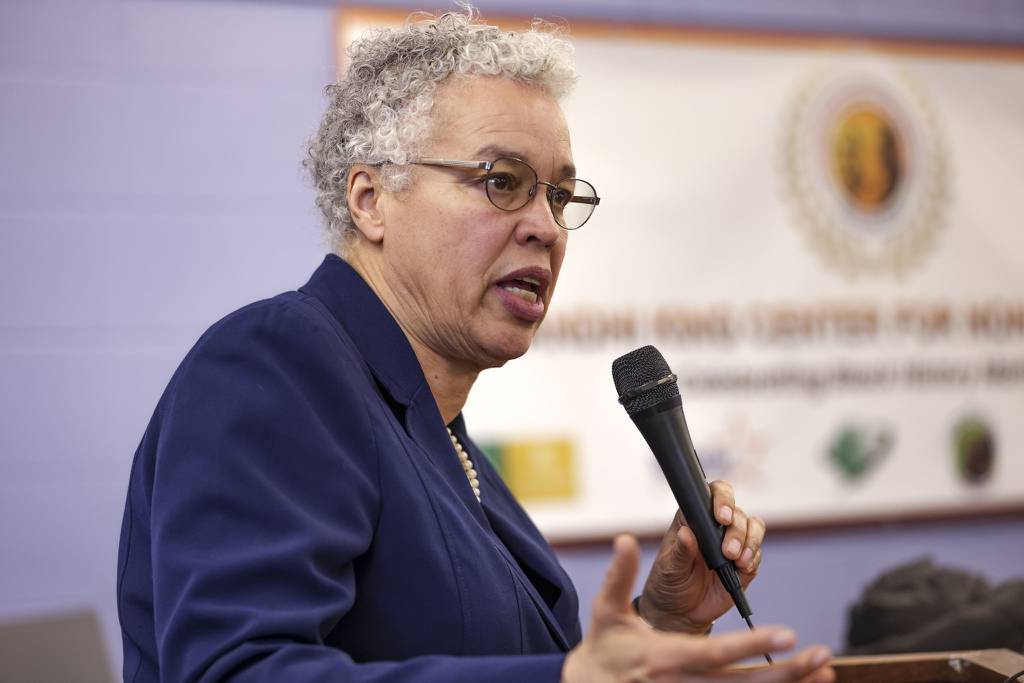
Cook County Board President Toni Preckwinkle, shown in February, proposed the medical debt elimination program, funded by federal COVID-19 relief money. (Shanna Madison / Chicago Tribune)

The county contracted with the nonprofit RIP Medical Debt to manage the program. Working with hospitals and physicians’ practices, the nonprofit buys qualified medical debt — often for pennies on the dollar — directly from hospitals and physicians groups. Rather than attempt to collect on it, the group forgives the debt and works to have it erased from credit reports. It contacts beneficiaries directly with a letter giving notice that their medical debt has been wiped out.

“Medical debt is a real problem for low-income families, particularly in communities of color. It’s not just a debt burden and a complication and a negative impact on their credit rating, but it’s also likely that people don’t pursue other medical care given that they already have this medical debt burden,” Preckwinkle said. “So it’s a fiscal challenge, one of the principal reasons for bankruptcy in this country. It negatively impacts people’s credit scores, and it’s a health care challenge.”

Though officials hoped that those letters would land over the 2022 holiday season, the first 45,000 notices didn’t begin to hit mailboxes until February.

“Look, I think we have the biggest program in the country, and we were surely first out of the gates. So it takes a little while to get these things up and going,” Preckwinkle told the Tribune in an interview Monday. “The hardest participant to get is the first, and once institutions are involved and can spread the knowledge of what a good idea this is, and that it’s a more compassionate way of dealing with medical debts than sending it to collection agencies, we’ll have more institutions get on board.”

RIP Medical Debt President and CEO Allison Sesso said, “Hospitals are bureaucracies, so it does take some time to weed our way through those bureaucracies. And so it’s really hard to predict how long it will take to get approvals” from legal, financial and board officials.

The first takers, according to Sesso, are Vituity, a national physician-based practice that serves hospitals; Chicago-based Mount Sinai, a safety net hospital; and AdventHealth.

Sesso said average debts cleared for physician care in the first round ranged from $500 to $1,000. For hospitals, the average debt was closer to $2,000.

Asked whether the county could spend the $12 million allotted in time, Sesso said, “Absolutely. … It takes a little while to get the hospitals warmed up, but once you get revving, and we have, you get there pretty quickly. I do feel like it’s sort of a domino effect. When the first falls, the others sort of follow.”

Advertisement

Cook County Health, which runs the flagship Provident and Stroger hospitals and a series of clinics, and does send past-due debt to collections, is not eligible for the county’s program due to federal restrictions. But RIP has previously said privately fundraised dollars will support debt relief efforts there. Those have not yet begun, Sesso said, because “we’re really focused on spending down the ARPA dollars because there is a time limit.”

Since Cook County rolled out its programs, Toledo, Ohio, and New Orleans have also contracted with RIP on similar programs.

“There’s probably 30 other counties, cities and states that have proposed this and are on their way to engage in this,” Sesso said. Cook County is “certainly a trendsetter,” and its announcement “has meant a lot of attention to what we’re doing across the country, which I think is really valuable.”

Preckwinkle acknowledged that debt erasure is only a Band-Aid to address larger issues with the cost and provision of medical care. “It’s no secret, I’ve said it before, I believe in universal health care coverage. We’re not there yet.”

Share. Facebook Twitter Pinterest LinkedIn Reddit WhatsApp Telegram Email
Previous ArticleChicago Bears Q&A: Is a reunion with Leonard Floyd a possibility? How much improvement can be expected from Justin Fields?
Next Article Police leaders to give update in slaying of off-duty Chicago police Officer Aréanah Preston
staff

Related Posts

Uncle Remus Says Similar Restaurant Name Is Diluting Its Brand and Misleading Customers

Youth curfew vote stalled in Chicago City Council’s public safety committee

Organizers, CBA Coalition pushback on proposed luxury hotel near Obama Presidential Center

Leave A Reply Cancel Reply

Video of the Week
https://www.youtube.com/watch?v=AxFXtgzTu4U
Advertisement
Video of the Week
https://www.youtube.com/watch?v=OjfvYnUXHuI
ABOUT US


The Windy City Word is a weekly newspaper that projects a positive image of the community it serves. It reflects life on the Greater West Side as seen by the people who live and work here.

OUR PICKS

Crypto’s Promise to Close the Wealth Gap: Revolution or Mirage?

How Christian Nationalists are Framing the 2024 Election

HBCU Champions Advance to Postseason Play

MOST POPULAR

Food Pyramid Blind Spots: What Supermarket Civil Rights Teaches Us 

Birmingham-Partnered Warming Station Will Open Sunday and Monday Nights

Empowering Black Parenting: Tips and Insights That Matter

© 2026 The Windy City Word. Site Designed by No Regret Medai.
  • Home
  • Lifestyle
  • Podcast
  • Contact Us

Type above and press Enter to search. Press Esc to cancel.