

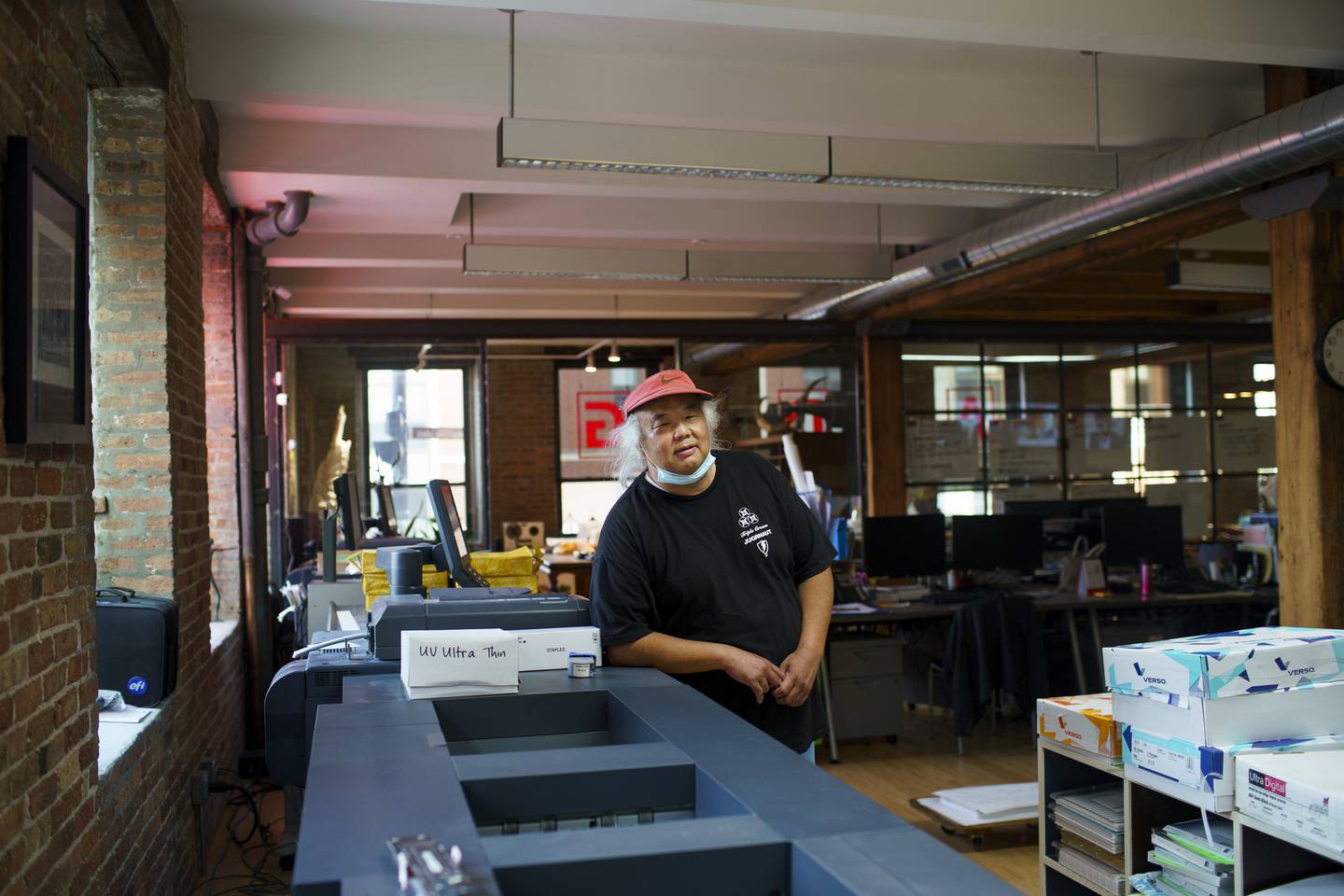
Randy Jue shuffled through a heap of papers on the desk inside his Bridgeport business until unearthing a detailed map of Chicago’s 11th Ward, where he spotted opportunity.
The son of Chinese immigrants who got his start in politics offering cheap printing jobs for newcomer candidates, Jue has established himself as an intuitive adviser to several winning campaigns, some of them by people of color.
Advertisement
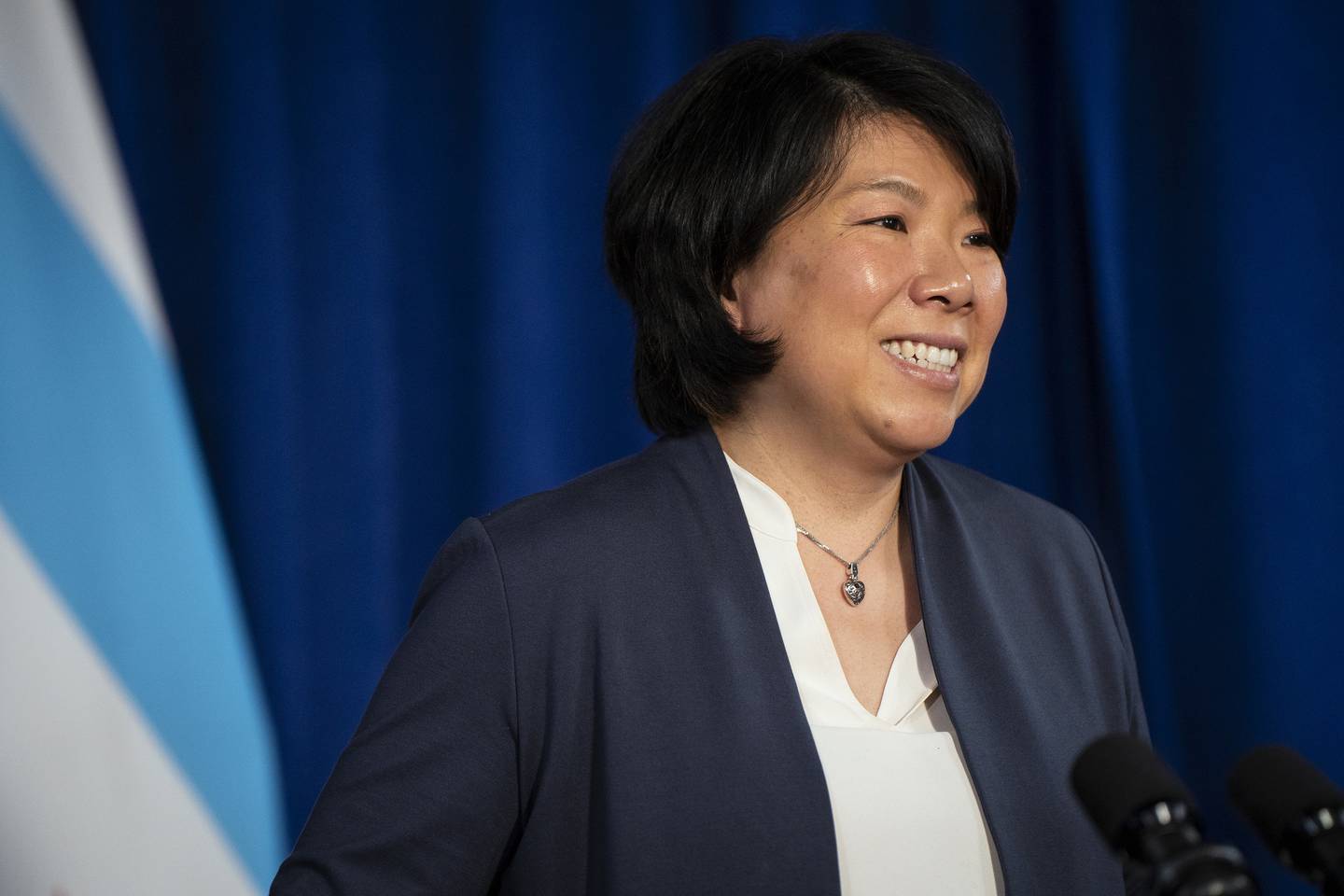
Now looking over the map of the newly drawn 11th Ward — famous for producing five mayors in the 20th century — Jue spotted something that could give an advantage to Chicago’s newest Asian American politician, Ald. Nicole Lee.
“This is actually the secret sauce,” said Jue, a volunteer consultant to Lee’s campaign, as he pointed his pencil at a precinct abutting his business. “There’s like a hundred homes there, right? But there’s only five people on this block that vote. So instead of knocking on all those doors, we want to only take those people that really vote.”
Advertisement
The scene at Athena Design Group — where Asian Americans were even dreaming of increasing their foothold in Illinois politics — was almost unfathomable to Jue at one time. But the landscape has changed significantly and in the 2022 general election at least 22 Illinoisans of Asian descent are running for office in November, from county commissioner to state representative to U.S. senator.
That could herald the state’s largest Asian American caucus ever and reflects a national trend of Asian Americans getting elected to public office.
In Chicago, Jue said he noticed the groundswell began when city leaders promised to establish the first Asian-majority ward during the once-a-decade redrawing of the City Council’s electoral map.
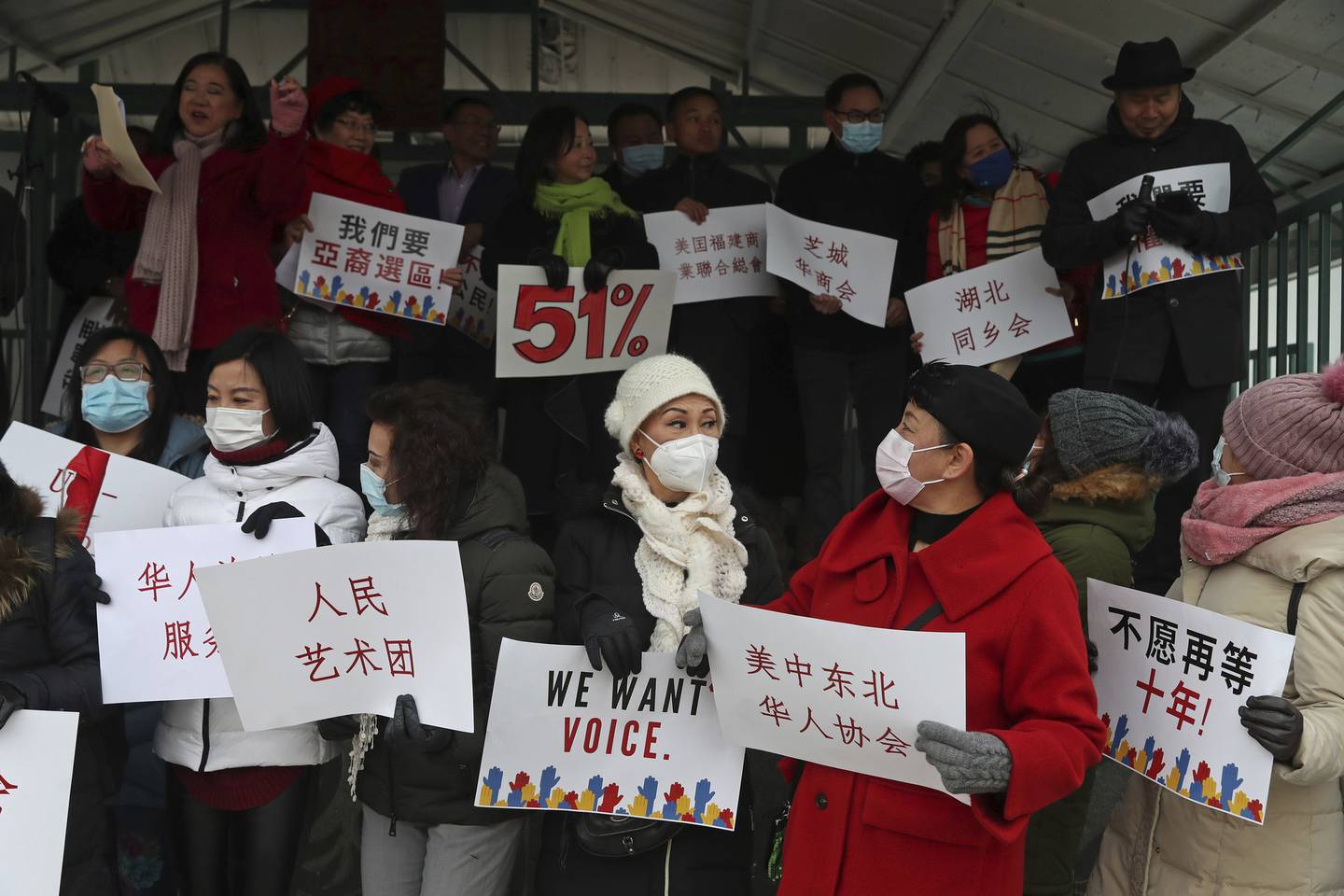
That it was the 11th Ward, which encompasses the Bridgeport and Chinatown neighborhoods, spoke volumes: It was the power center of and once home to the Daley family that produced two mayors, father Richard J. and son Richard M. Mayors Michael Bilandic, elected in 1977; Martin Kennelly, elected in 1947; and Edward Kelly, elected in 1933, also hailed from that ward’s organization.
In March, Mayor Lori Lightfoot appointed Lee as the city’s first Chinese American City Council member, replacing former Ald. Patrick Daley Thompson, a member of the powerful Daley clan who this year was convicted of felony tax fraud. Lee is now running in the Feb. 28 local election to retain the seat.
“It’s good to see more Asian people at the table,” Jue said. “Asians have been locked out of this for a long, long time, especially here. This is the 11th Ward, the most famous ward politically in Chicago.”
Jue has also consulted for Hoan Huynh, who’s running to represent portions of the North Side in the Illinois House and who would be the legislature’s first Vietnamese American representative if elected.
Jue and others who spoke with the Tribune said the current wave of Asian Americans engaged in politics is decades in the making and speaks to the organizing prowess of their community leaders. They also noted recent topics in the news — such as the rise in anti-Asian attacks and 2020 U.S. census figures showing Asians are the fastest-growing racial group in Chicago, Illinois and the country — demonstrate the urgency for more political representation.
Advertisement
“Maybe if we had Asians there (in office), we wouldn’t have had the Chinese Exclusion Act, right? Or internment camps,” Jue said of U.S. policies that restricted Chinese immigration starting in the late 1800s and that forced the relocation of Japanese Americans during World War II. “That’s why I think we should try to help each other out, to move an agenda.”
Inside the Buena Park bar where Huynh was hosting a general election campaign kickoff, the self-described progressive, who turns 33 this week, wasn’t shy about his identity as a Vietnamese refugee.
Speaking to a diverse throng of supporters — a fitting encapsulation of the North Side’s 13th District, home to an ethnically varied constituency that includes an enclave of Vietnamese and Chinese immigrants around Argyle Street — Huynh credited his success to one thing: the “promise of America.”
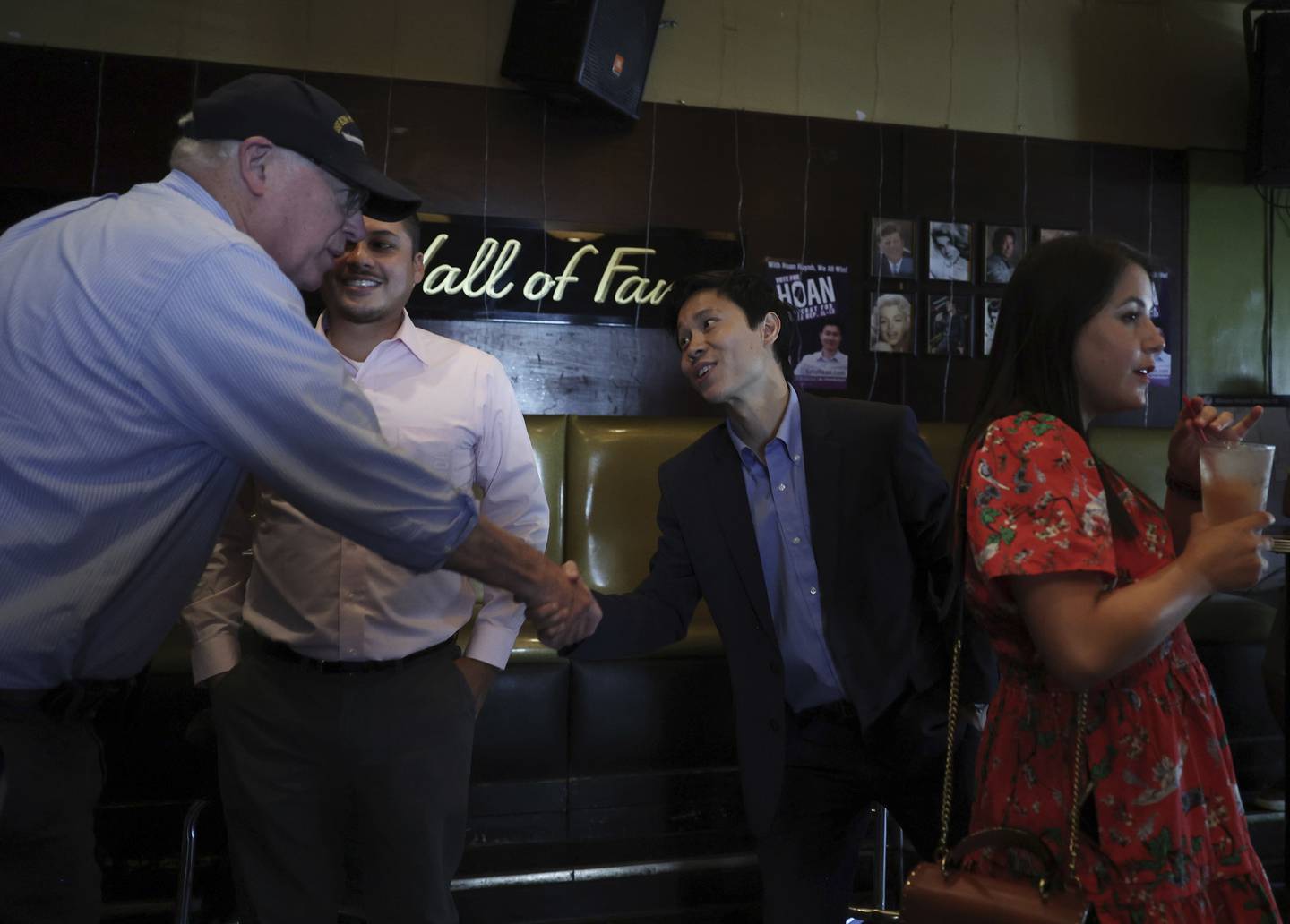
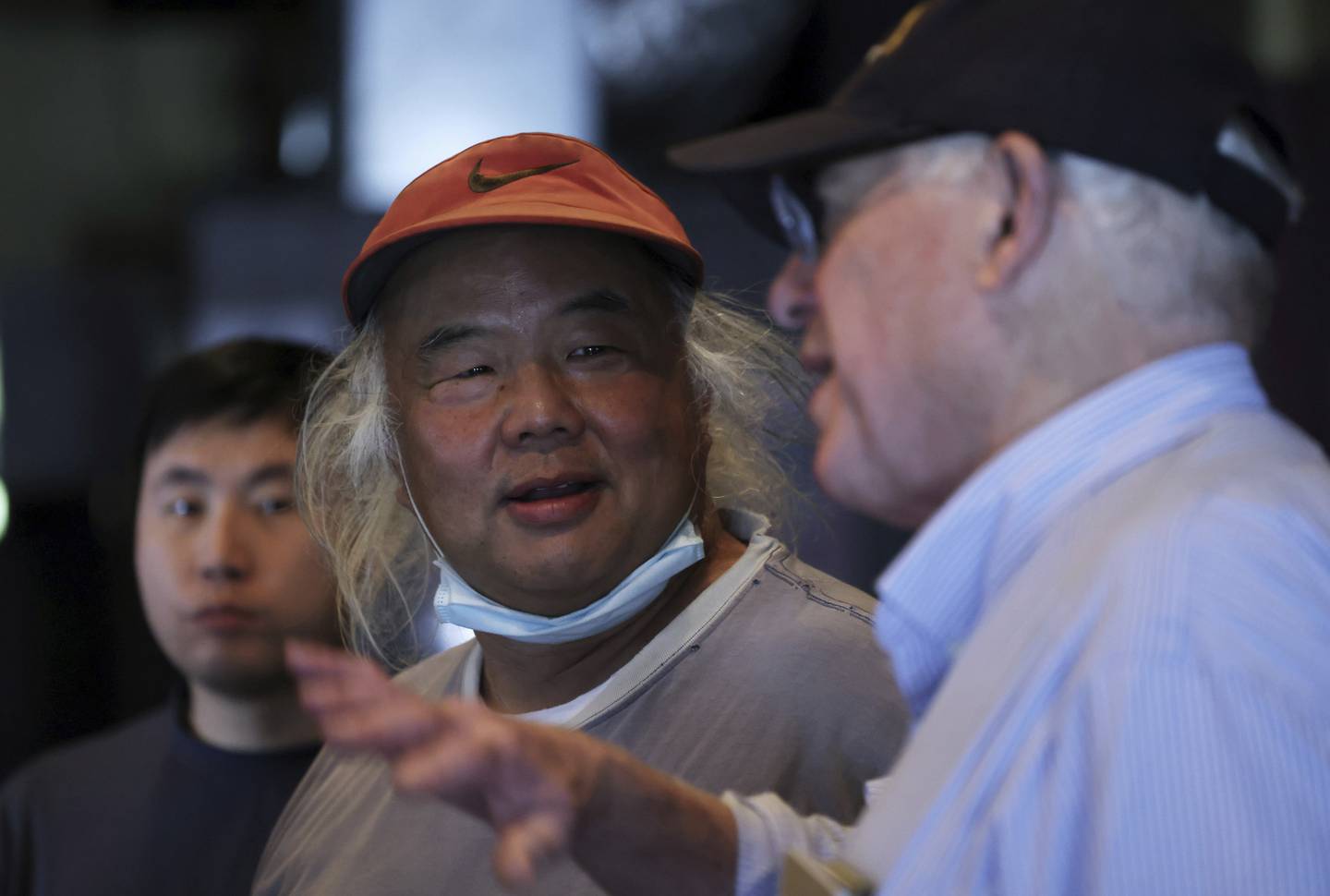
“Only in the United States of America can a refugee from Vietnam come here, have access to opportunities and be able to be the Democratic nominee in this great state, this great city. Let’s make sure that those opportunities are accessible for all of us,” said Huynh, who makes a point of noting on his campaign website that his name is pronounced “Hahn Win.”
Just three months earlier, the political newcomer’s path to victory seemed more tenuous. His Democratic primary opponents included Eileen Dordek, the former board chair of the pro-abortion rights Personal PAC who was endorsed by heavy hitters such as Gov. J.B. Pritzker, U.S. Sen. Dick Durbin and a slew of other Democrats. The only elected official willing to support Huynh back then was state Rep. Theresa Mah, the first Asian American elected to the General Assembly in 2016.
Huynh said his eventual triumph, which he attributed to intensive face time with district residents, “was a victory for all of us who have been left behind, have been discounted.” He faces Republican Alper Turan on Nov. 8.
Advertisement
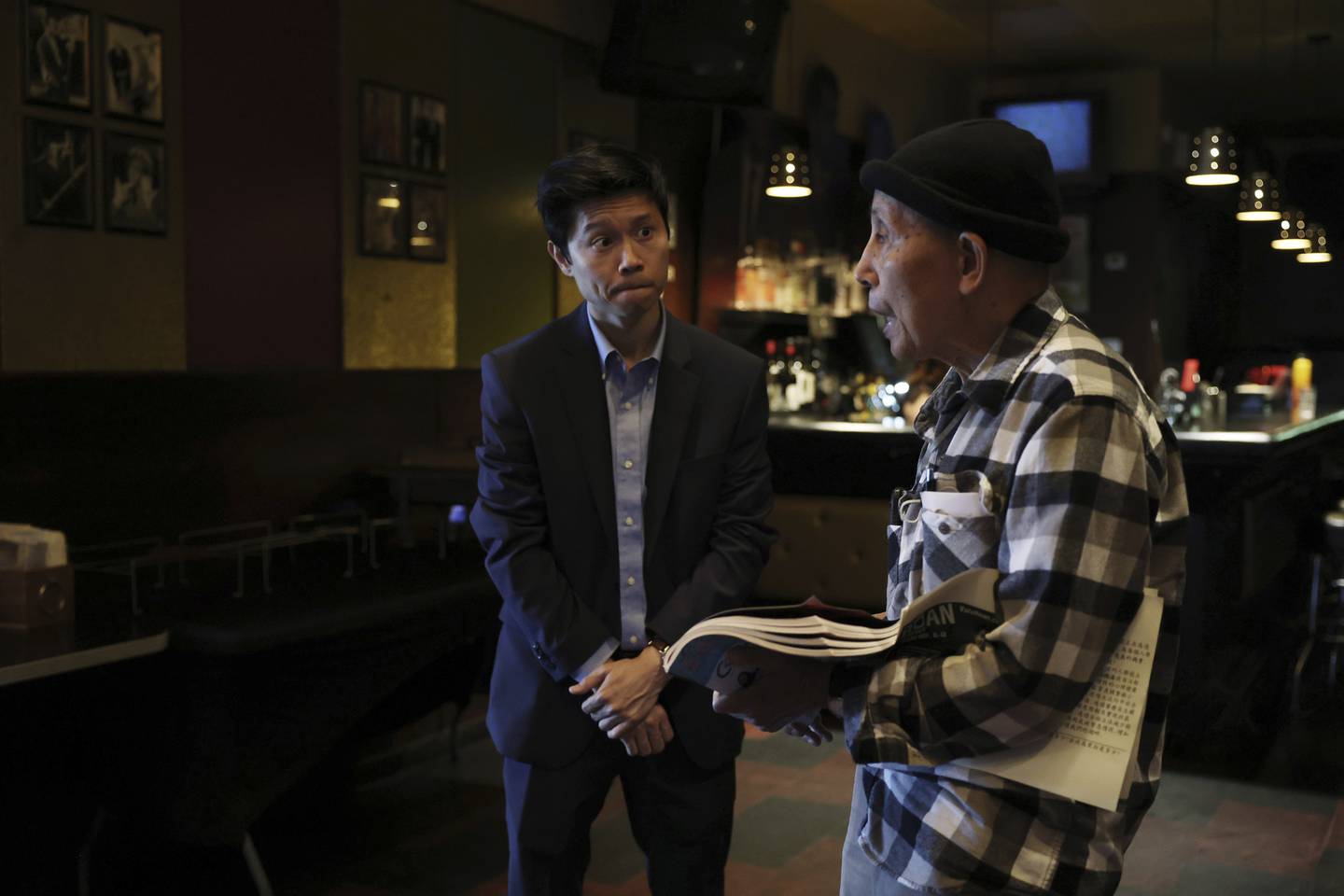
Seong-Ah Cho, field director for the Asian American Midwest Progressives, which did support Huynh, was blunter in acknowledging what they said were the racial dynamics behind the political establishment taking Dordek, who is white, more seriously.
“It’s sort of like deep-seated, right? This sense of who’s the ‘safe bet,’” Cho said. “Unfortunately, that aligns often with who is white, who has connections. … That’s a big part of why people discount when there’s a person of color first-time candidate who maybe doesn’t have the same amount of money but actually is more representative of the community.”
Paul Leong, Naperville’s first Chinese American city councilman, has the same stump speech each time he speaks to a crowd of Asian Americans, who make up the western suburb’s largest racial minority at one-fifth of the population.
Leong — also the Republican nominee for the Illinois House’s 81st District race — rattles off statistics many of them have likely heard already: Asian Americans have some of the highest salaries. They are among the most-educated Americans. And they lead “highly successful” professional lives, Leong said.
So, he would ask, why aren’t more of them stepping up in politics?
“I’ve been shouting this for years, and I hope it’s having some effect,” Leong said. “What is the phrase? ‘If you don’t have a seat at the table, you will end up on the menu.’ And that’s where we are, and we need to make sure our voices are heard.”
Advertisement
Vying to unseat Democratic incumbent Anne Stava-Murray in his statehouse race, Leong styles himself as fiscally conservative and socially moderate. But he acknowledged that the Republican Party, including its leader in former President Donald Trump, has not made many inroads with Asian Americans, who remain more likely to vote Democrat.
“Chinese American values have a huge overlap with conservative values in terms of working hard, being frugal, emphasizing education and so on,” Leong said. “(But) it’s a very difficult sell. I hear things like, ‘China is the enemy.’ … What they should say is that, ‘Of course, when I say China, I mean the People’s Republic of China, as opposed to our many fine Chinese Americans.’”
Nevertheless, Leong believes Asian Americans have recently become a local “political force” in the conservative realm due in part to their grassroots mobilization against a 2020 referendum to allow recreational marijuana stores in Naperville.
Although the referendum passed, Leong called that “the turning point. … This has really emboldened Asians to participate more in the political process, because they saw that they were able to express themselves without a lot of blowback. And in the future, I think that moment will be the moment that they became a political force.”
Leong then brings up what Asian American plaintiffs suing Harvard University allege in a lawsuit was a pattern in how admissions scored them: “Asian students are lacking in courage and likability.”
“My pushback on that is, that’s what politics is,” Leong said. “You have to have the courage to lead, and you have to basically win a popularity contest, so you have to be likable. … We can operate outside of the stereotypes.”
Advertisement
Back when suburban U.S. Rep. Raja Krishnamoorthi was a young man, running for office didn’t seem realistic because of his name.
That hesitation continued following the Sept. 11 attacks, which struck South Asian and Middle Eastern communities in America with a twofold fear of terrorism as well as of xenophobic backlash. Krishnamoorthi, who is Indian American, recalled noticing many cars with American flag bumper stickers happened to belong to families that looked like his.
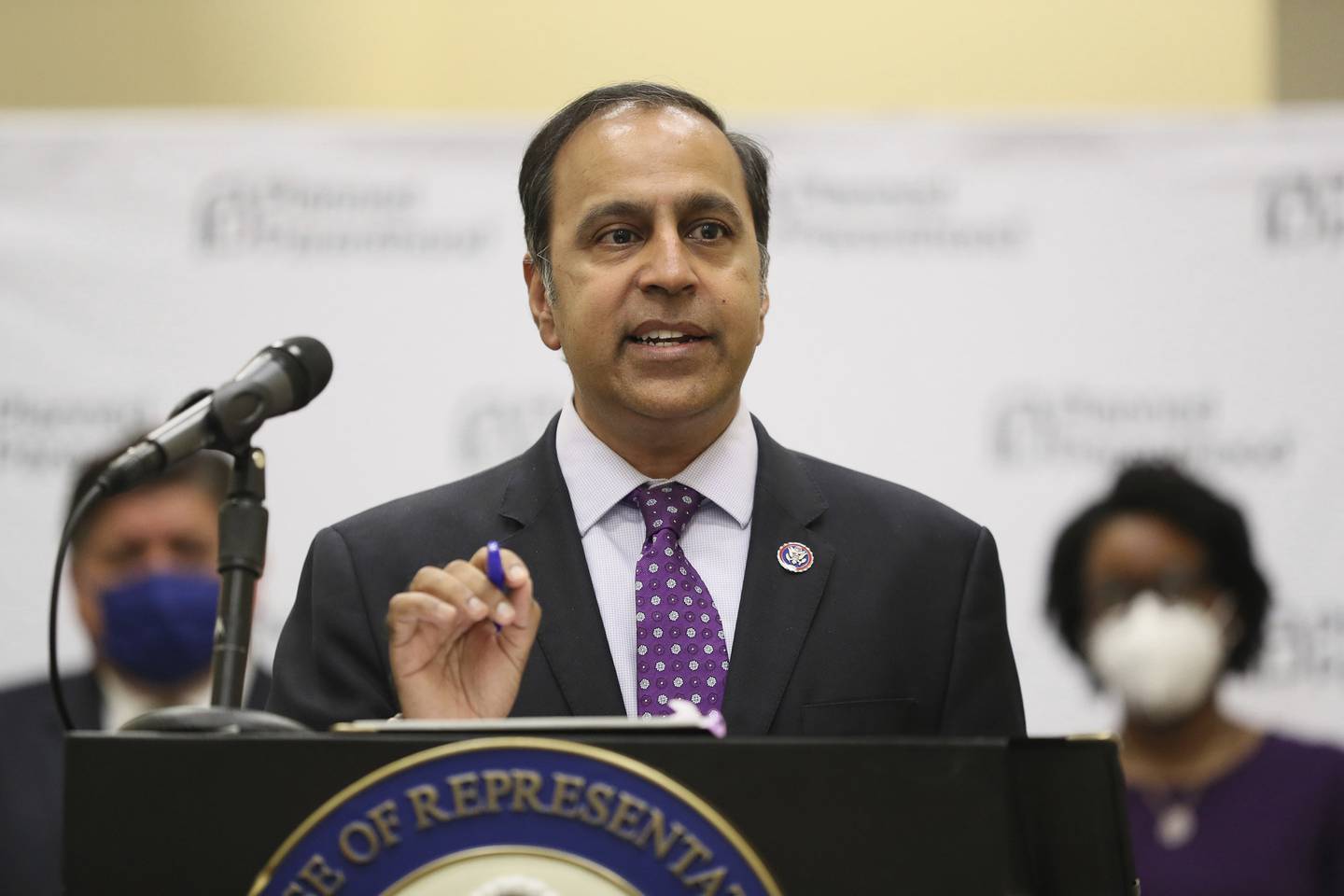
But a year later, he began working for an Illinois politician with another unusual name: Barack Obama. Seeing him ascend to the U.S. Senate and later become the country’s first Black president spurred Krishnamoorthi to reevaluate his own potential.
“It was kind of an awakening for me that perhaps running for office actually is a possibility,” Krishnamoorthi, who is seeking reelection in November, said. “That the people of Illinois and, for that matter, the United States, they’re good and decent people who look beyond the color of your skin.”
Krishnamoorthi, a Democrat from Schaumburg first elected to Congress in 2016, faces Republican Chris Dargis at the ballot box next month in the 8th District.
Down in the slower paced, more homogenous towns of central Illinois, Sharon Chung didn’t plan on drawing attention to her Korean ancestry when she took office in 2018 as the first Asian American elected to the McLean County Board. In some ways, that’s still the case when she’s campaigning as the Democratic nominee for the Illinois House’s new 91st District, an open seat that was redrawn this year to bring together more Democratic-leaning voters.
Advertisement
“I try not to make it a thing,” Chung said. “It’s very obvious I’m Asian. I don’t need to draw attention to the fact that I’m Asian.”
But then a gunman went on a shooting spree across Atlanta-area spas in March 2021, killing eight people, six of them women of Asian descent. The massacre was seen by many Asian Americans, including Chung, as a targeted attack on their community after a trying year of reports of increased violence against Asian Americans amid the COVID-19 pandemic.
So at the end of a board meeting the next month, Chung read a speech castigating County Board Chairman John McIntyre for not signing a grassroots organization’s letter of solidarity with the Asian American community.
“To add insult to injury, when asked to sign onto a statement denouncing the violence and supporting Asians in our community, the chairman of this very board didn’t sign on,” Chung had recited. “That is the bare minimum one should do as an elected official in our community. The bare minimum.”
Chung said that she and McIntyre, who did not respond to a request for comment, no longer speak. For the most part, Chung said she sticks to issues such as abortion access and economic relief on the campaign trail against Republican opponent Scott Preston. But the historic nature of a potential November victory propelling her to becoming the General Assembly’s first Korean American representative is not lost on her.
“I never wanted to be a figurehead,” Chung said. “But if I’m using my position and my voice to speak out about injustices or whenever I see where people can do better, then why not? That’s why I’m here.”
Advertisement