



Close Menu
  • Home
  • News
    • Local
  • Opinion
  • Business
  • Health
  • Education
  • Sports
  • Podcast

Subscribe to Updates

Get the latest creative news from FooBar about art, design and business.

What's Hot

What Is the Connection Between Health and Homelessness?

Beyond the Headlines: The Long Road to Recovery After Violent Crime

Beyond the Headlines: The Long Road to Recovery After Violent Crime

Facebook X (Twitter) Instagram
  • Lifestyle
  • Podcast
  • Contact Us
Facebook X (Twitter) Instagram Pinterest Vimeo
The Windy City Word
  • Home
  • News
    1. Local
    2. View All

    Uncle Remus Says Similar Restaurant Name Is Diluting Its Brand and Misleading Customers

    Youth curfew vote stalled in Chicago City Council’s public safety committee

    Organizers, CBA Coalition pushback on proposed luxury hotel near Obama Presidential Center

    New petition calls for state oversight and new leadership at Roseland Community Hospital

    What Is the Connection Between Health and Homelessness?

    Beyond the Headlines: The Long Road to Recovery After Violent Crime

    Social Drinking Habits Face New Scrutiny as Wellness Priorities Shift

    Why Stigma is Still One of the Biggest Barriers to Addiction Recovery

  • Opinion

    Rep Davis, Olive Post CDR., Call on Trump to Restore file of Black Vietnam War Hero to Website

    Capitalize on Slower Car Dealership Sales in 2025

    The High Cost Of Wealth Worship

    What Every Black Child Needs in the World

    Changing the Game: Westside Mom Shares Bally’s Job Experience with Son

  • Business

    Illinois Department of Innovation & Technology supplier diversity office to host procurement webinar for vendors

    Crusader Publisher host Ukrainian Tech Businessmen eyeing Gary investment

    Sims applauds $220,000 in local Back to Business grants

    New Hire360 partnership to support diversity in local trades

    Taking your small business to the next level

  • Health

    What Is the Connection Between Health and Homelessness?

    Beyond the Headlines: The Long Road to Recovery After Violent Crime

    Social Drinking Habits Face New Scrutiny as Wellness Priorities Shift

    Why Stigma is Still One of the Biggest Barriers to Addiction Recovery

    Saving Black Mothers Starts Outside the Hospital

  • Education

    COMMENTARY: Property Is Power! Why the Dream Booker T. Washington Preached in 1905 Still Matters Today

    COMMENTARY: From Chains to Change — Frederick Douglass’ Question Still Echoes Across America’s 250-Year Journey

    Chris Robinson Is Turning Cultural Memory into Public Art

    Africa University Gets First AME Member on Development Board

    National Museum of African American History and Culture Opens Two Exhibitions Exploring the Power of Abstraction Across Art and Design

  • Sports

    Nurture, Inc., Negro Southern League Museum Look to Preserve History While Healing the Community

    OP:ED How Black WNBA Players Became Collateral in the Caitlin Clark Culture War

    U.S. Men’s National Team Names its Roster for World Cup 2026

    Top 10 moments of the 2026 FIFA World Cup

    U.S. Soccer to Expand ‘Soccer at Schools’ Programming Across OUSD

  • Podcast
The Windy City Word
Lifestyle

The 411 on angioplasty

staffBy staffUpdated:No Comments3 Mins Read
Facebook Twitter Pinterest Telegram LinkedIn Tumblr Email Reddit
Share
Facebook Twitter LinkedIn Pinterest WhatsApp Email

No one wants to deal with serious cardiac events. But for Craig Webb, it’s a chapter of his life he’s learned to live with over the past two decades.

“Once you’ve been around the block, you know when to turn,” Webb says.

In July, Webb, a self-employed businessman from Monticello, Illinois, found himself at OSF HealthCare Heart of Mary Medical Center in Urbana, Illinois, after experiencing chest pressure and high blood pressure. It turned out to be nothing serious this time. But he got reacquainted with a typical but important procedure for people dealing with an urgent heart problem: angioplasty.

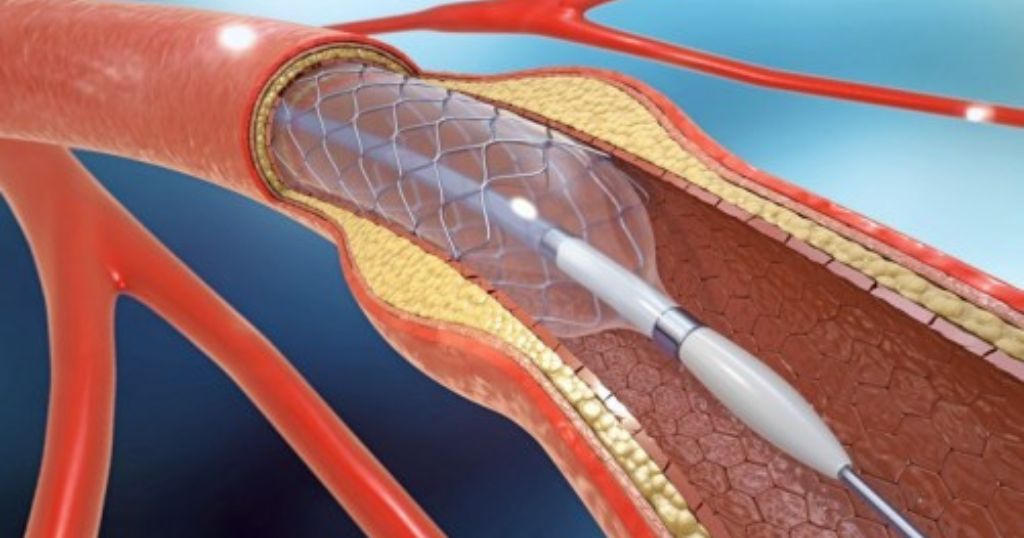
Tariq Enezate, MD, is the cardiologist who performed Webb’s angioplasty. He says the procedure is one of the first ways to deal with blocked arteries in the heart. This could be during an emergency, like a heart attack, or for a known, long-term blockage that’s causing chest pain or tightness.

Doctors start by finding an artery in the patient’s wrist or groin.

“We use a very small catheter, which is like a long tube, which goes all the way up to the heart,” Dr. Enezate explains.

Doctors then use contrast dye and an X-ray camera to see how much the arteries are blocked and what’s needed next. That could range from sending the patient home with medicine up to performing open heart surgery.

Webb says his angioplasty – and his whole experience in the hospital – were mostly seamless.  And  he would know the inner workings of a medical facility. He’s on the governing board of the hospital where he lives.

“The communication with the patient about why you’re here, what’s going to happen, when we’re going to do stuff,” Webb says. “And [the OSF Mission Partners] pretty much stick to that schedule.”

What to do if it happens to you

People experiencing symptoms of a cardiac event – chest pain, shortness of breath, dizziness and nausea – may debate where to go: their local urgent care or the emergency department at a hospital. Dr. Enezate admits it’s a tough question, but he says it comes down to knowing your body.

“If the patient is having sudden chest pain, they’ve never had it before, they don’t know what it is,” Dr. Enezate says. “I think it’s time to seek medical advice and go to the ER.”

Dr. Enezate adds that if you have a history of cardiac events and your treatment regimen isn’t making the new pain go away, head to the emergency department.

On the other hand: “If the patient has been having some chest tightness for a long time, it’s predictable,” Dr. Enezate says. “They know ‘Okay, if I walk three blocks, I feel it. I have to slow down.’ Maybe seek advice with primary care first.”

But go somewhere, Webb says. Don’t think you can weather the storm without medical professionals.

“Don’t wait until you can’t go or you have to call an ambulance,” Webb says. “When you don’t feel right, go to the emergency room and get checked out. You’re better off going and saying ‘There’s nothing wrong’ than not having that expertise available.”

And exercise and eat right.

“I’m a stockholder in McDonalds, but I don’t eat there every day,” Webb quips.

Learn more about heart care on the OSF HealthCare website.

This article originally appeared on OSF HealthCare.

Share. Facebook Twitter Pinterest LinkedIn Reddit WhatsApp Telegram Email
Previous ArticleIn visit to Illinois, VP Harris rallies voters around abortion rights
Next Article Chicago Pre-College Science & Engineering Program offers free, highly engaging math and science programs sign up at Kenwood Academy this Saturday
staff

Related Posts

What Is the Connection Between Health and Homelessness?

Beyond the Headlines: The Long Road to Recovery After Violent Crime

Social Drinking Habits Face New Scrutiny as Wellness Priorities Shift

Comments are closed.

Video of the Week
https://www.youtube.com/watch?v=AxFXtgzTu4U
Advertisement
Video of the Week
https://www.youtube.com/watch?v=OjfvYnUXHuI
ABOUT US


The Windy City Word is a weekly newspaper that projects a positive image of the community it serves. It reflects life on the Greater West Side as seen by the people who live and work here.

OUR PICKS

The Music of BlackSkin – Gary Hines

How the Modern White Moderate Co-Opted MLK’s Ideas

[REBROADCAST] Understanding Black Maternal Mental Health & Postpartum Depression

MOST POPULAR

What Is the Connection Between Health and Homelessness?

Beyond the Headlines: The Long Road to Recovery After Violent Crime

Social Drinking Habits Face New Scrutiny as Wellness Priorities Shift

© 2026 The Windy City Word. Site Designed by No Regret Medai.
  • Home
  • Lifestyle
  • Podcast
  • Contact Us

Type above and press Enter to search. Press Esc to cancel.