



More than three years after COVID-19 first sowed death and disruption, state and federal pandemic-related emergencies are officially ending Thursday.
The end of the emergency declarations will bring a slew of changes to state and federal requirements and programs related to COVID-19. The changes come now that hospitals are no longer overflowing with COVID-19 patients and daily deaths across the country have dropped.
“The reason it’s no longer considered an emergency is we now have vaccines, we have treatments, we have adequate testing capabilities,” said Dr. John Segreti, hospital epidemiologist at Rush University Medical Center. “It’s no longer the same situation we were in in March of 2020, but that does not mean that COVID is gone.”
Health leaders caution that the end of the emergencies does not mean that COVID-19 is no longer a threat — though it is a lesser one than three years ago. People continue to test positive for the illness and sometimes struggle with symptoms for months.
“Even though the emergency is ending, COVID is not over. And we are not considering COVID over in Chicago, but we are at a different point in terms of risk and there’s nobody happier than me that COVID does not have to be top of mind every day, at all times,” said Dr. Allison Arwady, commissioner of the Chicago Department of Public Health.
Here’s what the end of the emergencies means for Illinois residents, as society learns to live with COVID-19 long-term:
If you have private insurance, you’ll probably have to start paying out-of-pocket for at-home, rapid COVID-19 tests. The federal government will no longer require health insurance companies to cover at-home antigen tests, such as those that can be purchased from a drugstore, after Thursday.
Until now, the government required insurers to fully cover up to eight at-home tests a month per person. Now, it will be up to health insurance companies whether to continue covering them.
Blue Cross and Blue Shield of Illinois will no longer cover at-home tests. Illinois’ second-largest health insurer, UnitedHealthcare, did not answer questions about its plans.
Medicare Part B will no longer cover over-the-counter tests after Thursday. People on Medicaid will continue getting tests for free until the end of September 2024, under federal rules.
Without insurance coverage, the tests often cost around $20 for a two-pack. People who feel ill but test negative on an at-home test are supposed to take a second test a day or two later.
People who live outside Chicago can go to https://accesscovidtests.org to get an additional five at-home tests for free. The Illinois Department of Public Health is working with Project Act to distribute 1 million of the tests to households outside Chicago, on a first-come, first-served basis.
PCR tests will also no longer be free of charge for many people. PCR tests are more sensitive than rapid, over-the-counter antigen tests. They’re often performed in doctors’ offices, but pharmacies and testing sites offer them as well.
Private health insurers will no longer be required to fully cover the costs of PCR tests, and coverage will vary. Many private insurers, such as Blue Cross and Blue Shield of Illinois, plan to cover PCR tests, but patients might face a copay for them, depending on their plans, after Thursday. Medicare Part B will continue to cover PCR tests ordered by a provider at no cost to patients, as will Medicaid.
People can also go to https://testinglocator.cdc.gov/ to find locations offering free testing.
The end of the public health emergencies doesn’t affect masking. But many Chicago-area hospital systems have loosened their mask requirements in recent weeks. Hospitals were among the last places in Illinois still requiring face coverings.
Advocate Health Care made masks optional, in many cases, on March 27 at its 10 hospitals and 250 care sites across Illinois. Other hospital systems followed, with Rush, Sinai Chicago, Northwestern Medicine and NorthShore-Edward-Elmhurst Health relaxing their mask requirements in April.
Hospitals are continuing to recommend or require masks in certain areas, such as in places where patients are immunocompromised.
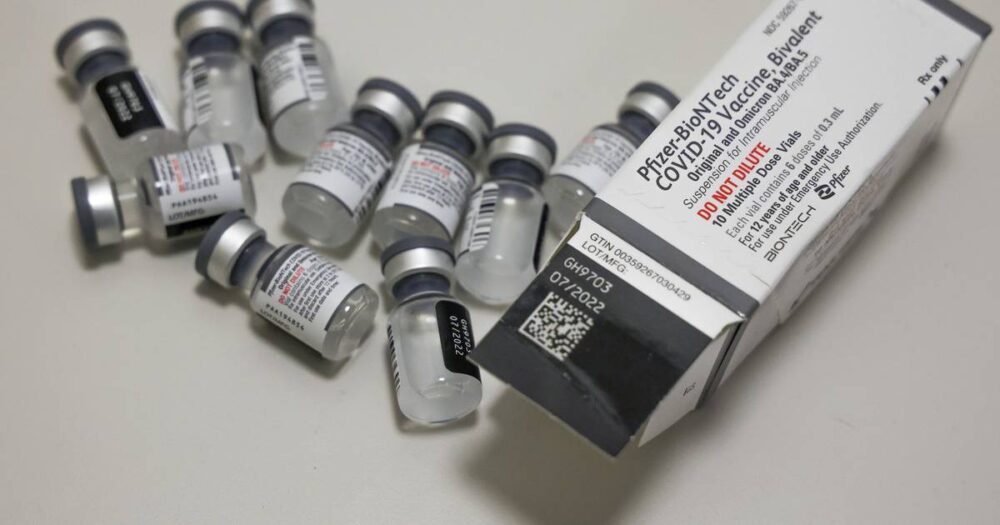
COVID-19 vaccines will generally be fully covered, at no cost to patients, by health insurance plans, Medicare and Medicaid, even after Thursday.
President Joe Biden’s administration has also said it will continue to offer COVID-19 vaccines for free to people without health insurance, through a $1.1 billion partnership with pharmacy chains, health departments and certain health centers.
Until now, Paxlovid, an oral medication for people at high risk of developing severe COVID-19, has been free to patients. After Thursday, it will no longer be free to everyone. Instead, it will be up to private health insurers how to cover the medication. Out-of-pocket costs may vary depending on a person’s insurance plan.
Medicare and Medicaid will continue to cover Paxlovid, at least through late 2024.
Paxlovid is supposed to be taken within five days of testing positive for the illness.
The Biden administration will also continue to offer Paxlovid at no cost to people without insurance, through its partnership with pharmacies, health departments and health centers.
Data about COVID-19 won’t be as plentiful after Thursday.
Hospitals will no longer have to report how many COVID-19 patients they have in beds. The Illinois Department of Public Health will continue to report the number of people admitted to hospitals from emergency departments with COVID-19, weekly deaths, and will monitor and report on COVID-19 in wastewater across the state.
The Centers for Disease Control and Prevention will stop reporting on community levels and community transmission levels of COVID-19.
Until now, the CDC had been labeling community COVID-19 levels as high, medium or low. That will end after Thursday.
The CDC will continue to report the rate of COVID-19 hospital admissions in each community, and that will “be the primary surveillance indicator to help guide community and individual decisions related to risk and prevention behaviors,” according to a CDC report.
“People need to be aware that COVID is still out there and assess their risk of getting severe disease or dying and do whatever they can to avoid getting infected,” Segreti said. “What a young, healthy 25-year-old does might be a lot different than what a 65-year-old diabetic would do.”
For the first time in three years, people on Medicaid in Illinois will have to prove they’re still eligible for the program to remain in it. The first round of letters asking people to renew their coverage in Illinois went out last week.
Anywhere from about 384,000 to 700,000 people in Illinois are expected to lose their Medicaid coverage because they make too much money to qualify or because they don’t fill out the required paperwork on time. Medicaid is a state and federally funded health insurance program for people with low incomes or disabilities.
During most of the pandemic, the federal government told states not to kick anyone off Medicaid or require them to renew their coverage. Federal lawmakers, however, passed a bill ending that provision on March 31, as the pandemic waned. That means the resumption of Medicaid renewals is coinciding with the end of the public health emergencies.
Illinois residents can go to abe.illinois.gov to verify their addresses and see when their renewals are due. People can also call 800-843-6154 for help with renewals.
Another impact of the COVID-19 public health emergency ending was the conclusion of the Supplemental Nutrition Assistance Program Emergency Allotment, or SNAP EA. With the federal government’s passage of the Families First Coronavirus Response Act, states could request that people on SNAP — a government-funded program that provides food for low-income households — receive more money than normal as school and business closures decreased affordable food accessibility.
Illinois’ SNAP EA program began in April 2020 and ended on March 1 as the threat of COVID-19 decreased.
Schools are now open, thus providing some relief that was unavailable during the pandemic, but inflation and rising gas prices have put pressure on the 2 million Illinoisans on SNAP who are receiving anywhere from $95 to $250 less each month now that SNAP EA has expired, according to a news release from the state.
The government program was helpful in keeping low-income Illinoisans fed, according to Man-Yee Lee, a spokesperson for the Greater Chicago Food Depository.
“The overwhelming response we are getting from our partner pantries, though, is that there is an increase of families and households that are coming to the pantries for help,” Lee said.
Throughout the pandemic, Gov. J.B. Pritzker used the authority of his office to enact a series of measures aimed at slowing the spread of the novel virus, beginning with a statewide disaster declaration on March 9, 2020.
Within 12 days, the governor banned gatherings of more than 1,000 people, closed schools, shut down restaurants and bars, and finally closed all “nonessential” businesses and enacted other restrictions through a statewide stay-at-home order that would remain in effect, with minor modifications, for more than two months.
Even as restrictions were slowly peeled back, and at times reinstated as the virus surged anew, Pritzker faced criticism, mainly from Republican rivals, about his use of unilateral power to drastically alter daily life. The legislature’s supermajority Democrats, meanwhile, were largely content to let the governor make the decisions — and take the criticism — in an election year when many of them would be on the ballot but Pritzker would not.
While judges largely upheld the governor’s authority to act in an emergency, some questions remain unanswered because restrictions were lifted before courts made final rulings.
The issue of mandated mask-wearing in schools serves as the most stark example, with Pritzker lifting the mandate amid an ongoing legal challenge due to changing guidance from the CDC.
The move allowed both sides to declare victory but left open questions about the bounds of the governor’s authority that may have to be addressed in the event of a future pandemic.
“The governor stands by the actions he took during a worldwide pandemic because the state’s response was focused on protecting the health and safety of Illinoisans,” Pritzker spokeswoman Jordan Abudayyeh said. “While the administration consistently adjusted the emergency orders to respond to the moment of the pandemic we were in, including rolling back mitigations as we learned to live with the virus and vaccines became widely available, the only people complaining about our commonsense approach backed by science were right-wing ideologues who tried to use the pandemic for political gain.”
Abudayyeh also noted that some of the governor’s actions, such as increasing access to telehealth and making it easier for health care workers to practice in Illinois, have since become law.


