



By: Danielle Bess, Esq
In the murder trial of Karmelo Anthony, the witnesses were not the only ones who took an oath. The citizens chosen as jurors also swore oaths. First, they swore to answer honestly during jury selection. Then, once seated, they took the juror’s oath prescribed by Texas law: “You and each of you do solemnly swear that in the case of the State of Texas against the defendant, you will a true verdict render according to the law and the evidence, so help you God.”
The facts of the case are known in Texas and in many African American communities: in April 2025, 17-year-old Karmelo Anthony fatally stabbed Austin Metcalf, also 17, after a confrontation at a high school track meet in Frisco. Anthony, who is Black, said he acted in self-defense. Metcalf was white. Anthony was charged with murder, tried in Collin County, convicted, and sentenced to 35 years. But the deeper story is one that is even more familiar: a Black defendant accused of harming a white victim, claiming self-defense, judged by a jury with no Black members.
The road from jury summons to oath to verdict has been the source of intense criticism and speculation in the Anthony case, in large part because not one member of the jury that judged the evidence was Black. In this series, we examine the jury selection process, how the makeup of that jury and the public’s perception of it shaped the outcome, and how it may determine the success of Anthony’s appeal.
Attorney Tiffany Burks knows the process from both sides. She spent 25 years as a prosecutor in the Tarrant County District Attorney’s Office, rising to the number-three position, and has spent the last three years representing defendants. She is now a candidate for Tarrant County District Attorney, challenging the incumbent who defeated her in 2022.
Burks summed up jury selection as a process of “deselection” each side working to eliminate the people it believes will not be sympathetic to its case.
When I asked Burks whether race is part of the process, she was candid. “Yes,” she said, and “anyone who says differently [is] not telling you the truth.” She went further: “If you can show me one prosecutor who has never thought about [race], I can show you a prosecutor who is lying.”
For many Black observers, the defining moment of the Karmelo Anthony case was not learning the verdict. It was learning the jury’s composition. Patrice (who asked that only her middle name be used), a Black resident of Collin County for more than 20 years, described her reaction when she heard there were no Black jurors: “Wow, that does not sound right.” She told me the county has a strong Black community, people who vote, who are educated, and who show up. The jury did not reflect the county she knows.
Her concern was not misplaced. Studies of criminal trial outcomes have documented that Black defendants who face jury pools without Black members are more likely to be convicted. A 2012 study of Florida felony trials published in the Quarterly Journal of Economics found that when the jury pool contained no Black members, Black defendants were convicted 81 percent of the time, compared to 66 percent for white defendants. When the pool included even one Black potential juror, the gap all but disappeared.
Census records show Collin County had a population of nearly 1.3 million as of July 2025. Roughly 76 percent—about 986,000 people—are adults. Using the Census Bureau’s non-overlapping categories, the county is approximately 49.6 percent white, 18.7 percent Asian, 16.1 percent Hispanic, and 10.8 percent Black, with the remainder multiracial or another race. A 12-person jury that mirrored the county would seat roughly six white jurors, two Asian jurors, two Hispanic jurors, one Black juror, and one multiracial juror. Half of the jury would be composed of people of color.
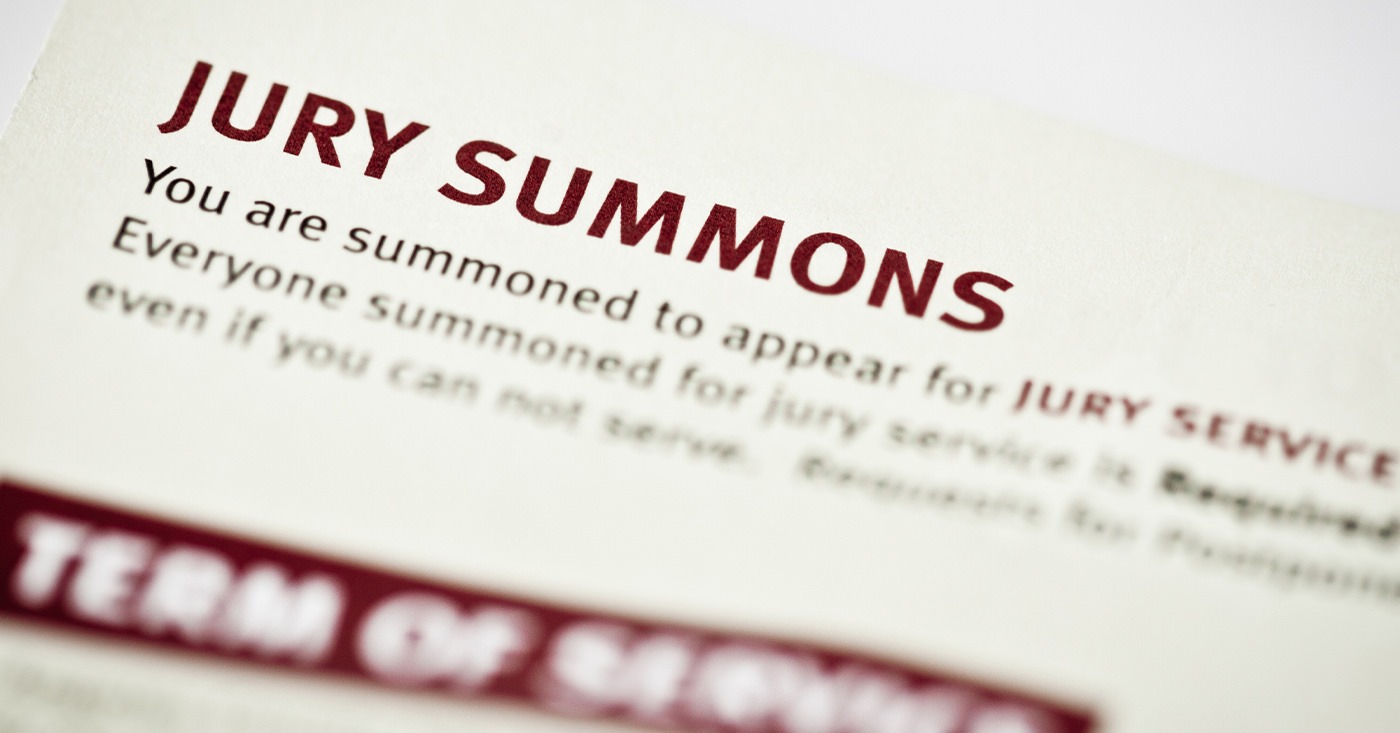
In Texas, prospective jurors are drawn from lists of registered voters and holders of a Texas driver’s license or state identification card. Whether you are summoned is a matter of luck, good or bad, depending on your perspective. The Secretary of State sends each county a list of prospective jurors, and the District Clerk then randomly selects citizens to receive a summons and questionnaire. The Collin County District Clerk’s website says the office strives to provide “a fair and impartial jury in every case.”
According to Collin County Jury Services, the questionnaire can be completed online. MarQuetta A. Clayton, a criminal defense attorney who practices in neighboring Tarrant County, said electronic access itself can be a barrier to service: “Everyone does not have access,” she said, and a significant number of people are excluded from jury service as a result.
Texas law also narrows who may serve. Jurors must be citizens, residents of the county, and able to read and write, and they must not have “been convicted of, or be under indictment or other legal accusation for, misdemeanor theft or a felony.” Once those disqualifications are factored in, the pool of eligible adults shrinks well below 76 percent of the population.
Then citizens begin excluding themselves, claiming exemptions Texas makes available: being over 75, caring for a child under 12 without adequate childcare, being a college student, a member of the military, or a caretaker are a few.
Clayton said it is not unusual to end up with a jury without Black members in Tarrant County, where she practices, a county demographically similar to Collin County. She has also observed Black jurors trying to “get off the jury.” The impulse to avoid jury service is not unique to Black citizens. But simple arithmetic amplifies its effect: when the proportion of Black citizens in the pool is small to begin with, every excusal cuts deeper.
Patrice’s own history illustrates how the funnel narrows. In more than 20 years in Collin County, she has been summoned twice. The first time, she was excused as a breastfeeding mother. The second time, she forgot the date, called the clerk after missing it, and was told she would be considered for future service.
Burks, who picked juries for a quarter century as a prosecutor, explained how jurors of color fare in the deselection process. Prosecutors view them as “less trusting of the police, less trusting of the system, so if they end up on the jury, for the prosecution, that could be problematic, because it’s an additional hurdle that the prosecution has to make.”
It was widely reported that approximately 589 prospective jurors were summoned for the Anthony trial. If that random selection mirrored Collin County, the pool would have included roughly 292 white, 110 Asian, 95 Hispanic, and 64 Black prospective jurors.
The summons is only the beginning. Once jurors arrive and their questionnaires are reviewed, some are dismissed for cause because they fall into an exemption or because they report they cannot be fair.
Voir dire is the phase when the attorneys for each side question the panel directly. The judge reportedly gave each side one hour and thirty minutes. The questions reportedly ranged from the social media storm surrounding the trial to its racial dimensions. According to courtroom reporting by CBS Texas, one panelist stated he would have a hard time putting a “brother” in jail.
After questioning, each side exercises its peremptory strikes, which permits the removal of potential jurors for any reason at all, except race or gender. In a Texas non-capital felony trial, each side gets ten. We know the prosecution used three of its ten to strike the three remaining Black prospective jurors. The State’s stated reason: the three were educators, too closely connected to the school setting where the stabbing occurred.
Burks told me her own thinking about race and jurors evolved over her career as a prosecutor. With experience came a realization: “There are a lot of pro-state, pro-police African American people. And you realize, I could have been getting rid of very good African American people.”
At the end of jury selection in the Karmelo Anthony case, a jury of twelve was seated, along with six alternates. Not one of the eighteen was Black.
If Burks is right, if a prosecutor who claims race plays no role in jury selection is not telling the truth, then it is reasonable to conclude that in a case like Karmelo Anthony’s, the race of the jurors was on the minds of both sides.
In the next article, I will examine who was struck, what we know about them, and whether the answers give Karmelo Anthony a path to a successful appeal.
The post Part One: The Road From Summons to Verdict appeared first on BlackPressUSA.