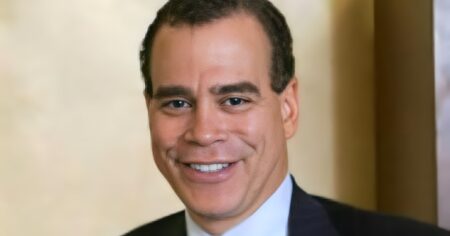






The National Probate Reform Coalition (NPRC) has announced that Bernard ‘Bernie’ Black, a nationally respected legal scholar, will meet with California Assistant Attorney General Eleanor Blume on July 27 to discuss the urgent need for guardianship, conservatorship, and probate reform.
The meeting marks another important step in NPRC’s effort to encourage California’s governor and attorney general to take a leadership role in addressing systemic abuse, financial exploitation, and the lack of meaningful oversight within probate and guardianship courts.
Black has been a professor of law and finance at Northwestern University and Northwestern Pritzker School of Law since 2010. Before joining Northwestern, he served on the faculties of Stanford University, Columbia University, and the University of Texas at Austin, earning international recognition as one of America’s foremost empirical legal scholars.
Despite his legal expertise, Black says neither his knowledge nor his professional reputation protected his family from what he describes as a deeply flawed guardianship system.
Following the death of his mother in 2012, Black’s sister, Joanne, who had lived with schizophrenia for more than 35 years, became the beneficiary of approximately two-thirds of their mother’s $4 million estate through a special needs trust established to provide for her lifetime care.
Seeking to preserve his mother’s estate plan and protect Joanne’s eligibility for public benefits, Black petitioned the Denver Probate Court for a temporary conservatorship and requested judicial approval for actions necessary to preserve assets. According to Black, the case initially appeared to proceed appropriately. Both the court-appointed counsel and a guardian ad litem supported his proposed conservatorship plan.
Black says the case later took a dramatically different turn.
According to Black, court-appointed professionals used family disagreements to seize control of the family trusts. What followed was 12 years of litigation and 96 probate court decisions, resulting in millions of dollars in professional fees.
Black says repeated settlement proposals intended to preserve assets for his sister’s benefit were rejected. He also strongly disputes adverse findings made by the probate court against him, his wife, and his son, arguing the court lacked jurisdiction over members of his family. Appeals were unsuccessful, reinforcing his concern that probate courts exercise extraordinary discretion with insufficient oversight.
Joanne Black passed away on Aug. 14, 2025. Black contends that millions of dollars that should have benefited his sister and preserved his family’s legacy have instead been consumed by litigation and administrative expenses. He continues to fight efforts to deplete the remaining family trusts.
“My sister has died, yet the Denver Probate Court and the guardianship professionals are still pursuing what is left of our family’s money,” Black said. “I’m talking millions of dollars.”
Black believes his family’s experience demonstrates that even experienced attorneys can become overwhelmed by a probate system that often lacks transparency and accountability.
Joining Black at the July 27 meeting will be Rick Black, founder of the Center for Estate Administration Reform (CEAR), who will present his organization’s proposed Victims’ Bill of Rights for individuals and families involved in probate and guardianship proceedings.
Together with the NPRC, they will urge the Attorney General’s Office to investigate fraud, financial exploitation, and predatory practices while aggressively enforcing existing laws that protect elders, disabled adults, and vulnerable families.
NPRC asserts California’s Attorney General, as the state’s chief law enforcement officer, has both the authority and responsibility to investigate fraud, public corruption, and financial exploitation occurring within probate courts.
The Coalition also hopes California will lead a national initiative by working with attorneys general across the country to develop coordinated enforcement strategies and meaningful reforms that restore integrity, transparency, and accountability to probate courts nationwide.
Bernard Black’s experience echoes hundreds of similar stories documented by probate reform advocates throughout the nation. His message to the Attorney General is both simple and sobering:
“If this can happen to one of America’s most respected law professors, it can happen to anyone.”
The post NPRC to Meet with California Attorney General’s Office on to Urge Guardianship Reform appeared first on BlackPressUSA.