


Democratic candidates hoping to compete statewide in Texas must fundamentally rethink how they engage Black voters. This includes investing in year-round organizing instead of relying on loyalty built over decades, Democratic Party strategists warn.
Texas now has more than 2.9 million Black eligible voters, more than any other state, while another said Black voter registration in Texas stands at 71.5%, the highest among racial groups in the state.

Speaking to Black voters in Houston, communications strategist Ashley Etienne argued that Democrats have spent years taking one of their most reliable voting blocs for granted.
Etienne, who has served as a senior advisor to Presidents Barack Obama and Joe Biden and Vice President Kamala Harris, added that it has created a widening trust gap that threatens the party’s long-term prospects in Texas and nationally.
“Trust is the currency of persuasion,” she said. “We’re seeing distrust at an all-time high, especially with black voters…distrust of the media, institutions, the Democratic Party, self-agreement. Campaigns don’t lose because they fail to talk to voters. They lose because they fail to listen.”
Tackling election cycles persistently
Houston’s local elected officials are trying to confront a harsh reality after multiple “disappointing” election cycles. Can the party maintain overwhelming Black support while persuading more eligible voters to participate?
Throughout a town hall focused on issues faced by the Black community, election strategists argued that the challenge is not voter registration but sustained engagement.
Etienne, for example, argued that Democrats have consistently underinvested in Black communities between elections while spending heavily on polling and consultants.
“Investment drives outcomes. If you don’t invest in it, it doesn’t work,” Etienne said.
According to Etienne, Democratic campaigns nationwide spend billions each election cycle while directing only a small fraction of that funding toward Black-led political infrastructure. She framed Texas as the country’s most important testing ground because of the size and diversity of its Black electorate.
“The first opportunity that the Democratic Party will have to address Black voters will be in the state of Texas,” she said. “All eyes are on Texas. We need serious amounts of listening. We need to get back to a level of intimacy with Black voters, activate our message, take all that intel, give it back to the campaign, put it back into the system, and formulate an effective message. Build trust…Our voters have to be able to trust each other at first and then connect and mobilize. Then we’ll have a way to turn it out.”
Her comments came against the backdrop of growing concern among Democratic strategists that support among Black voters, while still overwhelmingly Democratic, has gradually eroded over the past decade.
Etienne cited polling showing growing dissatisfaction among Black voters, particularly Black women, whom she described as the community’s most influential political organizers.
“We’re a force multiplied by our community,” she said. “The entire community that has to be addressed. I would definitely stop and have a strategy specific to engaging Black women.”
Rather than viewing Black voters as a single political constituency, Etienne urged campaigns to recognize differences in age, geography, income, and political priorities.
“The first opportunity that the Democratic Party will have to address Black voters will be in the state of Texas.”
Ashley Etienne, political advisor
“Texas is a microcosm of almost every Black person in America,” she said, pointing to suburban professionals, students, rural Texans, and longtime Houston residents as examples of communities requiring different approaches.
Outlining five recommendations for Democratic campaigns, Etienne suggested that campaigns should abandon what she called the “monolith myth” by recognizing the diversity of Black communities rather than assuming a single message fits every voter.
Second, she argued campaigns must look beyond traditional church-based organizing.
“You’ve got to go outside of the Black church,” Etienne said, arguing that younger voters and infrequent voters are increasingly disconnected from religious institutions where campaigns have traditionally concentrated their outreach.
Third, campaigns should build what she described as a modern communications ecosystem centered on trusted Black voices and Black-owned media. Black influencers and community media, Etienne added, should be compensated the same way campaigns routinely purchase advertising through mainstream outlets.
Fourth, she urged Democrats to shift their messaging away from appeals to party loyalty. Instead of asking Black voters to support Democrats simply because of history or partisan affiliation, campaigns should emphasize policies that expand Black political and economic power.
“We’ve been making that same argument decade after decade,” she said. “Those are becoming less persuasive arguments.”
Finally, Etienne called for permanent grassroots infrastructure that exists beyond Election Day. She pointed to Georgia as an example, arguing that years of sustained investment in Black organizing produced electoral gains that extended well beyond individual campaigns. The strategy requires campaigns to think beyond winning the next election.
“We have to build Black political power,” said Etienne, arguing that Texas Democrats have a rare opportunity to strengthen their coalition by investing early and consistently in Black-led organizations rather than concentrating resources in the final months before an election.
What is the way out?

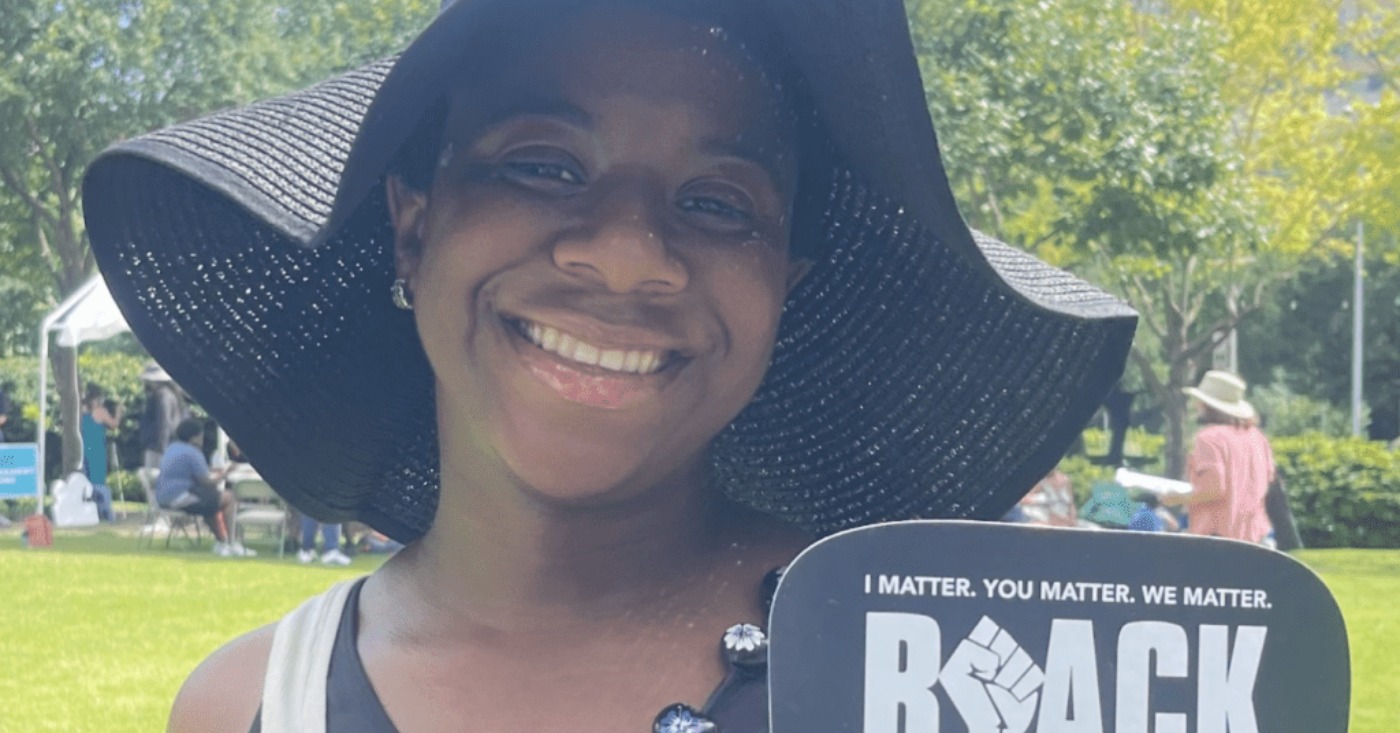
Harris County Democratic Party Chair Traci Gibson said local election results demonstrate why Democrats cannot afford to ignore Black turnout, arguing that even modest increases in participation could determine the outcome of dozens of races.
Gibson, the first Black woman to hold the position, framed the stakes in terms of registration and turnout data specific to Harris County. Texas has more Black eligible voters than any other state (2.9 million).
“Registration is not our problem,” Gibson’s presentation slide show. The task now, she said, is turning registered voters into actual votes. She urged voters to become precinct chairs and organize block by block in their own neighborhoods rather than waiting on the state party.
“We are the base,” Gibson said. “Midterms are almost 100 days away. The rest of our lifetime will be decided by what we do in November.”
Using county voting data, Gibson sought to reinforce the argument that Black voters are not simply an important Democratic constituency but the party’s electoral foundation in Texas.
In the March 2026 primary, approximately 94% of Black primary voters chose a Democratic ballot, compared with 77% of Hispanic voters, 60% of Asian voters, and 46% of White voters. Another slide noted that nearly 120,000 Black voters participated in the Democratic primary, almost matching White Democratic turnout despite a much smaller eligible voting population.
Gibson also highlighted several judicial races from the 2024 election that Democrats lost by razor-thin margins. In 2024, District judge candidate Elaine Palmer lost by 304 votes, and Jeralynn Manor lost by 647, while several other Democratic judicial candidates lost by a few thousand votes. Gibson said the results illustrate how lower participation in predominantly Black precincts can determine countywide elections.
“Remember, 144 races and these judges are at the bottom,” she said. “If you go into these polls and you vote for the first five people and then you leave, that’s how we get Elaine Palmer losing by about 300 votes.”
She encouraged voters to complete the entire ballot, noting that Texas regularly has some of the nation’s longest ballots.
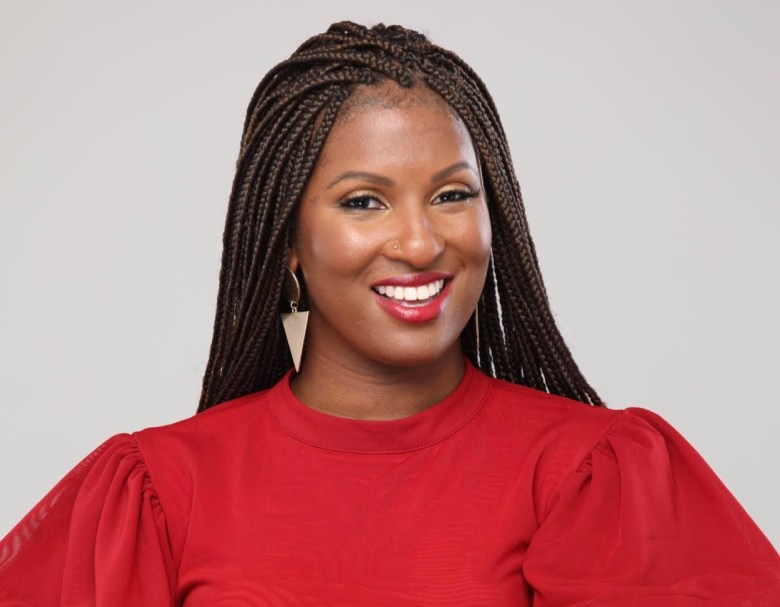
Shamier Bouie, chair of the Houston Black American Democrats (H-BAD), said persuasion remains the Democratic Party’s challenge.
“This is what we mean by African Americans are the base of the Democratic Party,” Bouie said. “We do not split our vote with Republicans.”
H-BAD reported reaching more than 53,000 Black voters by mail and approximately 18,000 voters through phone calls and text messages. The presentation also included a proposed budget calling for roughly $450,000 to $460,000 for a countywide Black voter outreach program.
“They [Democratic Party] should definitely be playing for Black media, mail, digital vote support,” Bouie said. “The number here is $450,000 minimum…It’s not a strategy fund. That’s investing in Black people.”
Bouie added that successful organizing must continue between election cycles rather than beginning a few months before Election Day.
“To increase the Black voter turnout, participate early, participate well,” she said. “Year-round engagement…increased investment in Black voter outreach, more funding for Black-led organizations that have relationships, infrastructure, and experience in effectively engaging Black communities.”
Based on reporting by Houston Defender.
The post Midterms: Building Trust with Black Voters Dominates Democratic Strategy appeared first on BlackPressUSA.