




Advertisement
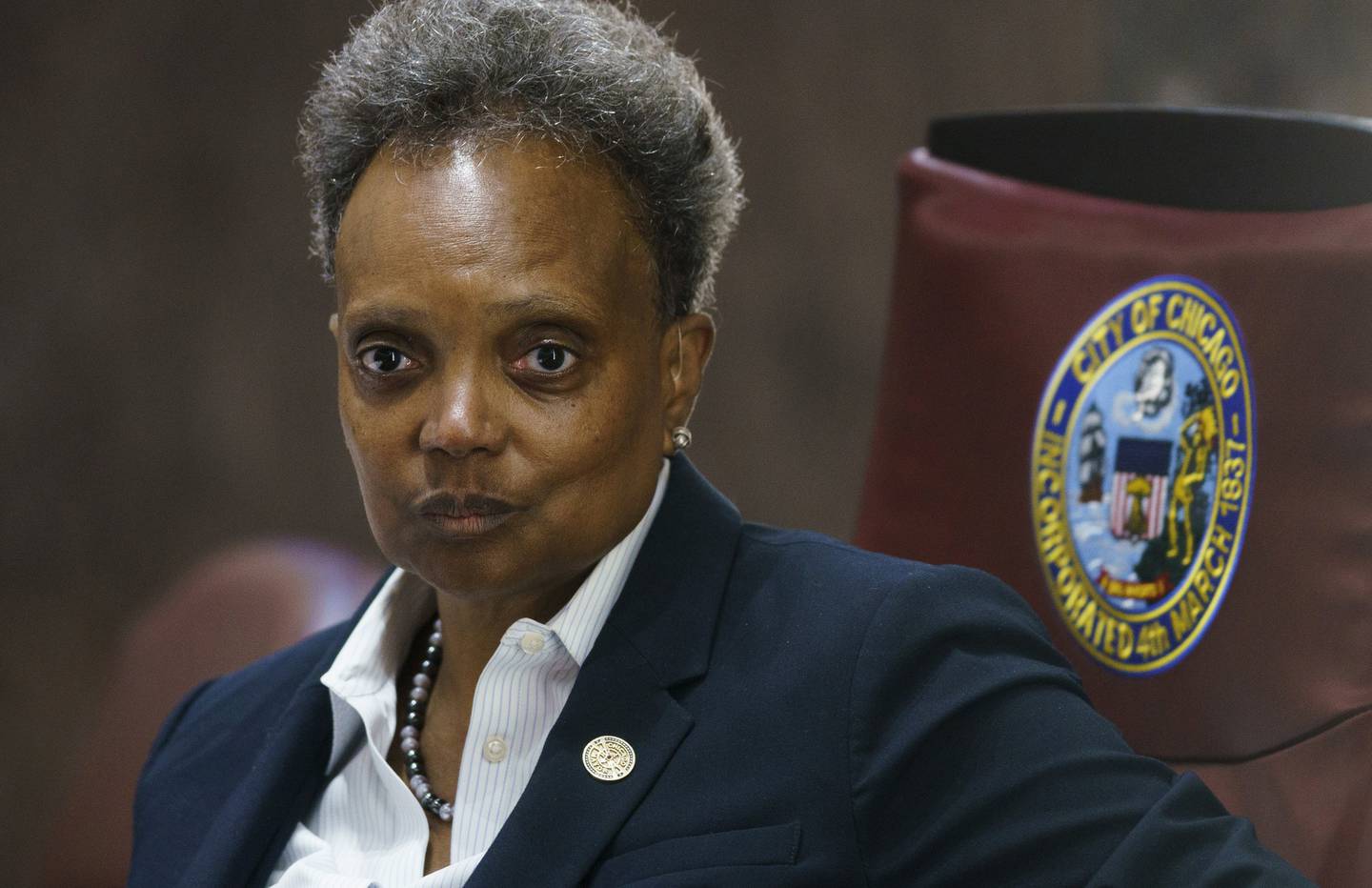
Chicago Mayor Lori Lightfoot on Wednesday laid out a $127.9 million budget shortfall, marking by far the smallest deficit of her time in office as she campaigns for a second term.
Advertisement
The city is also looking at a $42.7 million property tax increase as part of her policy tying Chicago’s annual property tax hike to the increase in consumer prices. That’s smaller than the $85.5 million increase her formula could’ve yielded, but it’s unclear whether the cut will be enough to satisfy critics.
Lightfoot cast the budget shortfall as the result of her efforts to put the city’s long-troubled finances on a stronger footing.
“As a result of our hard work over the past three-and-a-half years and despite a global pandemic, the resulting economic meltdown, and related loss of revenue, we persevered, stayed true to our values, and have cleared the City’s budget of decades of deferred liabilities,” Lightfoot said. “In other words, we are now living within our means and have started on the true road to financial stability and recovery.”
Politicians typically seek to avoid major tax hikes or significant budget cuts during election years and Lightfoot’s 2023 spending plan will likely aim to avoid upsetting residents ahead of the city’s February election. But the property tax increase could still cause problems for her, though Lightfoot argued that it’s a modest increase and necessary to help fund city pensions.
“When all is said and done, a homeowner with a $250,000 home will pay $34 in one year,” Lightfoot said. “That’s about the price of Al’s Italian Beef sandwiches — hot, dipped and with extra cheese — for a family of four.”
Sign up for The Spin to get the top stories in politics delivered to your inbox weekday afternoons.
Initial projections by city officials estimated the 2023 gap would be $867 million. In May, however, Lightfoot budget director Susie Park said finance officials had cut that number down by more than $500 million. The city used various funds, including federal COVID-19 relief dollars, “structural solutions” and increased revenues to narrow the gap to about $306 million, Park said.
The sunny year-end numbers for 2021 were finalized in the city’s annual comprehensive financial report released in late July. The city ended 2021 with a total fund balance of $679.1 million, more than double what it was the year before. Expenses were $107.2 million lower than expected, thanks to COVID grants that could be transferred and “overall operational efficiencies,” the report said.
Advertisement
Transaction taxes, which are collected on real estate sales, were particularly strong, coming in more than $200 million above budgeted amounts, though budget officials have previously warned that’s unlikely to continue. With employment strong, state income tax receipts were also up $228 million over the budgeted amount. Transportation revenues — which include charges levied at parking garages and on cab and ride hailing apps — were down, as were some non-tax revenues like fines.
The shortfall announcement sets the table for budget negotiations to begin, where Lightfoot will bargain with members of the City Council over spending priorities, potential cuts and taxes. Some aldermen are already moving to do away with the mayor’s scheduled property tax hike.
At this time last year, Lightfoot announced the city’s shortfall would be $733 million, dubbing her 2022 spending plan as the city’s COVID-19 “recovery budget.” That shortfall represented 5.7% of the previous year’s total budget. Throughout last year’s forecast speech, Lightfoot highlighted a more promising business environment and the beginning of a bounce-back in key city revenues.
Lightfoot closed that gap — and part of the previous year’s gap — with a portion of the $1.9 billion in COVID-19 federal relief money Chicago received, a one-time source of revenue.
The budget has provoked some of Lightfoot’s most contentious fights with aldermen. Lightfoot’s first spending plan passed the City Council 39-11, with much of the opposition coming from progressive aldermen who argued it doesn’t go far enough toward addressing the mayor’s campaign promises on issues including the reopening of mental health clinics.
Lightfoot responded by launching a website that shamed Chicago aldermen who voted against her first budget, which she said was a civic tool for the public despite criticism that it was petty and bullying.
Advertisement
In 2020, Lightfoot struggled to generate support for her budget, which was opposed by some aldermen because it made modest cuts to the police budget and by others who objected to a $94 million property tax hike. The mayor threatened not to help aldermen with projects in their wards if they voted against the budget, telling them, “Don’t come to me for s—” if they don’t support her budget.
The mayor had a far easier time getting last year’s budget through council in large part because it was buoyed by an influx of $1.9 billion in federal COVID-19 relief funds. That allowed her to spend significantly on anti-violence programs, affordable housing and mental health initiatives and other community projects lots of aldermen like.
The city’s gross property tax levy has grown an average of $78 million per year since Lightfoot’s first budget, from $1.53 billion in her 2020 budget to $1.71 billion this year. The city has historically opted to let the levy rise to capture new properties that are built and as tax increment financing, or TIF, districts expire. Over the length of former Mayor Rahm Emanuel’s time in office, the levy rose by an average of $80 million. That includes the massive multi-year property tax hike he pushed through in 2015.
In her speech on Wednesday, Lightfoot laid out steps she’s taken to strengthen the city’s finances, including her push for a Chicago casino that she said will generate $2 billion for the city and $2 billion for the state over time, though the facility’s construction is years away.
Lightfoot also highlighted a deal she struck with Joliet to sell the suburb Lake Michigan water.
“Our continued willingness to work together has allowed us to accomplish so much over the past few years despite all the challenges,” Lightfoot said. “It’s that same commitment to collaboration that will allow us to move ahead into an even more fiscally bright future.”
Advertisement


