


By Amy Kang
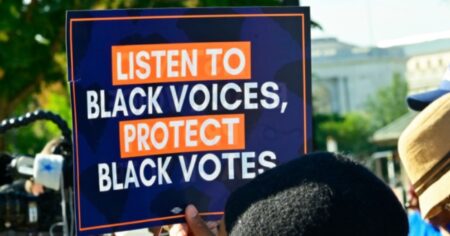
Insurance redlining happens when the address on your policy shapes your rate more than your record behind the wheel. Companies build prices from personal details like your neighborhood and credit, not just your driving history. The result: two drivers with identical records can pay far different premiums, and the steeper bill usually falls on Black neighborhoods.
State regulators are starting to back up what drivers have suspected for years. A 2024 study by the D.C. Department of Insurance, Securities and Banking found that Black drivers pay 46% more than white drivers on average – $1,031 a year compared to $705. Even after researchers accounted for age, claims history, and driving records, this gap persisted.
Gaps this large are no coincidence. They come from pricing formulas that lean on credit scores, homeownership, and neighborhood lines shaped by decades of housing discrimination. The old red ink is gone from the maps, yet its outline still lives in the algorithms that set your premium.
What Is Redlining in Insurance?
In the 1930s, federal housing maps drew red lines around Black neighborhoods and branded them “hazardous.” This is what insurance redlining is. For decades, insurers and banks used these maps to deny coverage and loans. This practice was outlawed by the Fair Housing Act of 1968.
Modern insurance redlining wears a different disguise. An agent will be happy to sell you coverage regardless of race. By the time the quote reaches you, the higher price looks like just another number.
These models measure where you live and what you own, not how well you drive. Advocates say the pricing pattern lands almost exactly where the old red lines sat. Even with a flawless record, a driver in a majority-Black area often pays hundreds more than a twin driver a few miles away.
Why Do Auto Insurance Premiums Vary by ZIP Code?
Insurance companies frame ZIP-based pricing as basic risk math. More crashes, more theft, and pricier repairs in an area should mean higher rates, they say. The explanation sounds fair until you look at how narrowly the map gets sliced.
ZIP codes are only one piece of the formula. Insurers also rely on non-driving rating factors, including:
- Credit history
- Education level
- Occupation
- Marital status
- Homeownership
Each of these inputs sits entirely outside driving skill, and each can still shift auto insurance premiums by hundreds of dollars a year.
The same pattern shows up outside auto coverage. The Consumer Federation of America documented a racial premium gap in home insurance as well, with predominantly Black neighborhoods paying roughly 16% more, about $500 extra each year, for the same coverage.
What Are Regulators Doing About Insurance Redlining?
State watchdogs are finally looking inside the pricing machinery. Colorado has moved first, with a rule that requires insurers to hunt down bias in their own models and correct it.
Under the state’s expanded regulation, which took effect in October 2025, auto insurers that use outside consumer data must prove their tools avoid unfair discrimination in insurance practices. The requirements are direct:
- Test pricing models for racial bias
- Report the results to state officials
- Fix any model that fails
This makes Colorado the first state to require measurable evidence of fair pricing from auto insurers rather than taking their word for it.
What Can Drivers Do About High Rates and Claim Denials?
The formula is out of your hands, but the first quote is not. Shopping around remains a driver’s best weapon, since every company weighs the same inputs differently.
Start with these steps:
- Compare quotes from at least three insurers
- Ask which discounts apply to you
- Recheck your rate at every renewal
- Save copies of quotes and letters
The same coverage can cost hundreds of dollars less at the next company, and finding out takes minutes.
Unfair pricing is only one side of the problem. After a crash, drivers can also run into:
- Dragged-out investigations
- Lowball offers
- Flat claim denials
Insurers bet that most people will take the outcome quietly.
Bringing in legal help rewrites that equation. Experienced personal injury attorneys can:
- Review a denied claim
- Deal with the insurance company directly
- Fight for the full compensation a policy promises
Frequently Asked Questions
Is Insurance Redlining Illegal?
Charging higher rates based on race is illegal in every state. Pricing based on ZIP code, credit, and other non-driving rating factors remains legal in most places, even when the results fall along racial lines. That gap between what the law bans and what the data shows is exactly what regulators are now examining.
Does My Credit Score Affect My Car Insurance Rate?
Most states let insurers use credit-based insurance scores, and a weak score can raise your premium more than a speeding ticket does. California, Hawaii, and Massachusetts ban the practice for auto policies entirely. Improving your credit can lower your rate everywhere else, often within one or two renewal cycles.
Can I Find Out Why My Rate Went Up?
Federal law requires an adverse action notice whenever your credit information raises your rate or limits your coverage. You can also ask your agent in writing for the specific reasons behind any increase. The answer may reveal a factor you can change before the next renewal.
How Do I File a Complaint About Unfair Insurance Pricing?
Every state insurance department accepts consumer complaints online at no cost. Include your policy number, the quotes you received, and any letters from the insurer. Regulators track complaint patterns, so each filing helps build the case for stricter rules.
Can Usage-Based Insurance Lower My Premium?
Usage-based programs track real habits through an app or plug-in device, then price the policy on braking, speed, and mileage. Safe drivers in high-priced ZIP codes often save 10% to 30% this way. Read the terms first, since some programs can raise rates for risky driving.
Fair Prices Should Follow the Driver, Not the Map
Insurance redlining works best when nobody notices it. It lives inside an algorithm, a credit check, or a boundary drawn decades ago, and it leaves careful drivers in Black neighborhoods paying more for identical protection.
State testing rules and skeptical consumers are moving the needle. Until your record matters more than your address, the best defense is to shop, document, and object. Subscribe to our newsletter for the latest updates delivered straight to your inbox.
The post Insurance redlining means two identical drivers pay different prices appeared first on BlackPressUSA.