
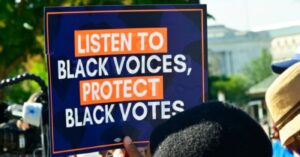





Temporary Protected Status (TPS) for Haitian nationals officially ended July 27, stripping legal status and work authorization from an estimated 350,000 Haitians nationwide.
The termination follows a June 25th U.S. Supreme Court ruling in Mullin v. Doe, which found federal law largely bars courts from second-guessing the Department of Homeland Security’s decision to end TPS for Haiti and Syria. A federal judge in Washington lifted the injunction blocking the termination on Aug. 4. Haiti’s TPS designation dates to the 2010 earthquake and was extended as gang violence worsened after the 2021 assassination of President Jovenel Moïse.
“It’s going to be a mess because they’re not organized,” said Sony Louis, a Houston resident of more than 30 years, describing his fears about what happens if large numbers of Haitians are forced to return to a country still gripped by gang violence. “Imagine a swarm of people coming, and the safety aspect of it, the resources … they would have to go to the countryside to try to figure out how to live, especially because Port-au-Prince is not safe at all.”
Louis said Haitians’ contributions, filling jobs in nursing homes, paying taxes, working in industries, few others will have gone overlooked. “They know Haitian people work hard,” he said. “They know Haitian people make big contributions … some billion dollars in the pocket of the United States.”
Community leaders sounded the same alarm Aug. 17 at a Houston City Hall press conference organized by Houston Haitians United, joined by U.S. Rep. Al Green and NAACP Houston Branch President Bishop James Dixon II.
“Haitians do not deserve what is happening to them in this country,” Green told the crowd, arguing that sending people back to a country under a federal Do Not Travel advisory puts lives at risk. “This is a racist policy … and this racist policy is going to cause some people to lose their lives if they’re sent back to Haiti.”
Jean Michel Celestin, co-founder of Houston Haitians United (HHU), framed the termination as a test of the country’s values.
“What kind of nation do we become when we decide whose life is worth protecting and whose life is not?” he asked, pointing to the same State Department advisory. “These are not just deportation statistics. These are human lives.”
While the political fight continues in Washington, some Houston Haitians are focused on preparing families for what comes next.
Esther Moise, chair of the health committee at Houston Haitians United and founder of Frontliner Staffing and NJN Training and Consulting, immigrated from Haiti at age 12. She said her team built an AI-powered web app to help TPS holders think through their options, including what a return to Haiti could look like logistically and financially.
“This app basically helped them through the whole planning process using AI,” Moise said. “It is a safe place because you can have your own account and you don’t have to provide all detailed information.”
Moise said she’s most concerned about elderly TPS holders who may lack family support or the technology skills to navigate a return, and said HHU is exploring a volunteer “buddy system” to help them.
She also pointed to a free virtual summit Sept. 4 on generating income and starting businesses with AI, including options for operating outside the U.S., one avenue for Haitians confronting the loss of their legal status. Details are available through HHU.
“They treat my people like they committed a crime, and those who are in a position to vote them out should do that. Temporary Protected Status is, of course, temporary, but it gives a relief mechanism that provides lawful presence and work authorization to people of certain countries facing conflict or natural disasters. This treatment is not right.”
Sony Louis, Houston resident
Louis, who supports an orphanage in Haiti and hasn’t been able to travel there in five years because of gang violence, said his message to fellow Haitians is to stay civically engaged.
“They treat my people like they committed a crime, and those who are in a position to vote them out should do that,” Louis said. “Temporary Protected Status is, of course, temporary, but it gives a relief mechanism that provides lawful presence and work authorization to people of certain countries facing conflict or natural disasters. This treatment is not right.”
__________________________________________________________________________
RESOURCE
Esther Moise
Founder of Frontliner Staffing and NJN Training and Consulting
Phone: 346-279-9065
Email: Esther@njntrainandconsult.com
Based on reporting by Houston Defender.
The post Houston Haitians Push Back Against TPS Terminations appeared first on BlackPressUSA.