



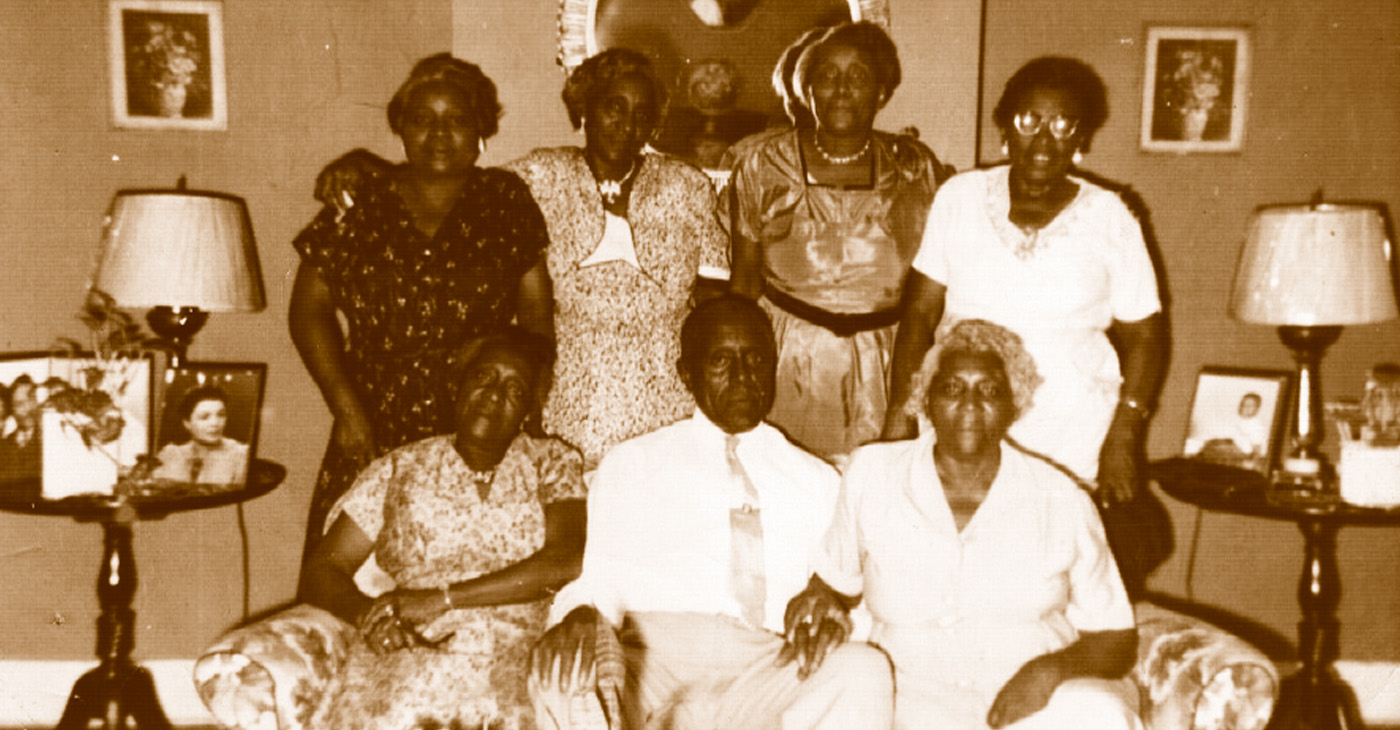
Part of Public Welfare Foundation’s Legacies Rooted in Resistance and Resilience Series
By Tonia Wellons
My name is Tonia Wellons, and I am the daughter of Rendell and Carol Wellons, the granddaughter of Ruth and James Lane, the great-granddaughter of St. Paul and Julia Wellons, the great-great-granddaughter of Hack and Maria Holloman, and the third great-granddaughter of Jason and Maria Holloman.
This lineage, which was spoken aloud at our 71st family reunion this month and has been spoken aloud at every family reunion for seventy years, carries the weight of our collective memory and the power of our shared triumph.
When I trace my roots back through eight generations to Temperance Brown, born around 1805 in Ivor, Virginia, I am not just recounting names and dates—I am honoring a legacy of resilience, faith, and unwavering commitment to family and community that defines who I am today.
In a society that often erases African American narratives, my family has insisted on remembering, on speaking our truth, on ensuring that future generations know they come from greatness. In a moment where the telling of Black history is facing a very real, very direct threat in this country, proudly sharing our stories is an act of both resistance and necessity. Our history must be preserved.
Temperance Brown was born into bondage, yet she became the foundation upon which our family’s American story was built. Her daughter, Maria Brown, later known as Martha, married Jason Holloman, and together they exemplified the courage and defiance that would become our family’s hallmark. When Jason, described in our oral history as “a proud and courageous man who refused to be beaten by his master,” was sold away to Alabama, never to be seen again, Maria faced the unimaginable—raising three sons alone while enslaved. The year was around 1830, just one year before Nat Turner’s rebellion would shake the very foundations of Virginia’s plantation system.
What happened next reveals the extraordinary character that runs through our bloodline. After the Civil War ended, Maria’s three sons—Hack Hanson, James Henry, and Julius—did something revolutionary: they purchased the very plantation where they had once lived as slaves. “Overhome ,” as it was known, became more than just land; it became a symbol of transformation, a place where the formerly enslaved became landowners, where the oppressed became community leaders.
The values that sustained our family through these trials were rooted in faith, community, and an unshakeable belief in justice. Hack and James Henry, according to our family historians, were “very outspoken and stood up for the rights of others.” They weren’t politicians, but they stayed informed about political activities, riding their “jumper”—a one-seat buggy—to Courtland whenever issues demanded their attention. As the first Black landowners in Southampton County and among the first Black voters in the county, they understood that their freedom was meaningless unless they actively participated in shaping their community’s future.
The tradition of family gatherings – first during Thanksgiving and beginning over 70 years ago on the 4th Saturday in July wasn’t just about family fellowship; it was about preserving our story, ensuring that each generation understood where we came from and what we had overcome. In those gatherings, family members shared “reminiscences of the old slavery days” and stories of hardship, but also of triumph. These weren’t just memories—they were lessons in resilience, blueprints for survival, and testimonials to the power of faith and family unity.
This legacy of activism and community leadership flows directly through my veins. The same courage that enabled Jason to resist his master, that drove Maria to raise three sons alone, that inspired Hack and James Henry to become community leaders, lives on in my own commitment to justice and service. When I engage in community work today, I carry forward their understanding that personal success is incomplete without collective progress. Their example teaches me that true freedom requires not just the absence of chains, but the presence of opportunity, dignity, and voice for all.
Faith was the cornerstone that held our family together through centuries of struggle. The strict moral teachings of our ancestors, their emphasis on respect and faith, created a foundation strong enough to withstand the storms of slavery, Jim Crow, and beyond. This spiritual grounding didn’t make them passive; instead, it empowered them to act with purpose and conviction. Today, my faith continues to guide my work, providing both the moral compass and the inner strength needed to confront injustice wherever I find it.
The preservation of our family history through oral tradition speaks to another core value: the understanding that our stories matter. For seventy-one years, we have gathered in Ivor, Virginia – the place where I was born and raised – to honor our past and strengthen our bonds. This commitment to storytelling and memory-keeping influences how I approach my own work—with the understanding that representation matters, that voices need to be heard, and that history must be preserved.
What makes our family story particularly powerful is not just that we survived slavery, but how we transformed that experience into strength, leadership, and service. From Temperance Brown’s quiet endurance to Hack and James Henry’s bold land ownership, from their roles as community leaders to their commitment to voting rights, our family has consistently chosen engagement over withdrawal, hope over despair, action over resignation.
Today, as I continue their legacy, I understand that my American story is both deeply personal and universally significant. It represents the broader American experience of trauma and triumph, of roots that run deep in American soil watered by both tears and determination. The values of activism, community work, faith, and family that sustained my ancestors through slavery and its aftermath continue to guide my steps today.
Standing on the shoulders of eight generations, I carry forward not just their DNA, but their dreams, their courage, and their unwavering belief that this country, for all its flaws, is our home. We helped build it, we fought for it, and we continue to perfect it. That is my American story—one of transformation, resilience, and the unbreakable bonds of family that have sustained us for over two centuries.
Tonia Wellons is the President & CEO of the Greater Washington Community Foundation, the largest public foundation in the region with over $500 million in assets and $70 million in annual grants.
This is the second essay in the Public Welfare Foundation’s Legacies Rooted in Resistance and Resilience Series.