



When we forget the first fights over voting rights, we forget who profits when the many are divided.
Voting rights is back in the news because some people are still trying to decide whose votes deserve trust. In Georgia, the Justice Department and FBI under President Donald Trump have reopened questions around Fulton County’s 2020 election records after agents seized hundreds of boxes of ballots. The Associated Press reports the FBI has assigned 260 analysts and operations staff to review them.
Fulton County includes most of Atlanta and sits at the heart of Georgia’s transformation. It has a large Black electorate, growing Latino and Asian American communities, and many newer residents drawn by the Atlanta region’s jobs and universities. It voted against President Trump. Yet Georgia’s 2020 result was not some partisan rumor. Local officials counted the ballots. The state counted them three times, including once by hand. Republican officials certified the result. Each count confirmed the same outcome. That matters because vote suppression has often followed the same pattern: discredit the voters, divide the people, deprive enough citizens of the ballot, and move power upward.
The country has largely forgotten one of its earliest broad voting rights victories: the campaign to end property qualifications for white men. In many states, a man could be white, free, taxed, armed and called to defend the Revolution — and still be denied the vote because he did not own enough property.
Those men did not suffer as long as Black men, women, Native people or others shut out of democracy. Their exclusion still reveals the old fault line. Power rightfully belongs to the people. Yet wealthy interests have often tried to keep too much of it for themselves.
Some people profit from our forgetting. If we forget that landless white men once had to fight for the vote, we can miss the pattern when it returns in new clothes.
Benjamin Franklin saw the absurdity. He told the story of a man whose vote depended on owning a jackass worth enough money to qualify him. When the animal died, the man lost the vote. Franklin asked the obvious question: “In whom is the right of suffrage? In the man or in the jackass?”
Thomas Paine gave the moral answer. “Man did not enter into society to become worse than he was before, nor to have fewer rights than he had before, but to have those rights better secured.”
There is irony in President Trump’s love of President Andrew Jackson. Jackson and his allies built the Democratic Party with a founding promise: government should answer to the landless many, not merely the propertied few.
Jackson’s democracy was badly bounded. It excluded Black people, women and Native people. His politics also embraced slaveholding white supremacy. Still, he saw one danger clearly. In his veto of the national bank, he warned that “the rich and powerful too often bend the acts of government to their selfish purposes.”
That warning fits this moment. Vote suppression has often worked by discrediting voters, dividing working people against one another, and depriving the many of their full voice so some rich and powerful people can bend government toward themselves.
That was much of the logic of monarchy: divide and conquer. It was much of the logic of Jim Crow: tell poor white people their enemy is Black freedom. It was true in the 1820s. It was true in the 1920s, when immigrants from predominantly Catholic countries like Ireland and Italy were cast as threats to real America. It is true today, when immigrants from predominantly Catholic countries like Haiti and Mexico are made into scapegoats again. Tell rural voters their enemy is city voters. Tell Election Day voters their enemy is mail voters.
The tools change. The purpose often does not. Property requirements became poll taxes. Poll taxes became literacy tests. Literacy tests gave way to purges, ID rules, closed polling places and attacks on early voting, same-day registration and mail ballots.
The burden comes as paperwork, deadlines, long lines, missing names and ballots questioned after the people have spoken. A poll tax charged money. A long line charges time. Cutting early voting can tax people who do not control their schedules. Restricting mail ballots can tax seniors, disabled voters, rural voters and caregivers.
The Rev. Jesse Jackson spent his life widening the meaning of the many. He urged young people to hold “a diploma in one hand” and “a voter registration card in that other hand.” Education and the ballot. Knowledge and power.
I come to this history as a son of the Revolution, the abolitionist movement, and the Southern populist tradition that rose in the decades after the Civil War and united working men across color lines. My great-great-grandfather, Edward David Bland, was born enslaved and died a Virginia legislator.
He helped build the Readjuster Party, a post-Civil War, multiracial voting rights movement that brought together Black men who had been enslaved and white men who had fought for the Confederacy. Their cause was schools, fairer taxes, debt relief, voting rights and democracy. When they gained power, they abolished Virginia’s poll tax.
After they were broken, Virginia’s ruling Democrats wrote a new constitution in 1902 that brought the poll tax back with literacy tests and other barriers. Black voters were almost wiped out as a political force. White voting was cut roughly in half. The old ruling class knew whose coalition it was trying to prevent from rising again.
Imagine if every schoolchild learned that the poll tax was not only an attack on Black voting power but also on poor white voting power. We might see the trick more clearly when it returns in new clothes.
The Democratic donkey did not come from Franklin’s parable. It came from Jackson’s enemies calling him a jackass, an insult he embraced and cartoonists later made stick. Still, the echo is hard to miss.
If Democrats keep the jackass, they should remember Franklin’s question. The right was never in the jackass. It was never in the deed, the poll tax, the ID card, the Tuesday work schedule, the mailbox or the database.
The right is in the people. Every generation that won more democracy ultimately did so by resisting efforts by the few to divide the many. That is our work now: remember the history, reject the division, and defend the vote for every one of us.
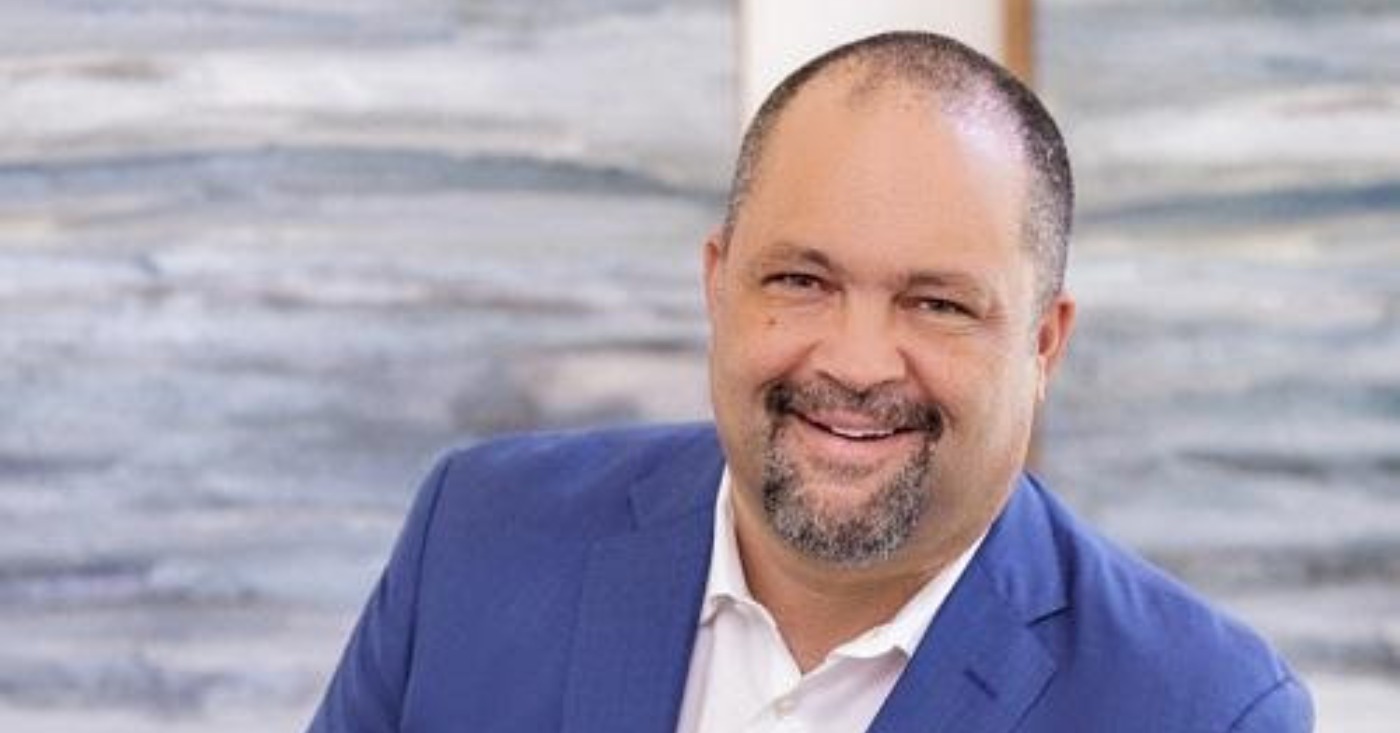
Ben Jealous is a professor of practice at the University of Pennsylvania and former national president and CEO of the NAACP.
The post COMMENTARY: A Nation That Forgets Its History is Bound appeared first on BlackPressUSA.