



TONEE TURNER WAS REPORTED MISSING IN 2019. SHE HAS YET TO BE LOCATED.
When Black women go missing, why doesn’t the media care as much?
by Zach Petroff, For New Pittsburgh Courier
It has been more than 1,140 days since Tonee Turner was last seen.
On a Monday, around 6 p.m., Turner left the Dobra Tea shop in Squirrel Hill to catch a bus back to where she lived in Hazelwood. The bus driver reported seeing Turner get off the bus, as she usually did, on Gidding Street.
She has not been seen since.
There have been few developments on the whereabouts of the then 22-year-old Black woman.
Turner’s disappearance garnered little national media attention, despite having similar circumstances to other, more mainstream stories involving missing women. The reason for the lack of national attention? Some say it could very well be the fact that Turner is not White.
“Missing White Woman Syndrome,” a phrase coined by the late Gwen Ifill, the first Black woman to host a nationally televised U.S. public affairs program on PBS, described the tendency of media to focus coverage of missing-person cases that involve young, traditionally attractive, upper- and middle-class White women rather than women of color. On Feb. 3, Duquesne University hosted a panel discussion on Missing White Woman Syndrome with investigative, media and ethical considerations.
Understanding and assessing this sociological blind spot could help evaluate, and perhaps help to curb, the alarming violence occurring against Black women in the Pittsburgh area.
It can also combat the biases in society that put an emphasis on the value of White women over Black women. “I think anytime when you see women, especially women of color, being killed or victims of homicide it is alarming,” said Kathi Elliott, executive director of Gwen’s Girls. “Historically this group has often been overlooked when tragedy or death or homicides have happened.”
GWEN’S GIRLS EXECUTIVE DIRECTOR KATHI ELLIOTT
According to a 2019 report by the City of Pittsburgh’s Gender Equity Commission, Black women are “more likely to die of homicide than Black women in 93 percent of similar cities” and the city’s “young adults and older adults of all racial groups are more likely to die from homicide than the national average.”
And in 2020, more than a third of the 268,884 women and girls who were reported missing in the U.S. were Black, according to the National Center for Crime Statistics. Black girls and women account for just 15 percent of the U.S. population.
“This is very alarming but unfortunately I’m not surprised,” Elliott told the Courier of the data. “Historically, Black girls and women’s lives aren’t valued or protected. Black girls are often seen as complicit in or the cause of the oppressive, abusive, exploitive and traumatic incidences that they experience. What’s more surprising is that addressing this isn’t a priority and that most people don’t know this horrible fact.”
Elliot, who joined the board of Gwen’s Girls in 2007 and became the CEO in 2015, is all too familiar with the discrepancies when it comes to the news coverage of Black women being victims to homicides and abductions.
“What we’ll tend to see is there might be something mentioned on the news sometimes,” Elliott said. “Then there is not follow-up or any type of effort to use the media or alarm the community to what has happened to that woman and family.”
In her years of experience, Elliott said she has seen a common narrative in the press and popular culture that assumes the missing Black woman played a role in her disappearance, more so than in instances of missing White women.
“Somebody must be holding them against their will or making them do something,” Elliot said. “The same assumption is not afforded to Black girls.”
In 2017, the Georgetown Law Center on Poverty and Inequality released the study, “Girlhood Interrupted: The Erasure of Black Girls’ Childhood,” which revealed that adults view Black girls as less innocent and more adult like than their White peers.
“This whole concept of adultification, looking at Black girls being more adult-like and not needing as much caring and support as White girls, is something we’ve seen historically,” Elliott told the New Pittsburgh Courier. “We’ve seen it in our communities and within our families, but people are not aware of some of the underlying issues that go with what’s happening.”
While race and gender play a major factor on which story receives the most attention, it is not the only factor.
Paula Reed Ward, a reporter for the Pittsburgh Tribune-Review and one of the panelists of the Feb. 3 discussion, noted the nuances that exist when dealing with missing person cases.
“Race is absolutely a consideration in these cases,” Ward said. “But there are other factors that come into play, too.” Those factors, such as socioeconomic status and how media-savvy a family is, can contribute to how much emphasis is placed on a missing person’s case.

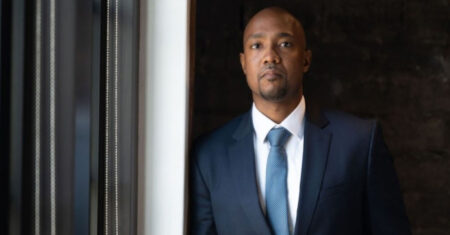
PITTSBURGH ASSISTANT POLICE CHIEF LAVONNIE BICKERSTAFF
“I don’t want to ever see any child abducted, Black or White,” said Pittsburgh Assistant Police Chief Lavonnie Bickerstaff, who also spoke on the panel. “But I do believe if it’s (an) affluent couple, and they know how to maneuver the media…”
Bickerstaff added that such couples would have the resources to help them travel to media outlets and reach national audiences in ways that less-affluent parents could.
“I think that we will see, maybe not as much, but I think some good coverage on getting that young lady or young man returned,” Bickerstaff said.
Bickerstaff also believes family and community can play a significant role in helping recover missing persons.
“Community is critical at all of our police endeavors,” Bickerstaff said. “They can go and do and say and get the information that police will never get.”
About Post Author