


Browsing: Sports

MOSCOW — More than four months after she was arrested at a Moscow airport for cannabis possession, a Russian court has set the start date of the U.S. basketball star Brittney Griner for July 1.The Phoenix Mercury star was also ordered to remain in custody for the duration of her criminal trial. She could face 10 years in prison if convicted on charges of large-scale transportation of drugs. Fewer than 1% of defendants in Russian criminal cases are acquitted, and unlike in the U.S., acquittals can be overturned.AdvertisementOn Monday, the court in the Moscow suburb of Khimki extended Griner’s detention for another six months after she appeared for a preliminary hearing held behind closed doors. Photos obtained by the AP showed her appearing in handcuffs. Griner had previously been ordered to remain in pretrial detention until July 2.[ [Don’t miss] As Brittney Griner’s detention nears 130 days, WNBA fans and activists want action: ‘When it comes to Black women … there isn’t a lot of support’ ]Griner’s detention and trial come at an extraordinarily low point in Moscow-Washington relations. She was arrested at Moscow’s Sheremetyevo Airport less than a week before Russia sent troops into Ukraine, which aggravated already-high tensions with sweeping sanctions by the United States and Russia’s denunciation of U.S. weapon supplies to Ukraine.AdvertisementAmid the tensions, Griner’s supporters had taken a low profile in hopes of a quiet resolution, until May, when the State Department reclassified her as wrongfully detained and shifted oversight of her case to its special presidential envoy for hostage affairs — effectively the U.S. government’s chief negotiator.That move has drawn additional attention to Griner’s case, with supporters encouraging a prisoner swap like the one in April that brought home Marine veteran Trevor Reed in exchange for a Russian pilot convicted of drug trafficking conspiracy.Russian news media have repeatedly raised speculation that she could be swapped for Russian arms trader Viktor Bout, nicknamed “The Merchant of Death,” who is serving a 25-year sentence on conviction of conspiracy to kill U.S. citizens and providing aid to a terrorist organization.Russia has agitated for Bout’s release for years. But the discrepancy between Griner’s case — she allegedly was found in possession of vape cartridges containing cannabis oil — and Bout’s global dealings in deadly weapons could make such a swap unpalatable to the U.S.Others have suggested that she could be traded in tandem with Paul Whelan, a former Marine and security director serving a 16-year sentence on an espionage conviction that the United States has repeatedly described as a set-up.U.S. Secretary of State Antony Blinken, asked Sunday on CNN whether a joint swap of Griner and Whelan for Bout was being considered, sidestepped the question.“As a general proposition … I have got no higher priority than making sure that Americans who are being illegally detained in one way or another around the world come home,” he said. But “I can’t comment in any detail on what we’re doing, except to say this is an absolute priority.”Any swap would apparently require Griner to first be convicted and sentenced, then apply for a presidential pardon, Maria Yarmush, a lawyer specializing in international civil affairs, told Kremlin-funded TV channel RT.

The Chicago White Sox saw Shohei Ohtani at the plate earlier this season at Guaranteed Rate Field.They are lined up to see the two-way star on the mound during their upcoming West Coast trip.AdvertisementThe Sox begin a three-game series Monday against the Los Angeles Angels in Anaheim, Calif., and the 2021 American League MVP Ohtani — who has 16 home runs this season — is slated to pitch Wednesday.The Sox are off Thursday and then have three games at Oracle Park against the San Francisco Giants, who just called up former Sox Yermín Mercedes from Triple-A Sacramento.AdvertisementHere’s what to watch for as the Sox try to build off Sunday’s 4-3 win against the Baltimore Orioles.Angels slugger Shohei Ohtani watches his solo home run during the third inning against the Mariners on Saturday in Anaheim, Calif. (Mark J. Terrill/AP)The teams split a four-game series April 29-May 2 at Guaranteed Rate Field.The Sox won the series finale 3-0, which was the beginning of a season-high six-game winning streak.A lot has changed since then for the Angels, who fired manager Joe Maddon on June 7 after losing 12 straight games. The skid ended at 14.The Angels are 8-11 since Phil Nevin became the interim manager.Through the shakeup, Ohtani and Mike Trout have continued to produce.The Sox limited Ohtani to two hits in 13 at-bats in the first series. He had one home run, two RBIs and scored three runs.While Ohtani didn’t pitch in that series, the Sox faced him once last season. He allowed three runs, one earned, on two hits while striking out seven and walking five in 4⅔ innings on April 4, 2021, at Angel Stadium.AdvertisementOhtani has a .261/.339/.493 slash line this season with the 16 home runs and 47 RBIs. On the mound, he is 6-4 with a 2.90 ERA and 90 strikeouts in 12 starts.“Who else can do that?” Sox manager Tony La Russa asked April 29 before the first series this season. “A lot of people have power, but it’s not just the fact that he’s got a good arm. He’s got an assortment of pitches that are quality. He’s unique.”Ohtani homered twice and drove in eight June 21 and then struck out a career-high 13 the next night against the Kansas City Royals.Trout, a three-time AL MVP, is on a tear. He’s slashing .340/.444/.943 with nine homers and 17 RBIs in his last 15 games.Angels center fielder Mike Trout gestures after hitting a solo home run during the fourth inning against the Mariners on Friday in Anaheim, Calif. Trout is tied for second in the American League with 22 home runs and leads the lead with a .658 slugging percentage. (Mark J. Terrill/AP)Trout is tied for second in the Amerian League with 22 home runs and leads the league with a .658 slugging percentage.One thing to keep an eye on with the Angels: potential suspensions after they were involved in a wild benches-clearing brawl with the Seattle Mariners on Sunday. Eight were ejected, including Nevin and Angels pitchers Raisel Iglesias, Andrew Wantz and Ryan Tepera.AdvertisementLa Russa indicated the Sox could get starting third baseman Yoán Moncada back from the injured list Tuesday. Moncada has been out with a strained right hamstring.“Be nice to get Yoán in there, get some muscle in the middle of that lineup,” La Russa said Sunday.Giants starting pitcher Carlos Rodon delivers against the Braves in the fourth inning Wednesday in Atlanta. (Harkim Wright Sr., AP)A pair of former Sox are having big seasons with the Giants.Starter Carlos Rodón, who signed a two-year deal with the Giants in March, is 6-4 with a 2.70 ERA and 101 strikeouts in 14 starts.The left-hander’s next start is Tuesday against the Detroit Tigers. The team is off Thursday before welcoming the Sox, likely hurting the odds of a reunion matchup.The Sox selected Rodón with the No. 3 pick in the 2014 draft. He went 42-38 with a 3.79 ERA in 121 appearances (116 starts) in parts of seven seasons with the team.Advertisement“Playing with the White Sox was a pleasure,” Rodón said after a March 24 Cactus League start against them.Outfielder Luis González was named the National League Rookie of the Month for May after slashing .368/.410/.500 with eight runs, 28 hits, seven doubles, a home run, 13 RBIs, five walks and three stolen bases in 23 games. Overall, he is slashing .302/.361/.447 in 49 games.He was placed on the 10-day injured list retroactive to Wednesday with a low back strain.The Sox drafted González in the third round in 2017. He went 2-for-9 with three walks and three runs in nine games over two seasons for the Sox. The Giants claimed him off waivers on Aug. 11, 2019.There’s a chance the Sox could see Mercedes, a former designated hitter with the team, during the weekend.Giants first baseman Yermin Mercedes gestures after fielding a ground ball against the Reds during the seventh Sunday in San Francisco. (Darren Yamashita/AP)He had a big impact early in 2021 with the Sox, becoming the first player since at least 1900 to begin a season with eight consecutive hits. He was named the AL Rookie of the Month for April but cooled off and was optioned to Triple-A Charlotte on July 2.AdvertisementMercedes was designated for assignment earlier this month, and Giants claimed him off waivers June 18.

Doctors learned early in the pandemic that COVID-19 was more than a respiratory disease. It was attacking bodily organs, including the heart — even in healthy, young athletes.Enough athletes with COVID were experiencing heart inflammation, called myocarditis, that doctors at the University of Maryland and other Big Ten schools didn’t want to take any chances.AdvertisementMyocarditis already was seen as one of the leading causes of sudden death in elite athletes, so doctors across the conference immediately imposed official protocols that kept some players off the fields for up to six months. Some grumbled, but everyone recovered.“They could be walking time bomb and we’d only find out retrospectively,” said Dr. Yvette Rooks, who oversees care for more than 530 athletes on 19 teams as head team physician at the University of Maryland, College Park. “Some had symptoms and many did not. This really could save lives.”AdvertisementUniversity of Maryland, College Park (ANDRa© F. CHUNG / STAFF)The doctors also started taking a deeper look into the chests of each student-athlete testing positive for COVID-19 starting in the early months of the pandemic, eventually reviewing some 1,600 cases.As they learned more about the risks, doctors scaled back intense testing and reduced the length of time out of play. But a registry created from the athletes’ health data is now poised to help the doctors understand more about the longer-term cardiovascular effects of COVID-19.Doctors and researchers at the University of Maryland and other Big Ten schools plan to follow the athletes even after graduation to better understand the consequences of COVID-19 on the heart, said Rooks, also a clinical assistant professor of family and community medicine at the university’s school of medicine and a co-investigator on the registry.The registry has specific findings from several tests, including MRIs, which are not typically performed on people testing positive for COVID-19. The detailed images found 37 cases of myocarditis, though only eight of those athletes had cardiovascular symptoms.Lacrosse player Jack Brennan was one of the asymptomatic cases. While home in Rochester, New York, in December 2020, he took a COVID-19 test so he could visit his grandparents and was surprised it came back positive. He was even more surprised when he returned to College Park in January 2021 and an MRI found swelling around his heart.He was frustrated to sit out the spring 2021 season, but with time and learning about the seriousness of the condition, he became more understanding.He was cleared by the fall of 2021 to return to play, and now 21, he’s eligible to compete as an intercollegiate athlete for two more years, instead of one. (The Big Ten gave athletes who missed a season under the more extensive timeouts an extra year of eligibility.)“I didn’t know what to think or what it was at first. All I heard was, ‘You’re not allowed to play,’ and I did give them a hard time, because I was impatient,” Brennan said. “But I’m not an expert. You have to listen to the doctors.”AdvertisementAnd he’s glad they’re using his records to keep looking at the long-term effects.“If they can figure out the process you go through, figure out how myocarditis affects athletes, that would be helpful,” Brennan said. “No one really knows the long-term effects yet.”Jack Brennan of Maryland charges past August Sally of Loyola Maryland on Feb. 12, 2022, before scoring at Maryland Stadium. Brennan was frustrated to sit out the spring 2021 season after having swelling around the heart, but with time and learning about the seriousness of the condition, he became more understanding. (Kim Hairston/The Baltimore Sun )Among the things researchers want to know is whether damage or scarring will ever cause issues and when and what is the cardiovascular tie to so-called long COVID, where symptoms persist well after an infection. Another lingering question is whether those who had asymptomatic cases, like Brennan, should be concerned.Early indications show that mild cases with no symptoms won’t be an issue, said Dr. Matthew Martinez, past chair of the American College of Cardiology’s Sports & Exercise Cardiology Section. He’s not involved in the Big Ten registry.Martinez studied data from a larger subsequent registry of athletes that found up to 15% developed myocarditis after COVID-19 infections, but there were no cases of sudden cardiac death.The study concluded that the intense across-the-board testing done by the Big Ten, specifically the use of MRIs, was needed only when athletes had cardiac symptoms or other heart tests were abnormal.AdvertisementFurther, Martinez said, returning recovered athletes to play faster was safe in most cases.Martinez said, however, the abundance of caution taken for all the athletes wasn’t a bad idea when no one knew what to expect from the new virus.“It’s really important to know,” said Martinez, also medical director of Atlantic Health System Sports Cardiology at Morristown Medical Center in New Jersey. “We’re all learning this on the fly. There is a measure of relief across the athlete community.”A doctor passes in front of University of Maryland Medical Center in 2020. (Ulysses Muñoz)Going forward, Martinez said, athletic programs ought to have a plan for athletes who develop heart issues on the field, including increasing access to defibrillators across all playing arenas.He said that cardiac testing, even an MRI, is needed when athletes have symptoms such as pressure in their chests, fast heart rates or breathlessness, or if they later develop those symptoms.He also said there should be study of protections from vaccines against myocarditis, which appears to be significant, as well as the risk from the vaccines themselves, which seems minimal. None of the Big Ten athletes developed the condition after the vaccinations.AdvertisementChicago Tribune SportsWeekdaysA daily sports newsletter delivered to your inbox for your morning commute.Martinez hopes there is a continued “focus on health and safety for athletes, including cardiovascular health.”Maryland’s Jack Brennan, right, shoots past Rutgers’ Brad Apgar on April 10, 2022, to score at Maryland Stadium. (Kenneth K. Lam/The Baltimore Sun)Big Ten researchers say studies are underway using the registry data, and that others are planned.Dr. Geoffrey Rosenthal is a professor of pediatrics in University of Maryland’s School of Medicine and chief of pediatric cardiology at University of Maryland Medical Center. He is serving as coordinator of six “core labs” that make up the registry. That’s where data from specific tests are housed so they are uniformly interpreted. The epidemiology and cardiac MRI labs are housed in Maryland’s medical school, while the overall registry is based at the Ohio State University.Rosenthal said answers to the doctors’ questions will come in time. But he already had immediate advice for the general population.“One of the biggest takeaways for the athletes and the general population is that the best way to protect one’s heart is to get vaccinated and get boosted when it’s time,” he said. “The second public health message for people who have or had COVID: If they have heart palpitations or chest pain, they should seek medical attention.”The researchers also were glad they have a bank of MRI data that identified all the myocarditis cases, even the asymptomatic ones. That offers a unique opportunity for researchers, said Dr. Jean Jeudy, professor of diagnostic radiology and nuclear medicine at the Maryland medical school. He leads the cardiac MRI core lab for the registry.Advertisement“It will be important for us to follow these student-athletes over time to determine whether mild myocarditis has any permanent impact on their heart health,” he said, “and how any findings may apply to the general population that tends to be older and sicker than these athletes.”

MINNEAPOLIS — Minnesota Twins pitching coach Wes Johnson
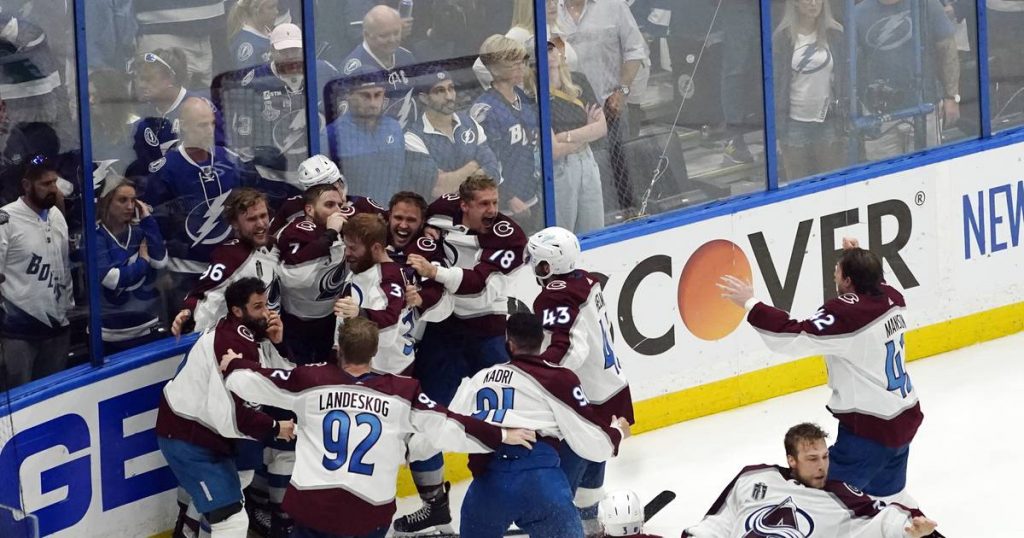
TAMPA, Fla. — The Colorado Avalanche are back atop hockey’s mountain after dethroning

There was mayhem outside the Magic Kingdom on Sunday when the Angels and Mariners had a benches-clearing throw down in Anaheim.The fun started in the second inning when Seattle’s Jesse Winker was plunked on the inning’s first pitch by Andrew Wantz. AdvertisementThe game was delayed 18 minutes and the brawl led to the ejections of Angels manager Phil Nevin, the Mariners’ manager, Scott Servais, as well as players Jesse Winker, JP Crawford, Julio Rodriguez, the Angels’ Raisel Iglesias, Andrew Wantz, and Ryan Tepera.The rest of the game occurred without incident and the Angels won, 2-1.AdvertisementWith News Wire Services

Courtney Vandersloot scored 18 points, including a buzzer-beating 3-pointer

ST. LOUIS — The Chicago Cubs rallied from a five-run deficit Sunday

Dylan Cease made it to the Chicago White Sox dugout

NBC Sports executive producer Sam Flood realizes that game telecasts