



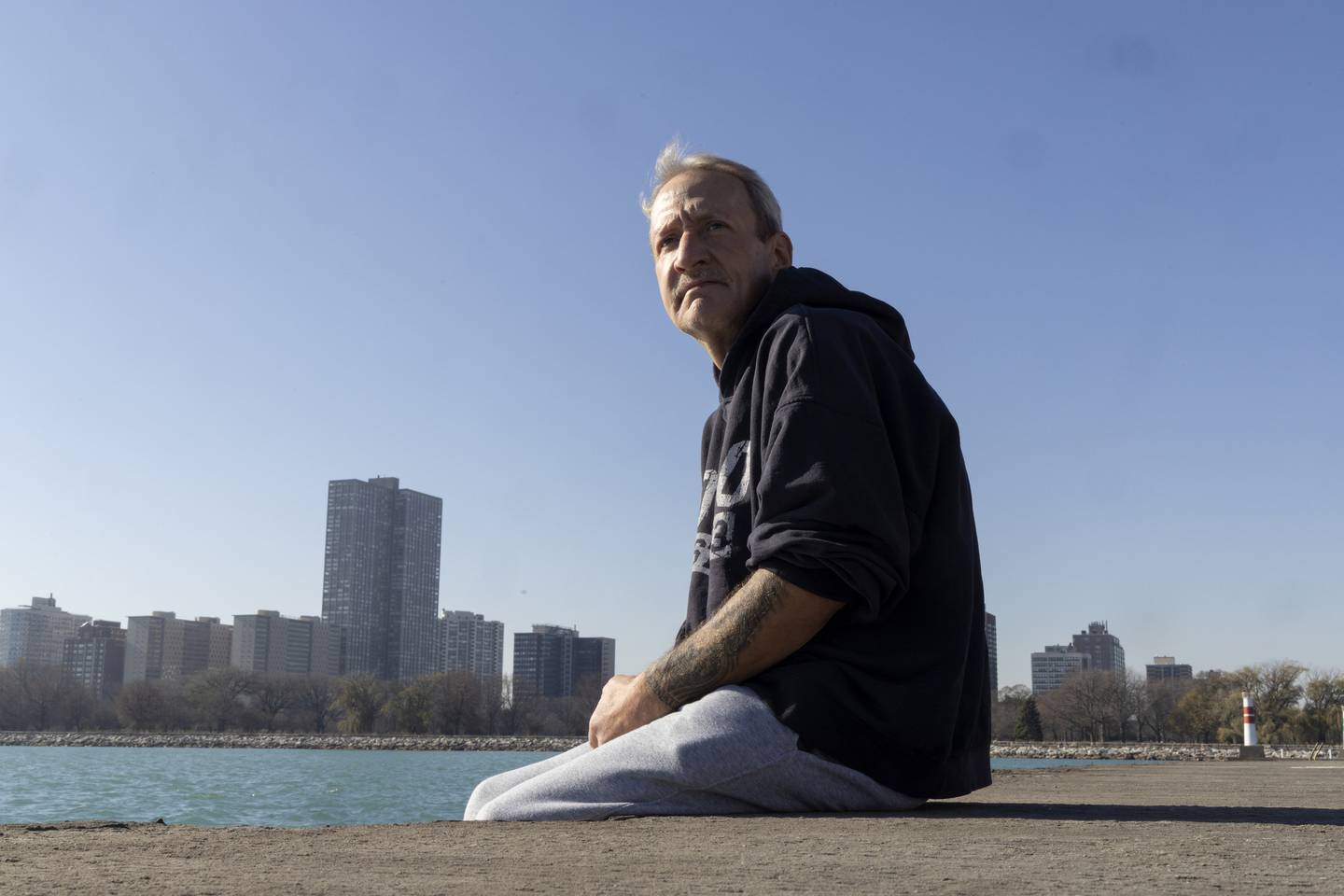
While Brien Cron was homeless in Woodstock a decade ago, he persuaded the mayor to change a policy that barred people at his shelter from getting a library card.
“Just to go through that in that one time, it was just horrible. … I was so embarrassed,” Cron, now 51, said. “Life is just up and down all the time, and I just want to make it a little easier for people to survive.”
Advertisement
But since moving back to Chicago and becoming an advocate for homeless people, Cron has had a tougher time getting city officials on board with his next pitch — until now.
Cron is the founder of Chicago Tiny House, a nonprofit started in 2017 that proposes building ecosystems of cheap and small residential units that would provide shelter to people experiencing housing instability. The idea was briefly considered under former Mayor Rahm Emanuel’s administration, but it did not get enough momentum.
Advertisement
Now, under Mayor Lori Lightfoot’s 2023 budget that passed last month, the city will direct $3 million in federal COVID-19 stimulus funds toward a tiny homes project that she said will be the “first of its kind.”
Though a small fraction of the nine-figure sum the city will spend on affordable housing investments, “we must push ourselves to be creative,” Lightfoot said when she unveiled her budget. “Tiny homes are an interesting innovation that we should embrace as a city.”
Cron said that was a long-sought victory for his organization, which has watched the concept take off elsewhere in the U.S., including several in Midwestern states. He blamed the earlier resistance on “red tape” and “politics” hindering city officials from moving forward.
“People are losing their jobs. They’re losing their mortgages,” Cron said. “That’s where tiny houses come in. They are affordable solutions to the housing market, and if they’re built quickly, they’re going to succeed and they’re going to provide for their community.”
Upon construction, the 500-square-foot tiny homes will compose a “micro-neighborhood” on two to five city-owned lots, with an average of two to four homes per lot, Department of Housing spokesperson Eugenia Orr said in a statement to the Tribune. The housing will be long term, with heating, plumbing and other required features under the Chicago building code. The structures will not be mobile, unlike the RV homes that make up existing communities in some pockets of the Chicago area. Specific locations for the city pilot program have not been determined.
Though the project is pitched to combat homelessness, the city intends to cater to specific subpopulations such as veterans, new mothers, LGBTQ youth and high school or college students, Orr said. She also listed “nontraditional” students, young professionals and members of a “limited-equity co-op,” a homeownership program where residents buy a share of the complex and resell it in the future.
Asked why the previous administration scrapped the tiny homes proposal, Orr noted the city’s “original” tiny home has been the historic coach house. But starting in 1957, tiny home dwellings weren’t legal in the city. That changed with last year’s amendments to the housing code.
“Tiny homes are not a new idea; rather, they are a re-imagining of a piece of Chicago’s history,” Orr said. “This new initiative takes tiny homes out of backyards to consider how a community of tiny homes can improve the lives of residents.”
Advertisement
Proponents who spoke with the Tribune said the pilot not only is practical — giving residents struggling to find affordable housing a roof over their head and privacy — but it also provides a much-needed sense of belonging. Orr said the hub could also contain a community center or other gathering space and will be close to grocery stores and transportation, allowing residents to be “thoughtfully integrated into the fabric of the community.”
In Indianapolis, about 180 miles from Chicago, 1 ½ acres sits empty next to a church in the warehouse district near the airport. But Ryan Hayes imagines a bustling miniature society of 18 tiny homes in there one day.
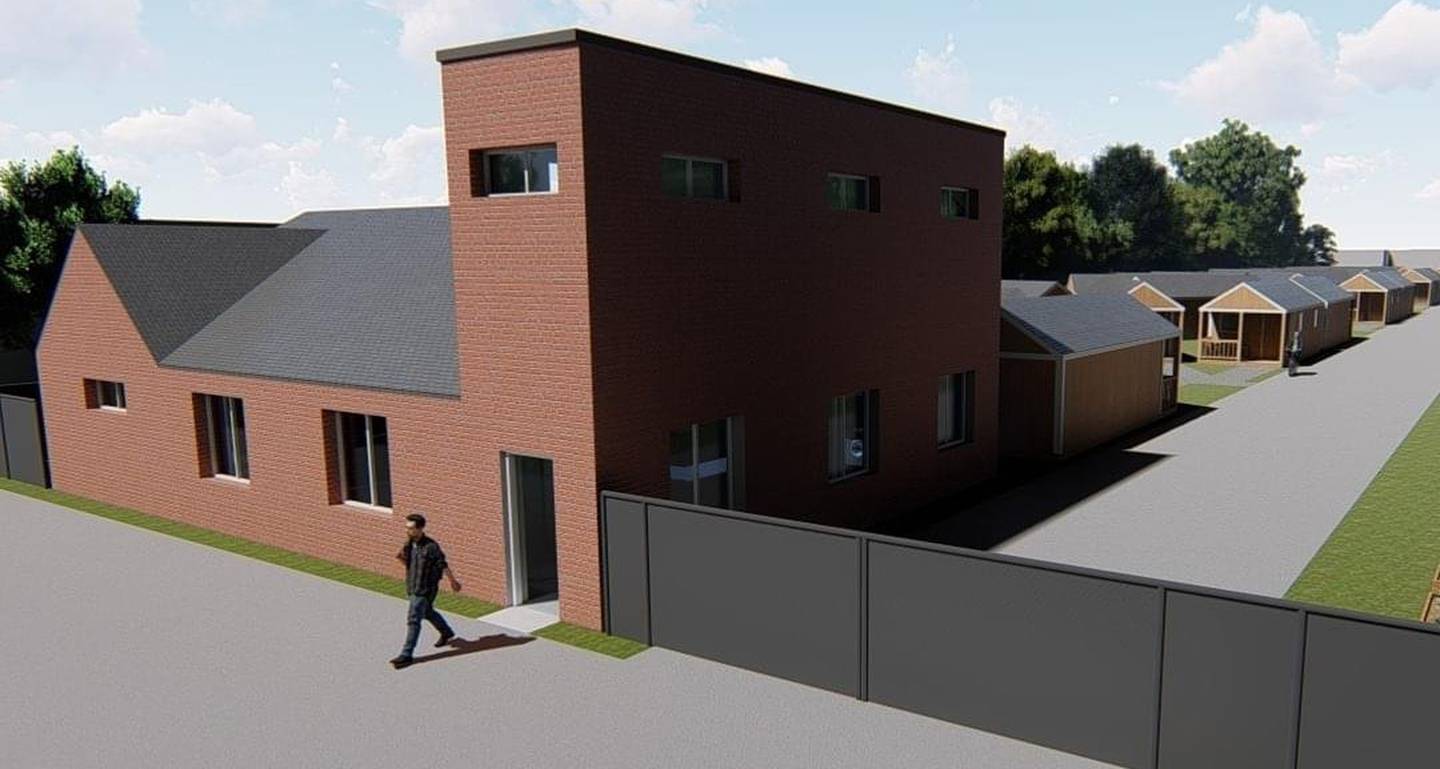
Hayes, vice president of the Circle City Village nonprofit’s board of directors, has been working on the vision with others since 2017. The project is currently in its fundraising stage but would consist of three different neighborhoods of six subsidized units with kitchens and plumbing. The residents would self-govern with ground rules and processes for when infractions occur.
Like Orr and Cron, Hayes agrees that tiny home centers will alleviate some of the loneliness that those without a permanent home sometimes feel. He also said that isolation has a compounding effect, cutting homeless people off from connections and opportunities that could improve their situations.
“Homelessness is oftentimes the catastrophic loss of community,” Hayes said. “We’ve all noticed that lost community and support is one of those main factors that oftentimes leads into those experiencing homelessness. … In our model and our vision, we want to support community.”
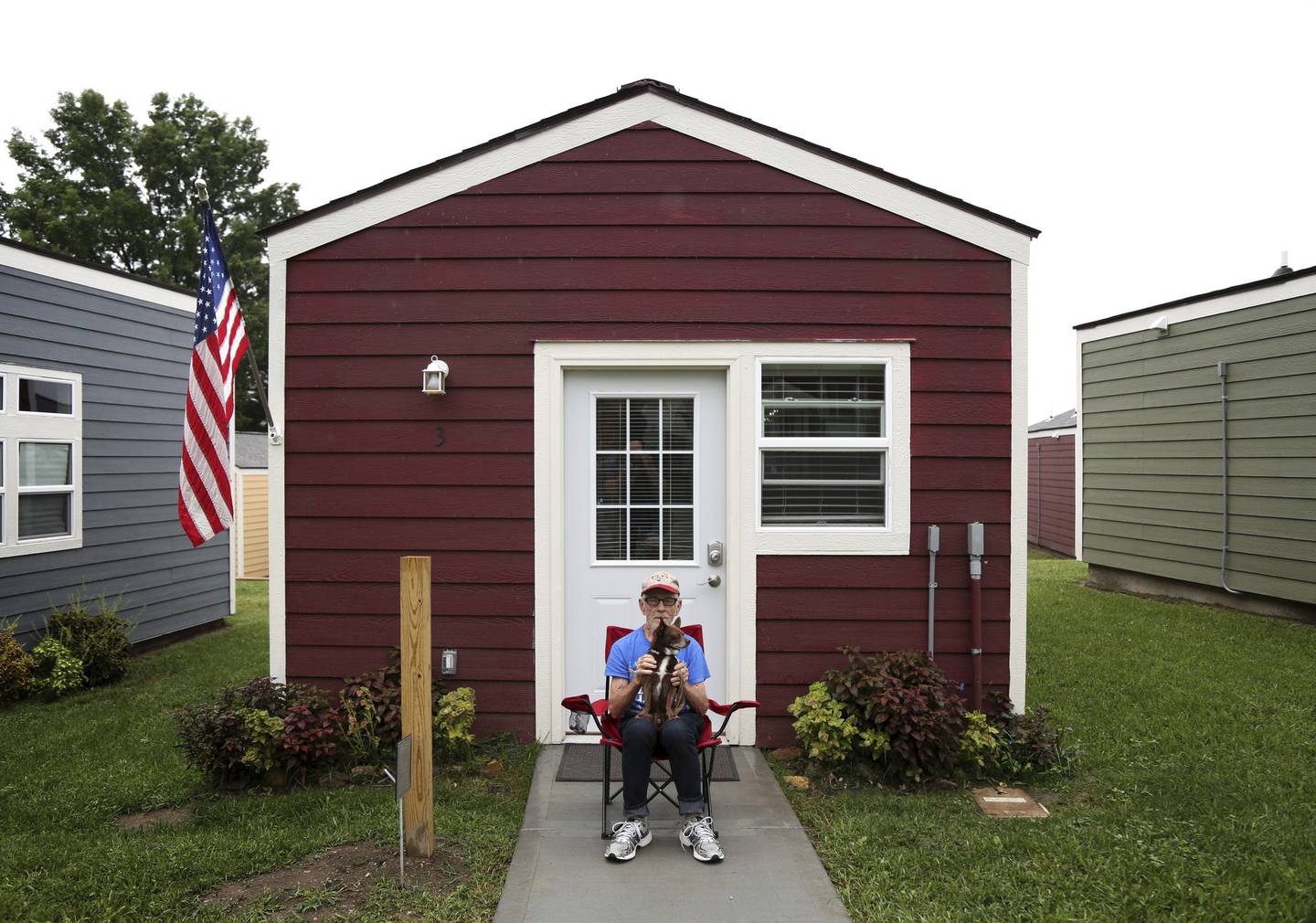
Elsewhere in the Midwest, Milwaukee is mulling a tiny home community for veterans, while an “Occupy Madison” complex of small units already exists in the Wisconsin capital and is named after the national “Occupy Wall Street” protests against economic inequality. Kansas City, too, has housed homeless veterans in a tiny home village.
Advertisement
However, Lightfoot proposed and passed her initiative under a backdrop of recent protests over her record on affordable housing. One such advocate — who is part of the Bring Chicago Home coalition calling on the mayor to support a real estate transfer tax increase to fund services for homeless people — said she does not oppose the idea of tiny home communities but believes it will not make a sizable dent in the homeless population.
“Any investment in affordable housing is great, and we appreciate the mayor thinking out of the box with the tiny home program, but what we need is a bold action and a plan instead of a project-to-project approach,” said Diane Limas with Communities United. “We need to create yearly revenue.”
Legislation to place the question of the tax hike on the ballot in the Feb. 28 election faltered in November after months of resistance from Lightfoot and her allies.
There are more than 65,000 homeless people living in Chicago, the Chicago Coalition for the Homeless estimated in a report released this year. Limas said Lightfoot’s tiny homes plan pales in comparison to the Bring Chicago Home proposal to increase the tax on property sales worth at least $1 million that the coalition argues would house 12,000 additional people in the next decade.
In total, Lightfoot’s 2023 budget includes more than $200 million in homeless prevention investments, which were tweaked to increase the number of rapid rehousing units from 800 to 1,200. She has also said she increased the mental health budget from $12 million in her first spending plan to $89 million this year.
Cron agreed that the scope of the tiny homes pilot is limited compared with the scale of homelessness in Chicago. But he noted that it still serves as a useful tool within a larger patchwork of solutions pushed by affordable housing advocates.
Advertisement
“You can’t help everybody in the world that is homeless. You just can’t,” Cron said. “I want to create communities that flourish, that welcome, that bring back the old-fashioned values of community.”


