



By Fred Redmond
Everywhere you look, people are talking about the rising cost of living.
Families are stretching every paycheck to cover soaring grocery bills. Housing costs remain out of reach for too many. Child care, health care, and gas bills continue to strain household budgets. People are doing everything right, yet too many are still falling behind.
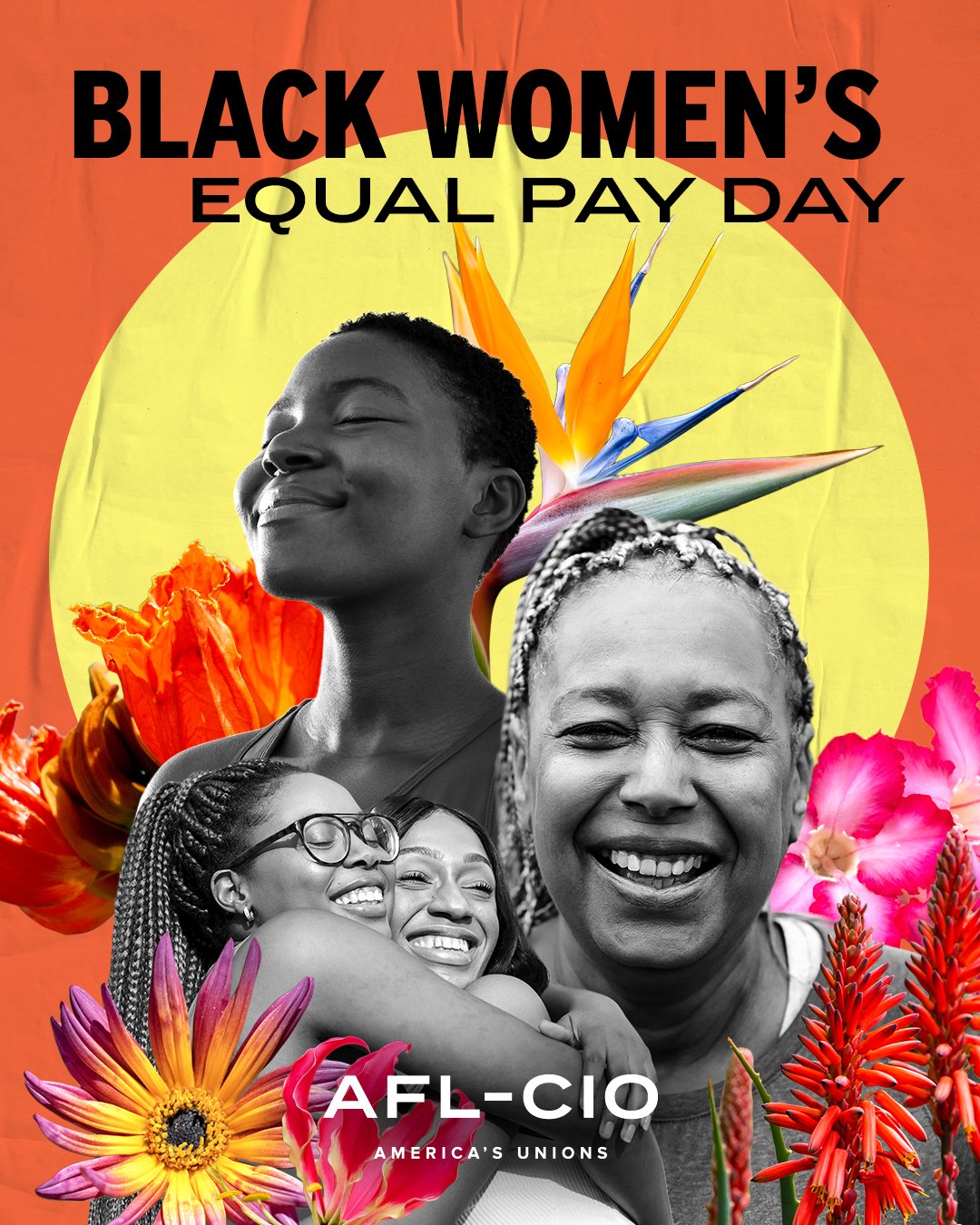
For Black women, this crisis is compounded by a persistent and unjust pay gap. That’s why we observe Black Women’s Equal Pay Day this year on July 21. It brings attention to the fact that among full-time, year-round workers, Black women earned just 65 cents in 2025 for every dollar earned by white men. That wage gap isn’t just a statistic—it means smaller paychecks, fewer opportunities to build wealth, greater financial insecurity and harder choices about providing for their families.
At a time when every dollar matters, Black women deserve equal pay for equal work. Anything less hurts working families and weakens our economy. A union contract can help level the playing field.
The evidence is clear. Black women represented by a union earn about $9,150 more per year than Black women who are not in a union. Black workers overall also receive a large wage boost from union membership, with a 12.6% wage premium compared with nonunion Black workers. Most importantly, union contracts help narrow gender pay gaps as well: Women working full time in union jobs earn 87.2 cents for every dollar earned by men who are union members—a significantly smaller gap than among nonunion workers.
Negotiated contracts replace arbitrary decisions with clear wage scales, transparent pay systems and enforceable workplace standards. Instead of leaving pay to bias or favoritism, union contracts establish fair standards that workers can enforce.
A new report from the Economic Policy Institute finds that rebuilding union power would significantly reduce racial wage gaps while strengthening our economy and our democracy. Communities with higher union membership invest more in public education, are more likely to expand access to health care and provide stronger unemployment protections when people lose their jobs.
Our labor movement has always understood that civil rights and workers’ rights are inseparable. Dr. Martin Luther King Jr. recognized that truth when he stood with striking sanitation workers in Memphis, Tennessee. Today, we carry that legacy forward by fighting for workplaces where every worker is respected, protected and paid fairly.
Black Women’s Equal Pay Day should not simply remind us how far we still have to go. It should remind us that we already know how to make progress. It happens when workers organize. It happens when we bargain together. And it happens when we stand in solidarity with one another. That’s why we must elect leaders who will work to protect workers’ rights, strengthen unions and defend our democracy.
Let’s recommit ourselves to building an economy where every worker is valued, every paycheck reflects the dignity of work and every Black woman receives the equal pay she has long deserved. Because equal pay isn’t just about fairness. It’s about making sure every family can afford to build a better future.
Fred Redmond, the highest-ranking African American labor official in history, is the secretary-treasurer of the AFL-CIO, the nation’s largest labor federation representing 65 unions and nearly 15 million workers.
The post Black Women Deserve Equal Pay. Unions Help Make It Happen. appeared first on BlackPressUSA.