



Author: staff


Chicago enters the July Fourth weekend with some encouraging news: The unrelenting gun violence that the city has experienced over the previous two years continues to…

“The leaves of my arrowwood viburnums look like they have been shredded, and the small pieces of leaves that remain have turned completely brown. This has not happened in previous years. I had always thought that this viburnum was trouble-free and easy to grow. What is this problem and what should I do?”— Gail Westerman, HighwoodAdvertisementYour description sounds like your viburnums have been attacked by the viburnum leaf beetle, a relatively new insect pest for the Chicago region. I have been seeing lots of arrow wood viburnums in home gardens, with lots of damage this year, including my own plants, since the arrowwood viburnum is a favorite of this insect. The Chicago Botanic Garden monitors its viburnum collection for this pest each year now and treats it as needed. AdvertisementYou will need to control the insect on your viburnums, as well as provide supplemental water during dry periods this summer if you want to save them. The plants should leaf back out this year if they were healthy before being damaged.Damage from viburnum leaf beetles, a relatively new insect pest for the Chicago region. (Tim Tiddens/Chicago Botanic Garden)The viburnum leaf beetle is a heavy feeder that can completely defoliate viburnums. It happened very quickly on the viburnums in my garden. Both larvae and adults feed on the leaves and remove leaf tissue between the midrib and larger veins. The leaves will then have a skeletonized appearance, which will look like they have been shredded. Plants may die after two or three years of damage from very heavy infestations. This insect’s feeding is limited to viburnum species, so you do not have to treat other plants in your garden. Monitor any other viburnums that you are growing, though, for this insect.The viburnum leaf beetle prefers viburnums with smooth leaves (little hair or pubescence). Arrowwood viburnum (Viburnum dentatum) and American cranberrybush viburnum (Viburnum trilobum) are commonly planted viburnums that are preferred hosts and will likely be killed over a course of two to three years if no control treatments are made. Other widely planted viburnums such as burkwood viburnum (Viburnum burkwoodii), blackhaw viburnum (Viburnum prunifolium) and fragrant snowball viburnum (Viburnum carlcephalum) have varying degrees of susceptibility to damage but generally are not destroyed. Koreanspice viburnum (Viburnum carlessii), Judd viburnum (Viburnum juddii) and doublefile viburnum (Viburnum plicatum) tend to be resistant to feeding. There generally will be more damage on any viburnums that are grown in the shade.Viburnum leaf beetles overwinter as eggs on twigs of the host plant. In May, larvae hatch from the overwintered eggs and begin feeding on the host plants — this is the damage you have recently noticed on your plants. The larvae are greenish-yellow and develop dark spots as they age. They are usually found feeding in groups on the leaves. The larvae drop to the ground and pupate between early and mid-June and remain in the ground for about 10 days before emerging as adults in mid- to late July, so you may not see them at this time. The adult beetle is small, ½ to ⅜ of an inch long and is a golden-brown color with sheen when in the sunlight. Adults will remain active until the first frost. Development from egg to adult takes eight to 10 weeks.AdvertisementIn late summer and fall, females will begin laying eggs. They chew holes in the bark of twigs to deposit eggs and then cover them with excrement and fragments of chewed bark. A female can lay up to 500 eggs. One effective way to control viburnum leaf beetle is to prune and destroy infested twigs after egg laying has ceased in the fall in October, up until April. But pruning alone will not be enough. You will need to spray an insecticide such as spinosad, acephate, carbaryl or malathion when larvae first appear in early May for good control. Acephate will have a degree of residual activity, as it will move into the leaves. A second application in mid- to late summer on feeding adults may be helpful if damage is excessive, but a strategy of just treating adults will not provide effective control. You should only spray your viburnums if you find this insect and follow all directions for proper and safe use of the product that you are using. Provide supplemental water to the affected viburnums during any dry periods for the rest of this year to help reduce stress on the plants.For more plant advice, contact the Plant Information Service at the Chicago Botanic Garden at plantinfo@chicagobotanic.org. Tim Johnson is senior director of horticulture at the Chicago Botanic Garden.

A man was charged with attempted first-degree murder in connection to a shooting Friday morning that left an officer seriously injured. Jalen Vales, 27, was charged…
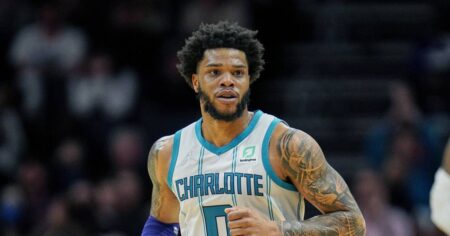
Charlotte Hornets forward Miles Bridges was charged with felony domestic violence stemming from an incident earlier this week, the Los Angeles Police Department confirmed Friday.The LAPD posted on Twitter that Bridges was arrested for “intimate partner violence with injury,” a felony, on Wednesday after an incident two days earlier in West Los Angeles.AdvertisementHe was released on $130,000 bond and has a July 20 court date. The LAPD said it does not release police reports on domestic violence arrests.Mychelle Johnson, the mother of Bridges’ two young children, addressed the incident on Instagram on Friday, posting several pictures of injuries and a medical report that read “adult victim of physical abuse by male partner; Assault by strangulation, Brain concussion; Closed fracture of nasal bone; Contusion of rib; Multiple bruises; Strain of neck muscle.”Advertisement“I hate that it has come to this but I can’t be silent anymore. I’ve allowed someone to destroy my home, abuse me in every way possible and traumatize our kids for life,” Johnson wrote on Instagram. “I have nothing to prove to the world, but I won’t allow anyone who could do something so horrible to have no remorse and paint a picture of something I’m not. I won’t allow the people around him to continue to silence me and continue to lie to protect this person.”Bridges’ agent, Rich Paul, did not return phone calls to the Associated Press, and it was unclear whether Bridges has an attorney. Attempts to reach Johnson also were unsuccessful, and AP could not locate an attorney of record for her.Bridges, 24, is a restricted free agent who is expected to command big money this summer following a breakout season.The 6-foot-7, 225-pound Bridges was the Hornets’ leading scorer, averaging 20.2 points and seven rebounds in his fourth NBA season.The Hornets extended Bridges a qualifying offer earlier this week, allowing them a chance to match any offer sheet made by another team. The team indicated earlier this week — before knowledge of Bridges’ arrest — that it wanted to re-sign him.The Hornets released a statement Thursday, indicating they are looking into the incident. NBA spokesman Mike Bass said “we are in the process of gathering more information.”

Four people were injured in a shooting in West Garfield Park Friday night, officials said. Just after 9 p.m., a man was walking north on South…

SAN FRANCISCO — In Johnny Cueto’s first start with the San Francisco Giants, the right-hander threw seven strong innings against the Milwaukee Brewers on April 5, 2016, allowing one run and striking out out four in a 2-1 road victory.Cueto earned the win, the first of his 18 that season.AdvertisementHe had an immediate impact with the Giants, making the National League All-Star team and finishing sixth in Cy Young Award voting while helping them reach the playoffs.Cueto’s impact also has been noticeable since joining the Chicago White Sox in May. He returned to San Francisco this weekend for a three-game series at Oracle Park.Advertisement“I felt like I pitched very well there,” Cueto said through an interpreter Wednesday afternoon at Angel Stadium in Anaheim, Calif. “The chemistry we had on that team was good. Teammates were very nice with me.”White Sox starter Johnny Cueto warms up during a game against the Cubs on May 28, 2022, at Guaranteed Rate Field. (Stacey Wescott / Chicago Tribune)Cueto, 36, said being back at the ballpark was an “honor.”“It was my house for six years,” Cueto said. “The fans have treated me very well there. I like the ballpark. It’s a big ballpark.”Cueto, who is 2-4 with a 3.33 ERA in nine outings (eight starts) this season, shared handshakes, hugs and laughs with some Giants before batting practice Friday.He isn’t the only player seeing familiar faces this weekend. Former Sox starter Carlos Rodón is 7-4 with a 2.62 ERA in his first season with the Giants.“Everybody’s pulling for him,” Sox manager Tony La Russa said of Rodón on Friday.Rodón, who spent parts of seven seasons with the Sox, and Cueto are not slated to pitch this weekend after both were on the mound Tuesday. Rodón allowed one run in six innings in a 4-3 victory against the Detroit Tigers, and Cueto allowed three runs on seven hits in six innings and earned the victory in an 11-4 win against the Los Angeles Angels.The Giants’ Carlos Rodón follows through on a pitch during the first inning against the Pirates on June 17, 2022, in Pittsburgh. Rodón, a former White Sox pitcher, is 7-4 with a 2.62 ERA in his first season in San Francisco. (Gene J. Puskar/AP)“It would be fun to have the chance to pitch there,” Cueto said.AdvertisementCueto went 39-27 with a 3.81 ERA in 104 appearances (103 starts) for the Giants from 2016-21. He went 7-7 with a 4.08 ERA last season.The Sox signed Cueto to a minor-league contract on April 8. After four starts at Triple-A Charlotte, Cueto made his Sox debut May 16 against another one of his former teams — the Kansas City Royals. Cueto allowed two hits and struck out seven in six scoreless innings.It was just the beginning of an impressive season.“I feel happy with how my season has been going,” Cueto said. “I’ve been able to pitch well, to help the team. And I feel good.”La Russa said Cueto “could not have been better for us.”“He’s very smart, he’s got a good memory, he knows how to get through a lineup,” La Russa said Friday. “He’s a worker. Guys like to be around him, and he likes to contribute what he knows.”AdvertisementCueto, in his 15th major-league season, has pitched at least six innings in seven of the eight starts.“We knew it was possible that he had that upside,” Sox general manager Rick Hahn said on June 20. “It was a matter of health. He was going to give us everything that he had at that point. The question was just going to come down to what he had left. So far, he’s been fantastic.”One of Cueto’s standout performances didn’t come in a start. Scheduled to pitch the June 13 series opener in Detroit, Cueto volunteered to work out of the bullpen the day before when starter Michael Kopech exited after two-thirds of an inning with right knee discomfort.Cueto entered in the third and pitched five solid innings against the Texas Rangers.Chicago White Sox starting pitcher Johnny Cueto heads out from the bullpen before the start of a game against the Orioles on June 23, 2022, at Guaranteed Rate Field. (Chris Sweda / Chicago Tribune)“What he did when Kopech went down for him to essentially, I mean literally get out of the hot tub and wander over and say he was able to go, we don’t do what we did in Detroit (sweep a three-game series) without Johnny Cueto stepping up and eating up those innings,” Hahn said. “Our bullpen leading up to that Detroit series was extremely taxed. And quite candidly, we weren’t sure how we’d get through that game (against the Rangers) only getting two outs from our starter. And Cueto saved the bullpen, saved the staff and set us up for a successful road trip.”Cueto followed that outing with seven shutout innings against the Astros on June 18 in Houston.Advertisement“It’s good (playing behind Cueto) because he likes to pitch fast and he usually gets quick outs,” Sox center fielder Luis Robert said Tuesday.Asked about his path to the Sox, Cueto said there were a few teams interested in him, “but they weren’t offering a good deal. And they were offering me just a spot for the bullpen.“I’ve been a starter for my whole career. I have my routine as a starter. I know what I have to do to prepare for the games. Once you know you aren’t able to make it as a starter, then you go to the bullpen. That’s not my case.”White Sox closer Liam Hendriks celebrates after closing out the Cubs in the ninth inning on May 3, 2022, at Wrigley Field. (Chris Sweda / Chicago Tribune)The Sox closer pitched a simulated game Friday afternoon at Oracle Park and anticipates being reinstated from the injured list Monday.Hendriks has been on the IL retroactively since June 11 with a right forearm strain.“Ball came out well (Friday), and that’s all that really matters,” Hendriks said. “The plan is to be active on Monday, right in time for that (Minnesota) Twins series.”AdvertisementHendriks has a 2.81 ERA and 16 saves.
A Chicago man was sentenced to 73 years Thursday after he was convicted in May of fatally shooting a friend in Gary after they argued on…

Christopher Morel got a belt-high pitch and launched it toward Waveland Avenue for a long two-run homer.It was another big moment for the Chicago Cubs rookie from the Dominican Republic. And he has had a few lately — at the plate and in the field.AdvertisementMorel homered in his third consecutive game, and the Cubs rallied to beat the Boston Red Sox 6-5 on Friday at Wrigley Field.The Cubs took advantage of 10 walks by five pitchers and came back after falling behind 4-0.AdvertisementMorel came up big again when he launched a tying two-run drive to left against Hansel Robles (1-3) with two outs in the sixth.The Cubs’ Christopher Morel hits a two-run home run during the sixth inning against the Red Sox on Friday at Wrigley Field. (Nam Y. Huh / AP)Christopher Morel, right, celebrates with Andrelton Simmons after hitting a two-run home run during the sixth inning against the Red Sox on Friday at Wrigley Field. The Cubs won 6-5. (Nam Y. Huh / AP)Willson Contreras then walked and later scored on a Jake Diekman wild pitch to Nico Hoerner to make it 6-5 and cap a three-run inning. That sent the Cubs to their fourth win in five games.Morel playing a big role is becoming the norm for the Cubs.He had five hits Thursday in a 15-7 rout of the Cincinnati Reds. He also went deep Wednesday and made a terrific throw from center field to nail a runner at the plate, helping lift the Cubs to an 8-3 win against the Reds.Against the Red Sox, Morel started at second base. And as far as he’s concerned, that’s just fine. He’ll play wherever manager David Ross wants.“That’s why I work on it every single day. Every position,” Morel said. “Anywhere they need me, that’s what I’m there for, the team. Wherever they need me, I’ll be there.”The Red Sox looked ready to roll to an easy win after going 20-6 in June.Jarren Duran, back in the lineup after missing a three-game series in Toronto because he’s unvaccinated, drove the game’s first pitch from Adrian Sampson to the center-field bushes for a home run.AdvertisementJackie Bradley Jr. made it 4-0 with a three-run double in the second. Rich Hill breezed through four innings before exiting with a sprained left knee in a three-run fifth.The 10 walks were the most the Red Sox issued since 11 against the Los Angeles Angels in a 15-inning game on Aug. 30, 2019.Chicago Tribune SportsWeekdaysA daily sports newsletter delivered to your inbox for your morning commute.Hill, who debuted with the Cubs in 2005, gave up three runs and three hits in 4⅔ innings. He walked four and struck out three.Red Sox starting pitcher Rich Hill reacts in the dugout after he left the game against the Cubs because of an injured left knee in the fifth inning Friday at Wrigley Field. (Nam Y. Huh/AP)Hill appeared to be shaking his leg at one point in the fifth and was visited by an athletic trainer. The 42-year-old left-hander exited after hitting Patrick Wisdom to load the bases with two outs.Tyler Danish came in and walked Rafael Ortega, cutting the gap to 4-3.Hill said he “felt great” before the fifthAdvertisement“Unfortunately I put us in a tough position, and that’s what makes me sick to my stomach,” Hill said. “But overall, before that point, the ball was coming out well.”Ian Happ had three hits for the Cubs.Sampson gave up five runs and eight hits in 5⅓ innings. Brandon Hughes (1-0) got three outs and earned his first career win, and David Robertson worked the ninth for his 10th save in 13 chances.

A man is in custody after several Jefferson Park stores were defaced with swastikas, authorities said.Swastikas were painted on the Supreme Smoke Shop’s back door, boarded-up…
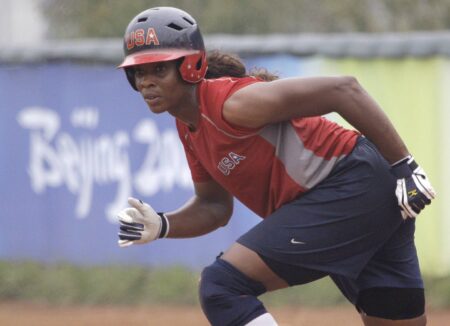
Once Tina Sloan Green took over the lacrosse program at Temple University in the years after the passage of Title IX, the landmark gender-equity law, she never stopped thinking about the girls who weren’t playing.At practices during the 1970s, Sloan Green, the first Black woman to coach a college lacrosse team, noticed neighborhood kids peering through the fences at her players as guards kept them out. And when high school athletes were welcomed on the university’s fields for training camps, most were white and from predominantly white suburban schools.Advertisement“That was very, very disturbing to me to see that,” she said. “And that was — that was the reality that I had to face … Title IX was a complete help for women in sports but in my mind, there were still disparities.”For girls of color, some women’s college sports, such as lacrosse, equestrian, rowing or even softball, are ones they are unlikely to be exposed to in grade school. The reasons vary, though availability and costs can be major challenges for youth programs.AdvertisementJune 23 marked the 50th anniversary of Title IX and in the years since the landmark law was passed, profound strides have been made in women and girls’ participation in sports. Women now make up 44% of all NCAA athletes, compared to just 15% in 1971, according to the Women’s Sports Foundation. Nearly 3.5 million high school girls play sports, compared to less than 300,000 in 1972.For Black women and other women of color in sports, those gains have not been equally shared, reflecting the limitations of a policy that only addresses equity on the basis of sex and gender.“We say very often that sport is a microcosm of society,” said Karen Issokson-Silver, vice president of research and education at the Women’s Sports Foundation. “Whenever systemic racism occurs in the broader society, in addition to gender discrimination, it’s reflected in the sport ecosystem.”An early barrier to pursuing athletic opportunities in college and beyond is as simple as exposure to the sport.Natasha Watley, a Black woman who is a two-time Olympic medalist in softball, started playing when she was 5. She did not have a Black teammate until she was a teenager and said there were so few girls of color who played with her and went on to college teams that she could count them on one hand.After the UCLA graduate returned from the 2008 Olympics, Watley recalled speaking to young girls about her experience.“This one young girl I’ll never forget — a young little African American girl, she raises her hand and she’s like, ‘Ms. Natasha, your story sounds amazing, but what is softball?’” Watley said. “She had no idea what softball was.”According to the U.S. Census Bureau, median household income in 2020 for white, non-Hispanic families was $74,912 compared to $55,321 for Hispanic families and $45,870 for Black families. Factors like income contribute to a racial clustering phenomenon where women of color are overrepresented in sports like track and field that have a lower entry cost, said Courtney L. Flowers, associate professor of sport management at Texas Southern University.Advertisement“Even middle class families aren’t sending their kids to schools that have access to an equestrian team,” she said. “We typically are pushing African American women to women’s basketball and track and field because of those reasons.”FILE – U.S. softball player Natasha Watley runs during practice Sunday, Aug. 10, 2008, at the Beijing 2008 Olympics in Beijing. Watley, a Black woman and two-time Olympic medalist in softball, started playing when she was 5. She did not have a Black teammate until she was a teenager and said there were so few girls of color who played with her and went on to college teams that she could count them on one hand. (AP Photo/Elaine Thompson, File) (Elaine Thompson/AP)The inequities carry over into leadership roles. While 34% of head coaches for women’s teams are white women, just 7% are women of color. Among athletic directors, just 4% are women of color compared to 20% for white women.Candice Storey Lee, the first Black woman to be athletic director at Vanderbilt University, said that a single policy like Title IX, without subsequent action, could not be expected to bring equity to the field.“We know a law alone does not change behavior,” she said. “You have to have people who are committed at every level to get the outcome you want. And so I wouldn’t blame Title IX for that, but I would say we still have work to do in our own communities to ensure that there is access for everyone.”Those disparities in leadership and college athletic opportunities begin early in life, said Neena Chaudhry, general counsel and senior advisor for education at the National Women’s Law Center. A study published by the center found that 40% of the country’s public high schools are highly segregated, serving either 90% students of color or 90% white students.At schools that predominantly serve students of color, there are far fewer opportunities to play sports, and disparities between boys and girls are more stark — 40% of high schools that predominantly serve students of color have large opportunity gaps for girls in sports, compared with 16 % of heavily white schools. The opportunity gap is the difference between the percentage of spots on teams allocated to girls and the percentage of students who are girls, with differences of more than 10 points considered a large opportunity gap.AdvertisementResearch shows that in addition to physical health, girls who play sports are more likely to have higher levels of self-esteem, stronger collaborative skills, and greater academic achievement. But disparate access to athletics, through both community centers and the rising cost of youth sports, makes schools a key place to engage young girls of color in athletics, Chaudhry said.“All students are required to go to school, and that’s really a place to provide opportunities that some students wouldn’t otherwise get,” she said. “Not everybody can afford to pay for sports outside of school … It’s really important to provide those opportunities through school equally. It’s both important and it’s the law.”Sloan Green, who in 1992 co-founded the Black Women in Sport Foundation, said that expanding access to young girls of color, especially between pre-kindergarten and eighth grade, is crucial. At Temple, she expanded her camps and recruiting to communities that had been overlooked, including the children in the neighborhood. Having role models that reflect girls of color and widely sharing their successes is also critical to getting girls onto the playing field, Sloan Green said.In Southern California, Watley started the Natasha Watley Foundation to introduce girls in marginalized communities to softball, which serves about 1,000 girls each year. Beyond the cost, the main concern she hears from parents is that they aren’t sure the sport would welcome their daughters. Watley said she wanted young girls to know that the sport could be a place for them to thrive, in college and beyond.“More than anything, I wanted to make sure that girls were getting introduced to the game, that they understood that the game was for them, that it was a place for them,” she said. “There are opportunities far beyond their imagination that this game can take them.”Ma, based in Charlotte, North Carolina, writes about education and equity for AP’s Race and Ethnicity team. Brunt reported from Oklahoma City. AP Sportswriter Teresa M. Walker in Nashville, Tennessee, contributed to this report. AdvertisementFor more on Title IX’s impact, see AP’s full package: https://apnews.com/hub/title-ix