


Close Menu
  • Home
  • News
    • Local
  • Opinion
  • Business
  • Health
  • Education
  • Sports
  • Podcast

Subscribe to Updates

Get the latest creative news from FooBar about art, design and business.

What's Hot

OP-ED: For Us It’s Feel-a-Nomics

OP-ED: Is Creativity a Superpower in Early Education?

Mathew Knowles Shares Breast Cancer Survival Story at Houston’s Inaugural Pearl’s Pink Promise Gala

Facebook X (Twitter) Instagram
  • Lifestyle
  • Podcast
  • Contact Us
Facebook X (Twitter) Instagram Pinterest Vimeo
The Windy City Word
  • Home
  • News
    1. Local
    2. View All

    Youth curfew vote stalled in Chicago City Council’s public safety committee

    Organizers, CBA Coalition pushback on proposed luxury hotel near Obama Presidential Center

    New petition calls for state oversight and new leadership at Roseland Community Hospital

    UFC Gym to replace shuttered Esporta in Morgan Park

    Mathew Knowles Shares Breast Cancer Survival Story at Houston’s Inaugural Pearl’s Pink Promise Gala

    It’s Time to Lose Weight Before the Holidays

    NFL Round-Up: Caleb Williams strikes back, Panthers, Browns and Titans secure victories

    HBCU Football Roundup: Homecoming Wins for Howard, Tennessee State and Jackson State

  • Opinion

    Rep Davis, Olive Post CDR., Call on Trump to Restore file of Black Vietnam War Hero to Website

    Capitalize on Slower Car Dealership Sales in 2025

    The High Cost Of Wealth Worship

    What Every Black Child Needs in the World

    Changing the Game: Westside Mom Shares Bally’s Job Experience with Son

  • Business

    Illinois Department of Innovation & Technology supplier diversity office to host procurement webinar for vendors

    Crusader Publisher host Ukrainian Tech Businessmen eyeing Gary investment

    Sims applauds $220,000 in local Back to Business grants

    New Hire360 partnership to support diversity in local trades

    Taking your small business to the next level

  • Health

    Mathew Knowles Shares Breast Cancer Survival Story at Houston’s Inaugural Pearl’s Pink Promise Gala

    It’s Time to Lose Weight Before the Holidays

    OP-ED: She’s Not Non-Compliant, She’s Hungry: Addressing Food Justice to Improve Breast Cancer Outcomes

    Cash for Moms: As Medicaid Cuts Loom, Cities Test a New Approach to Black Maternal Health

    More Families to Benefit from Evidence-Based Home Visiting

  • Education

    Ancestral Responsibility: Young Native Voters Fight Political Invisibility

    Kickstarter CEO Everette Taylor Shares Tips on Creating and Growing a Business

    Author Kristen Amundson Explains ‘The Grandparent Effect’ and How It’s Helping Children Thrive Through Love, Support, and Connection

    Responsible AI Development Requires a Seat at the Table for Black America

    COMMENTARY: Being Frank: a Safe Place

  • Sports

    NFL Round-Up: Caleb Williams strikes back, Panthers, Browns and Titans secure victories

    HBCU Football Roundup: Homecoming Wins for Howard, Tennessee State and Jackson State

    Jaguars Do Better: Top of Ladder or Resting at the Bottom

    NFL: Bryce Young is Proving “Patience is a Virtue”

    WNBA Playoffs: DeWanna Bonner and Atlanta Dream dominate on defense, Win Game 1

  • Podcast
The Windy City Word
Featured

After the Ruling: How Trump’s Struck-Down Tariffs Impact Black-Owned Businesses

staffBy staffUpdated:No Comments4 Mins Read
Facebook Twitter Pinterest Telegram LinkedIn Tumblr Email Reddit
Share
Facebook Twitter LinkedIn Pinterest WhatsApp Email

A picture of the Supreme Court of the United States. (Photo: Keith Golden Jr./HUNewsService.com)

By Armani Durham | Howard University News Service

On Feb. 20, the U.S. Supreme Court ruled 6-3 in Learning Resources Inc. v. Trump that President Donald Trump was not authorized to impose sweeping tariffs under the International Emergency Economic Powers Act (IEEPA).

IEEPA, created in 1977, authorizes the president to act during a national emergency to regulate commerce, freeze assets or impose economic sanctions. Trump used the law, declaring national emergencies to bypass Congress and impose tariffs, sanction foreign entities and threaten economic action.

“The decision to…move very quickly to both impose tariffs and then increase those tariffs [has] injected new lines of uncertainty and a lack of predictability to markets…that doesn’t serve the United States economy or those market participants as well,” said Eric Morrissette, a senior fellow at the Joint Center for Political and Economic Studies

The ruling carries national significance, as it not only reshapes consumer prices and business costs but also redefines the limits of presidential authority over trade and signals a broader shift in United States economic and global policy.

On Feb. 24, Trump signed a proclamation under Section 122 of the Trade Act of 1974 to address “fundamental international payment problems.”

The proclamation imposes a 10% global import surcharge, implemented for 150 days.

Tariffs imposed under Section 122 require congressional approval to continue beyond 150 days, making them a temporary replacement for the invalidated IEEPA tariffs.

Approximately 90% of tariff costs were paid by businesses and consumers in the United States, not in foreign countries. Businesses that rely on imports saw input costs rise.

“At the end of the day…we all receive the repercussions behind their actions,” said Tony Barnes, co-owner of Oohh’s & Aahh’s.

After the IEEPA tariffs were struck down, companies can seek refunds totaling $130 billion to $175 billion.

On March 4, in Atmus Filtration v. US, the U.S. Court of International Trade (CIT) ordered U.S. Customs and Border Protection (CBP) to refund unlawful IEEPA tariffs.

CBP issues refunds electronically via Automated Clearing House (ACH).

Refunds are primarily available to importers of record that paid the tariffs and are registered in the Automated Commercial Environment (ACE) system.

For court-ordered refunds, CBP uses the Consolidated Administration and Processing of Entries (CAPE) system to manage, track, and process tariff refund claims.

The Supreme Court only struck down tariffs imposed under IEEPA.

Trump’s tariffs, including tariffs imposed under IEEPA before it was invalidated, have impacted businesses across the country, including Black-owned businesses.

Black-owned businesses are not able to handle rising costs and the economic uncertainty, like other businesses, because of their smaller size, limited financial resources and concentration in import-dependent and customer-facing industries.

According to the Center on Budget and Policy Priorities, tariffs increased input costs, leading Black-owned businesses to raise prices, cut staff or both.

Higher input costs disproportionately affect Black small businesses, as they often operate on narrower profit margins and have less access to capital than white-owned businesses.

Approximately 52% of Black-owned businesses experienced a decline in sales due to tariffs.

“The prices have changed…they’re going up,” said the manager of JC Lofton Tailors, who goes by Shoemaker to customers. “Then you have to go up on your customers, and you don’t want to lose them.”

Trump’s tariffs affected everyday people, with some populations being more vulnerable, such as the Black community.

“There are real people on the other side of this, who have both their life and their livelihoods tied into the decisions that are being made,” Morrissette said. “I think they all deserve the respect and the honor of being considered before a rush of action. Which seems to have been the case.”

Armani Durham is a reporter for HUNewsService.com


The post After the Ruling: How Trump’s Struck-Down Tariffs Impact Black-Owned Businesses appeared first on BlackPressUSA.


Share. Facebook Twitter Pinterest LinkedIn Reddit WhatsApp Telegram Email
Previous ArticleDOJ Announces $90 Million Medicaid Fraud Indictment in Minneapolis as Acting AG No-Shows
Next Article Automatic Draft Registration Raises Questions Among Young Americans
staff

Related Posts

OP-ED: For Us It’s Feel-a-Nomics

OP-ED: Is Creativity a Superpower in Early Education?

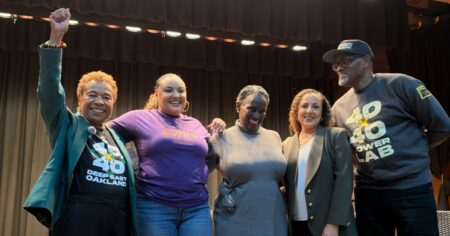
Mayor Barbara Lee Holds Special State of the City Address in Deep East Oakland

Leave A Reply Cancel Reply

Video of the Week
https://www.youtube.com/watch?v=AxFXtgzTu4U
Advertisement
Video of the Week
https://www.youtube.com/watch?v=OjfvYnUXHuI
ABOUT US


The Windy City Word is a weekly newspaper that projects a positive image of the community it serves. It reflects life on the Greater West Side as seen by the people who live and work here.

OUR PICKS

Secrets Revealed: Pierpont Mobley Talks ‘Black Side of the White House’

‘Santa looks like me’: How Santa Larry brings representation to Chicago for Christmas

Breaking Cycles with Tiara Nolen

MOST POPULAR

Mathew Knowles Shares Breast Cancer Survival Story at Houston’s Inaugural Pearl’s Pink Promise Gala

It’s Time to Lose Weight Before the Holidays

OP-ED: She’s Not Non-Compliant, She’s Hungry: Addressing Food Justice to Improve Breast Cancer Outcomes

© 2026 The Windy City Word. Site Designed by No Regret Medai.
  • Home
  • Lifestyle
  • Podcast
  • Contact Us

Type above and press Enter to search. Press Esc to cancel.