




By Stephen Oduntan | Black Press USA
WASHINGTON — When African government officials, business leaders, and global investors gather outside Washington later this month, organizers will put approximately $4 billion in African investment opportunities before them, betting that changing perceptions of risk and new approaches to financing can help move more global capital toward the continent.
The $4 billion figure, however, represents a pipeline rather than capital already committed.
Nana Agyeman Prempeh, president of the Millennium Excellence Foundation, which is organizing the Africa Business Investment Summit, said it includes projects actively seeking financing as well as deals already in negotiation that are being curated for investors attending the Aug. 27-28 gathering at MGM National Harbor.
“It’s not just capital that is already committed, but it’s an addressable opportunity that we’re putting in front of the investors that are coming,” Prempeh told Black Press USA.
The distinction gets to the larger challenge facing the summit: not simply generating interest in Africa, but converting that interest into investment that reaches projects and ultimately produces jobs, businesses and infrastructure.
Prempeh argues that conditions for doing so have changed considerably.
“Over the past few years, we’ve seen stronger regulatory institutions, more sophisticated blended finance instruments that pair public and private capital, and policy reforms across multiple African markets,” he said.
“The risk-to-return looks materially different from what it was a decade ago.”
Prempeh’s argument comes amid a broader rethink of how African development should be financed—one increasingly centered on investment and the continent’s own financial resources rather than dependence on traditional foreign aid.
That debate has taken on new urgency. Under the Trump administration, the United States sharply reduced foreign assistance and dismantled USAID, while other major donor countries also cut development spending. Official development assistance worldwide fell more than 23% in 2025—the largest annual decline on record, according to the OECD, with the United States accounting for 70% of the reduction. Bilateral aid to sub-Saharan Africa fell 26.3% in 2025 and is projected to decline another 11.6% in 2026, marking a third consecutive year of decline.
But the debate over whether foreign aid should remain central to Africa’s development is much older. In her 2009 book Dead Aid, Zambian-born economist Dambisa Moyo argued that even well-intentioned assistance can undermine local economies. She illustrated the point with a hypothetical African mosquito-net manufacturer employing 10 workers: flooding the community with 100,000 donated nets might meet an immediate public-health need, she reasoned, but could also put the local producer out of business, eliminating jobs and future production capacity.
Moyo’s argument for trade, investment and greater access to capital markets sparked considerable debate. Nearly two decades later, as traditional aid flows shrink, African institutions are increasingly looking to private investment and domestic resources to finance development.
African institutions are trying to unlock substantially larger pools of investment capital. Reuters reported in July that African governments and development banks are increasingly using guarantees to make infrastructure projects attractive to private investors, including the continent’s own pension funds, insurers and sovereign wealth funds. The Africa Finance Corporation estimates that as much as $4 trillion in African domestic capital could potentially be directed toward infrastructure if projects can achieve the credit quality institutional investors require.
“De-risking the opportunities using guarantees … unlocks domestic capital, and domestic capital leads the way for global capital to come in,” Banji Fehintola, head of financial services at the Africa Finance Corporation, told Reuters.
For Prempeh, ABIS is intended to put that argument into practice.
Rather than organizing the summit primarily around speeches and panel discussions, he said the program has been structured around curated deal rooms, sector-specific investment sessions, government roundtables and private meetings between investors and project sponsors.
“Most African investment conferences have been built around panels and photo opportunities,” Prempeh said. “I think it’s less a conference and more of a two-day convening designed to move capital, and not just discuss it.”
Prempeh identified Ghana and Nigeria as the countries currently “leading the pack,” pointing to projects in infrastructure, mining and oil and what he described as a strong appetite for American capital.
“I think American capital should come in now,” Prempeh said. “The Chinese are there. I think that this is the time that America should be quite bullish.”
Nigeria, in particular, is “really, really looking for investor capital,” Prempeh said, pointing to the level of Nigerian participation expected at the summit as evidence of that interest.
But Prempeh said attracting money alone will not determine whether the summit succeeds.
Asked what billions in investment would mean for Africans outside the summit’s private deal rooms, Prempeh pointed to jobs, local ownership, infrastructure and opportunities for African businesses.
The goal, he said, is for communities to see “better roads, more employment, and more local businesses.”
Prempeh said the Millennium Excellence Foundation intends to follow deals beyond the summit, tracking capital ultimately deployed and jobs created over the following six months and year. When pressed for a specific dollar amount or number of completed deals that would define success, however, he did not set a numerical benchmark.
Who Defines African Investment Risk?
But attracting that capital also means confronting how Nigeria—and the risks of investing there—is perceived abroad.
As the continent’s most populous nation and one of its largest economies, the country offers enormous opportunities across infrastructure, energy, technology, and other sectors. Yet international perceptions of Nigeria are also frequently shaped by reports of terrorism, kidnapping, and political instability. Prempeh argued that those distinctions can become lost when Nigeria is viewed primarily through the lens of insecurity.
He pointed to international companies that have successfully operated in Nigeria for years and said that Nigerian officials attending ABIS are expected to address investor concerns directly. Representatives from Lagos and other states, he said, will outline measures they say have been put in place to provide greater security and certainty for investors.
For investors, the distinction matters. Nigeria is a vast and economically diverse country, and security conditions can vary sharply from one region to another. Violence or instability in one part of the country does not necessarily define the investment environment elsewhere.
The question for ABIS organizers is whether they can persuade American investors to evaluate opportunities project by project and market by market rather than through generalized perceptions of risk.
The growing use of guarantees and other financial protections across the continent suggests African institutions themselves are not arguing that risk does not exist. Instead, they are increasingly trying to identify, price, and mitigate it in ways that make projects attractive to institutional capital.
A Call to the African Diaspora
Prempeh’s pitch is not directed solely at Wall Street or institutional investors.
For Black Americans and the broader African diaspora, he framed Africa’s economic development in more personal terms—as an opportunity for ownership, entrepreneurship and reconnection.
“I think the time has come where African Americans [come] to Africa to own what is rightfully theirs,” Prempeh said.
He pointed to opportunities to own property, build businesses, and form partnerships with African entrepreneurs.
“This is the time that African Americans start coming back home and partner with your brothers and sisters in Africa,” he said.
Prempeh also acknowledged that such a relationship is not automatic. Cultural barriers between Africans and African Americans remain, he said, and overcoming them will require greater understanding on both sides.
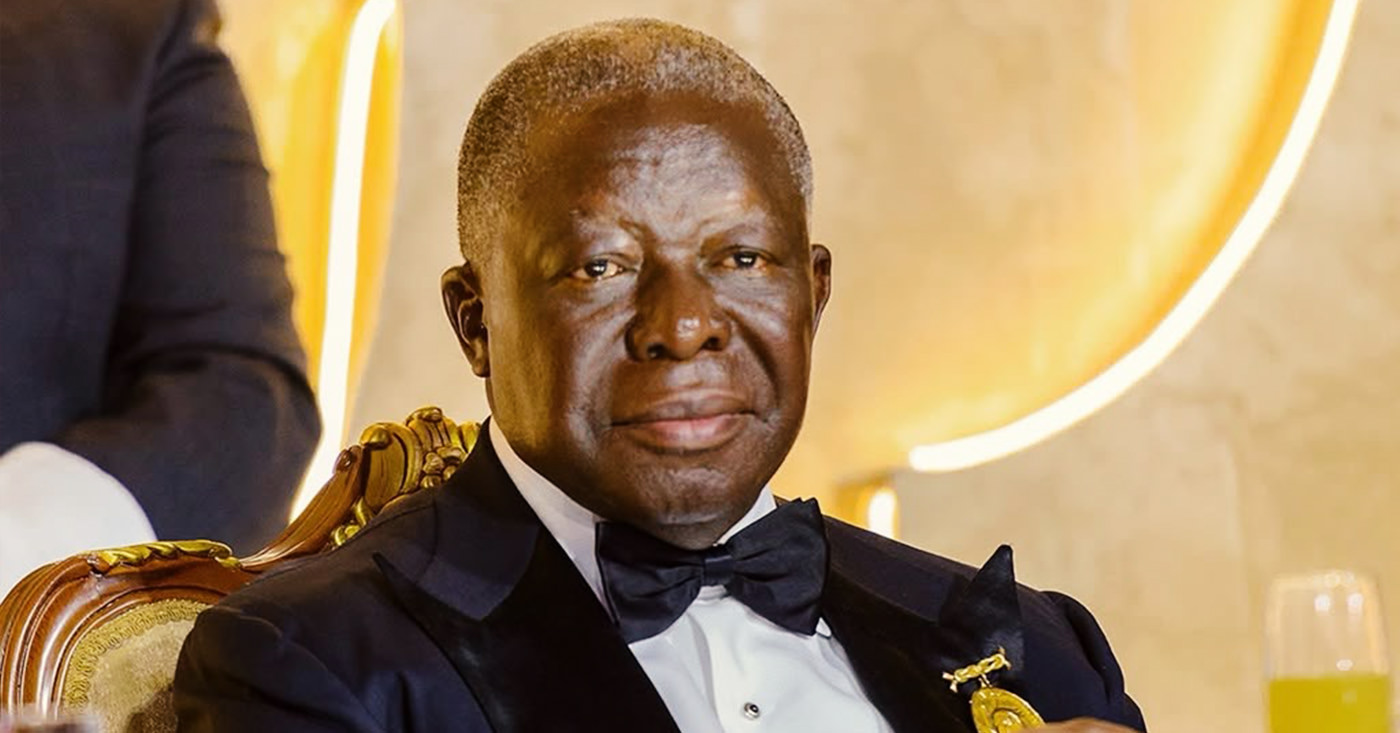
The summit will be held under the patronage of Otumfuo Osei Tutu II, King of the Asante Kingdom, who is scheduled to deliver the opening royal keynote. Ghana’s Vice President Naana Jane Opoku-Agyemang, government representatives from several African countries, and business leaders are also expected to participate.
Prempeh said details of individual projects within the $4 billion pipeline were still being curated and would be released as the summit approaches.
The larger test comes after Washington: how many conversations become deals, how much capital is actually deployed—and whether Africans themselves can see the benefits.
Asked what Black Press USA should look for if it called him a year from now to determine whether ABIS had succeeded, Prempeh did not respond with a dollar figure.
“I’m very optimistic,” he said. “I believe that what we’ve started is going to be one that is going to make waves.”
Then he invoked Wakanda, the fictional African nation home to the Marvel superhero Black Panther, to describe the future he hopes the summit can help set in motion.
“Wakanda … has started.”
The post Africa Investment Summit Brings $4 Billion Pipeline to Washington as Organizers Seek to Turn Opportunity into Deals appeared first on BlackPressUSA.