




Greensboro, NC — When the North Carolina Juvenile Services Association (NCJSA) first organized in 1966, juvenile rehabilitation was largely indistinguishable from adult correction. Young offenders were often held in adult facilities, supervised by adult parole officers, and met with rigid punitive measures rather than developmental care. Six decades later, hundreds of frontline practitioners, community advocates, and statewide leaders gathered at the Embassy Suites in Greensboro from October 14–16, 2026, to celebrate sixty years of groundbreaking advocacy, service, and youth empowerment under the banner: “A Legacy of Service, A Future of Hope.”
The three-day diamond anniversary conference reflected both the historic evolution of juvenile justice across North Carolina and the urgent, modern challenges we face today. From youth mental health and social media exploitation to adult court transfer laws and systemic racial disparities, this important conference created a safe space for essential conversations.
Opening the historical retrospective, longtime leaders Pamela Stokes, Eastern Area Manager for the N.C. Department of Public Safety (NCDPS) Division of Juvenile Justice and Delinquency Prevention (DJJDP), and Johnny Wilson, President and CEO of Fayetteville Urban Ministry, walked attendees through the timeline of change.
Stokes detailed how juvenile justice advocates broke away from the adult probation system in 1966 to build specialized juvenile training, establish community youth homes, and eliminate the warehouse penal approach for minors. By 1997, NCJSA formally received its 501(c)(3) nonprofit status, continually expanding its network from court counselors to include clinicians, educators, and grassroots diversion specialists. “Rather than a single founding figure, the NCJSA was a group of dedicated people who collectively formed together to ask: What are we going to do to help our children?” Stokes noted, emphasizing that early pioneers recognized children needed rehabilitation, family support, and genuine guidance rather than adult incarceration.
The dialogue throughout the opening sessions remained uncompromisingly honest. Johnny Wilson challenged the room to recognize that what society often labels as “badness” in a child is frequently untreated trauma. Wilson, drawing on decades of community intervention, urged attendees to confront the blind spots in youth service, “Who is mentoring your child when the adults aren’t looking? Mentorship is repetition and consistent relationship. When one child is impacted by the justice system, the entire family is impacted. We have to be the voice for the voiceless and hope for the hopeless.”
Wilson pointed out that while nearly two-thirds of high school students report having an adult at school they can talk to, too many youth still feel unsafe at home and in their communities, leading them toward risky street influences and firearm possession as a misguided shield. He stressed that authentic diversion must bridge safety, accountability, and development before a child ever reaches a courtroom desk.
This protective sentiment was further echoed in a critical digital safety session on internet crimes against children. Law enforcement presenters highlighted the explosion of digital exploitation, online grooming, extortion, and non-consensual artificial intelligence imagery targeting minors, noting a 1,000% statewide increase in related investigations since 2019. Law enforcement and child protection experts urged workers to act swiftly in preserving evidence, report via the National Center for Missing & Exploited Children via MissingKids.org, CyberTipline, and the SBI, and remember above all else: “The child is the victim, not the offender.”
Another powerful keynote on policy and data briefing by Deputy Secretary William “Billy” Lassiter of the NCDPS Division of Juvenile Justice shared vital metrics shaping the state’s current juvenile justice landscape, alongside a recorded welcome address from Governor Josh Stein. Lassiter delivered welcome news: overall juvenile crime complaints across North Carolina experienced a significant decline over the past year—marking nearly 2,000 fewer youth entering the system. However, Lassiter and state analysts pointed to complex systemic dynamics beneath the topline numbers: There has been disproportionate minority contact. Deep racial disparities persist across North Carolina’s system. While African American youth make up approximately 21% of the state’s juvenile population, they accounted for over 21,000 of the complaints filed last year, compared to roughly 8,000 for white youth. Lassiter emphasized that disparities are most severe at the system’s entry and exit points (referrals and secure detention), urging practitioners and lawmakers to directly address these inequities with targeted community resources.
A major concern is the adult transfer burden. Following the implementation of recent statutory changes, including House Bill 834, which directs 16- and 17-year-olds facing Class A through E felonies into adult court, juvenile detention centers are increasingly filled with adult-transferred youth awaiting trial. Lassiter reported that these youths now make up 60% to 70% of daily detention beds, with an average length of stay reaching 276 days, compared to just 25 days for youth under juvenile jurisdiction. Strikingly, approximately 60% of transferred homicide/murder charges against juveniles are eventually dismissed due to accessory or bystander involvement rather than principal culpability.
As we know as a community, there are intensive mental health needs. More than 99% of youth held in Youth Development Centers (YDCs) have at least one mental health diagnosis, averaging nearly five distinct diagnoses per child. In response, NCDPS recently broke ground on a specialized, 10-bed juvenile crisis unit in partnership with New Hope Treatment Centers, set to open on November 1 to provide intensive stabilization and eliminate long, draining emergency room waits.
Finally, Lassiter highlighted North Carolina’s upcoming $451 million settlement from Meta, structured in $45 million annual distributions over nine years, intended to curb screen addiction, fund crisis lines like 988, and expand outdoor and community-based Juvenile Crime Prevention Council (JCPC) programs.
Celebration was central to the diamond anniversary and the overall mood of the conference. Despite such a serious subject matter, there was also a solid focus on fun and celebration. The association paid tribute to its founding and lifetime members, including pioneers like Jane Steinberg, Renee Walker, and Judy Juliet, whose early service paved the path for today’s statewide continuum.
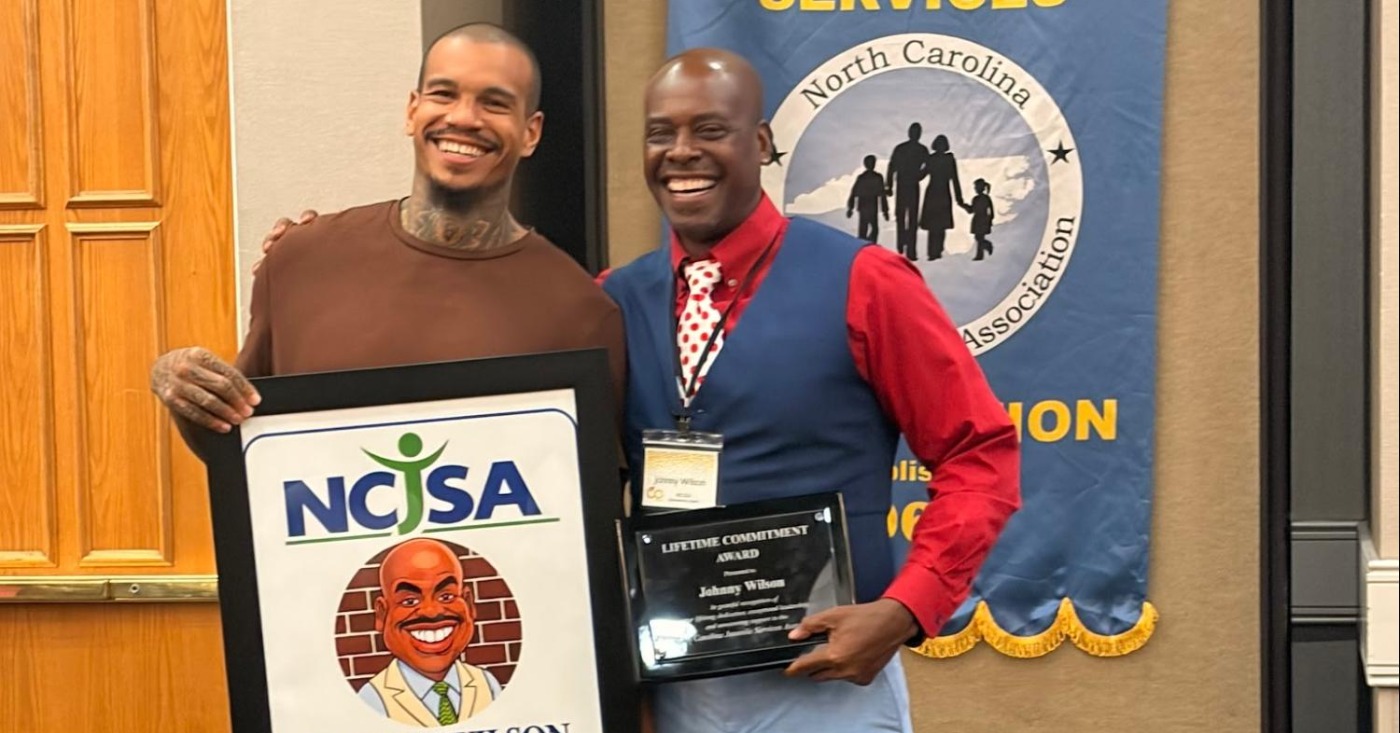
NCJSA presented several prestigious awards. In a special tribute, the NCJSA Board and Fayetteville Urban Ministry surprised Johnny Wilson with lifetime honors for his steadfast leadership, faith-driven advocacy, and deep commitment to North Carolina’s children and families since joining the association in 2006.
The conference closed with a resounding call to sustain both youth and the professionals who care for them. Keynote reflections framed the transition from mere bureaucratic compliance to genuine human connection, urging attendees to practice self-care and mutual support. Using the metaphor of an airplane’s oxygen mask, speakers reminded caseworkers, court counselors, and facility staff not to leave their own oxygen masks on the floor while rushing to save others, “We cannot serve our children and families effectively if we are operating on empty. To reach year 61 and beyond, we must see each other, celebrate our small victories, heal our own spirits, and remember our ‘why.’”
As attendees stood with linked arms across the ballroom, the message of NCJSA’s 60th anniversary was unmistakable: the past six decades prove that prevention, compassion, and community-centered intervention work. For North Carolina’s youth, the next sixty years will depend on sustaining the people and programs who refuse to give up on their promise.
Based on reporting by The Carolinian.