




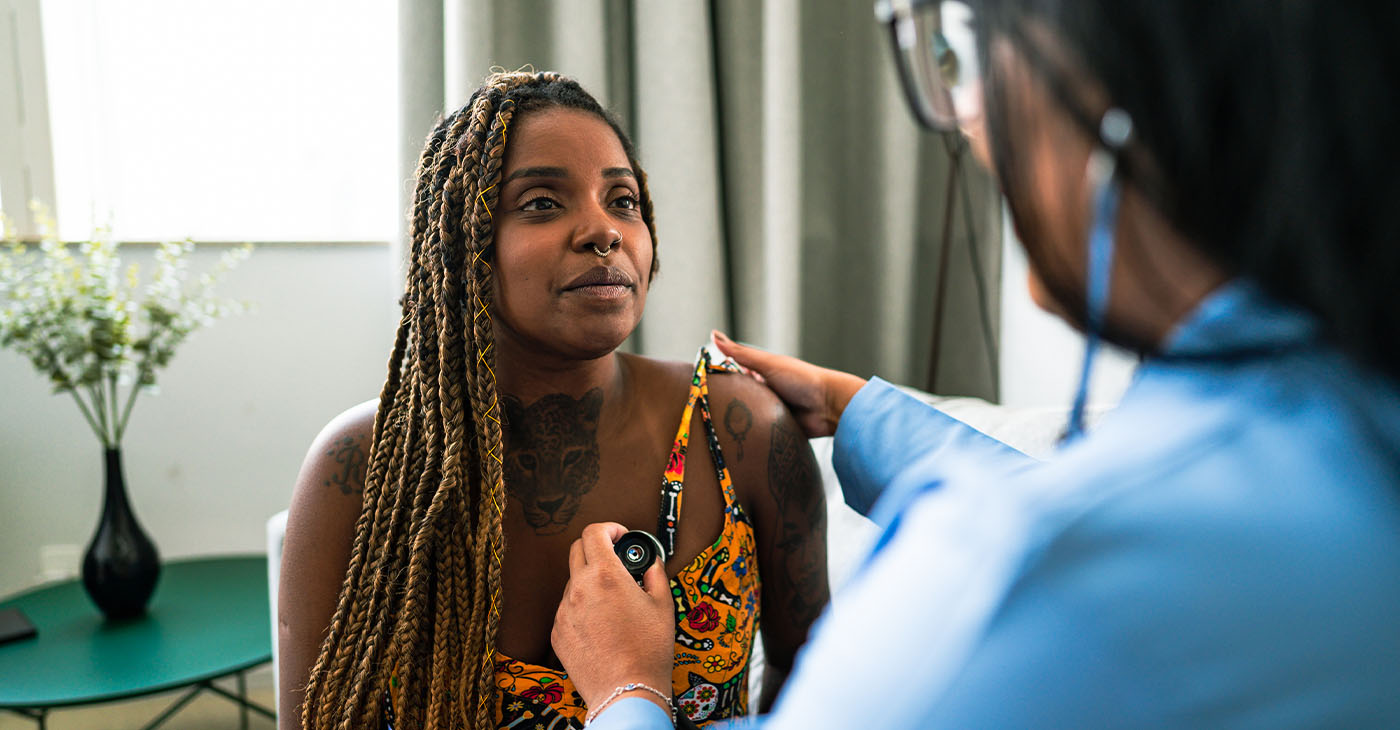
Black Women’s Health Disparities Highlight Gaps in Research and Care
By Dr. Ayanna Quamina | Minnesota Spokesman Recorder
Black women’s health disparities remain a critical issue as limited research funding continues to impact care, treatment and understanding of common conditions affecting Black women.
Women’s health research has historically been underfunded, and the numbers tell a sobering story. In 2023, the National Institutes of Health (NIH) invested less than 8% of its total grant funding in women’s health, about $3.4 billion out of a $43.7 billion budget. While that may sound substantial, it represents only a small share of the resources devoted to understanding half the population. Research specifically focused on Black women’s health is even more limited.
Estimates suggest that only about 2% of U.S. health research is dedicated to studying the health needs of Black women. Organizations such as the Black Women’s Health Imperative are working to change that. With support from a $1.2 million grant from the W.K. Kellogg Foundation, the organization has launched initiatives to address these disparities, including the largest menopause and perimenopause survey ever conducted specifically for Black women.
Still, the overall level of research focused on Black women’s health remains deeply inadequate. This means there is limited information about how conditions uniquely affect Black women, how symptoms present differently in our bodies, and what treatments may be most supportive for our population.
As the only Black naturopathic doctor actively practicing in the state of Minnesota, I am particularly aware of these gaps, I see them reflected in my patients’ experiences every day.
Learning how your body works is one of the most powerful first steps toward protecting your health. Because large institutions have yet to fully prioritize research in this area, I’m sharing insight from the clinical side. Below are three of the most common conditions I see among my Black women patients, along with a brief look at both conventional and naturopathic approaches.
Fibroids
What it is:
Also known as leiomyomas, fibroids are common benign growths made of uterine muscle and connective tissue. They affect many women during their reproductive years, but occur significantly more often in Black women.
Although fibroids are noncancerous, they can cause problems depending on their size, number, and location. Some women live their entire lives without realizing they have fibroids, while others experience severe symptoms. These may include:
- Heavy or prolonged menstrual bleeding
- Bleeding between cycles
- Severe menstrual cramping
- Pain during sexual intercourse
- Constipation
- Frequent urination or difficulty emptying the bladder
- Abdominal fullness or distention (many women say they look several months pregnant)
Conventional approach:
Depending on severity, conventional medicine offers several treatment options, including:
- Hormonal medications such as leuprolide to suppress estrogen
- Surgical removal of fibroids (myomectomy)
- Procedures such as uterine artery embolization or MRI-guided therapies
Dr. Q’s approach:
In naturopathic medicine, the focus is on addressing underlying causes. In my clinical experience, fibroids often correlate with chronic stress and hormone imbalance.
One of my preferred diagnostic tools is a salivary cortisol and hormone panel, which helps us understand how a patient’s stress hormones and reproductive hormones interact. From there, we create a personalized protocol that may include:
- Stress management strategies
- Nutrition and eating habit adjustments
- Sleep optimization
- Targeted supplementation, such as phytoestrogens or adrenal adaptogens
While naturopathic medicine does not surgically remove fibroids, I have seen cases where fibroids shrank significantly, sometimes to the point that they were no longer visible on imaging.
Perimenopause and Menopause
What it is:
Globally, an estimated 1.2 billion women are currently transitioning through menopause, the largest number in human history. In recent years, perimenopause and menopause have received increased attention as more women share their personal and clinical experiences.
Perimenopause and menopause are not diseases or signs that the body is failing. They are natural biological transitions as the body moves from one hormonal phase of life to another. However, because estrogen is one of the body’s most biologically active hormones, the transition can feel overwhelming for many women.
Common symptoms include:
- Hot flashes
- Mood changes
- Sleep disruption
- Brain fog
- Irregular menstrual cycles
Fortunately, once hormones stabilize, many of these symptoms improve.
Conventional approach:
Conventional medicine uses several tools to manage symptoms. Hormone replacement therapy (HRT), once widely feared, is now being used more thoughtfully with improved safety protocols. Some physicians also prescribe antidepressants to help manage mood-related symptoms.
Dr. Q’s approach:
My approach to menopause is highly individualized. Some patients use HRT in collaboration with their medical providers. Others prefer botanical options such as black cohosh, chaste tree berry, or passionflower to help support symptom management.
Equally important are lifestyle foundations, particularly stress management and healthy sleep patterns during this transition.
PCOS (Polycystic Ovarian Syndrome)
What it is:
Polycystic ovarian syndrome, or PCOS, is a complex hormonal condition that affects an estimated 10% to 23% of women worldwide. It is not defined by a single symptom but by a cluster of related issues that may include:
- Irregular menstrual cycles
- Ovarian cysts
- Acne
- Excess facial hair
- Fertility challenges
Many women with PCOS also experience complications such as insulin resistance, weight gain, hypertension, and elevated cholesterol.
Conventional approach:
Conventional treatment often focuses on managing symptoms and may include:
- Birth control pills to regulate menstrual cycles
- Medications to improve insulin sensitivity
- Surgery if ovarian cysts cause complications
Dr. Q’s approach:
Although the precise cause of PCOS is still being studied, research shows that insulin regulation, hormonal imbalance, and stress all play important roles. My approach focuses on restoring balance in these areas. This may include:
- Stabilizing eating habits to support blood sugar balance
- Supporting insulin regulation with nutrients such as inositol
- Using phytoestrogenic botanicals to help modulate hormone activity
While the research world continues to catch up, one thing remains clear: knowledge is power. Understanding how your body functions, how it responds to stress, and how it signals imbalance can transform the way you approach your health.
Until research truly reflects the needs of all women, sharing knowledge within our communities and clinics will remain one of our most powerful tools.
Learn more about Dr. Ayanna Quamina and her practice at http://www.drayannaq.com. Email her directly at info@drayannaq.com.