



The 14th Amendment exists because the United States once embraced a legal lie: that people born on American soil could be denied membership in the nation because of their race.
That lie was not abstract. It shaped the lives of millions of Black Americans whose families had lived in what became the United States since the earliest colonial period. They cleared land, built wealth for others, fought in wars, raised families and helped make the country possible—first under slavery and later under a system that too often treated freedom as conditional.
Yet for generations, Black Americans were denied what many white immigrants could obtain: recognized membership in the political community.
The 14th Amendment was written to end that contradiction.
A Country Built by Many
The American story has never been a story of a single people arriving at a single moment. Native nations were here first. European colonization began in the 16th and 17th centuries. Enslaved Africans arrived in English North America in 1619, only a few years after the establishment of Jamestown.
Black people, in other words, were not latecomers to the American experience. They were present from the country’s beginning, though involuntarily and under brutal conditions.
Many white immigrant groups arrived in substantial numbers later—particularly in the 19th and early 20th centuries. Irish, German, Italian, Polish, Jewish and other European immigrants often faced poverty, prejudice and exclusion. Their struggles were real.
But the law still offered most of them a path that it denied to Black Americans. They could naturalize. They could vote once eligible. They could claim legal standing as citizens. Their whiteness placed them within the boundaries of American citizenship, even when their accent, religion or national origin made them targets of discrimination.
Black Americans were treated differently. Even those born in the United States could be told that the nation of their birth was not their nation at all.
The Dred Scott Rule
That injustice reached its most infamous legal form in 1857, when the Supreme Court decided Dred Scott v. Sandford.
Dred Scott was an enslaved man who had lived with his enslaver in free territory and argued that his residence there made him free. The Court did not merely reject Scott’s claim. It went much further.
Chief Justice Roger B. Taney declared that people of African descent, whether enslaved or free, could not be citizens of the United States within the meaning of the Constitution. The decision said, in effect, that Black people could be born here, live here for generations and still be denied a place in the American political community.
Taney’s opinion included the now-infamous assertion that Black people had no rights “which the white man was bound to respect.”
The Dred Scott decision was not simply an error about one man’s freedom. It was a declaration that race could override birth, residence, service and human dignity. It made clear that, under the Constitution as then interpreted, Black Americans could be permanently excluded from citizenship.
The decision helped intensify the national conflict over slavery. Within four years, the country was at war.
Citizenship After Emancipation
The Civil War destroyed the legal foundation of slavery. The 13th Amendment abolished slavery and involuntary servitude, except as punishment for crime. But emancipation alone did not answer a basic question: What was the legal status of the people who had been freed?
Were they citizens? Could states deny them basic civil rights? Could they own property, enter contracts, testify in court, travel freely, vote, or receive equal protection from the law?
Southern states moved quickly to limit the freedom of newly emancipated Black Americans through the Black Codes. Those laws sought to control where Black people could live, work, travel, and assemble. The system of slavery was gone, but the effort to preserve racial caste was not.
Congress understood the danger. It understood that abolition without citizenship would leave formerly enslaved people vulnerable to a new form of subordination.
That is why the 14th Amendment was ratified in 1868.
Its opening sentence states:
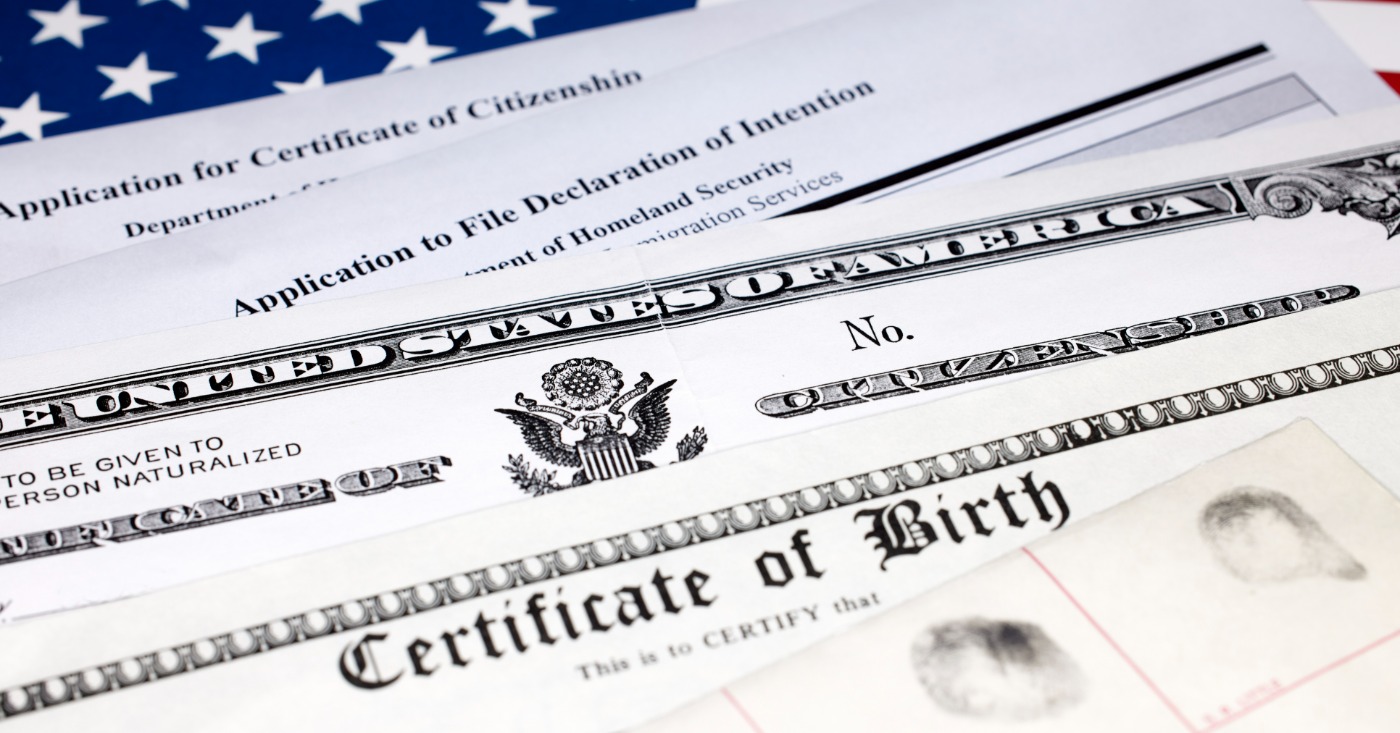
All persons born or naturalized in the United States, and subject to the jurisdiction thereof, are citizens of the United States and of the State wherein they reside.
Those words were a direct answer to Dred Scott. They established that citizenship could not be withheld from people born in the United States simply because they were Black.
Birth on American soil was made constitutionally meaningful.
The Meaning of Birthright Citizenship
The Citizenship Clause did not create the idea that birth in the United States mattered. But it made that principle a constitutional command after the Supreme Court had denied it to Black Americans.
The amendment did not say that citizenship belonged only to people whose ancestors came from a particular country. It did not make citizenship depend on race, religion, wealth or whether one’s parents had been welcomed by society.
It established a clear rule: a person born in the United States and subject to its jurisdiction is a citizen.
The immediate purpose was unmistakable. The amendment protected the citizenship of formerly enslaved people and their American-born children. But the principle it adopted was broader than its immediate crisis. It created a durable national rule against inherited caste.
That is one reason the 14th Amendment remains central to modern debates over citizenship. The question is not merely about immigration policy. It is about whether American citizenship is based on race, ancestry and political favor—or whether the nation follows the constitutional rule adopted after the Civil War.
More Than Citizenship
The 14th Amendment did more than overturn Dred Scott. It also established some of the strongest protections for individual rights in American constitutional law.
Its Due Process Clause provides that no state may deprive any person—not merely any citizen—of life, liberty or property without due process of law. Its Equal Protection Clause bars states from denying any person equal protection of the laws.
Those provisions became the foundation for landmark decisions involving racial segregation, interracial marriage, voting rights, criminal procedure, education and discrimination.
In Brown v. Board of Education, the Supreme Court relied on equal protection to reject legally enforced racial segregation in public schools. In Loving v. Virginia, the Court invalidated laws banning interracial marriage. The amendment has also shaped cases involving unequal treatment based on race, sex, national origin and other classifications.
The amendment did not instantly produce equality. It did not end racism, segregation, voter suppression or economic injustice. Those struggles continued through Reconstruction, Jim Crow, the civil rights movement, and into the present.
But it gave Americans a constitutional language for challenging government-imposed inequality.
The Argument Still Before Us
The Citizenship Clause remains at the center of political and legal debate. Some argue that the phrase “subject to the jurisdiction thereof” should be read narrowly enough to exclude certain children born in the United States to noncitizen parents.
But the amendment’s history should matter in understanding the clause. Its framers wrote it after a Supreme Court decision had declared that Black Americans, including people born in the country, could never be citizens. They sought to make that kind of exclusion impossible.
The 14th Amendment was not adopted to create a fragile citizenship, available only to those whom political leaders might later choose to recognize. It was adopted to establish citizenship as a constitutional guarantee.
That guarantee was born from one of the nation’s deepest failures. It remains one of its most important commitments.
The central lesson of the 14th Amendment is plain: A nation cannot claim to be governed by equal law while denying citizenship to people born under its flag and subject to its authority.
This post, Birthright Citizenship: The 14th Amendment Was America’s Answer to a Lie, appeared first on The Orlando Advocate.
Based on reporting by Orlando Advocate.
The post COMMENTARY: Birthright Citizenship: The 14th Amendment Was America’s Answer to a Lie appeared first on BlackPressUSA.