



By Stephen Oduntan
To most people, Scott Soliz looks healthy.
But appearances, he says, can be deceiving.
“It’s an invisible disease,” said Soliz, 35, who has lived with sickle cell disease since birth. “People think we’re okay because we look okay, but inside we’re not.”
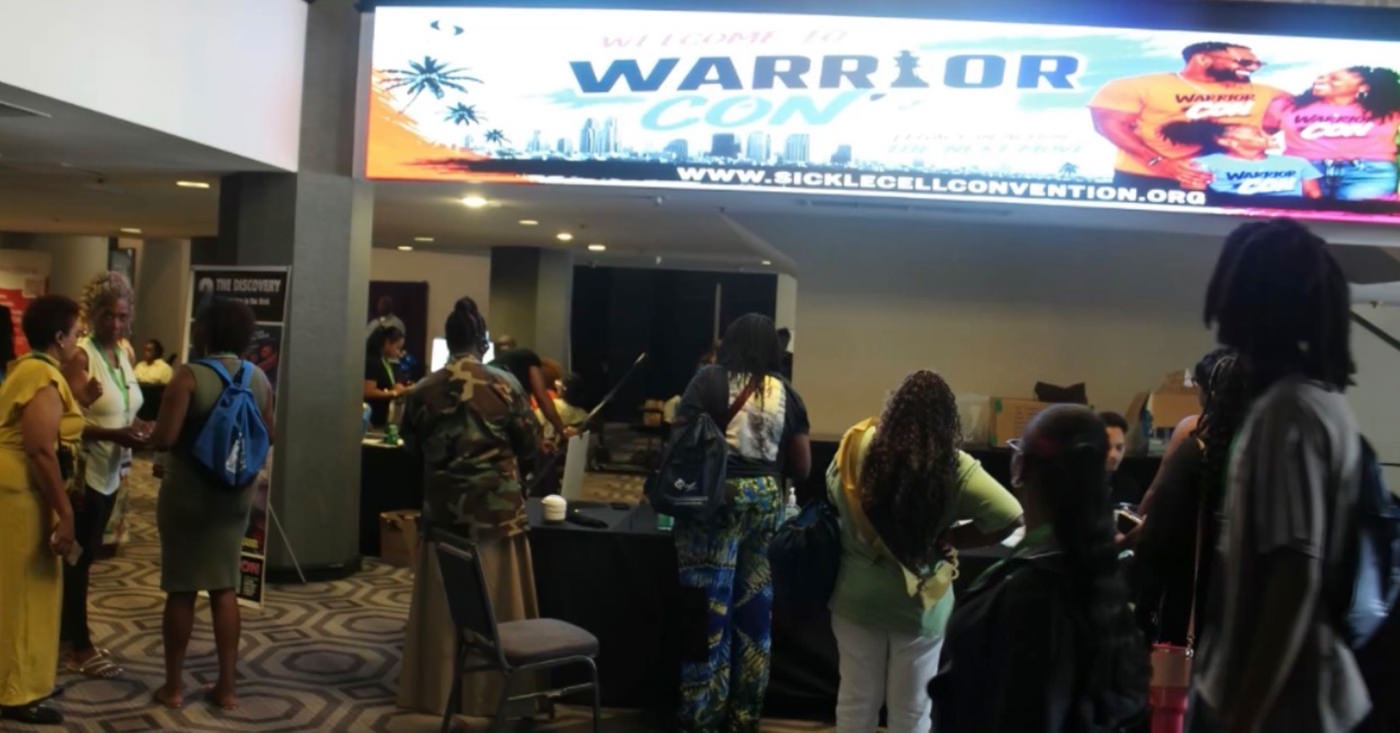
That invisible struggle became one of the defining themes at Warrior Con 2026, where patients, caregivers, physicians, researchers, and advocates from across the United States—and as far away as the United Kingdom—gathered in Los Angeles to celebrate scientific progress while confronting the barriers that continue to shape life with sickle cell disease.
The conference came at a pivotal moment for the sickle cell community. Gene-editing therapies have ushered in a new era of treatment, offering hope that was unimaginable just a decade ago. People with sickle cell disease are living longer than previous generations, and researchers say advances in molecular medicine are transforming what may be possible for future patients.
Yet for many attendees, the greatest obstacles are no longer found in the laboratory.
They are found in emergency rooms, where patients say they are too often viewed with suspicion when seeking treatment for excruciating pain. They are found in persistent misconceptions that sickle cell disease affects only Black people or that those living with the condition “look fine” and therefore cannot be seriously ill. And they are found in longstanding disparities in funding, access to specialized care, and public awareness.
“Many people would say the biggest advancement is gene therapies and the ability to alter the DNA to correct the sickle cell mutation,” said Dr. Lakiea Bailey, founder and executive director of the Sickle Cell Community Consortium, who has lived with the disease since childhood. “It is a great advancement.”
But, she cautioned, scientific breakthroughs alone are not enough.
“I think we also need advancements in just basic standards of care, which is still greatly lacking,” Bailey said. “We are definitely living much longer than we used to. However, we are still not the recipients of support the way many other diseases are.”
Bailey, who was diagnosed with sickle cell disease at age 3 and earned a doctorate in molecular hematology and regenerative medicine, said one of the greatest barriers patients continue to face is how their pain is perceived.
“Once we go in for treatment, we’re often accused of drug seeking instead of offered the help that we need,” she said. “People are sent away while still quite ill. After a while, it gets difficult, and when you find yourself having to choose between death and dignity, after a while dignity starts to win out.”
Her comments echoed those of attendees throughout the convention, many of whom described living with an illness that remains largely misunderstood despite decades of medical progress.
While researchers continue pushing the boundaries of treatment, longtime advocate Dr. Joyce El, founder and CEO of the nonprofit Journey By Grace, said the promise of new treatments must be matched by greater support for the everyday realities of living with sickle cell disease.
El praised advances in gene therapy and research but said patients continue to face challenges that cannot be solved in a laboratory.
“People still have to live,” she said. “They still need services such as transportation, housing and food. We can’t get so caught up in spending money on conventions and research that we forget people still have to live.”
She also said families need better support as young people transition from pediatric to adult care, a period she described as one of the most overlooked stages of living with sickle cell disease.
“When they turn 18, everything changes,” El said. “Their doctors change. Their benefits change. If families aren’t preparing them, they’re not ready.”
For El, improving public understanding remains just as important as advancing medical treatment.
“Sickle cell is a real disease,” she said. “Warriors are not drug-seeking individuals. They experience real pain.”
“It’s a hidden disease,” said Vashti-Iona Beckford, a sickle cell trait carrier and advocate from London. “A lot of people don’t understand how someone could be in pain if they don’t look like they’re in pain.”
For Beckford, Warrior Con offers something that medicine alone cannot provide: community.
“It helps to be around people that know that they’re invisible,” she said. “You’re not isolated in your feelings.”
That sense of belonging is what continues to draw hundreds of families, patients, and advocates together each year—not only to learn about the latest treatments, but to remind one another that no one should face the disease alone.
For former NFL wide receiver Devard Darling, the consequences of misunderstanding sickle cell trait are deeply personal.
In 2001, Darling’s identical twin brother, Devaughn, collapsed and died during an offseason football conditioning workout at Florida State University after complications related to sickle cell trait. The tragedy, which drew national attention to the condition, transformed Darling into an advocate for greater awareness among athletes, coaches, and medical professionals.
“Back then, we had no idea,” Darling said. “We didn’t know the complications of having the trait or how deadly it could be in certain situations.”
The brothers had dreamed of playing football together at Florida State. Instead, Devaughn’s death became the catalyst for a lifelong mission to educate others through the As One Foundation, which promotes awareness of both sickle cell disease and sickle cell trait.
“If we knew how to prepare our athletes, our coaches and our trainers, things might have been different,” Darling said.
He points to one of the major changes that followed his brother’s death: in 2010, the NCAA began requiring Division I athletes to be tested for sickle cell trait or sign a waiver acknowledging the risks before participation.
Still, Darling believes significant misconceptions remain.
“People think sickle cell trait doesn’t matter because many carriers never experience symptoms,” he said. “But that’s where it begins.”
One misconception he is determined to challenge is the belief that sickle cell affects only Black people.
“It’s not a skin disease,” Darling said. “It’s a blood disease.”
While sickle cell disease is most common among people whose ancestry traces to regions where malaria has been prevalent—including parts of Africa, the Mediterranean, the Middle East, and India—it can affect people of many racial and ethnic backgrounds.
“The medical field has to change,” Darling said. “That’s what we need the funding for—research. Knowledge is power.”
His message echoed throughout Warrior Con, where education was viewed not simply as awareness but as a way to save lives.
For many attendees, however, Warrior Con is about more than the latest research or policy discussions. It is about finding a community that understands what life with sickle cell disease actually feels like.
Scott Soliz said Warrior Con gives people living with the condition something many struggle to find elsewhere: a community that understands their experiences.
“When you come to an event like this, you’re talking to different warriors about similar experiences,” Scott said. “It’s a breath of fresh air to know that you’re not alone.”
His twin brother, Steve Soliz, said one of the biggest challenges is combating misconceptions about people living with the disease.
“People mistake lazy with being tired or fatigued,” Steve said. “We’re not lazy at all. We’re very talented people. We just have to take time to heal and focus on our health.”
Bailey said that sense of community is exactly what Warrior Con was created to foster.
“I want everyone living with sickle cell and caregivers to leave here feeling seen and empowered,” she said. “I want others who don’t know much about sickle cell to leave here knowing a lot more and how to support the people in their lives.”
Looking to the future, Bailey said she is encouraged by the next generation of patients and advocates.
“They have more access to treatments than we ever have. They’re more knowledgeable than previous generations, and they’re more willing to fight for what is right,” she said. “I’m very excited about these kids.”
The post Beyond Breakthroughs: Sickle Cell Advocates Say the Fight for Better Care Is Far From Over appeared first on BlackPressUSA.