

Close Menu
  • Home
  • News
    • Local
  • Opinion
  • Business
  • Health
  • Education
  • Sports
  • Podcast

Subscribe to Updates

Get the latest creative news from FooBar about art, design and business.

What's Hot

DC Voters Fill the Seats at ‘Ask a D.C. Candidate Mayoral Forum’

‘Slavery Was a Good Thing,’ Black Leader Says MAGA Told Him

‘I Was Confident in Myself and Her Answer. I Knew She Would Say Yes … We Had Spent a Lot of Time Together’

Facebook X (Twitter) Instagram
  • Lifestyle
  • Podcast
  • Contact Us
Facebook X (Twitter) Instagram Pinterest Vimeo
The Windy City Word
  • Home
  • News
    1. Local
    2. View All

    Uncle Remus Says Similar Restaurant Name Is Diluting Its Brand and Misleading Customers

    Youth curfew vote stalled in Chicago City Council’s public safety committee

    Organizers, CBA Coalition pushback on proposed luxury hotel near Obama Presidential Center

    New petition calls for state oversight and new leadership at Roseland Community Hospital

    DC Voters Fill the Seats at ‘Ask a D.C. Candidate Mayoral Forum’

    American College of Physicians Names First Black EVP & CEO, LeRoi Hicks

    Dads, Kids & Community Clean with a Purpose

    Building Bridges of Support: How AAPI Equity Alliance Is Strengthening California’s Anti-Hate Network

  • Opinion

    Capitalize on Slower Car Dealership Sales in 2025

    The High Cost Of Wealth Worship

    What Every Black Child Needs in the World

    Changing the Game: Westside Mom Shares Bally’s Job Experience with Son

    The Subtle Signs of Emotional Abuse: 10 Common Patterns

  • Business

    Illinois Department of Innovation & Technology supplier diversity office to host procurement webinar for vendors

    Crusader Publisher host Ukrainian Tech Businessmen eyeing Gary investment

    Sims applauds $220,000 in local Back to Business grants

    New Hire360 partnership to support diversity in local trades

    Taking your small business to the next level

  • Health

    DC Voters Fill the Seats at ‘Ask a D.C. Candidate Mayoral Forum’

    American College of Physicians Names First Black EVP & CEO, LeRoi Hicks

    Building Bridges of Support: How AAPI Equity Alliance Is Strengthening California’s Anti-Hate Network

    Revolve Fund to Provide $20,000 to Support Food Access Efforts in Alabama Black Belt

    Mamdani Plans City Grocery Store in East Harlem 

  • Education

    PRESS ROOM: Southern University Just Made HBCU History. The National Championship Is Next.

    Delaying Kindergarten May Have Limited Benefit

    The Many Names, and Many Roles, of Grandparents Today

    PRESS ROOM: PMG and Cranbrook Horizons-Upward Bound Launch Journey Fellowship Cohort 2

    Poll Shows Support for Policies That Help Families Afford Child Care

  • Sports

    Dads, Kids & Community Clean with a Purpose

    WNBA Draft 2026 Explained

    WAVE – Jax Unveils New Women’s Pro Basketball League

    A DREAM COME TRUE: Angel Reese is traded to the Atlanta Dream

    NBA: Hawks’ CJ McCollum made it work during a “storm”

  • Podcast
The Windy City Word
Local

Chicago’s history with hosting Democratic and Republican conventions dates back to 1860

staffBy staffUpdated:No Comments5 Mins Read
Facebook Twitter Pinterest Telegram LinkedIn Tumblr Email Reddit
Share
Facebook Twitter LinkedIn Pinterest WhatsApp Email

Chicago is no stranger to hosting the Democratic National Convention.

Between 1860 and 1996, the city hosted 25 Republican and Democratic conventions. No other city has hosted nearly as many, with the runner-up, Baltimore, claiming 10, followed by Philadelphia, with 9.

Advertisement

Add to that total the founding of the Prohibition Party at an 1869 convention in Chicago’s Farwell Hall. Plus Theodore Roosevelt’s Progressive Party, founded in 1912 as a breakaway from the Republican Party that also met in Chicago that same year.

And in 2024, the city will once again host the Democratic National Convention.

Advertisement

Here’s a look back at how the Tribune has covered them.

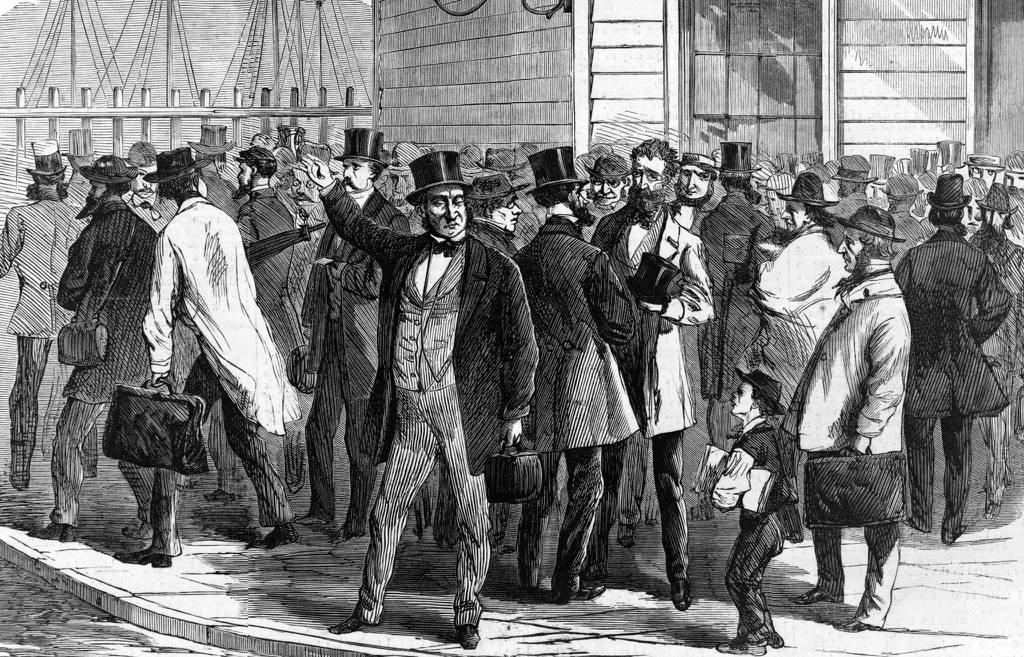
Arrival of the delegates to the 1860 Republican convention in Chicago, sketched by W.B. Baird in 1868. (W.B. Baird/Library of Congress)

In the run-up to the 1860 Republican Convention, Abraham Lincoln got cold feet. The Chicago Tribune was tirelessly touting him as the party’s choice for president. But Lincoln was juggling his law practice and candidacy. In March, he fought and won a tough, 11-day courtroom battle in Chicago.

So he confessed his misgivings to the newspaper’s editor. “See, here, you Tribune boys got me up a peg too high,” he told Joseph Medill, the paper’s editor. “How about the vice presidency? Won’t that do?”

Medill wouldn’t have it. He’d worked too hard persuading the Republicans to hold their convention in Chicago and getting the city to build a hall to hold it in.

“We’re not playing second in this dance to any musician. It’s president or nothing. Else you can count the Tribune out. We’re not fooling away our time and science on the vice presidency.”

Medill’s insistence on going full bore for the presidency established Chicago as the go-to town for political conventions.

Democrats met in Chicago for the first time in 1864, when the party nominated Gen. George B. McClellan. Four years later, Republicans returned to nominate Civil War hero Gen. Ulysses S. Grant.

Republicans returned in 1880 to nominate James A. Garfield, and, in 1884, Chicago hosted its first double convention where Republicans nominated James G. Blaine of Maine and Democrats nominated New York Gov. Grover Cleveland, who was later elected president. Four years later, Republicans nominated U.S. Sen. Benjamin Harrison of Indiana, who lost the popular vote but defeated Cleveland in the Electoral College. In 1892, Democrats nominated Cleveland again and he regained the presidency.

Advertisement

In 1896, Chicago hosted the Democratic convention where William Jennings Bryan delivered his historic “Cross of Gold” speech and won the nomination but lost to William McKinley.

In 1904, Republicans convened to nominate President Theodore Roosevelt, who had assumed office after McKinley’s assassination. Four years later, the GOP convention in Chicago was the location where the party nominated William Howard Taft, Roosevelt’s hand-picked successor. In 1912, Roosevelt challenged Taft. Roosevelt won almost all the primaries, but Republican leaders refused to nominate him. Roosevelt refused to drop out and two months later the Progressive Party nominated him in Chicago. New Jersey Gov. Woodrow Wilson later won the election. In 1916, the Republicans again rebuffed Roosevelt and instead nominated Charles Evans Hughes.

Four years later, the Republicans were back again and nominated U.S. Sen. Warren G. Harding. Another double convention occurred in 1932 when Republicans renominated President Herbert C. Hoover in Chicago and then weeks later Democrats picked Franklin D. Roosevelt, who ended up winning for the first time. Roosevelt was renominated for his third and fourth terms in Chicago, with the convention being held at the Chicago Stadium. Republicans met in 1944 in Chicago to nominate New York Gov. Thomas E. Dewey.

In 1952, Republicans nominated Gen. Dwight D. Eisenhower in Chicago while Democrats were here to nominate Illinois Gov. Adlai E. Stevenson II. The Democrats returned four years later to nominate Stevenson again — and he lost to Eisenhower again. The last GOP convention in Chicago was in 1960 when the Republicans nominated Vice President Richard M. Nixon.

Image 1 of 5

Delegates on the Democratic National Convention floor chant “Stop the war” after a speech by Pierre Salinger, President John F. Kennedy’s press secretary, on Aug. 28, 1968. Salinger urged adoption of the dove plank on the Vietnam War. (John Austad / Chicago Tribune)

In 1968, the Democratic Party was to meet Aug. 26-30 at Chicago’s International Amphitheatre. Tensions were high amid protests about the war in Vietnam, the assassination of Martin Luther King Jr. in April and the assassination of Robert F. Kennedy on June 5. Ron Grossman wrote: “The phrase ‘ ‘68 Convention’ was about to join ‘Al Capone’ as mnemonic shorthand for the more notorious chapters of Chicago’s history.”

Inside the convention hall, demonstrations erupted and angry words were traded among attendees. Outside the convention hall, rioting by “hippie” protesters took over Chicago and images of police beating the demonstrators were broadcast around the world. Of the many protesters arrested, several men were charged with conspiracy and crossing state lines to incite a riot. They became known as the Chicago 7. During the five-month trial in Chicago, protesters never let up demonstrating against the trial and the war.

Advertisement

Image 1 of 5

President Bill Clinton and Vice President Al Gore face the roaring delegates at the Democratic National Convention at the United Center in 1996. (Jose More/Chicago Tribune)

Chicago wouldn’t host another Democratic convention until 28 years later, when it was held at the United Center Aug. 26-29. President Bill Clinton was nominated for a second term, and speakers included first lady Hillary Rodham Clinton, keynote speaker Indiana Gov. Evan Bayh, actor Christopher Reeve, gun-control advocate Sarah Brady and Mayor Richard Daley.

“The agenda behind this convention was apparent to anyone who got close to the process: Wipe out the unpleasant memories of 1968 — with its battles between cops and protesters — and replace them with memories of a lovefest,” read a Chicago Tribune article from 1996.

Share. Facebook Twitter Pinterest LinkedIn Reddit WhatsApp Telegram Email
Previous ArticleFire weather watch issued Wednesday for Chicago, counties across Illinois
Next Article Hammond woman dead, firefighter injured during house fire early Tuesday
staff

Related Posts

Uncle Remus Says Similar Restaurant Name Is Diluting Its Brand and Misleading Customers

Youth curfew vote stalled in Chicago City Council’s public safety committee

Organizers, CBA Coalition pushback on proposed luxury hotel near Obama Presidential Center

Leave A Reply Cancel Reply

Video of the Week
https://www.youtube.com/watch?v=AxFXtgzTu4U
Advertisement
Video of the Week
https://www.youtube.com/watch?v=OjfvYnUXHuI
ABOUT US


The Windy City Word is a weekly newspaper that projects a positive image of the community it serves. It reflects life on the Greater West Side as seen by the people who live and work here.

OUR PICKS

André 3000 played his flute on the West Side like a true Outkast would

LIVE! HE SAID, HE SAID, HE SAID: “DATING DIALOG: Do’s & Don’ts” w/ Lamont White — FRI. 10.11.24 7PM

@HBCU Students Take Over Audi Dealership!

MOST POPULAR

DC Voters Fill the Seats at ‘Ask a D.C. Candidate Mayoral Forum’

American College of Physicians Names First Black EVP & CEO, LeRoi Hicks

Building Bridges of Support: How AAPI Equity Alliance Is Strengthening California’s Anti-Hate Network

© 2026 The Windy City Word. Site Designed by No Regret Medai.
  • Home
  • Lifestyle
  • Podcast
  • Contact Us

Type above and press Enter to search. Press Esc to cancel.