



Close Menu
  • Home
  • News
    • Local
  • Opinion
  • Business
  • Health
  • Education
  • Sports
  • Podcast

Subscribe to Updates

Get the latest creative news from FooBar about art, design and business.

What's Hot

The mission of Youth Alive! Is to “break the cycle of violence, heal trauma, and uplift a thriving community of leaders, to save lives in Oakland and beyond” by serving “as mentors, youth leaders, counselors, case managers, intervention specialists and violence interrupters,” working “to help violently wounded people heal themselves and their community.”

Standoff for Justice: Our Homes Are Worth Fighting For

‘Eyes on Cuba’: A Conversation About Humanitarian Conditions Facing Cuba in Midst of Crippling U.S. Blockade

Facebook X (Twitter) Instagram
  • Lifestyle
  • Podcast
  • Contact Us
Facebook X (Twitter) Instagram Pinterest Vimeo
The Windy City Word
  • Home
  • News
    1. Local
    2. View All

    Uncle Remus Says Similar Restaurant Name Is Diluting Its Brand and Misleading Customers

    Youth curfew vote stalled in Chicago City Council’s public safety committee

    Organizers, CBA Coalition pushback on proposed luxury hotel near Obama Presidential Center

    New petition calls for state oversight and new leadership at Roseland Community Hospital

    Arnold Perkins: At 85, a Life of Service, Faith and Giving Back

    Recorder Rewind: Falcons 34 – Colts 6, NFL Preseason (photos)

    COMMENTARY: The Great Potential of Black Children in Texas

    Former Missile Plant Gets Toxic Cleanup While Thousands Wait

  • Opinion

    Rep Davis, Olive Post CDR., Call on Trump to Restore file of Black Vietnam War Hero to Website

    Capitalize on Slower Car Dealership Sales in 2025

    The High Cost Of Wealth Worship

    What Every Black Child Needs in the World

    Changing the Game: Westside Mom Shares Bally’s Job Experience with Son

  • Business

    Illinois Department of Innovation & Technology supplier diversity office to host procurement webinar for vendors

    Crusader Publisher host Ukrainian Tech Businessmen eyeing Gary investment

    Sims applauds $220,000 in local Back to Business grants

    New Hire360 partnership to support diversity in local trades

    Taking your small business to the next level

  • Health

    Arnold Perkins: At 85, a Life of Service, Faith and Giving Back

    COMMENTARY: The Great Potential of Black Children in Texas

    Former Missile Plant Gets Toxic Cleanup While Thousands Wait

    PRESS ROOM: UAB and Children’s of Alabama Celebrate Five-Year Anniversary of NICU Bookworms

    7 Ways Crohn’s Disease Affects Black Women Differently

  • Education

    Alphas Use Mentorship to Prepare Jacksonville Youth for Manhood

    COMMENTARY: You Are Already Paying for the AI Boom

    COMMENTARY: We Lived It: Why a Different World Still Matters Today — an Ode to HBCUs

    A Legacy Written in Faith Now Written on the Streets of San Diego

    Arabia Mountain Alum Selected for USTA Coaching Program

  • Sports

    Recorder Rewind: Falcons 34 – Colts 6, NFL Preseason (photos)

    BSPNTX Announces 2026-27 Scholarships Recipients

    MEAC Preview: South Carolina State Picked to Win Conference

    COMMENTARY: Money Matters — Why the Detroit Pistons Are Investing in Detroit Entrepreneurs

    100 Black Wings’ Team Oakland Youth Athletes Heading to Taiwan for 2026 International Children’s Games

  • Podcast
The Windy City Word
Local

CTA, Metra to get $185 million in federal funding to make stations more accessible

staffBy staffUpdated:No Comments4 Mins Read
Facebook Twitter Pinterest Telegram LinkedIn Tumblr Email Reddit
Share
Facebook Twitter LinkedIn Pinterest WhatsApp Email

Chicago will receive a total of $185 million in federal funding to make several of its Chicago Transit Authority and Metra stations accessible for disabled riders, officials announced Monday as part of a new program tucked into the bipartisan infrastructure law signed by President Joe Biden last year.

Combined, Chicago will receive the second-largest bundle of grants, after New York City, under a provision in the massive $1 trillion bill that sets aside $1.75 billion for transit agencies to improve their stations’ accessibility. That program was championed by U.S. Sen. Tammy Duckworth, a Democrat from Illinois, who modeled it after CTA’s own 20-year plan to place elevators in all stations.

Advertisement

“It’s absolutely urgently needed,” Duckworth said in a phone interview. “This is going to be a significant investment in making sure that our mass transit stations will become fully accessible to all.”

The largest award for the city will be $118.5 million, for the CTA to modernize its Irving Park, Belmont and Pulaski stations to be fully compliant with the Americans with Disabilities Act. Those stops were built more than 50 years ago and are among 42 CTA stations that are not ADA-compliant, but the construction projects envisioned for those three include elevators, ramp upgrades and improved signs.

Advertisement

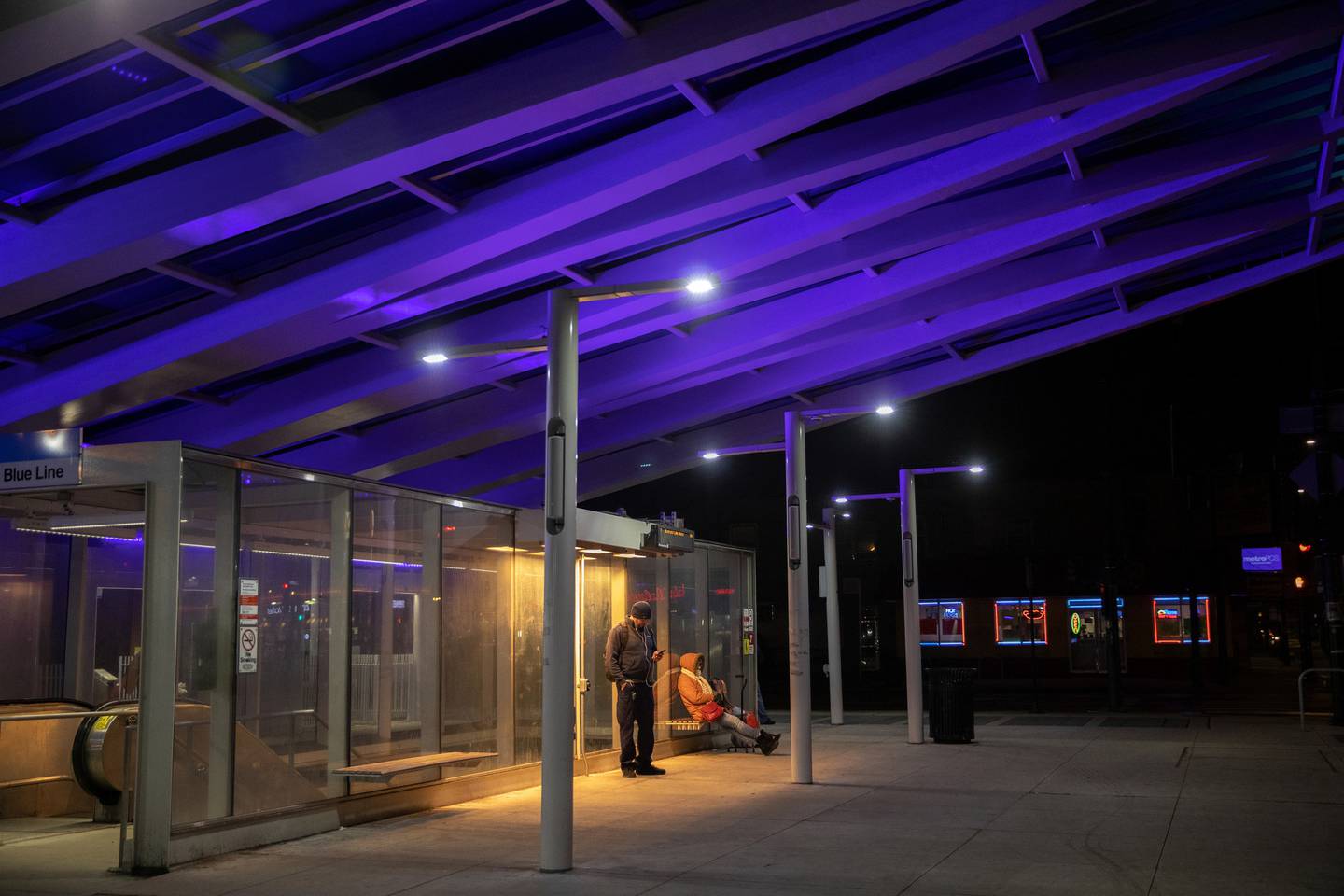
People wait outside the CTA Belmont Blue Line Station on March 23, 2020, in Chicago. (Erin Hooley / Chicago Tribune)

Then another $37.6 million will improve accessibility at the 59th/60th Street Station on the Metra Electric line, including reconstructing the street entrances and platform enhancements. The last $29 million will go toward making the 95th Street-Chicago State University station — built in the 1920s — fully ADA-accessible via installing elevators, adding a pedestrian tunnel and pathways to connections and redoing the platform.

“The urgency for individual human beings is stunning. It’s life-changing,” Paul Kincaid, a spokesman for the Federal Transit Administration within the U.S. Department of Transportation, told the Tribune. “One of the hallmarks of public transportation is that everyone gets a chance to ride.”

The new grants — a total of 15 in nine states — must be used for improving inaccessible rail facilities that were built before the 1990 signing of the ADA, which largely allowed older buildings without accommodations to be grandfathered in if they predated the law. More than 900 such legacy stations remain inaccessible today, the federal government estimates.

Signed into law by President George H.W. Bush, the ADA prohibited discrimination against Americans with disabilities and required all newly constructed buildings to be fully accessible. At the time, less than 10% of CTA stations complied with accessibility standards, and that percentage is now over 70%.

But that still leaves 42 of Chicago’s 145 “L” stations inaccessible today and lacking upgrades for decades, with some last renovated in the 1930s and a handful that have not been substantially improved since the late 1800s and early 1900s, according to CTA records.

Duckworth, who lost her legs in a combat helicopter crash in Iraq, said that lack of progress is abysmal.

“It’s a sorry state,” Duckworth said. “I mean, I don’t take the ‘L’ in Chicago because I never know if a station is going to be fully accessible for my wheelchair or not. That’s why I created the … act at the federal level.”
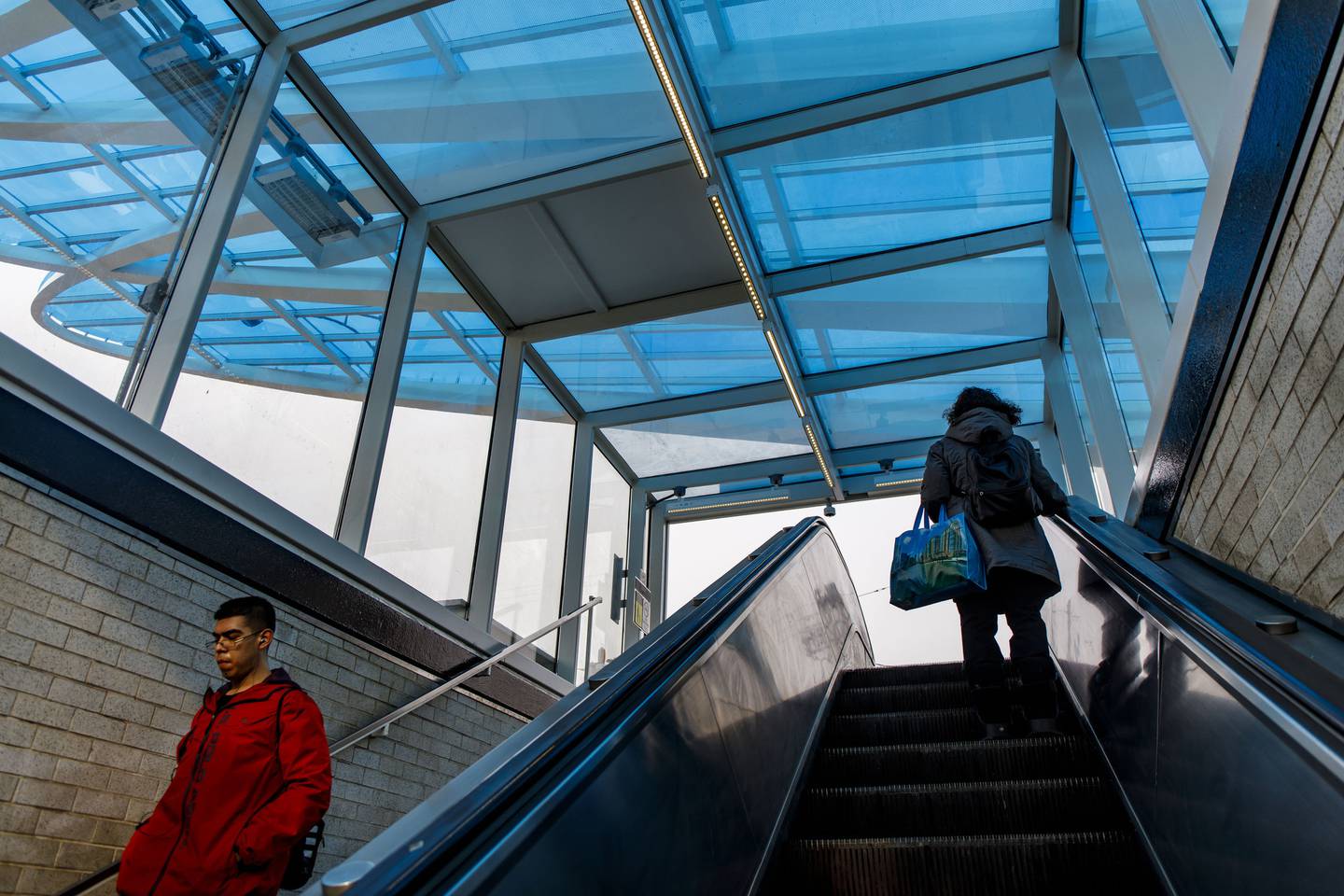
The remodeled CTA Blue Line Belmont subway and bus stop on March 28, 2019, in Avondale.

The remodeled CTA Blue Line Belmont subway and bus stop on March 28, 2019, in Avondale. (Brian Cassella / Chicago Tribune)

In 2018, CTA President Dorval Carter Jr. and then-Mayor Rahm Emanuel unveiled the transit agency’s All Stations Accessibility Program, or ASAP, an effort to make all of the CTA’s stations accessible by 2038. Duckworth balked at the slow timeline, but Carter said his hands were tied unless more funding streams opened.

Advertisement

So the then-freshman senator introduced a bill to implement the ASAP initiative on a federal scale. That legislation was superseded by the $1.75 billion accessibility program in the federal infrastructure bill — only half the amount Duckworth wanted, but a good start nonetheless, she said.

Kincaid said the Biden administration will continue vetting projects submitted through the grant program for the next few years, under the bipartisan infrastructure law, which sunsets in 2026. However, the federal government will also “encourage” local governments to put up as much funding as they can too, he said.

“The best time for this would have been years ago, right?” Kincaid said. “But the second best time is tomorrow.”

ayin@chicagotribune.com

Share. Facebook Twitter Pinterest LinkedIn Reddit WhatsApp Telegram Email
Previous ArticleSing Me a Story: Nonprofit brings power of music to kids in need with original songs
Next Article ‘Highlight reel’ Justin Fields draws more praise — but Chicago Bears lose 7th straight. Brad Biggs’ 10 thoughts on the draft order, Cairo Santos and more from Week 15.
staff

Related Posts

Uncle Remus Says Similar Restaurant Name Is Diluting Its Brand and Misleading Customers

Youth curfew vote stalled in Chicago City Council’s public safety committee

Organizers, CBA Coalition pushback on proposed luxury hotel near Obama Presidential Center

Leave A Reply Cancel Reply

Video of the Week
https://www.youtube.com/watch?v=AxFXtgzTu4U
Advertisement
Video of the Week
https://www.youtube.com/watch?v=OjfvYnUXHuI
ABOUT US


The Windy City Word is a weekly newspaper that projects a positive image of the community it serves. It reflects life on the Greater West Side as seen by the people who live and work here.

OUR PICKS

‘This Is a Series’: Atlanta Hawks Lose Game 3 to Knicks, Head to NY for Crucial Game

Drive with Confidence: Subaru Forester Limited’s Advanced Safety Features

Rising Auto Prices: Who Really Pays the Price?

MOST POPULAR

Arnold Perkins: At 85, a Life of Service, Faith and Giving Back

COMMENTARY: The Great Potential of Black Children in Texas

Former Missile Plant Gets Toxic Cleanup While Thousands Wait

© 2026 The Windy City Word. Site Designed by No Regret Medai.
  • Home
  • Lifestyle
  • Podcast
  • Contact Us

Type above and press Enter to search. Press Esc to cancel.