




LITTLE RICHARD
November 30
1912—Legendary filmmaker and photographer Gordon Parks is born in Fort Scott, Kan. In addition to his pioneering work in film and photography, Parks wrote 12 books and authored a ballet entitled “Martin” in honor of civil rights legend Dr. Martin Luther King Jr.
1924—Congresswoman Shirley Chisholm is born in Brooklyn, N.Y. Chisholm became the leading Black female politician in America. She served in the New York State Assembly, the United States Congress and ran for the Democratic Party nomination for president in 1972. Chisholm died on Jan. 1, 2005.
December 1
1641—U.S. (then British) colonies began legalizing slavery. On this day, Massachusetts became the first colony to do so. Other colonies followed suit. Ironically, Massachusetts was also the first state to outlaw slavery as a result of a 1783 State Supreme Court ruling.
1774—In another compromise measure that characterized the legal struggle against slavery in America, the Continental Congress approves a measure banning the further importation of slaves into the country. However, slavery itself remained legal. Plus, it was common for slave ships to violate the ban.
1877—Judge Jonathan Jasper Wright resigns. Wright had been the first Black state Supreme Court judge. However, he resigned on this day (out of possible fear for his life) as the Reconstruction era ended White racists were reasserting control over Southern politics and law. While on the South Carolina Supreme Court, Wright wrote 87 opinions which were noted for “clear thinking and a solid basis in common law.”
1878—Arthur Spingarn is born. He, along with his brother Joel, was one of the principal early organizers of the NAACP. At one point, he headed both the NAACP and the NAACP Legal Defense Fund. His contribution to the group was primarily in the areas of law and contacts to liberal, politically well-connected Whites.
December 2
1859—John Brown, one of the leading White heroes of Black history, is hanged near Harpers Ferry, Va. He was a tireless crusader against slavery. His activities ranged from working in the secretive “Underground Railroad,” which helped Blacks escape slavery to attacking slave owners who wanted to expand slavery outside of the South. Brown’s frustration, with the slow pace of efforts to abolish slavery, led him to attempt to incite a violent slave revolt which began with a raid on the federal arsenal at Harpers Ferry in October 1859. His group was eventually cornered and he was hanged on this day in 1859.
1884—Granville T. Woods (1856-1910) invents and on this day patents a major improvement to the telephone transmitter. Indeed, it can be reasonably argued that this highly productive African American inventor actually invented the telephone because his device (called “telegraphony”) was superior to that invented by Alexander Graham Bell. It was so superior, in fact, that the Bell Company purchased it from Woods in part because his telephone was better and in part to prevent Woods from becoming a major competitor. Woods received nearly 50 patents for inventions in the areas of transportation, electricity and communications. He was called “the Black Edison” after Thomas Alva Edison who is generally considered the most productive U.S. inventor. However, Woods and Edison would cross paths when Edison sued him in a dispute over which one first invented the multiplex telegraph. Edison tried to buy Woods off by offering him a prominent position in his company but Woods declined.
1891—Historian Charles Wesley is born in Louisville, Ky. Wesley was one of Black America’s most productive historians and a strong advocate of the need for Blacks to know their history. His major works included “Neglected History,” “Collapse of the Confederacy” and “Negro Labor in the United States.” He had a long association with Carter G. Woodson’s Association for the Study of Afro-American Life and History in Washington, D.C.
December 3
1847—Frederick Douglas and Martin R. Delaney establish “The North Star” and it goes on to become a major anti-slavery newspaper.
1922—Ralph Gardner is born in Cleveland, Ohio. He was a pioneer chemist whose research into plastics led to the development of so-called hard plastics and aided product developments in the petrochemical and pharmaceutical industries.
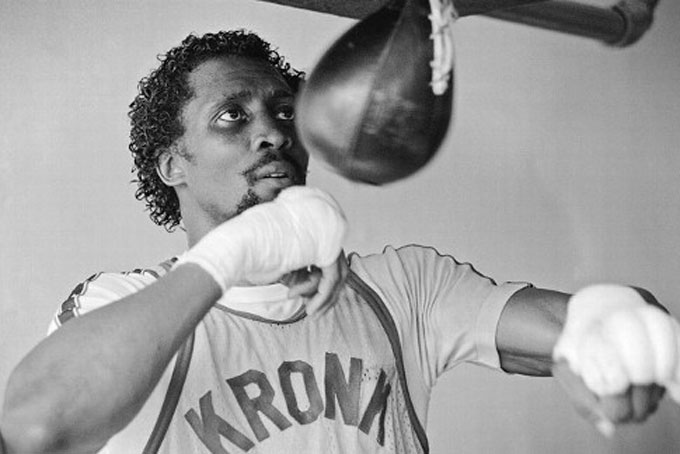
1982—Thomas “The Hit Man” Hearns defeats Wilfredo Benitez for the WBC Junior Middleweight boxing title. Hearns becomes the first person to win boxing titles in five different weight classes.
December 4
1783—General George Washington gives his famous farewell address to troops at Fraunces Tavern in New York City. The tavern was owned by a prominent Black businessman of French and West Indian descent named Samuel “Black Sam” Fraunces, who had aided the Americans in their bid to gain independence from England. After he became president, Washington hired Fraunces as his chief steward.
1807—Prince Hall dies. His was one of the most prominent Black names in colonial America. Hall was born (circa 1748) in Barbados in the West Indies and migrated to Boston. He became one of the leaders of the city’s Black community. He also became an abolitionist and a Mason. In fact, he is considered the “father of Black Masons.” He also fought in the American war for independence from England.
December 5
1775—A memorial is dedicated to Salem Poor in Cambridge, Mass. Poor was a slave who had bought his freedom and became a hero fighting in the American Revolutionary War for independence from England. He so distinguished himself in battle, including at Bunker Hill, that he won the praise of 14 officers.
1784—The amazing poet Phyllis Wheatley dies in Boston, Mass. Wheatley was kidnapped in Africa at age 7 and sold to a prosperous Boston family, which placed a high value on education. By age 12, she was reading Greek and Latin classics. In the 1770s she became a sensation in the city because of her amazing ability to write poetry. A London company published her first book of poetry. Sadly, she died in poverty before she could find a publisher for her second book. That second volume has never been found. Although some letters she wrote during this period were recently discovered and sold at auction.
1870—Legendary Black cowboy William “Bill” Pickett is born in Travis County, Texas. Standing only 5’7” and weighing 145 pounds, he is considered one of the toughest men every to be called a cowboy. He became famous in the Miller Brothers 101 Ranch Wild West Shows where he performed dare devil feats and invented the rodeo sport of “bulldogging.” He is thought to have been of Black and Indian descent. He died at age 70 in Ponca City, Okla.
1870—Alexandre Dumas (pere) dies in France. Dumas, one of the most famous French writers of the 1800s, was a Black man born to a French marquis and a slave woman on the island of St. Domingue (now Haiti). Dumas wrote such noted works as “The Three Musketeers” and “The Count De Monte Cristo.”
1932—The “King of Gospel” Rev. James Cleveland is born in Chicago, Ill.
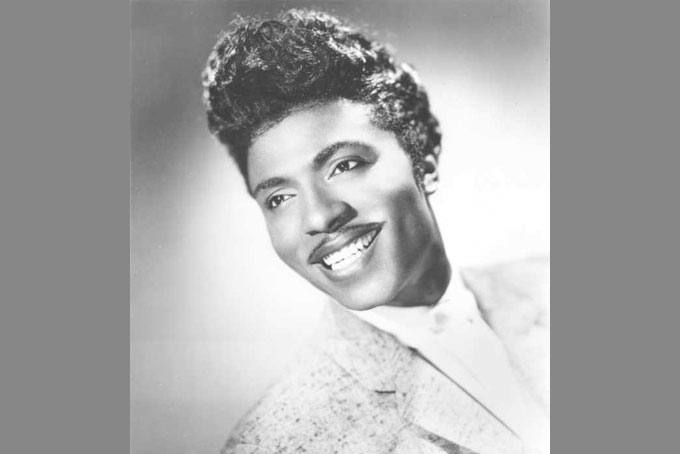
1932—Flamboyant singer-performer “Little Richard” is born and raised in Macon, Ga. He becomes one of the founding fathers of rock-and-roll. His dynamic stage performance and homosexuality often landed him in trouble. But he remained a major force in the music field.
1955—The historic bus boycott begins in Montgomery, Ala. The Black boycott of city buses was set in motion when civil rights heroine Rosa Parks refused to surrender her seat on the bus to a White man. The law at that time required her to give up the seat. A young minister named Martin Luther King Jr. was called upon to lead the boycott launching his career as the national civil rights leader.
1957—New York becomes the first city to pass a law banning racial or religious discrimination in housing with the Fair Housing Practices law.
December 6
1849—Harriet (Ross) Tubman escapes slavery in Maryland. But she becomes perhaps the greatest “conductor” on the Underground Rail Road returning to the South 19 times and helping an estimated 300 slaves escape. Despite a serious head injury received from an angry slave master when she refused to beat another slave, Tubman was one of Black America’s greatest examples of courage and determination. During the Civil War she also spied on the South and relayed the information to Northern generals.
1870—Joseph H. Rainey (1832-1887) is sworn in as the first Black to serve in the U.S. House of Representatives. He represented South Carolina—the state in which he was born a slave. But his father—a barber—managed to raise the money to purchase his family’s freedom. Earlier this year, the portrait of Rainey was finally hung in the House of Representatives.
1949—Blues legend Huddie “Leadbelly” Ledbetter dies. Ledbetter was born in 1885 near Mooringsport, La. But he had a quick temper and a violent streak. Thus, he stayed in trouble with the law. Indeed, his musical genius was discovered in jail by a visiting White folklorist. Upon release from prison, he moved north and became a sensation performing in the U.S. and Europe.
1961—Revolutionary psychiatrist and writer Frantz Fanon dies in Washington, D.C., where he had gone for medical treatment. In his writings, the Martinique-born Fanon explored the psychological aspects of racial oppression and Black liberation. His most famous works were “Black Skins, White Masks” and “Wretched of the Earth,” which was considered by many “the handbook for Black revolution.”
About Post Author