


In the illustration, a sun-splashed residential block is lined with spindly trees as tall as the buildings, a bike lane bustles with riders, people cross the street by foot or wheelchair — and there’s not a driver in sight. “Make streets safer for Chicagoans who walk, bike, roll and ride,” the picture’s label reads.
The image was part of the city’s recent pitch to aldermen about a sweeping transit-focused development ordinance, dubbed “Connected Communities,” which passed in July as part of Mayor Lori Lightfoot’s bid to combat segregation and gentrification.
Advertisement
Tucked into the ordinance are a series of provisions that advocates hope could help convince more people to turn to walking, cycling and public transit over personal cars. Among the provisions: restrictions on residential parking near public transit.
“Fundamentally, we want a city that’s designed for people,” housing Commissioner Marisa Novara said in an interview. “Where some cities have erred is in emphasizing driving above all else, … the human connection is what we lose when we prioritize cars over people.”
Advertisement
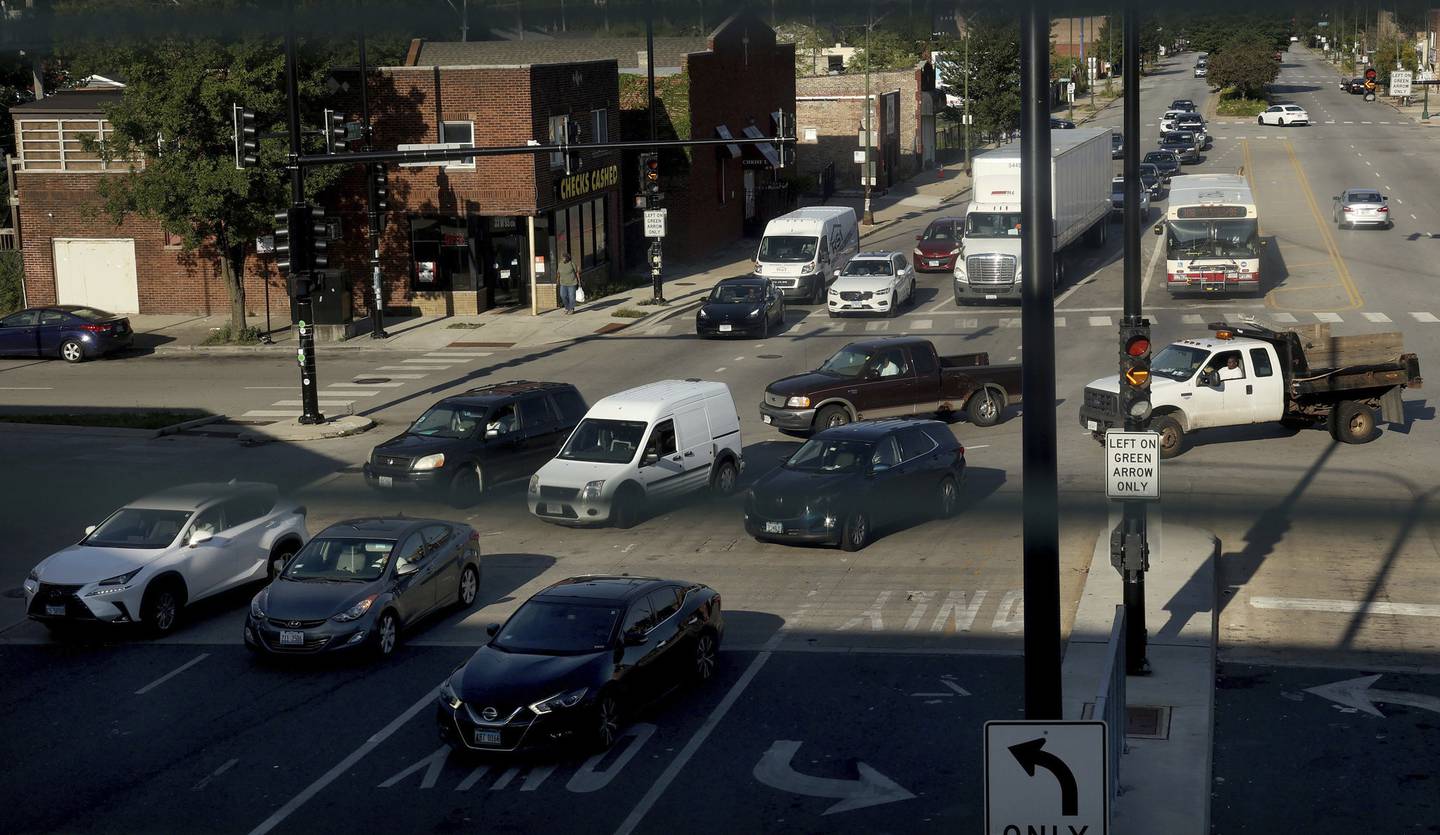
The sentiment that cities focus too much on vehicles, at the expense of other transportation modes, has long been a rallying cry of bicycling, public transit and environmental advocates. Recent demands for less car-centric city planning have coincided with a rash of traffic fatalities in Chicago, whose victims included toddlers, leaving some City Council members outraged at the deference they say is given to cars.
In its more extreme form, the antipathy toward driving has fueled a “car-free” movement. But that’s not realistic in the eyes of most city leaders. When rolling out a free prepaid gas card plan in the spring, Lightfoot shrugged off criticism that the measure encouraged fossil fuel usage by saying “back on planet reality,” many residents live in public transit deserts and need a car to get around.
Novara said her ideal vision is one where each Chicagoan has the choice among walking, public transit, biking and driving. She added there is “abundant” public transit on the South, Southwest and West sides, though some areas may be richer in bus routes than trains.
“I don’t think that we are in a position where we’re saying there’s something wrong with owning or driving a car,” Novara said. “We’re simply saying that it has its place, and people should have lots of options around how they get around this city.”
The idea behind Connected Communities centers on what’s known as “transit-oriented development,” originally meant to boost homes and businesses along rail stations, and more recently along bus routes. The concept gained momentum in Chicago in a 2013 ordinance under former Mayor Rahm Emanuel, but from then until 2019, nearly all the development it led to was concentrated on the North and Northwest sides, downtown and the West Loop, according to Department of Housing statistics.
In addition to measures intended to accelerate development near public transit, the Connected Communities ordinance implements a novel cap on the amount of parking for new residential buildings near train stations — one spot per two units. Developers need city approval to build at a higher one-to-one ratio.
The ordinance also expands the reach of existing limits on parking requirements near transit stations to four blocks, and near certain bus corridors to two blocks, and it eliminates on-site parking mandates for affordable housing citywide. In addition, the legislation bans new curb cuts and driveways within a half-mile of rail stations without city approval and requires pedestrian-friendly design within that same perimeter.
The parking provisions in the new ordinance could play a role in getting Chicago residents to go carless, and likely signal that the city is moving toward incentivizing other ways besides vehicles of getting around, said Audrey Wennink, transportation director for the Metropolitan Planning Council.
Advertisement
It will take other measures to make those efforts work, she said, but she believes less car use is a realistic goal for Chicago. The city has the bones of an extensive public transit system in place, and even with CTA challenges, that gives Chicago a leg up, she said.
“I don’t think people recognize that when we build housing, there’s a significant proportion of the cost of that housing historically that goes to the parking,” Wennink said. “You need to make driving less attractive and make these other options more attractive so people make that choice.”
Steven Cain, a Chicago landlord who is part of the Neighborhood Building Owners Alliance, said the ordinance is “certainly more good than bad” in that it expands incentives for transit-oriented development rather than forcing it. For example, the elimination of on-site parking requirements in affordable housing serves as a “financial incentive,” Cain said.
“The less parking you have to provide is the less money you have to spend on building parking lots, or the more land that you have available for housing versus somebody’s car,” Cain said. “So there’s sort of financial incentives to make it more attractive to include affordable housing. … Seems like a worthy goal.”
But it could take work to make other options more attractive than driving. Just ask Seth Blumenthal.
Blumenthal, 47, spent several years carless in Chicago. He sold his vehicle around 2015, feeling like he’d been paying a lot of money to keep a car he wasn’t using much, and instead favored public transit and walking.
Advertisement
Blumenthal became a near-daily CTA rider. He continued riding after the pandemic hit, though he was going fewer places.
But by 2021, he found train trackers were becoming less accurate and that the quality of trips was declining. When he got off his bartending shift late at night, his wait for a Blue Line train was sometimes longer than his trip home. Increasingly unwilling to wait, he shelled out for ride-shares instead.
“I was getting more and more irritated with depending on CTA,” he said. “The value of my time was not being served well.”
He caved, bought a car and reserved a parking spot near his home.
“I’m part of the problem,” he said. “I’m in traffic, and I’m complaining about traffic.”
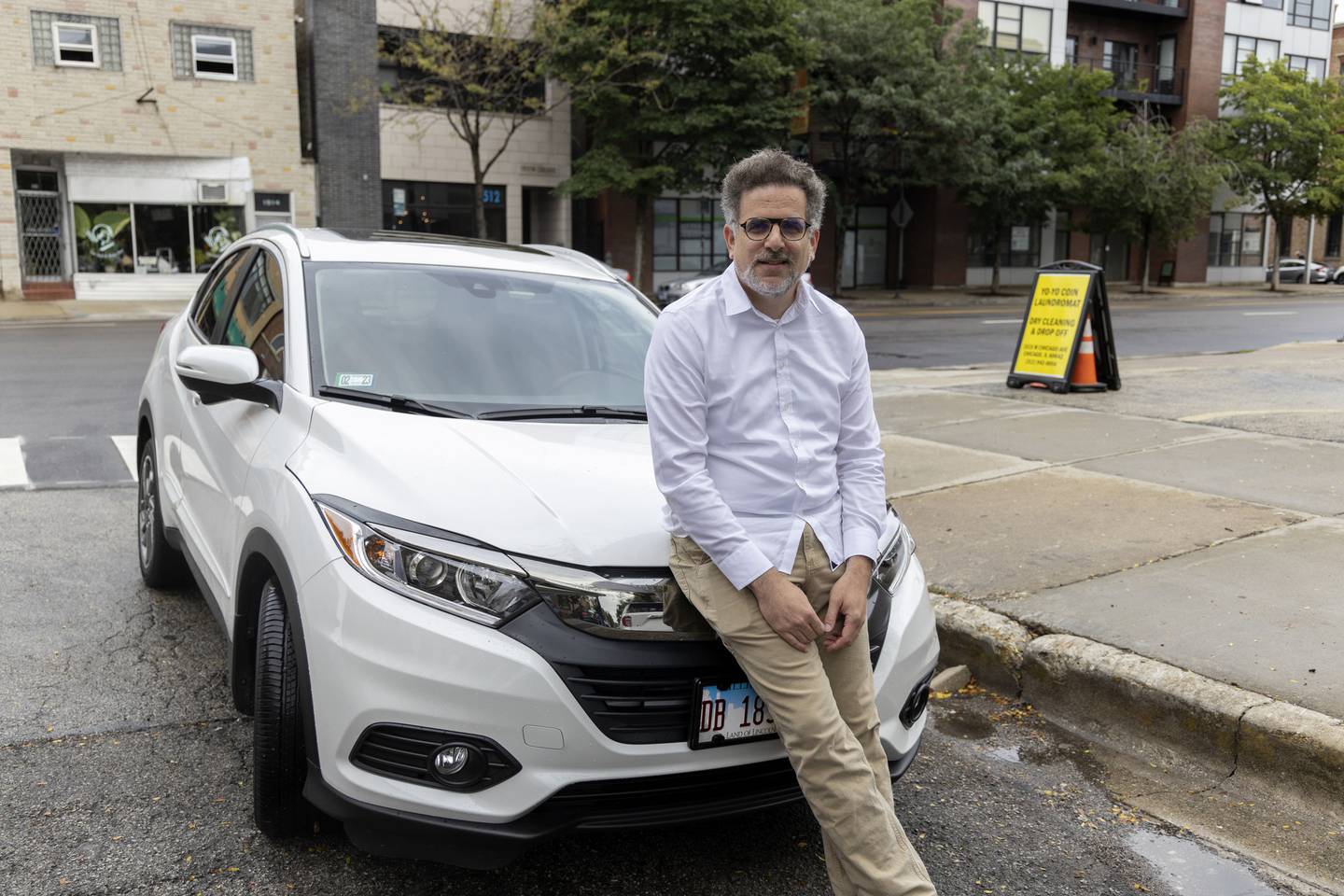
Getting Blumenthal to sell his car again would come down to better bus and train service, he said, and that includes express buses or bus priority lanes. Faster connections between downtown, where he lives, and the Milwaukee Avenue corridor, where he spends much of his time, would also persuade him. And, of course, there’s persistent safety and cleanliness concerns, he said.
Advertisement
“I feel helpless; there’s so little I can do,” he said. “I’m not personally contributing to transit anymore by riding it, so I kind of feel bad as an active citizen and transit enthusiast, but I have to live my life.”
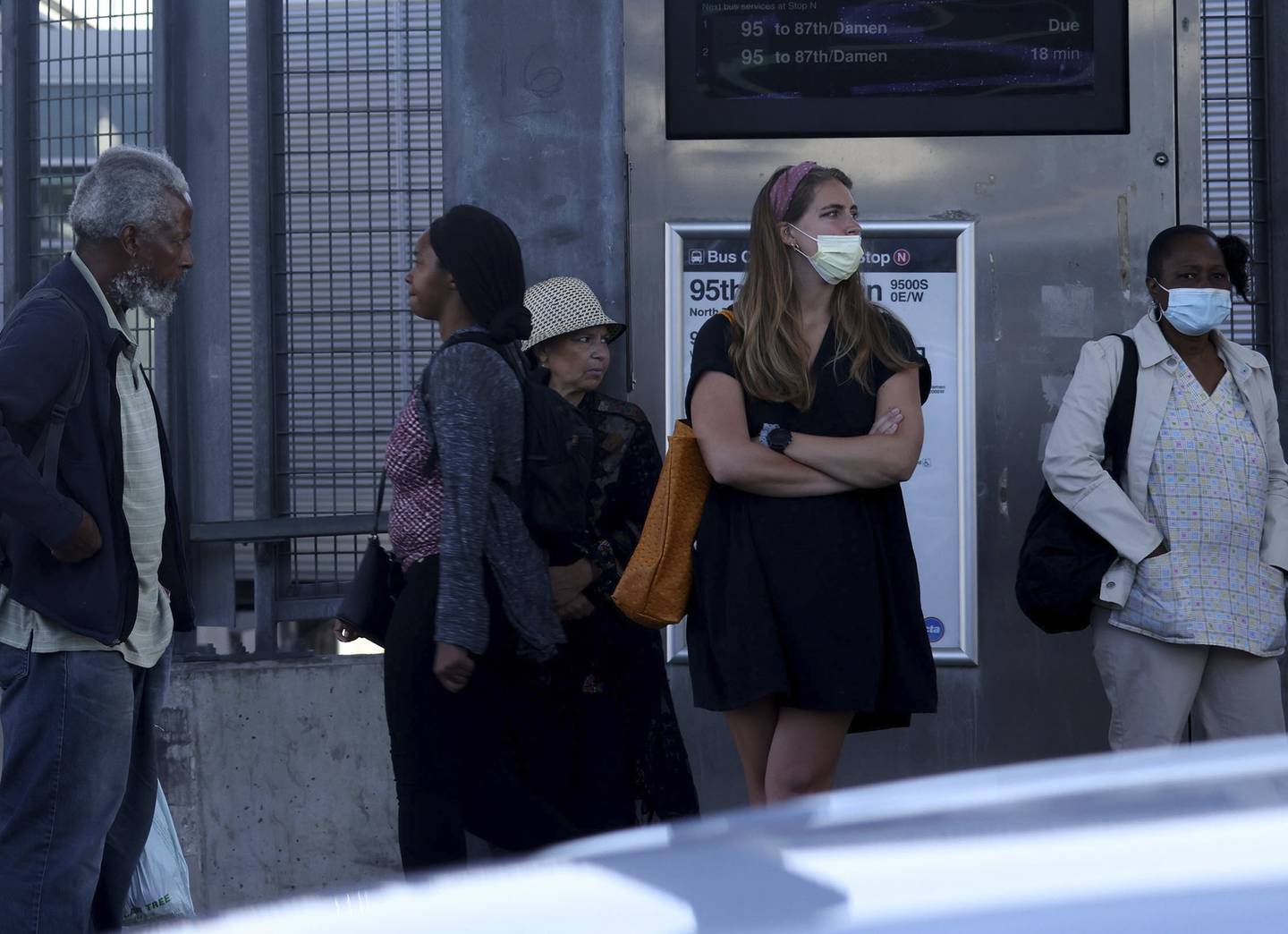
CTA has been facing widespread complaints about service reliability and safety. Both violent and nonviolent crimes on CTA were up compared to last year, leading to a 42% increase in total crime through mid-August, according to Chicago police.
CTA has said many of its service challenges are because of staff shortages, and recently unveiled a plan to address those and other concerns through hiring, schedule tweaks, upgraded train and bus trackers and other measures. CTA also highlighted recent work with Chicago police to add more officers to address safety, among other security measures.
“CTA ridership will continue to grow, and serve as a catalyst for opportunity and investment across the city,” the agency’s officials said in a statement.
Research shows the availability of free parking is one major impetus of car use and ownership, said Yonah Freemark, a researcher at the Urban Institute who focuses on land use and transportation. To that end, the new city ordinance is strong in curbing such habits.
Although Chicago’s share of carless households is far higher than the rest of the country — 26.8% according to a 2020 census estimate, compared with 8.5% nationwide — it also crept down from 34.3% in 1990. To reverse that trend would mean investing in the CTA, protected bike lanes and more, he said.
Advertisement
“I think there is no question that it is hard to get people to give up their cars when they feel like they can’t rely on the transit system, when they feel unsafe biking around their communities, when they think crime has increased,” Freemark said. “There is no question that people seek out their cars because it’s kind of a safety blanket.”
Ald. Nick Sposato, 38th, said he voted no on the Connected Communities ordinance because, among other things, he believes the parking restrictions will lead to a “firestorm” of criticism from residents with cars in his Far Northwest Side ward. He would know, given he is one of them.
As someone who uses a wheelchair, Sposato said he takes the train a lot less and finds it simply unrealistic for Chicagoans to embrace policies that he believes “force” people to give up their cars.
“This is America,” Sposato said. “I don’t think there’s enough people in the city that are that gung-ho about becoming carless. … If they feel that way, great. Do your share.”
But Chicago Department of Transportation Deputy Commissioner Vig Krishnamurthy said there are signs the city is relying less on cars, including census data that shows in 2019 the share of residents driving alone to work was its lowest in more than a decade, at about 48%.
“That’s to me a signal of there’s a latent demand, or a latent interest, in getting around in different ways,” Krishnamurthy said. “Increasingly we’re seeing people are using a variety of modes, kind of like a delicious salad, if you will. And I think that actually is great because we’re not then wedded to seeing a transportation system or a city from just the perspective of one modality, but rather it’s this mix.”
Advertisement


