




Proposed legislation to force Big Tech to pay publishers for aggregating news content online is headed for the Senate after the Judiciary Committee approved a revised amendment addressing censorship concerns Thursday.
The Journalism Competition and Preservation Act would temporarily exempt newspapers, broadcasters and other publishers from antitrust laws to collectively negotiate an annual fee from Google and Meta/Facebook, which dominate the nearly $250 billion U.S. digital advertising market.
Advertisement
Proponents say it will boost struggling news organizations and level the playing field with Big Tech, while critics question whether local journalism or large media companies will be the true beneficiaries of the bill.
The bill stalled in committee two weeks ago after an amendment introduced by Sen. Ted Cruz to prohibit censorship “collusion” narrowly passed, sharply dividing the bipartisan sponsors of the bill.
Advertisement
At the time, Sen. Amy Klobuchar, D-Minn., lead co-sponsor of the bill, said the bipartisan legislation had been “blown up” by the Cruz amendment, which would provide Big Tech a negotiating out by simply bringing up content moderation. But she worked with Cruz to come up with a revised amendment to keep censorship off the table when media and Big Tech negotiate content fees.
The replacement amendment further clarifies “the bill’s focus is solely on compensation for news organizations when platforms access their content, and that discussions or agreements between news organizations and platforms on content are outside of the scope of the bill,” Klobuchar said.
Introduced in the House and the Senate last year, the bill provides temporary safe harbor from antitrust laws, enabling news outlets to join together to negotiate content fees for aggregated content on Google and Meta/Facebook, the only two platforms targeted by the proposed legislation.
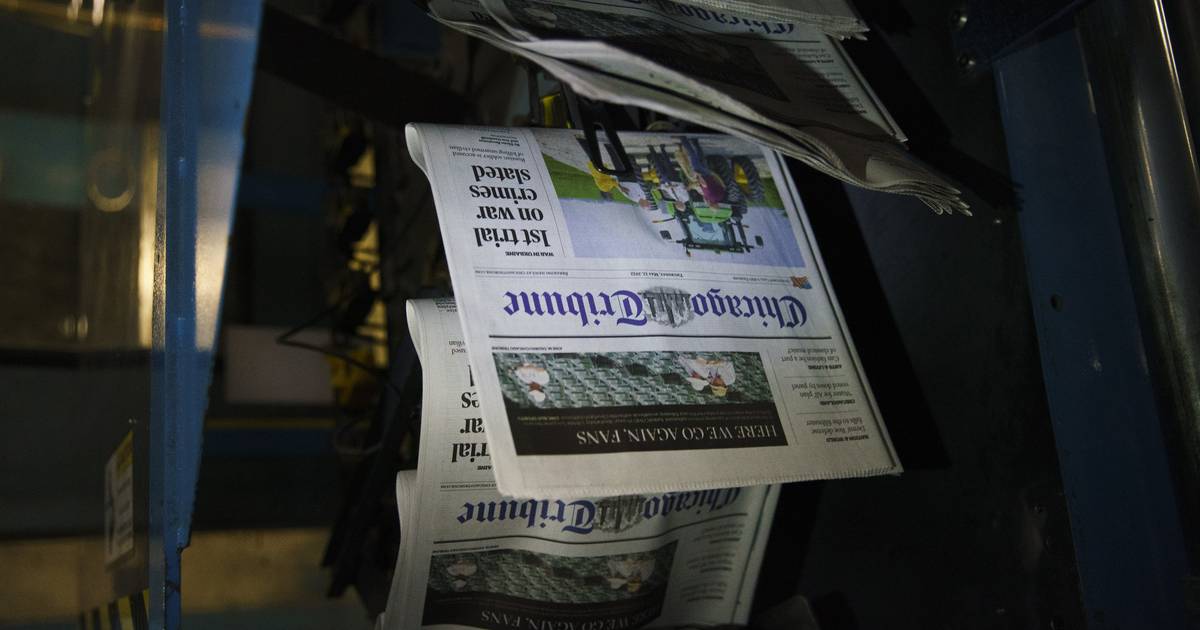
The bill would cover thousands of local and regional newspapers, including the Chicago Tribune and other Tribune Publishing newspapers, which were acquired by hedge fund Alden Global Capital for $633 million in May 2021. It excludes large national publications such as The New York Times, The Washington Post and The Wall Street Journal.
Local TV and radio broadcasters — including network owned and operated stations — that publish original digital news content and meet other eligibility requirements would also be covered by the bill.
“This legislation misunderstands the relationship between Facebook and news, and it ignores our users’ preferences for new types of content,” a Meta spokesperson said in an emailed statement Thursday. “Facebook does not proactively post news on our platform — publishers and broadcasters are the ones who control whether and how their content appears on Facebook, and they can choose to use our free services as long as it provides value and makes business sense for them.”
A Google spokesperson did not respond to a request for comment.
With approval of his amendment, Cruz supported the legislation, which passed through committee by a 15 to 7 vote, and will move to the Senate floor for consideration.
Advertisement
“I think this amendment protects against this antitrust liability being used as a shield for censorship,” said Cruz, R-Texas. “Big Tech hates this bill. That to me is a strong positive for supporting it.”
The local media ecosystem has been in steep decline during the new millennium. Newspaper ad revenue, which peaked at $49.4 billion in 2005, fell by more than 80% to $9.6 billion in 2020, according to the Pew Research Center. A recent study by Northwestern University’s Medill School of Journalism found the country has lost more than a fourth of its newspapers — about 2,500 overall — and 60% of its working journalists since 2005.
Meanwhile, Big Tech has been gobbling up the bulk of the fast-growing digital advertising pie. Google is projected to generate nearly $70.1 billion and Meta/Facebook $55.5 billion, or more than 50% of the total U.S. digital ad spend this year, according to Insider Intelligence.
Under the bill, the annual fee paid by Big Tech would be distributed to all local publishers that participate in the collective negotiations, with 65% of the allocation based on how much they spend on journalists as a proportion of their overall budget.
“Today’s markup and vote was a major step toward getting small and local news publishers the fair compensation they deserve for their content,” David Chavern, president and CEO of the News Media Alliance, a Washington, D.C.-based newspaper trade organization, said in a statement Thursday.
But diverse opposition to the bill, from journalist unions to digital rights groups, has been mounting over everything from the temporary antitrust exemption to undermining copyright law and fair use on the internet. The biggest concern may be whether payments from Big Tech would bolster local journalism or benefit big media companies.
Advertisement
Those concerns were exacerbated last month when Gannett, the nation’s largest newspaper chain, laid off 400 employees, or about 3% of its U.S. workforce, following a larger than expected revenue decline and loss in the second quarter. McLean, Virginia-based Gannett publishes USA Today and more than 230 other newspapers.
Sen. Alex Padilla, D-Calif., voted to move the bill out of committee, but said he could not support it in the Senate without “built-in consequences” to hold accountable companies such as Gannett and Alden, the second-largest newspaper chain, if they don’t invest the Big Tech proceeds in journalists.
“I believe we need stronger language to ensure that the revenue from this bill goes to the workers that make journalism possible and is invested in the high-quality local journalism that those workers produce,” Padilla said.


