


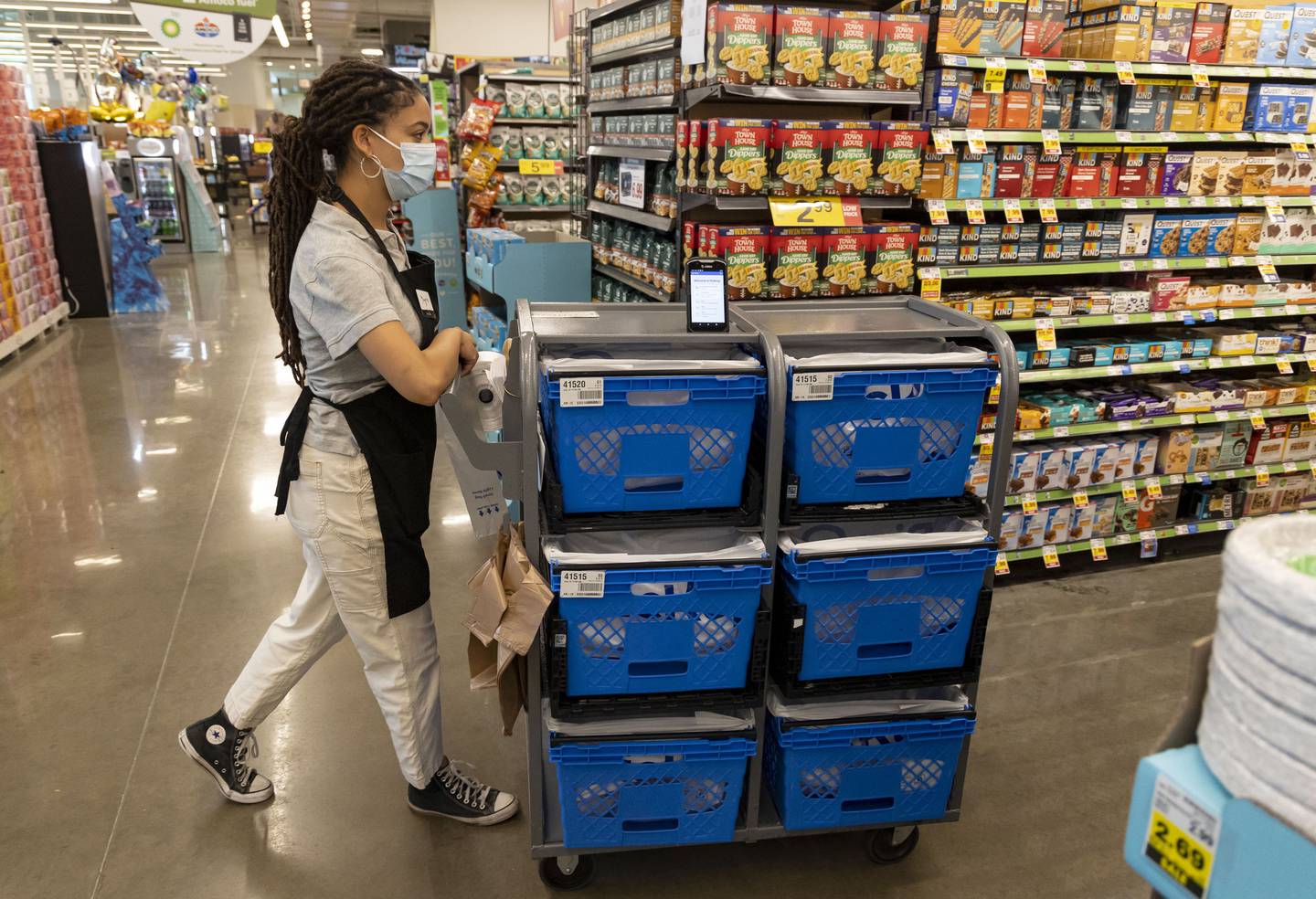
Michelle Adeniyi started getting groceries delivered around the start of the pandemic, when shopping in person became a hassle.
But food prices have risen precipitously since the start of the year, and like many Chicagoans, the 27-year-old South Loop resident has adjusted her grocery shopping routine.
Advertisement
Adeniyi, a program analyst working in global health, used to shop more often at Whole Foods, but has been limiting her visits as prices rise. These days, she usually does her shopping at Trader Joe’s or Mariano’s.
When the weather warmed up this spring, she cut herself off from grocery delivery.
Advertisement
“I’ve started driving instead of getting them delivered, so that’s helped as well,” Adeniyi said.
The online grocery market, which boomed in the early days of the pandemic, is cooling off as shoppers return to pre-pandemic routines and rising food costs prompt many people to reexamine their spending.
Some online grocery startups operating in Chicago are struggling or exiting the market altogether. California-based delivery startup Farmstead stopped operations in Chicago this summer after just a few months, and ultrafast Russian-backed delivery startup Buyk filed for bankruptcy in March after starting Chicago deliveries in November.
Other companies, like Jewel-Osco and Kroger, which owns Mariano’s, are forging ahead with large-scale Chicagoland investments in grocery delivery. Kroger began fulfilling deliveries from a new Maywood distribution facility, its first in the Chicago area, last month; Jewel-Osco plans to open a new facility in October.
The online grocery market, which includes delivery, pickup and ship-to-home services like meal kits, reached a high of $9.3 billion in January 2021, according to the retail consultancy Brick Meets Click. Last month, consumers spent $7.8 billion in the online grocery market — a drop from the pandemic peak but almost four times as high as pre-pandemic spending.
“There is more growth, but it’s slowing growth,” said Jeremy Goldman, director of marketing and commerce briefings at the market research firm eMarketer.
According to eMarketer data, the percentage of U.S. adults using grocery delivery doubled from 15% in the fourth quarter of 2019 to 31% two years later. Now that online grocery platforms have picked the “low-hanging fruit” of people easily persuaded to try online grocery shopping, that growth has tapered off, Goldman said.
Logan Square resident Sara Rashid said she never ordered groceries online before the pandemic, but did so exclusively for about six months in 2020 because she was concerned about COVID-19. These days, she finds the extra price of ordering groceries online is worth it only for items she can’t find in person: a favorite sauvignon blanc, a particular chicken sausage.
Advertisement
Spending in the online grocery market has dropped since earlier this year as food prices have risen, with more spent on pickup than delivery. According to Brick Meets Click, Americans spent $3.4 billion on grocery pickup in July, compared with $3 billion on delivery and $1.4 billion on ship-to-home groceries.
Though grocery prices in the Chicago area declined nearly half a percent in July, they were up 12.7% since a year ago, according to the Bureau of Labor Statistics.
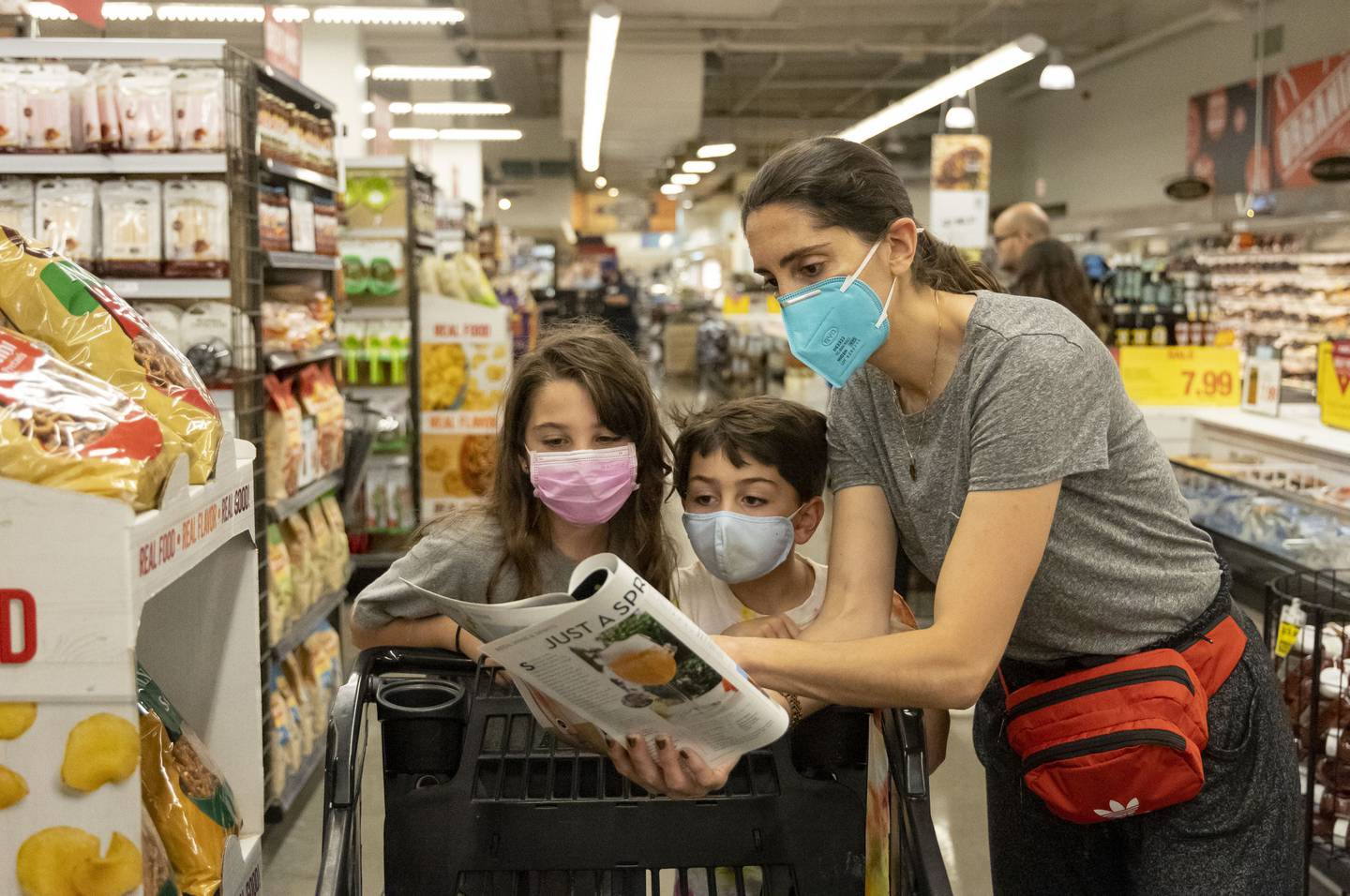
On Wednesday, Rashid, a psychotherapist, shopped at a neighborhood Mariano’s with her kids, Alya, 8, and Tom, 6. Rashid pulled up her Amazon Fresh cart as she shopped: She planned to buy her produce in person, and other groceries online.
“I will only buy produce that I can see,” said Rashid, 45.
Advertisement
Advertisement
Advertisement
Promising lower prices and free same-day delivery in as little as an hour, California-based startup Farmstead began operating in Chicago in March with plans to expand to “many more markets” this year. But in July, Farmstead halted service here and in three other cities, laying off nearly a quarter of its staff, according to business news publication Insider.
The company leased nearly 30,000 square feet in an industrial building in Franklin Park in January with a March move-in date, according to records provided by CoStar. CEO Pradeep Elankumaran told Insider earlier this month that the company has kept its leases in all its markets, anticipating a return to operations “in the next few quarters.” It now operates only in San Francisco.
The company did not respond to numerous requests for comment.
Fresh Street, an online grocery pickup retailer that opened a 10,000-square-foot West Rogers Park storefront in March, is closing the store at the end of August, said founder Mike Sayles.
Advertisement
Sayles said the company has had difficulty winning venture capital funding. “Access to capital required to build out the vision was not where we anticipated it being,” he said. Fresh Street was initially funded by $4 million in investment from family and friends.
Ultrafast delivery startups that promise groceries to delivered to shoppers in 15 minutes or less have also struggled.
Buyk, a Russian investor-backed high-speed grocery startup that began operating in Chicago last November, filed for bankruptcy in March. According to its bankruptcy filings, the Russian invasion of Ukraine presented the company with “an existential and, ultimately, fatal crisis.” Buyk had eight locations in the Chicago area and about 30 in New York.
Getir, a Turkish high-speed grocery delivery company, first entered the U.S. market in Chicago last fall. The company attempted to lure shoppers in with promise of groceries at their door in about 10 minutes and said it would waive delivery fees for their first five orders.
Getir is still operating in Chicago and has since expanded to Boston and New York, but in May was planning to lay off about 14% of its staff, Bloomberg News reported. At the time, the company blamed inflation and a “deteriorating macroeconomic outlook,” according to a memo obtained by Bloomberg. Getir did not respond to a request for comment.
Fundamentally, Bishop said, the speed at which ultrafast delivery companies promise groceries to their customers’ door is unsustainable.
Advertisement
“The incentives were so attractive, it was drawing people to try it,” Bishop said. “But trial doesn’t mean it’s got some level of stickiness or acceptability. Because after all, there’s a very small market for consumers who need a particular grocery item in 15 minutes.”
Some companies are forging ahead with Chicago-area online grocery investments.
Jewel-Osco opened its first micro fulfillment center for online grocery shopping in suburban Westmont in December, investing $7.6 million into a 20,000-square-foot warehouse the company said could fulfill 1,000 online orders a day.
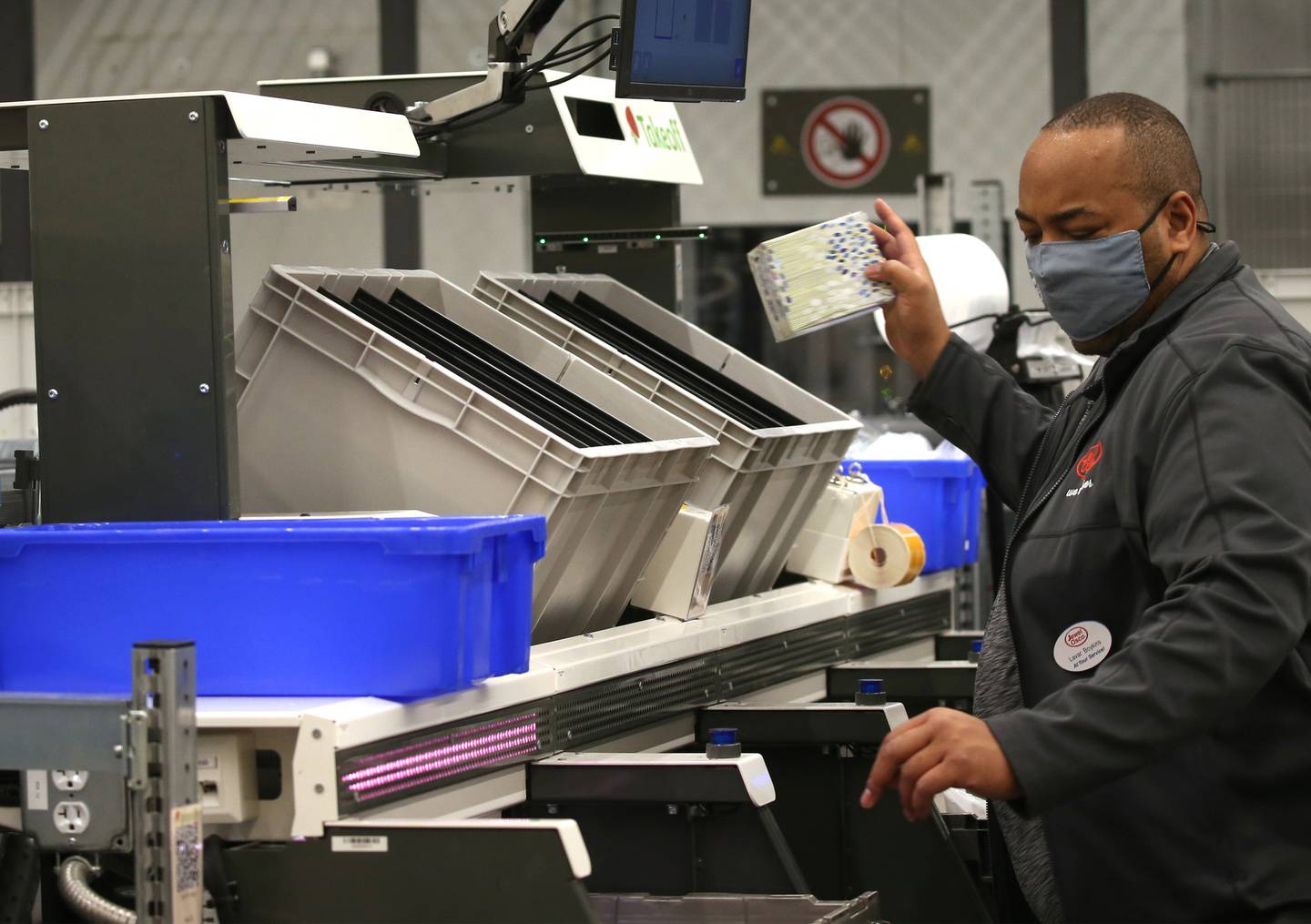
The company will open a new micro fulfillment center in the South Loop in October, said spokesperson Mary Frances Trucco. Third-party delivery drivers from Door Dash, Shipt and Point Pick-Up will fulfill online orders from there, like they do at Jewel’s Westmont facility.
Albertsons, which owns Jewel-Osco, reported 28% growth in digital sales during the first quarter. In July, CEO Vivek Sankaran said the company had invested in its mobile app and seen digital engagement driven by a meal planning tool it had launched in the fourth quarter.
Kroger, which owns Mariano’s, started fulfilling orders from a nearly 80,000-square-foot facility in Maywood last month, said spokesperson Amanda Puck. The facility, which is strictly for online order fulfillment, is the first in the Chicago area. When it’s running at full capacity, it will employ 200 people, said Kroger spokesperson April Martin.
Advertisement
The company has invested in its own drivers and refrigerated delivery trucks, which it says gives it more control over the quality of delivered groceries — an issue for companies that only use third-party delivery services, analysts said.
“Your ice cream is frozen, your cold items are cold and your cereal is the right ambient temperature,” Puck said.
The company saw a 6% drop in digital sales during the first quarter, CFO Gary Millerchip told investors during a June earnings call. That’s in stark contrast to the skyrocketing growth in online sales Kroger saw when the pandemic began, when it reported more than 100% growth in digital sales for three quarters in a row.
Despite the recent cooling in online sales, the company has made large investments in online sales in recent months. In addition to the Maywood facility, Kroger opened fulfillment centers in Pleasant Prairie, Wisconsin, and Dallas this summer.
Large investments in online delivery fulfillment, like Kroger’s or Jewel’s, are typically investments that companies make carefully because of their scale, Goldman said.
“It’s not the kind of thing that you can just pull back from that quickly,” he said.