

Author: staff

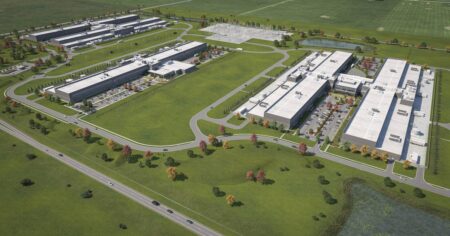
Meta, the social media giant formerly known as Facebook, is expanding its massive $1 billion data center under construction in DeKalb to nearly 2.4 million square feet, putting the college town west of Chicago at the center of its metaverse.Slated to open next year, the five-building complex filled with servers and other computing equipment, will create 200 jobs and power everything from Facebook posts to Instagram photos as one of 17 Meta data centers across the U.S.Advertisement“This is the physical backbone of all of our apps and services,” said Meta spokesman Tom Parnell.The expansion, announced Thursday, will make the DeKalb data center one of Meta’s largest facilities, and an integral part of its ambitious plans to expand its social media platforms into an immersive virtual reality experience, Parnell said.AdvertisementMeta’s bricks-and-mortar data centers supply the massive computing power needed to share information and connect users on the evolving social media platforms. The company has 14 data centers operating in the U.S., with three under construction, including DeKalb.The DeKalb data center broke ground in 2020, starting with two buildings that are now 70% complete, Parnell said. Construction on the three additional buildings began in January, and the infrastructure buildout at the sprawling 505-acre site is expected to be finished in 2023.Meta is hiring 200 workers to operate the facility, with positions ranging from technicians and electrical engineers to culinary staff. About half of the employees are already onboard, preparing the data center for its launch next year.“The impact Meta has made within the City of DeKalb goes beyond just an economic one,” DeKalb Mayor Cohen Barnes said in a news release. “Since day one, they have made a concerted effort to make a larger impact on DeKalb, and I look forward, with this announcement, to seeing that partnership continue to grow over the years to come.”The demand for data centers has been growing exponentially in recent years, spurred by the heightened need for cloud technology and remote connectivity during the COVID-19 pandemic, which saw work-from-home go mainstream. The adoption of long-term hybrid strategies for many companies portends continued growth, according to industry analysts.The Chicago area is tied with Atlanta as the fourth largest data center market in the world behind Northern Virginia, Silicon Valley and Singapore, according to a new study by Cushman & Wakefield. The study cites low cost of land, a robust development pipeline and lower power costs than most large data centers as advantages for Chicago.The study also notes that Chicago-area sites come with “sizable incentives,” a factor that helped bring Facebook/Meta to DeKalb.In 2019, Illinois created the Data Center Investment Program, offering an exemption from state and local sales and use taxes for companies that invest at least $250 million and create 20 new operational jobs in a data center. The program also requires the data center to be carbon-neutral.AdvertisementFacebook was granted the data center sales tax exemptions by the state, Parnell said.As part of the green building requirement, Meta is partnering with the University of Illinois at Urbana-Champaign to develop a more sustainable concrete mix for construction of the data center. Meta has also invested in two new wind energy projects in Morgan and DeWitt counties, with the goal of supporting DeKalb data center with 100% renewable energy.One thing the DeKalb data center ostensibly won’t be processing is facial recognition technology after agreeing to pay $650 million in a landmark settlement over alleged violations of Illinois’ biometric privacy law.In November, Facebook announced it would shut down its facial recognition system amid “growing concerns” over the widespread use of the technology. As a result, Facebook said it planned to delete more than a billion facial recognition templates it had stored, putting an end to the feature that automatically recognized if people’s faces appear in memories, photos or videos.About 1.6 million Illinois Facebook users who filed claims can expect to receive their $397 checks beginning May 9, according to Chicago attorney Jay Edelson, who brought the lawsuit against Facebook seven years ago.rchannick@chicagotribune.com
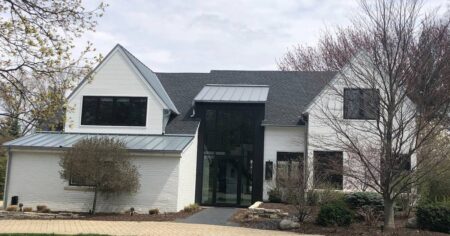
Former Chicago Blackhawks defenseman Steve Smith, who played for the team for six seasons in the 1990s, on Tuesday sold a four-bedroom, 4,822-square-foot house in Oak Brook for $1.26 million.Since retiring from his playing career, Smith, who now is an assistant coach for the New York Rangers’ Hartford Wolf Pack developmental hockey team, also has had a career as a homebuilder. In 2018, he paid $780,000 for the house in Oak Brook’s Brook Forest subdivision, and he subsequently set about on a dramatic overhaul of the home.AdvertisementSmith’s work included significantly expanding the second floor and raising the ceiling of the front entrance hall to produce a more light-filled entry. To execute the renovation, Smith used Hinsdale-based G.O. Architectural Design for the design work.The house has 2 ½ bathrooms, a family room with a fireplace, a glass-enclosed all-seasons room and a lower-level exercise room, all on a 0.48-acre property.AdvertisementSmith listed the house in December for $1.29 million.In a phone interview, Smith declined to comment on the sale.The house had a $9,492 property tax bill in the 2020 tax year.Bob Goldsborough is a freelance writer.Join our Chicago Dream Homes Facebook group for more luxury listings and real estate news.
Former Chicago Blackhawks defenseman Steve Smith, who played for the team for six seasons in the 1990s, on Tuesday sold a four-bedroom, 4,822-square-foot house in Oak Brook for $1.26 million.Since retiring from his playing career, Smith, who now is an assistant coach for the New York Rangers’ Hartford Wolf Pack developmental hockey team, also has had a career as a homebuilder. In 2018, he paid $780,000 for the house in Oak Brook’s Brook Forest subdivision, and he subsequently set about on a dramatic overhaul of the home.AdvertisementSmith’s work included significantly expanding the second floor and raising the ceiling of the front entrance hall to produce a more light-filled entry. To execute the renovation, Smith used Hinsdale-based G.O. Architectural Design for the design work.The house has 2 ½ bathrooms, a family room with a fireplace, a glass-enclosed all-seasons room and a lower-level exercise room, all on a 0.48-acre property.AdvertisementSmith listed the house in December for $1.29 million.In a phone interview, Smith declined to comment on the sale.The house had a $9,492 property tax bill in the 2020 tax year.Bob Goldsborough is a freelance writer.Join our Chicago Dream Homes Facebook group for more luxury listings and real estate news.
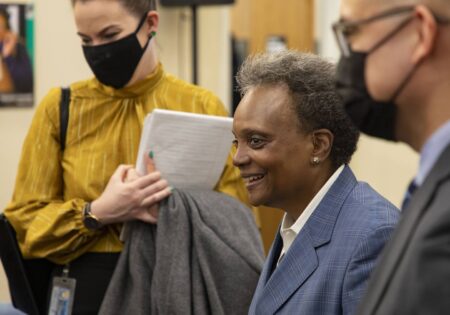
Chicago Mayor Lori Lightfoot’s controversial free gas and public transit card giveaway narrowly passed the City Council Wednesday after aldermen debated whether the measure will truly help struggling residents or simply be a political “gimmick.”The plan to hand out 50,000 gas cards, worth $150 each, and 100,000 Chicago Transit Authority fare cards, $50 each, passed 26-23 despite reservations from several aldermen that it was a political stunt and would be largely ineffective. Lightfoot’s program, dubbed “Chicago Moves,” followed mayoral candidate Willie Wilson’s self-funded $2.2 million gas giveaways to drivers who camped out at gas stations.Advertisement“Some of our neighborhoods have intentionally been starved for no other reason than systemic racism,” Lightfoot said Wednesday before the City Council vote. “Should we not address that problem, solve it? We are a city. A city of neighbors.”Ald. Raymond Lopez, 15th, who has also declared his candidacy for mayor in the 2023 election, dismissed Lightfoot’s plan before the vote: “To say it comes off as a gimmick would be an understatement.”AdvertisementMayor Lori Lightfoot, shown Monday, got her gas and public transit fare card giveaway through the City Council Wednesday. (Brian Cassella / Chicago Tribune)Ald. Andre Vasquez Jr., 40th, cried foul over the timing of Lightfoot putting tax dollars into gas cards “all of a sudden” when a political rival, Wilson, concluded multiple gas giveaways.Wilson has announced he’ll run for mayor in February. Lightfoot has not formally declared but is widely expected to seek a second term.Other aldermen expressed concern about the city subsidizing gas purchases, which they said was environmentally unfriendly, and argued that the money would be better spent on affordable housing or other needs.Lightfoot brushed off the criticism that her program is a political stunt as “nonsense.” At one point, she brandished two dollar bills to emphasize that people are struggling financially.Lightfoot also tried to shoot down hang-ups over the environment and public transit by saying the city was doing everything in its power to keep the CTA safe with more police and cameras, and that “back on planet reality,” many residents live in public transit deserts and need a car to get around.“Am I solving every problem with this? Of course not,” Lightfoot said.With Lightfoot expected to announce her campaign for a second term in the near future, her proposal called for spending $12.5 million in city money for the gas and public transit cards. Facing pushback, Lightfoot amended her initial plan to direct the cards to lower-income households, from $140,000 to $93,200 for a family of four, and to ensure three-fourths of the $7.5 million in gas cards go to people from the mobility-challenged neighborhoods. The cards would be distributed via lottery if more eligible households apply than the number of cards that are available.AdvertisementThe measure passed with the support of three aldermen — Gilbert Villegas, 36th; Debra Silverstein, 50th; and Derrick Curtis, 18th — who voted against the ordinance in committee. Lightfoot made changes to her bill so more residents would be eligible.

Boeing said Wednesday that it lost $1.2 billion in the first quarter as it and took large write-downs and lost money in both its civilian-airplane and defense businesses.The loss was bigger than Wall Street had forecast, and the company’s quarterly revenue also fell short of expectations. Boeing burned through $3.2 billion in cash.Advertisement“Messier quarter than any of us would have liked,” CEO David Calhoun acknowledged on CNBC.Shares of Boeing Co., based in Chicago, fell 10% shortly after the opening bell Wednesday.AdvertisementBoeing offered some optimism for improvement, however, saying that it has submitted plans to resume deliveries of its 787 airliner and it increased production and deliveries of the 737 Max passenger jet during the quarter.Calhoun said the company was on track to generate positive cash flow over the entire year “despite the pressures on our defense and commercial development programs.”The quarterly report brought disappointing news for Boeing shareholders on several fronts.The company again pushed back the expected first delivery of a new version of its long-range, twin-aisle 777 passenger jet by at least a year until 2025. The move was widely expected, as Boeing adapts to certification standards that have been tightened since regulators approved the Max, then were forced to ground the planes after two deadly crashes.The delay in expected approval for the 777-9 caused Boeing to forecast $1.5 billion in “abnormal” production costs.Boeing took a $660 million charge for its program to build new presidential Air Force One jets, which it blamed on higher supplier costs, final technical requirements and schedule delays. It also took $367 million in charges on a military training jet.Boeing said it submitted plans to the Federal Aviation Administration to resume deliveries of the 787 passenger jet. Those deliveries have been halted for more than a year by production issues that Boeing previously said would add about $2 billion in costs, of which $312 million was recorded in the first quarter.Airlines are expecting a boom summer, with travelers returning in huge numbers after two years of pandemic. But some of them, like American, have trimmed summer schedules because they haven’t received the Boeing 787s that they ordered years ago.Advertisement“They have a busy summer schedule. We have already disappointed them with respect to the capacity on that summer schedule,” Calhoun said. Just when Boeing will be cleared to resume deliveries of 787s is up to the FAA, but Calhoun said “We will be back in the air sooner rather than later.”Boeing expects to boost production of the 737 Max to 31 planes a month in the current quarter, which runs through June. That plane was grounded worldwide for nearly two years after two deadly crashes.And Boeing took $212 million in pretax charges related to Russia’s invasion of Ukraine. The company did not immediately explain the write-down.In a memo to employees, Calhoun said Boeing is taking steps to improve long-term performance.“We are a long-cycle business, and the success of our efforts will be measured over years and decades, not quarters,” he said.Boeing’s commercial-airplanes division lost $859 billion, hobbled by the inability to deliver 787 jets while Boeing tries to fix production flaws on the twin-aisle plane.AdvertisementThe defense business, long a bulwark against volatility in aircraft sales to airlines, lost $929 million as revenue fell 24%.The company reported a loss attributable to shareholders of $1.22 billion, compared with a loss of $537 million a year earlier. The “core” loss was $2.75 a share on revenue of $13.99 billion. Analysts expected a loss of 25 cents per share on revenue of $16.02 billion, according to a FactSet survey.
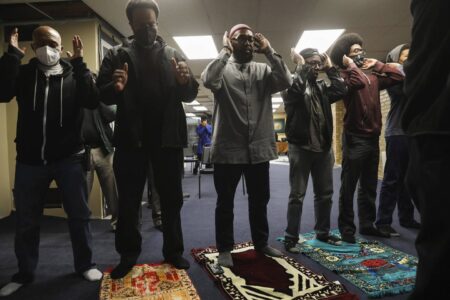
There’s a shared notion between all those who celebrate, that Ramadan just hits different. Even though you’re objectively hungry or thirsty, your soul feels quenched, said Tariq El-Amin, imam at Masjid Al-Taqwa on Chicago’s Southeast Side, and host of “Black Glue Podcast,” where conversations are centered on Black and Muslim experiences in America.For 30 days during the ninth month of the Islamic calendar, Muslims fast from slightly before dawn until dusk, which in the Chicago area adds up to about 14 hours and 58 minutes. The fast begins with a morning meal known as suhoor and is broken with an evening meal called iftar, where it is recommended practice to begin eating with a date and some water.AdvertisementMuslims, while obligated to pray five times daily no matter the month, take it up a notch on things like reading the Quran, partaking in extra prayers and giving charity.The Eid holiday marking the end of Ramadan will be Sunday or Monday, depending on the sighting of the new moon. And as the holy month comes to a close, El-Amin offered that there’s something to be said about how quickly the month slips away, replacing the hustle and bustle of communal prayers and 4 a.m. alarm clocks with a helpless urge to cling to the “feelings” of the month.Advertisement“Fasting is a human attempt at gratitude, and an attempt to gain clarity. We fast to increase our God consciousness, or what we term as taqwa. It’s a way for us to maintain a connection not just with God, but also our fellow human beings, our neighbors, our families,” El-Amin said over the phone while construction crews were tiling the floors of the mosque’s new property at 9329 S. Escanaba Ave.Imam Tariq I. El-Amin, center, joins other worshippers during afternoon prayers at Masjid Al-Taqwa in Chicago on April 22, 2022. (Jose M. Osorio / Chicago Tribune)Renovations at Masjid Al-Taqwa, which serves a large Muslim community on the South Side and the south suburbs, are expected to be completed by July. But even during construction the place of worship is open for Jummah, or Friday prayers, and during Ramadan on the weekends for communal prayers known as taraweeh.For people who don’t know “why we fast,” El-Amin said it’s worth understanding the benefits of the practice outside the tenets of Islam.“What fasting does is it actually allows us to realize how much we consume out of habit and not really out of need,” he explained. “And that awareness makes us realize there’s a lack of control, and we are being given an opportunity to reclaim our agency. It’s a really beautiful thing.”El-Amin noted that science has caught up with religion in its observations of the medical and health benefits associated with fasting. But there’s also an ethical and behavioral component to fasting in Ramadan that stretches beyond the dietary.“For people who engage in the practice of fasting, they do so with one of the goals of becoming a better person. We also fast from feelings of jealousy, anger, suspicion. … We’re making a conscious effort to think well about others around us,” he said.Above all, El-Amin said, the main takeaway when the month wraps up should be empathy.“Your hunger should make you think about the people who don’t have an iftar. We’re reminded of those who are not able to break their fast, who wake up fasting and will go to sleep fasting,” he said. “This forces us back to the realization that we are not the center of the universe.”Advertisement“You can’t even have water?” a colleague asked Maha Ayesh a few weeks ago as Ramadan began. “No, not even water,” she responded, as a set of bulging eyes looked back at her saying, “Oh man, I would die.”Being the only Muslim police officer at the Bartlett Police Department, Ayesh brought in a platter of sweets with a note that read “Ramadan Mubarak” before the Islamic month kicked off to introduce her team to what she would be going through for the next 30 days.“They looked at me with so much curiosity, ‘Like no water, no food, nothing?’” Ayesh said. “These encounters are what I love because number one, I am the first Muslim to ever work for them, and I’m the first one that they had to alter their policies to accommodate for in terms of the hijab. Those questions are never going to upset me at all, it’s going to be something that I would love to converse about.”Bartlett police Officer Maha Ayesh, center, sits with fellow officers, Dylan Villareal, left, and Sam Mora, right, in roll call before the start of a 12-hour shift on April 21, 2022, in Bartlett. Ayesh has been a police officer in Bartlett since October 2020. (Stacey Wescott / Chicago Tribune)For the 31-year-old Palestinian American who will mark two years as a patrol officer in October, sparking conversations has become a defining trait, and she is aware of the barrier-breaking optics of her position.“At first I didn’t know if I could do it,” Ayesh said over the phone on her first half-day off in a week.AdvertisementAyesh holds a master’s degree in forensic psychology and before pursuing her inkling for law enforcement, worked at Kane County Jail evaluating inmates for mental health disorders. She is reportedly the first female Muslim patrol officer in Illinois, and she wears that badge as proudly as she wears the hijab.“When I realize I did what was never done before to break a barrier, to break fears … to just move past all those insecurities and say, wow, I’m the first one, it’s so humbling,” Ayesh said. “When I see people, even on the street, they’re like, ‘Whoa, I’ve never seen a Muslim police officer wearing hijab. This is so amazing.’ You don’t require someone to come tell you that, but it’s such a sense of appreciation. I always say it would be easier, but it was never a thought of mine to do it and take off the hijab.”With an already packed week ahead, Ayesh also picked up a night shift to help out a colleague. She’d break fast at her parent’s home in Lombard, have dinner and pray before heading to the station at 10 p.m.On a typical Ramadan day, Ayesh wakes up around 4 a.m. to have suhoor and then offers Fajr — the early morning prayer — before driving off to her 6 a.m. to 6 p.m. shift.“Alhamdulillah, I really start my days off pretty strong and motivated. Around noon I’m feeling a little tired, but I still have the ability to get through because we have different experiences that really keep the adrenaline going,” Ayesh said. “I always sip on my coffee all day, so that’s the only thing that I miss.”While on duty, Ayesh carves out a place to pray a couple times a day to fulfill the five daily prayers. “You pray wherever you are. You get out of the car, put your car in park and pray. You can find a little place like a fitting room or even just outside. That’s how I’ve grown up,” she said.AdvertisementThroughout her experience of fasting while on duty, Ayesh has had her squad to lean on.“A lot of the officers come by and ask, ‘Hey, how are you holding up Maha?” I tell them I’m good. I’m just a little tired. I never feel like I am alone,” she said. “The day goes on, roll call, we all work together.”Bartlett police Officer Maha Ayesh makes a traffic stop for distracted driving during her shift on April 21, 2022. (Stacey Wescott / Chicago Tribune)There’s a tinge of peace this Ramadan for Ayesh that was overshadowed by a field training program last year. This month, she graduated from probation, officially making her a union officer. “Now it’s more about what I can do on the job and as part of the religion that can help me in my day to day,” she added.A source of great relief and joy for Ayesh has been encounters like the one recently at a Jain temple in Bartlett. A few evenings ago, after Ayesh and another officer completed a security detail, a woman at the temple approached Ayesh to ask if she was fasting for Ramadan, given that it was 7:40 p.m., post-sunset.Ayesh told the woman she had a Cliff bar in the car, but didn’t have time yet to grab food. The woman immediately said, “you’re going to come down with me, we’re going to make you a plate and you’re going to have your iftar,” Ayesh said.“It was so, so amazing to have two different religions in the same place, and both of us were able to observe with so much respect,” Ayesh said. “She just assumed and I confirmed, and she had the hospitality to make me a plate. And I was still able to do my job.”AdvertisementFor Rohany Nayan, this Ramadan in particular was about internalizing her faith while practicing an eco-friendly lifestyle. As CEO of Chicago Muslims Green Team, a local faith-based nonprofit, she pledged to closely follow the organization’s mission of six R’s: reconnect, reflect, repair, reuse, recycle and reduce.“We can apply all of those terms spiritually and physically,” Nayan said. “Reduce is a big one — I am trying to reduce a lot of the habits that are harmful. You have to know Allah and learn what is expected of you, and then we can know better how to channel the blessings we have to the society that we live in.”Nayan said her goal this year is to cook less and spend that time instead reading religious books or in zikr, which is a form of meditative worship. She’s also avoiding frequent trips to the grocery store and making do with a little.“I am eating less meat and more vegetarian dishes for iftar to help reduce my carbon footprint,” she said. “You can help the earth heal while you help yourself heal.”She’s also making an effort to compost whatever can be salvaged, explaining that a lot of food tends to be wasted during Ramadan, partly because people make more food than they have the capacity to consume after a long day’s fast.Rohany Nayan, left, and Rana Jaber laugh while attending an earth-friendly “green Ramadan” iftar at Nayan’s home on April 21, 2022, in Chicago. (Armando L. Sanchez / Chicago Tribune)For someone with a scaled back approach to living, Nayan often surprises people when she tells them of her many endeavors over the years. She not only holds a Ph.D. in curriculum and instruction with a concentration in literacy studies, she has taught at the University of Illinois Chicago, the University of North Carolina at Charlotte, Massachusetts Institute of Technology and overseas at the King Saud University in Riyadh, Saudi Arabia.AdvertisementNow living “as an empty nester” in Chicago’s West Loop with her husband, she spends most of her time creating opportunities at Chicago Muslims Green Team that enforce literacy development and cross-cultural awareness related to environmental issues. And when she’s not doing that — she’s most likely in worship.Before beginning the fast with an early meal of plant-based foods and lots of water, Nayan wakes up at 3 a.m. for tahajjud, or what’s known in Islam as a voluntary night prayer.“I really love the quiet moments of tahajjud, that’s when I can have a conversation with God,” Nayan said, adding that when she was younger, she didn’t know how to make dua, or pray, but has found valuable resources like Yaqeen Institute to help. “I found that I’m not shy to ask God for anything. God is my best helper.”She also spends time reading and understanding the Quran in its original language. Being Malaysian and not a native speaker of Arabic, it’s an accomplishment Nayan has been working toward for 10 years.The interconnectedness of green living and guidance from Islamic text is something people don’t realize until they do it, she elaborated.On the Chicago Muslims Green Team webpage, an excerpt from the Quran scrolls by: “Eat and drink from the provision of God, And do not commit abuse on the earth nor spread corruption (Surah Al-Baqarah 2:60).”AdvertisementNayan referred to the Islamic month as “training to be who you want to be,” and for her it starts and ends with her relationship with faith.“Ramadan is about becoming aware of the blessings we have, which we often take for granted. When you’re fasting, for example, you can say you’re hungry when you run into a homeless person, but until you experience what hunger means, you don’t really know what they are experiencing,” Nayan said. “It’s about being aware of who bestows these blessings upon you.”And when the God consciousness lines up with an improved sense of self, “you become happier,” she added.zsyed@chicagotribune.com
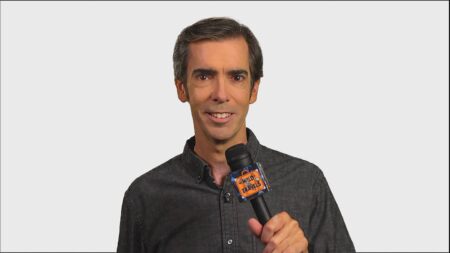
Within 24 hours, two separate attacks occurred at two North Side Red Line stations that resulted in one man being stabbed during an armed robbery and another hospitalized from being punched. Chicago police are now investigating the attacks on the transit system, which recently has seen a spate of similar incidents.AdvertisementCBS Chicago reported that the man who was punched was actor Will Clinger — the former host of the WTTW-Channel 11 program “Wild Chicago” and the current host of “Wild Travels.” CBS reported that Clinger remained in intensive care Tuesday night after being attacked. He told the news station that he never saw it coming.”Wild Travels” host Will Clinger (Harvey Moshman)The earlier attack occurred around 4:40 a.m. Monday when Chicago police were called to the Belmont CTA station, at 945 W. Belmont Ave. in Lakeview, police said. They found that a 44-year-old man had been stabbed by someone who also robbed him of some items before running off, police said.AdvertisementIt wasn’t immediately clear where on his body the man was stabbed, at what hospital he was treated and his condition was not released by authorities, who said mass transit detectives were investigating. Police didn’t say what was stolen from the man.Later that night, around 8:45 p.m. Monday, police were called to the Addison Red Line station, at 940 W. Addison St., to investigate a battery and robbery, police said.A 64-year-old man, identified by CBS as Clinger, “was approached by two unknown males who demanded his personal property,” police said. One of the two men also “punched the (64-year-old) in the face causing (him) to fall and hit his head on the wall.” He suffered “minor bruising and a laceration to the head and was transported to Illinois Masonic hospital in good condition,” according to police.Crime at Chicago transit stations has been making headlines this month, anecdotally alluding to an increase in violence on public transportation in the city, although statistics for the month have not yet been released. Last month, police and CTA officials committed additional resources to combat growing concerns over the safety of the transit system.The continued news of attacks comes as CTA grapples with spikes in violent crime and complaints that more riders are breaking rules that prohibit smoking, drinking and other nuisance behavior on trains and buses. Police and CTA officials on March 9 announced plans to address crime and rule-breaking, saying they would be doubling the number of unarmed security guards and adding more police officers and supervisors to patrol the transit system, including on the busy Red and Blue lines, with a focus on gang and narcotics crimes.Check back for updates.
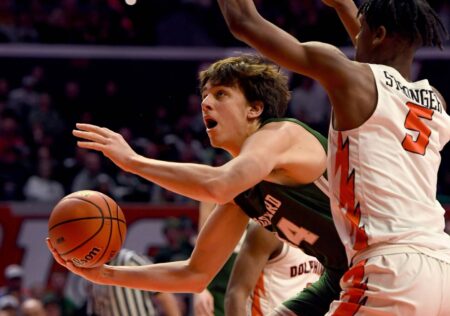
Braden Huff put team success over individual glory while leading Glenbard West to the Class 4A state championship and one of the most dominant seasons in Illinois high school basketball history.The individual accolades still came.Advertisement“It’s nice to see that winning matters, even if you’re not putting up the biggest numbers,” Huff said. “You don’t have to be a selfish player and focus on your stats to get the individual accolades.“We were able to meet our ultimate goal of winning a state championship and still recognized individually. That’s the cool part about this.”AdvertisementHuff, a 6-foot-11 senior forward who is headed to Gonzaga, was voted Mr. Basketball of Illinois for 2022.Barrington junior guard Sophie Swanson, a Purdue recruit, took home the title of Ms. Basketball of Illinois.Huff averaged 16.4 points, 5.8 rebounds and 3.2 assists, statistics that easily could have been higher if he did not play so unselfishly, according to Glenbard West coach Jason Opoka.ExpandAutoplayImage 1 of 5Glenbard West’s Braden Huff at the school gym on April 26, 2022. (John J. Kim / Chicago Tribune)“Those kids have been playing together forever,” Opoka said of his senior class. “They’ve learned from an early age to trust each other and to sacrifice for the good of the team. That’s blatantly obvious with Braden.“He could have scored a lot more points. He could have taken more shots. But he trusted his teammates and his overall goal was to win a state championship.”The Hilltoppers (37-1) won the program’s first state championship, capping a dominant postseason in which they won all six games by at least 22 points.Along the way, Huff became quite a celebrity in Glen Ellyn.“It was definitely surreal,” he said. “After our first game at home, we finished up and all of a sudden there were all these kids around us asking for autographs and photos and all that. I’d have to cut it short to go talk with the team in the locker room but then I’d come back out and there were still people there.Advertisement“I enjoyed every second of all that. That was a really cool thing that I could have never imagined.”The awards are voted on by a statewide poll of coaches and media and are presented by the Tribune in conjunction with the Illinois Basketball Coaches Association. Players received five points for a first-place vote, three for second and one for third.Huff and Swanson will be honored Saturday evening at the IBCA Hall of Fame Banquet at Illinois State’s Redbird Arena.Huff was named on 100 of 123 ballots and received 84 first-place votes to easily win the award with 473 points. Yorkville Christian’s Jaden Schutt (192 points, 15 first-place votes) was the runner-up, followed by Thornton’s Ty Rodgers (135, 13).“It’s crazy,” Huff said. “It’s always been a goal of mine to win this award. It’s a very prestigious award. To be in the company of all those great basketball players is a really cool thing for me and a great accomplishment.”Swanson, meanwhile, won a much closer race for Ms. Basketball.AdvertisementShe received 13 first-place votes and was named on 29 of 76 ballots, finishing with 95 points to edge Kenwood senior Brianna McDaniel. McDaniel, who was named on 18 ballots, received 15 first-place votes and 82 points. Stevenson’s Simone Sawyer was third with nine first-place votes and 60 points.Swanson led Barrington (30-6) to the first state trophy in program history with a runner-up finish in Class 4A.ExpandAutoplayImage 1 of 6Portrait of Ms. Basketball of Illinois Sophie Swanson, a junior at Barrington. (Stacey Wescott / Chicago Tribune)She averaged 21.4 points and 5.2 rebounds, breaking school records for points in a season (750) and a game (40).“It’s really a blessing because of how hard I’ve worked,” Swanson said. “I had all these goals that I set, and to be able to achieve them is really surreal.”Swanson showcased her skills on the big stage when she scored 35 points in a state semifinal win against Bolingbrook.“That was really cool,” she said. “It was a really fun environment. It was definitely like a preview of college. I really enjoyed it.Advertisement“The state experience, the playoff experience was unforgettable. We had so much fun as a team.”Swanson’s ability to score in so many ways is what sets her apart, according to Barrington coach Babbi Barreiro, who has led the Broncos for 30 years.“In the open court, she’s got another gear that makes her really hard to defend,” Barreiro said. “If you do step in to stop her, she can pull up and shoot the ball. Then she’s got that step-back 3-pointer where she steps in and pops back. I joke that it’s almost indefensible. It’s really special.”By winning Ms. Basketball as a junior, Swanson has a chance to join even rarer company. Four players have won the award in back-to-back seasons, including three-time winners Candace Parker and Brea Beal.“It’s so exciting,” Swanson said. “It’s really an honor to win this award and to be up there with all those big names. I’m going to keep getting in the gym, keep developing myself as a player and the goal is to get back to state next year.”Steve Millar is a freelance reporter for the Chicago Tribune.AdvertisementGlenbard West’s Braden Huff drives past Young’s Xavier Amos on his way to the basket during the Class 4A final on March 12 at the State Farm Center in Champaign. (Rob Dicker / Daily Southtown)123 ballots cast; first-place votes in parentheses; 5-3-1 vote value1. Braden Huff, Glenbard West: 473 (84)2. Jaden Schutt, Yorkville Christian: 192 (15)3. Ty Rodgers, Thornton: 135 (13)4. Nick Martinelli, Glenbrook South: 46 (2)5. AJ Casey, Young: 40 (1)Advertisement6. Robbie Avila, Oak Forest: 12 (1)7. Ethan Hefel, Galena: 10 (2)8. Caden Pierce, Glenbard West: 79. Ben VanderWal, Timothy Christian: 6 (1)10: Benjamin Vandigo, Scales Mound: 6Others receiving multiple votes: Will Grudzinski, Barrington, 5 points; Zach Hawkinson, Sacred Heart-Griffin, 5; N.J. Benson, Mt. Vernon, 4; Darrin Ames, Kenwood, 2; Dawson Feyen, East Dubuque, 2.AdvertisementReceiving one vote: Lucas Foote, Reed-Custer, 5 points (1); Brock Harding, Moline, 5 (1); David Hise, Knoxville, 5 (1); Zack Schroeder, Metamora, 5 (1); Cameron Christie, Rolling Meadows, 3; Zach Cleveland, Normal Community, 3; Jake Hamilton, Sacred Heart-Griffin, 3; Kellen Henze, Eastland, 3; Nojus Indrusaitis, Lemont, 3; Taj McKinney, Wayne City, 3; Tysen Meents, Wilmington, 3; Trey Pettigrew, Kenwood, 3; Lashawn Pollard, Vocational, 3; Cale Steinbaugh, Georgetown-Ridge Farm, 3; Jeremiah Talton, Quincy, 3; Damari Wheeler-Thomas, Larkin, 3; Devonte Hall, TF North, 1; Cason Headley, Coal City, 1; Wes Hunt, Peoria Christian, 1; Victor McGill, Litchfield, 1; Jackson Munro, New Trier, 1; Amarion Nimmers, Rock Island, 1; Michael Osei-Bonsu, Bolingbrook, 1; Levonte Pointer, Thornridge, 1; Jalen Quinn, Tuscola, 1; Patrick Robinson, Oswego East, 1; Tommy Zimmer, Illinois Lutheran, 1.Barrington’s Sophie Swanson reacts after her three-point shot in the third quarter against St. Charles East in the Class 4A South Elgin Supersectional game on Feb. 28 2022. (H. Rick Bamman / The Beacon-News)76 ballots cast; first-place votes in parentheses; 5-3-1 vote value1. Sophie Swanson, Barrington: 95 points (13)2. Brianna McDaniel, Kenwood: 82 (15)3. Simone Sawyer, Stevenson: 60 (9)4. Katie Krupa, Morton: 47 (5)Advertisement5. Abbey Schreacke, Quincy Notre Dame: 39 (4)6. Katy Eidle, Hersey: 37 (3)7 (tie). Kenzie Hare, Naperville North: 33 (5)7 (tie). Janae Kent, Oak Forest: 33 (5)9. Ella Lune, Brimfield: 28 (3)10. Lenee Beaumont, Benet: 19AdvertisementOthers receiving multiple votes: Camille Jackson, Butler College Prep: 13 (1); Amiah Hargrove, Christopher: 11 (2); Jordan Wood, Carmel; 10 (1); Katie Baker, Serena: 8 (1); Kammie Ludwig, Geneseo; 8; Taylor Charles, Burlington Central: 7 (1); Lisa Thompson, Joliet West, 7; Faith Feuerbach, Sycamore, 6; Bella Finnegan, Mother McAuley, 4; Sydney Harris, Edwardsville, 4; Mallory Ramage, Mattoon, 4; Emily Fisher, Libertyville, 2; Brynn Haas, Stockton, 2; Grace Sullivan, Carmel, 2.Receiving one vote: Bailey Berry, North Greer, 5 (1); Kloe Froebe, Lincoln, 5 (1); Gracie Furlong, Galena, 5 (1); Brooklyn Gray, Rockford Auburn, 5 (1); Anna Liaromatis, Wilmington, 5 (1); Shakara McCline, East St. Louis, 5 (1); Grace Nelson, Altamont, 5 (1); Lisa Thompson, Joliet West, 5 (1); Miyah Brown, Winnebago, 3; Maggie Furlong, Galena, 3; Shamiyah Godfrey, Orr, 3; Riley Guy, St. Anthony, 3; Alayna Kraus, Okawville, 3; Alyssa Latham, Homewood-Flossmoor, 3; Ashley May, Fieldcrest, 3; Claire McDougall, Washington, 3; Alexis Pohlman, Greenfield, 3; Molly Stiles, Coal City, 3; Tatiana Thomas, Bolingbrook, 3; Haley Warren, Rockton Hononegah, 3; Ava Bardic, Stevenson, 1; Joy Bergstrom, St. Viator, 1; Shelby Bowman, West Central, 1; Ella Goodrich, Fieldcrest, 1; Jillian Hamilton, Pena, 1; Brooklyn Harding, Reed-Custer, 1; Alexa Jamison, Salt Fork, 1; Kennedi Perkins, Bolingbrook, 1; Sydney Richards, Neoga, 1; Mya Wardle, Peoria Notre Dame, 1Mr. Basketball of Illinois2022: Braden Huff, Glenbard West2021: No award (COVID-19)2020: Adam Miller, Morgan Park2019: EJ Liddell, Belleville West2018: EJ Liddell, Belleville West2017: Mark Smith, Edwardsville2016: Charlie Moore, Morgan Park2015: Jalen Brunson, Stevenson2014: Jahlil Okafor, Young2013: Jabari Parker, Simeon2012: Jabari Parker, Simeon2011 (tie): Ryan Boatright, East Aurora and Chasson Randle, Rock Island2010: Jereme Richmond, Waukegan2009: Brandon Paul, Warren2008: Kevin Dillard, Homewood-Flossmoor2007: Derrick Rose, Simeon2006: Jon Scheyer, Glenbrook North2005: Julian Wright, Homewood-Flossmoor2004: Shaun Livingston, Peoria2003: Shannon Brown, Proviso East2002: Dee Brown, Proviso East2001: Eddy Curry, Thornwood2000: Darius Miles, East St. Louis1999: Brian Cook, Lincoln1998: Frank Williams, Peoria Manual1997: Sergio McClain, Peoria Manual1996: Ronnie Fields, Farragut1995: Kevin Garnett, Farragut1994: Jerry Gee, St. Martin de Porres1993: Rashard Griffith, King1992: Chris Collins, Glenbrook North1991: Howard Nathan, Peoria Manual1990: Jamie Brandon, King1989: Deon Thomas, Simeon1988: Eric Anderson, St. Francis de Sales1987: Marcus Liberty, King1986: Nick Anderson, Simeon1985: Ed Horton, Springfield Lanphier1984: Brian Sloan, McLeansboro1983: Marty Simmons, Lawrenceville1982: Bruce Douglas, Quincy1981: Walter Downing, ProvidenceMs. Basketball of Illinois2022: Sophie Swanson, Barrington2021: No award (COVID-19)2020: Angela Dugalic, Maine West2019: Brea Beal, Rock Island2018: Brea Beal, Rock Island2017: Brea Beal, Rock Island2016: Kathleen Doyle, Benet2015: Haley Gorecki, Fremd2014: Tyra Buss, Mount Carmel (Ill.)2013: Tyra Buss, Mount Carmel (Ill.)2012: Morgan Tuck, Bolingbrook2011: Ariel Massengale, Bolingbrook2010: Tricia Liston, Fenwick2009: Morgan Tuck, Bolingbrook2008: Sarah Boothe, Warren2007: Brittany Johnson, Olney East Richland2006: Theresa Lisch, Belleville Althoff2005: Lindsay Schrader, Bartlett2004: Candace Parker, Naperville Central2003: Candace Parker, Naperville Central2002: Candace Parker, Naperville Central2001: Cappie Pondexter, Marshall2000: Cappie Pondexter, Marshall1999: Molly McDowell, Nokomis1998: Allison Curtin, Taylorville1997: Courtney Smith, Carlyle1996: Tauja Catchings, Stevenson1995: Tamika Catchings, Stevenson1994: Michelle Hasheider, Okawville1993: Kim Williams, Marshall1992: Tammy Van Oppen, Bartonville Limestone1991: Megan Lucid, Mother McAuley1990: Courtney Porter, Hume Shiloh1989: LaTonia Foster, Marshall1988: Nancy Kennelly, Maine West1987: Cindy Kaufman, Seneca1986: Doris Carie, Teutopolis
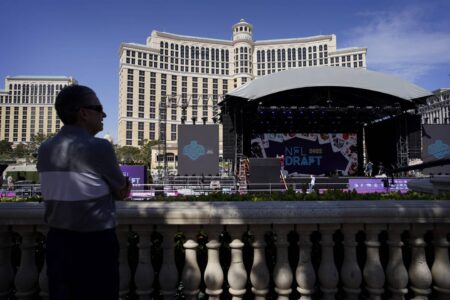
General manager Ryan Poles, coach Matt Eberflus and their staffs could spend their first draft night with the Chicago Bears on the sideline.The Bears don’t have a first-round draft pick Thursday after former general manager Ryan Pace traded it last year to move up for quarterback Justin Fields. So unless Poles engineers another trade, the Bears will spend the night watching the board unfold and plotting their Day 2 moves, which include two second-round picks and a third-rounder.AdvertisementHere’s what you need to know about this year’s draft.Round 1 will kick off at 7 p.m. CT Thursday, followed by Rounds 2-3 at 6 p.m. Friday and Rounds 4-7 at 11 a.m. Saturday.AdvertisementLas Vegas — originally scheduled to host in 2020 before COVID-19 made the draft a virtual experience — gets the stage this year. And what a visual show it will be, with the Strip anchoring the events and a red-carpet stage at the Fountains of Bellagio.“The key thing for the draft is to take on the character of where we are,” said Eric Finkelstein, NFL senior director of event operations. “This is not a cookie-cutter event. We try to embody and highlight where we are.”People look on as workers erect a stage during setup for the NFL draft on April 26, 2022, in Las Vegas. (John Locher/AP)At the Bellagio, there was thought of placing the prospects on boats in the fountains to get them to the red carpet. Time constraints and weather concerns — Thursday night’s forecast calls for strong wind, unusual in Vegas this time of year — canned that idea.The main stage for the draft is next to Caesars Forum and behind the High Roller observation wheel. Portions of the Strip will be closed to vehicular traffic, which is a big deal in Vegas — usually reserved for New Year’s Eve and for the city’s marathon.As it stands, the Bears have the following selections:2nd round: No. 392nd round: No. 483rd round: No. 715th round: No. 1485th round: No. 1506th round: No. 186[ [Don’t miss] 12 intriguing wide receiver options for the Chicago Bears in the NFL draft ][ [Don’t miss] Chicago Bears have 3 picks on Day 2 of the NFL draft. Who are the best players still available? ]The draft will be on NFL Network, ABC, ESPN and ESPN Deportes from Thursday-Saturday.AdvertisementRich Eisen leads the NFL Network team, which also includes Daniel Jeremiah, Charles Davis, Ian Rapoport, Melissa Stark and more.For the first two nights on ABC, Rece Davis, Todd McShay Desmond Howard, Sam Ponder, Jesse Palmer, Suzy Kolber, Laura Rutledge and Robert Griffin III will be among the analysts and reporters covering the event. Mike Greenberg, Mel Kiper Jr., Louis Riddick, Booger McFarland and Chris Mortensen will lead the ESPN coverage. The ESPN broadcast will be simulcast on ABC on Saturday.Kirk Herbstreit won’t work the draft for ESPN after doctors discovered a blood clot: “I feel good, but out of an abundance of caution, I think we’re just going to take a step back from this year’s draft coverage.”Kiper, the 61-year-old analyst who has appeared on ESPN’s draft coverage every year since 1984, will be working from his Maryland home because he’s not vaccinated. NFL reporter Adam Schefter will not cover the draft because he will be attending his son’s college graduation.Poles spent 13 years with the Kansas City Chiefs, so he has worked before on draft night. But he’s gearing up for his first as a general manager, and he prepared by putting his staff through multiple draft simulations.“The responsibility of making the pick, yeah, it’s bigger,” he said. “At the same time, you just rely on the work that everyone put in to make the right decision. And that was the cool thing about doing a lot of these mock-up drafts. We feel comfortable with the way that this thing is going to play out.”AdvertisementSince the Bears don’t have a first-round pick, Poles said the Bears will work through more simulations Thursday night so their operation runs smoothly Friday.Because the Bears only have six picks, Poles talked about trading back in the draft a couple of times to add to their draft haul. While there has been a lot of talk about drafting a wide receiver on Day 2, he said he thinks this class has depth among offensive linemen, defensive backs, defensive linemen and running backs.[ [Don’t miss] Ryan Poles’ remodeling project is about to take a big step forward. Here’s how he prepared for his 1st draft as Chicago Bears GM. ]And while providing help to quarterback Justin Fields is a priority, Poles said that can come in different forms.“Anytime you just improve the team overall, you’re helping all of the players out,” Poles said. “That can look different. You could say he needs receivers, receivers, receivers, but he needs blocking, too, and he also needs balance in terms of running the ball efficiently and getting that done up front.“And then you can do some play-action pass stuff, then you can do different things. Turnovers. Maybe a returner to flip the field to score more points. So it’s all connected. That’s really why the mindset is to get the best players on this team as possible. If I get too lopsided and be like, ‘I’ve got to do this specific thing,’ I think that’s where you lead into big mistakes.”Most analysts agree the Bears are most in need of offensive linemen, wide receivers and cornerbacks as they enter Poles’ first draft.AdvertisementIn Brad Biggs’ first Tribune mock draft, he suggested the Bears could pick Alabama cornerback Josh Jobe and wide receiver John Metchie III with their second-round selections. Biggs’ second mock draft sent Tulsa offensive tackle Tyler Smith and Florida cornerback Kaiir Elam to the Bears in the second round. In his final mock draft, Biggs tabbed DL Logan Hall from Houston and OT Bernhard Raimann from Central Michigan as second-round picks for the Bears .In ESPN’s three-round mock draft, Kiper and McShay had the Bears take Texas A&M guard Kenyon Green, Elam and Kentucky defensive end Josh Paschal.ExpandAutoplayImage 1 of 30Virginia McCaskey, the daughter of George Halas, took over as majority owner of the Chicago Bears in 1983. (Brian Cassella / Chicago Tribune)Some of the most notable moves Poles made in his low-key first few months were letting go of former Bears players. He traded Khalil Mack to the Los Angeles Chargers, let Allen Robinson, Akiem Hicks, James Daniels and Bilal Nichols go into free agency, and released Eddie Goldman, Danny Trevathan and Tarik Cohen.After nixing the Larry Ogunjobi deal because of a failed physical, Poles’ biggest additions have been center Lucas Patrick, defensive tackle Justin Jones, defensive end Al-Quadin Muhammad, wide receiver Byron Pringle, linebacker Nicholas Morrow and backup quarterback Trevor Siemian. But the GM still has a lot of roster spots to fill.Read about all the Bears moves so far here.ExpandAutoplayImage 1 of 119Bears quarterback Justin Fields scores in the fourth quarter against the 49ers at Soldier Field on Oct. 31, 2021. (Jose M. Osorio / Chicago Tribune)This will be the third time in four years the Bears haven’t had a first-round pick.AdvertisementPace sacrificed the pick last year to get Fields at No. 11 and also traded up to pick offensive tackle Teven Jenkins at No. 39. Pace also traded the Bears’ first-round picks in 2019 and 2020 to acquire Mack.The Bears’ top picks in 2020 were second-rounders Cole Kmet and Jaylon Johnson, as well as fifth-rounders Darnell Mooney, Trevis Gipson and Kindle Vildor. In 2019, the Bears’ first pick was third-rounder David Montgomery, and the only other player from that five-person class still with the Bears is cornerback Duke Shelley.[ [Don’t miss] Chicago Bears Q&A: Is there a position no one is talking about to target in Round 2? Who is playing left tackle to start minicamp? ]Before that, inside linebacker Roquan Smith, quarterback Mitch Trubisky, outside linebacker Leonard Floyd and wide receiver Kevin White were Pace’s first four first-round picks. Smith, the No. 8 pick in 2018, is the only one of those four still with the team.[ [Don’t miss] As Roquan Smith gets acquainted with a new regime, he ‘absolutely’ wants to stay with the Chicago Bears long term ]There are a few — but mostly in later rounds. Here are some key names to watch for. (Projections based on a consensus of seven-round mock drafts by The Athletic, CBSSports.com, ESPN.com, NFL.com and Sporting News)S Kyle Hamilton, Notre Dame, 1st roundDT Perrion Winfrey, Oklahoma (Lake Park), 1st-3rdWR Alec Pierce, Cincinnati (Glenbard West), 2nd-4thS Kerby Joseph, Illinois, 3rd-5thDT John Ridgeway, Arkansas (Bloomington), 3rd-6thRB Kyren Williams, Notre Dame, 4th-5thWR Kevin Austin, Notre Dame, 4th-7thQB Jack Coan, Notre Dame, 4th-7thLB Jack Sanborn, Wisconsin (Lake Zurich), 4th-7thOT Vederian Lowe, Illinois (Rockford Auburn), 5th-7thC Doug Kramer, Illinois (Hinsdale Central), 7th-FALB Jake Hansen, Illinois, 7th-FAP Blake Hayes, Illinois, 7th-FADE Myron Tagovailoa-Amosa, Notre Dame, 7th-FAOT Andrew Rupcich, Culver-Stockton (McHenry), 7th-FACOVID-19 disrupted the draft process the last two years.AdvertisementIn 2020, the NFL and its teams conducted the draft virtually, with general managers and coaches working from home to make picks. Last year in the pre-draft process, the NFL canceled the scouting combine and didn’t allow in-person prospect visits. Teams were allowed back in their facilities to draft, but there were some restrictions for teams that didn’t have fully vaccinated personnel.This year, the process mostly has been back to normal. The combine and in-person prospect visits returned, and the NFL dropped its COVID-19 restrictions in March. Barring an outbreak, the Bears should be able to operate as usual from their draft room at Halas Hall.Here are some fun NFL draft facts with a Chicago angle:Chicago hosted the festivities in 1938, 1942-43, 1951, 1962-64 and 2015-16. Before 2015, the draft had been held in New York. But after Chicago, the draft has traveled to Philadelphia, Dallas, Nashville, Tenn., and Cleveland.A University of Chicago halfback was the first player chosen in an NFL draft. The Eagles made Jay Berwanger the No. 1 pick on Feb. 8, 1936, during the nine-round event at Philadelphia’s Ritz-Carlton. Berwanger had won the inaugural Heisman Trophy and the Chicago Tribune Silver Football as the best player in the Big Ten when the Maroons were members of the conference. But he never played a down in the NFL.ExpandAutoplayImage 1 of 15George Halas Jr., from left, Abe Gibron, former Chicago Bears player, and Phil Handler, line coach for the Bears, sit at the Bears table during the NFL draft Dec. 2, 1963, at the Sheraton Hotel in Chicago. (Eddie Wagner, Sr., Chicago Tribune)

LAS VEGAS — Draft night on Thursday will include prospects walking a red carpet above the Bellagio fountains, a theater built specifically for the proceedings where they hope to hear their names called early, and the aura of gambling everywhere.How about that for something different for the NFL?AdvertisementThere’s no question the flavor of Sin City — from the attractions to the casinos to themed hotels to showgirls lining the players’ walkway to the mountains nearby — infiltrates this draft. The league seems very pleased with that symbiosis.“The key thing for the draft is to take on the character of where we are,” said Eric Finkelstein, NFL senior director of event operations. “This is not a cookie-cutter event. We try to embody and highlight where we are.”AdvertisementHe then noted the High Roller Ferris wheel directly in front of him and perhaps three football fields away from the theater stage where Commissioner Roger Goodell will announce the 32 picks on opening night. Finkelstein also mentioned circles on the stage emulating the famed “Welcome to Las Vegas” sign. Construction began on April 1.[ [Don’t miss] When do the Chicago Bears pick? What do the mock drafts say? Everything you need to know about the 2022 NFL draft. ]Above the stage flashed digital playing cards, each one designed for a specific NFL team. Adjacent to the theater, which will seat about 1,500 and has a footprint of about 1 million square feet, is Caesars Forum. That convention center even has an “NFL Draft Door,” which the league requested during construction.“We worked with Caesars to add a door to allow us to get the prospects out of the building with a direct connection to our theater build,” said Heather Nanberg, the league’s director of events.The 2020 draft originally was scheduled for Las Vegas, but became a virtual exercise because of the COVID-19 pandemic. So 2022 was substituted, and some plans changed.At the Bellagio, for example, there was thought of placing the prospects on boats in the fountains to get them to the red carpet. Time constraints and weather concerns — Thursday night’s forecast calls for strong wind, unusual in Vegas this time of year — canned that idea.Should the players need to escape the heat before or after walking the carpet, though, Kelsey Pietrangelo, the NFL’s manager of live event operations, joked that “we will have scuba suits if they’d like to jump in.”A worker swims in the fountain of the Bellagio hotel-casino during setup for the NFL draft on April 26, 2022, in Las Vegas. (John Locher/AP)Indeed, there were workers in scuba gear on Tuesday making late adjustments to the stage and walkway.“Using six divers is a first for us,” she added.AdvertisementPietrangelo noted that 300 drones will circle the fountains on Wednesday through Friday and the fountains will be in use during the pre-draft festivities.From the Bellagio, two billboards advertising sports betting, including one with the NFL logo on it, are in full view. As they certainly can be for the TV networks later this week. No one from the league seems uncomfortable with that scenario, instead emphasizing the importance of their “partners.” Particularly Caesars Entertainment.“We really focused on our prospect experience this year,” Nanberg said, “and we are committed to Caesars Forum.”Since the league turned the draft into a road show in 2015, it has held what in some (dull) circles is called the “Selection Meeting” in Chicago for two years; Philadelphia; Arlington, Texas; Nashville; and Cleveland. The general consensus is that Music City topped the charts with its presentation, shutting down Broadway for what has been estimated as close to 600,000 attendees over the three days. Thrown in were free concerts by Tim McGraw and Dierks Bentley, plus all sort of freebies (and other enticements) at the honky tonks.ExpandAutoplayImage 1 of 46NFL football fans watch as people race against digital representations of NFL prospects at Draft Town on April 29, 2016. (Chris Sweda / Chicago Tribune)Las Vegas might top that weekend, willingly shutting down a significant portion of the Strip and offering up Weezer, Ice Cube and Marshmello in concert. But the myriad other attractions in town — music, magic, ventriloquism, the tables and slots — could scatter visitors, something that didn’t occur in Tennessee.“Las Vegas is the entertainment capital of the world,” Finkelstein said. “We know there are a lot of things going on in this town. They all get how to do a big event. We’ve gotten to towns where that was a little bit of a challenge with size. Here, they know what we are trying to achieve.”