
Author: staff


As the election looms closer, it’s easy not to think of people in prison at all, except maybe as statistics. Those in prison are easy to…

PITTSBURGH — One pitch three starts ago still lingers in Matt Swarmer’s mind.The sequence occurred in his June 11 outing at Yankee Stadium, where he notably became the first Chicago Cubs starter since 1901 to allow six home runs in a game. On that night, Swarmer threw a 90-mph fastball so inside to catcher Jose Trevino that the pitch nearly was in the batter’s box. But Trevino turned on the ball, hitting it off the left-field foul pole for a solo homer.AdvertisementGiven the placement, Swarmer figured the ball would have at least gone foul off Trevino’s bat if he didn’t take the pitch. Instead, it gave the Yankees their fourth homer of the game in an 8-0 win, part of a series sweep.The Cubs believe Swarmer was tipping pitches against the Yankees. In his two starts since then, Swarmer thinks he has addressed the issue and the tipping problem has not been as pronounced.Advertisement“I don’t want to give hitters any advantage and make them feel like everything looks the same and you never know what’s coming,” Swarmer told the Tribune on Wednesday. “In the moment you’re not worried about where your hands are or mechanics, you’re just worried about executing pitches. But yeah, it can speed up on you quick. I’ve just got to be more aware early.”Cubs starting pitcher Matt Swarmer, right, gets a visit from pitching coach Tommy Hottovy, left, during the third inning against the Pirates on Tuesday in Pittsburgh. Swarmer took the loss in the 7-1 defeat. (Gene J. Puskar/AP)Swarmer credited pitching coach Tommy Hottovy for bringing to his attention during games when he notices him potentially tipping, pointing to an indicator that the right-hander’s mechanics are off.“I mean, that was a really good lineup — tipping/no tipping, that’s a potent (Yankees) offense,” Hottovy told the Tribune. “As long as he’s true to himself and continues to trust what he does really well and then find ways to sprinkle in the fastball and changeup and move the ball around … he’s got a unique slider that a lot of people don’t see.”Swarmer was done in Tuesday against the Pittsburgh Pirates by a 39-pitch third inning in which he gave up three runs. It prevented him from pitching deep into the game, limited to four innings. It forced manager David Ross to use right-hander Mark Leiter Jr., called up hours earlier to give the bullpen a fresh long reliever. Swarmer allowed five runs (four earned) in the outing while walking two and striking out five.Chicago Tribune SportsWeekdaysA daily sports newsletter delivered to your inbox for your morning commute.After two short starts in the series from Swarmer and Caleb Kilian, who was optioned to Triple A on Tuesday, right-hander Keegan Thompson stepped up.Thompson delivered a quality start for a second straight outing, holding the Pirates to one run over six innings in the Cubs’ 14-5 win Wednesday. The offense provided plenty of run support early, scoring seven runs in the second inning when they sent 10 batters to the plate and went 3-for-5 with runners in scoring position. The Cubs took advantage of loading the bases with nobody out in the inning, cashing in against Pirates starter Jerad Eickhoff.Five Cubs drove in a run in the victory, paced by Ian Happ and Patrick Wisdom each hitting two-run homers. For Wisdom, it represented back-to-back days with a home run. Alfonso Rivas connected for his first-career grand slam, hitting it off Pirates infielder Diego Castillo in the ninth.With the Cubs likely not getting any of their three injured starting pitchers back until around the All-Star break, Swarmer has an opportunity to get an extended big-league look. He wants to be more aggressive earlier in games and not worry about strikeouts. Ultimately, Swarmer wants to be a starter that the Cubs can count on to pitch deep into games.Advertisement“Sometimes I try to do too much and it just throws me off my game even more,” Swarmer said. “Like, I’ll just try too hard. I’ll get 0-2 or 1-2, and I’m trying to put the guy away or get weak contact. And outs are outs. But I’ve got to keep getting better, honestly, and keep learning.”Swarmer continues to rely on his fastball-slider mix. He knows working on his changeup as a bona fide third pitch is going to be important to prevent hitters from sitting on his slider. It’s Swarmer’s best pitch, and Hottovy wants to see heavy usage.“We’re still wanting guys to trust their stuff also trying to find ways to keep developing guys,” Hottovy said. “And he’s one of those guys that falls into that role of we know he’s got a pitch that plays really well. How can we complement that with other stuff and keep giving him an opportunity to succeed?”

The Chicago White Sox hold their annual Pride Night on Thursday for the opener of a four-game series against the Baltimore Orioles.Sox closer Liam Hendriks, who raised a pride flag at Guaranteed Rate Field along with his wife, Kristi, said it’s important for every organization in baseball to show its support of the LGBTQ+ community.AdvertisementWhile many MLB teams already have events in conjunction with Pride Month, the Tampa Bay Rays recently made national news when their team-initiated Pride Night celebration turned into a controversy about whether players should need to wear caps and jerseys with the rainbow-colored logo. Five Rays pitchers — Jason Adam, Jalen Beeks, Brooks Raley, Jeffrey Springs and Ryan Thompson — removed the rainbow logo and wore their regular caps.Adams told the Tampa Bay Times the players decided not to wear the rainbow logos for religious reasons, saying “it’s just that maybe we don’t want to encourage it if we believe in Jesus, who’s encouraged us to live a lifestyle that would abstain from that behavior, just like (Jesus) encourages me as a heterosexual male to abstain from sex outside of the confines of marriage.”AdvertisementHendriks in an interview Tuesday declined to address the Rays controversy, saying “everyone is entitled to their own opinions.” Sox players will not be asked to wear logos on their caps or jerseys, a team spokesman said.White Sox relief clsoer Liam Hendriks starts to celebrate a victory as Boston Red Sox batter Xander Bogaerts flies out to end the game on May 25, 2022, at Guaranteed Rate Field. (Chris Sweda / Chicago Tribune)Is it important for the entire team to show its support?“Not necessarily the whole team,” Hendriks replied. “But the more people you get involved at certain points, you’re trying to move the ball forward every single year, whether it be one player this year and another next year. …“I know there are a lot of players that are very open to the concept of doing anything. They just aren’t sure whether they want to be (vocal). They’re all on board with supporting it. They just aren’t sure whether they can go out and be that kind of voice, to put their face out there.“I want to get us to a society where you can say whatever and have your own opinions, as long as it’s not hateful toward an entire demographic.”Hendriks not only is comfortable being the voice of the Sox celebrating Pride Night — which they have done since 2018 — but said he spoke with the front office about being involved in it before signing here as a free agent.Detail of the Tampa Bay Rays’ pride burst logo celebrating Pride Month during a game against the White Sox on June 4, 2022, at Tropicana Field in St. Petersburg, Fla. (Julio Aguilar/Getty Images North America/TNS)“It wasn’t a demand by any means, and it wasn’t a make-or-break decision,” he said of the discussion. “It was something like, ‘Hey, if you don’t have (Pride Night), this is a conversation we’re going to have to have. And if you do have one, sweet, how do I become more involved?’“I want to be, not the ambassador, but I want to make sure there is a player’s name attached to this and we can move forward and try to get every team to have a single guy, or group of guys, that can put their face on this (event) and say ‘This is what we’re doing in our clubhouse.’ That’s what we’re aiming for.”AdvertisementThe Hendrikses also donated South Slydah Society-branded Pride flags to the Sox event — they will be distributed for free in Section 154. Liam Hendriks said he has been involved in the cause for many years and confirmed he has received hateful comments on social media for supporting the LGBTQ+ community.He called them “cowards” who would never say the same comments to his face.“Everyone tends to be a little (bit of) keyboard warriors when they have no repercussions,” Hendriks said. “It is what it is. The fact is the hate I get for being an ally is very limited compared to what some other people may be getting if they’re in the spotlight or in the limelight going through this ordeal of going out and being true to themselves.“That’s something that shouldn’t happen in life. But unfortunately it’s a lot of judgment without knowing the person. It’s a lot of hate and vitriol about a certain lifestyle. I don’t think anyone is perfect in this world. The fact they can judge someone else for who they are is damaging to an entire population.”
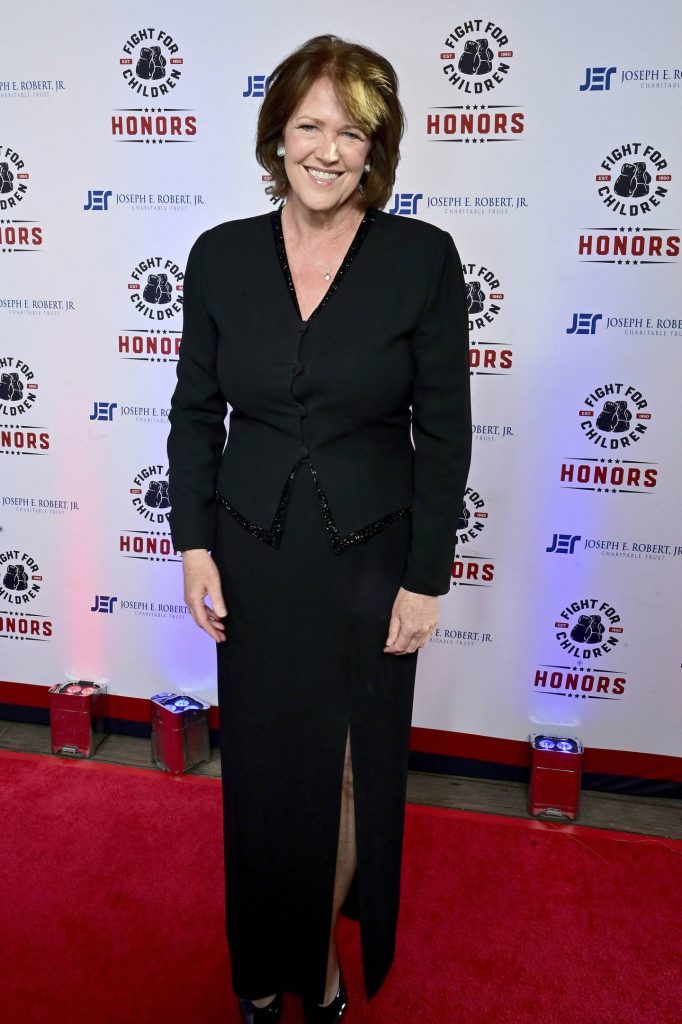
The most powerful anecdote in the legend of Jeannie Morris was about the time she traveled to Minnesota to cover a Chicago Bears-Minnesota Vikings game and was barred from the press box — because women and children weren’t allowed.Undeterred, Morris covered the game in a blizzard from a seat above the box.Advertisement“That wasn’t much fun, but it makes for a good story,” she later said in a Bears video.At a time when Title IX was helping girls and women gain more opportunities on sports fields and courts, Morris was helping to fight battles in the media as one of the most influential women sports broadcasters in Chicago history. Those fights included being barred from access at the Indianapolis 500 trials and being called “a shrimp female” while Ted Williams ordered her out of the dugout.Advertisement[ Title IX turns 50: Meet 50 women in Illinois who have impacted sports on — and off — the field of play ][ After a tennis career as ‘the only one,’ Katrina Adams is now on a mission to open doors for women in sports ]Earlier this week, in honor of the 50th anniversary of Title IX, the Tribune unveiled a list of 50 women who have made an impact in Chicago sports history. But we wanted to acknowledge a separate group of women who have influenced Chicago sports with their words — on air, on paper and online — despite a different set of obstacles.From Morris to Melissa Isaacson to Leila Rahimi, here are 20 women who have stood out over the years in Chicago sports media.USA Today sports columnist Christine Brennan attends the Fight For Children Honors Gala at The Anthem on May 19, 2022, in Washington. (Shannon Finney / Getty Images)Christine Brennan: Chicago can claim the longtime USA Today columnist, TV commentator and Red Smith Award winner because she’s one of a long line of distinguished alumnae from Northwestern’s Medill School of Journalism, where she is a professor of practice. She’s one of two notable USA Today women sports columnists with Chicago ties, the other Nancy Armour. Brennan was the first woman sports writer at the Miami Herald, worked at the Washington Post and has written several books.Lisa Byington: The versatile announcer has a lot of firsts on her resume, including becoming the first woman to work as a full-time TV play-by-play announcer for a major men’s professional sports team when the Milwaukee Bucks hired her in September. She also was the Big Ten Network’s first female play-by-play announcer to call a football game. A basketball and soccer player at Northwestern, Byington also is part of the Chicago Sky broadcast crew.Toni Ginnetti: A sports writer for 33 years at the Sun-Times, Ginnetti covered multiple professional beats, including the White Sox and the Cubs. She started her career at the The Daily Herald for nine years before moving to news at the Sun-Times but frequently pitched ideas to the sports department, according to a Robert Feder story in 2014. In that story announcing her retirement, she said legendary Chicago columnist Mike Royko helped push her permanent move to sports when he asked the Sun-Times managing editor, “When are you going to put her in sports?”Margaret Holt: She became the first woman sports editor at the Chicago Tribune when she was hired from the South Florida Sun-Sentinel in 1993. Holt stayed in the role until 1995, just part of her 50-year journalism career, which ended when she left the Tribune in January after a stint as the standards editor. A Chicago Reader story documented a well-known spat Holt had with a Tribune copy editorafter she took away the department’s TV, which editors used to monitor scores and late games. Holt didn’t want it to be a distraction. But the story also interestingly detailed Holt’s move from only results-focused game stories, an approach many sports sections and sites have made since, especially in the internet age.[ Commentary: 50 years later, Title IX gains are fragile. And there’s much more work to do in the next 50 years. ]Cassidy Hubbarth on the set of “NBA Tonight” in 2014. (Rich Arden / ESPN Images )Cassidy Hubbarth: The Evanston native and Northwestern graduate has been with ESPN since 2010, working as an NBA host and reporter. She is the lead host of “Hoop Streams,” ESPN’s NBA pregame show for digital and social media, and has hosted “NBA Tonight” and “NBA Coast to Coast.” She started as a traffic reporter and also worked for CSN Chicago, the Big Ten Network and Intersport. She was a state champion soccer player at Evanston. She’s far from the only female ESPN employee with ties to Chicago. Broadcasting powerhouses Andrea Kremer and Bonnie Bernstein each made career stops in Chicago with the network, while Sarah Spain, who is on this list, is from Lake Forest.Melissa Isaacson, the longtime Chicago Tribune sports writer who wore No. 10 for the 1979 Niles West girls basketball team, wrote a book about the team that was released in August 2019. (Courtesy of Melissa Isaacson / H / Handout)Melissa Isaacson: She was the Chicago Tribune beat reporter for the Bulls during the Michael Jordan era and also covered the Bears in her 19 years at the Tribune. She later moved to ESPN and now is a lecturer at Northwestern. Isaacson wrote a book — “State: A Team, a Triumph, a Transformation” — about her experiences on Niles West’s 1979 state championship basketball team in the years immediately following Title IX. She is one of many successful women sports writers at the Tribune over the years, including Bonnie (then DeSimone) Ford, who went on to work at ESPN, and Shannon Ryan, who was the 2020 Illinois Sportswriter of the Year and now works for The Athletic.AdvertisementChristina Kahrl poses before Game 4 of the National League Championship Series between the Cubs and Mets on Oct. 21, 2015. (Andrew Theodorakis/for New York Daily News)Christina Kahrl: Now the San Francisco Chronicle sports editor, the University of Chicago and Loyola alum and former longtime resident of the city was a co-founder in 1996 of Baseball Prospectus, for which she became the executive editor and a columnist. She then worked for ESPN for 10 years. She was the first openly transgender sports writer when she came out in 2002-03 and was inducted into the Chicago LGBT Hall of Fame for her activism for the transgender community.Linda Kay was the first sports writer at the Chicago Tribune. After leaving Chicago, Kay was a Montreal Gazette columnist, a professor at Concordia University and an author. She died in 2018 at 66. (Quentin C. Dodt / Chicago Tribune)Linda Kay: She was the Chicago Tribune’s first woman sports writer, co-authoring the Odds & Ins column with Skip Myslenski and then Mike Conklin. She went on to become a lifestyle columnist at the Montreal Gazette and a journalism professor at Concordia University. She died in 2018 at 66.Peggy Kusinski: She has been a part of the fabric of Chicago sports media for three decades, most notably with NBC-5 for nearly 20 years. She started at CLTV before becoming the first woman to host a Chicago sports talk show, WMAQ-AM 670’s “Sports Huddle.” She was a sports anchor and host on ESPN’s WMVP-AM 1000 and now is back on the station hosting a Saturday show with Dionne Miller. She also hosts podcasts “The Sportscaster And Her Son” and “Pass the Mic.” Kusinski is one of a long list of talented women’s TV sports anchors/reporters that also includes former CBS-2 reporter Megan Mawicke and Miller, who is on ABC-7.Fox Sports sideline reporter Sarah Kustok prepares for a postgame interview during a game between the Colts and Vikings on Sept. 20, 2020, in Indianapolis. (Zach Bolinger/AP)Sarah Kustok: The former Sandburg and DePaul basketball player became a Blue Demons assistant coach under Doug Bruno and started her broadcasting career in Chicago with CSN Chicago, NBC-5 and FOX-32. After serving as the Brooklyn Nets sideline reporter for the YES network, she became the first woman to be named the solo color analyst for an NBA team for a regional network in 2017. She also has worked for Fox Sports and CBS’ “We Need to Talk.”Jeannie Morris, a Chicago sports media trailblazer, sits for a photo at the Union League Club on March 6, 2014. Morris died in December 2020. (Abel Uribe / Chicago Tribune)Jeannie Morris: During a 24-year career as a broadcaster, Morris made her mark on the Chicago sports scene despite battling sexism. She did sportscasts with her husband, former Bears wide receiver Johnny Morris, for NBC-5 and CBS-2 and co-hosted “The Mike Ditka Show” with him. Morris was the first woman to report live from the Super Bowl in 1975. She also was a writer, starting with a column in the Chicago American and continuing with the Brian Piccolo biography, “Brian Piccolo: A Short Season.” She’s not the only area woman who had access issues. A 1972 Chicago Tribune article described the removal of Lynda (Morstadt) Fillmore from the Comiskey Park press box. Morris died in December 2020.A portrait of broadcaster Beth Mowins, who became the first woman to call Cubs games, outside Wrigley Field on March 17, 2021. (Brian Cassella / Chicago Tribune)Beth Mowins: Last season, she became the first woman in Chicago Cubs history to serve as a play-by-play announcer. She had extensive experience before that calling multiple sports, including NFL and college football games and NCAA championships in basketball, softball, soccer and volleyball.AdvertisementSports writer Carrie Muskat in the Cubs dugout before a game against the Astros on May 16, 2001, at Wrigley Field. (NUCCIO DINUZZO / CHICAGO TRIBUNE)Carrie Muskat: She covered Major League Baseball for four decades, including the Cubs for MLB.com from 2001-18. She also is an author of books about the Cubs, including “Banks to Sandberg to Grace: Five decades of love and frustration with the Chicago Cubs” and “The Big 50: The Men and Moments who made the Chicago Cubs.”Sharon Pannozzo: She worked for the Cubs for 24 years, including as director of media relations, holding a high-ranking position in baseball at a time when few women did. After resigning in 2006, she went on to become vice president of entertainment publicity at NBC Universal, which included working as a spokesman for “Saturday Night Live.”Candace Parker: The only woman to make both our lists of 50 women in Chicago sports history and 20 women in Chicago sports media, Parker has made a splash as an NBA analyst for TNT and NBA TV. The Chicago Sky player and Naperville Central alumna is part of a TNT Tuesday crew that includes Shaquille O’Neal and Dwyane Wade. She also has done work as a producer, including a recent documentary: “Title IX: 37 words that changed America.”Leila Rahimi: She is the first woman to be a full-time lead sports anchor at NBC-5. Before that, she was a full-time weekday host on WSCR-AM 670 with Dan Bernstein, one of the few women to have hosted on the station, a list that includes Julie DiCaro, Maggie Hendricks and Julie Swieca, who was a reporter and host for the station for 10 years. Rahimi still appears on the station on Wednesdays. She previously worked in Chicago at NBC Sports Chicago and covered the Olympics for NBC.Cheryl Raye-Stout: Now a sports reporter for WBEZ-FM 91.5, Raye-Stout has been in Chicago sports radio for nearly four decades. She started at WMAQ-AM 670, producing Chet Coppock’s show and hosting “One-on-One with Cheryl Raye.” She later reported for WMVP-AM 1000, including covering the Michael Jordan-era Bulls. She had a hand in breaking two of the biggest Jordan stories — his move to baseball and his return from retirement.Krista Ruch: She has been the executive sports producer at CBS-2 since 2003, leading all of their daily coverage as well as coverage of Chicago’s sports championships along the way. She began at WGN-9 in 1993, working her way up to supervising sports producer in 1999, becoming the first woman and youngest person at 28 to hold the top sports producer job at any Chicago TV station.AdvertisementUndated photo of Mary Shane, a pioneering broadcaster who teamed with Harry Caray and Jimmy Piersall for White Sox games during the 1977 season. (Chicago White Sox archives)Mary Shane: She became the first woman regular play-by-play announcer for a Major League Baseball team when the White Sox hired her in 1977. Shane started her sports journalism career in Milwaukee doing freelance writing and radio, and it was while covering the Brewers at County Stadium that Harry Caray noticed her. He invited her to join him in the booth during the game that day and the next. The Sox hired her to the broadcast team the next season, and she did play by play and color commentary on radio and TV.Studeio portrait of ESPN radio and TV commentator Sarah Spain, a Lake Forest native, in December 2015. (Joe Faraoni / HANDOUT)Sarah Spain: The ESPN TV/radio/podcast host and writer is from Lake Forest, where she played basketball, field hockey and track. She went on to be a heptathlete at Cornell. Along with Malika Andrews, the ESPN NBA reporter and host whose Chicago connection is a brief career stop at the Tribune and ESPN as a Bulls writer, Spain is one of the most high-profile — and social media-savvy — Chicago-area women on the network. She also is a co-owner of the Chicago Red Stars.

Vade Mecum translates from Latin as “go with me.” When Glenn Jones makes such an offer, anyone who appreciates a vivid musical trip shouldn’t think twice.…
On a scorching June afternoon, historic Wrigley Field served as a fitting backdrop.Chicago Cubs co-owner Laura Ricketts holds a rare position within men’s professional sports leagues. She is one of a few women currently at the ownership level. And as chairman of the board for Cubs Charities, Ricketts has witnessed firsthand how sports can have an impact on communities.AdvertisementAlthough she didn’t grow up with aspirations of a career in sports, Ricketts says she was the best athlete in her family.[ [Don’t miss] Title IX turns 50: Meet 50 women in Illinois who have impacted sports on — and off — the field of play ]“My brothers would probably disagree about that, but my mom will not disagree. She knows,” Ricketts said with a smile during a recent interview with the Tribune. “So that was my thing.”AdvertisementBorn five years after Title IX passed in 1972, Ricketts was among the first generation of girls to benefit from the amendment, which included opportunities in sports. She recalled playing T-ball at 5 years old, and by the time she reached high school, volleyball, softball, basketball and track filled up her calendar. Recently she has started playing tennis with her wife, Brooke.Cubs co-owner Laura Ricketts stands for a portrait at the offices next to Wrigley Field on June 14, 2022. (John J. Kim / Chicago Tribune)“It’s hard to overstate how it’s impacted my life — and it made me who I am today, honestly,” Ricketts said of sports. “Sports teaches you about being a teammate, it teaches you to put yourself out there, it teaches you to work really hard, it teaches you about resiliency, it teaches you that there’s no shame in failing as long as you try hard or try something new.“I know all of those played into my development and who I am to this very day.”Ricketts also has the distinction of being Major League Baseball’s first openly gay owner. Ricketts, who was out when her family bought the Cubs in 2009, acknowledges there can be a burden to breaking barriers; however, she believes it’s an opportunity.[ [Don’t miss] After a tennis career as ‘the only one,’ Katrina Adams is now on a mission to open doors for women in sports ]“I may be a queer woman, but I’m also a white woman,” Ricketts said, “so imagine being a queer brown or Black woman, or just imagine being a Black or brown human being of limited means in this country, right? I don’t know what it’s like to walk in their shoes, but I can have the beginning of an understanding of what it’s like not to be equal and to be thought of as the other. I have this incredible access and incredible privilege.“Obviously it comes up in baseball. … I have the credibility as the queer person in the room to give the leeway for conversation and to allow people to grow and to learn from it.”Her foundation in sports helped Ricketts navigate law school at Michigan, and eventually as a lawyer, in a competitive, largely male environment. Ricketts remembers women in law school forming a study group, encouraging and supporting each other. In the years since, this dynamic has played out for Ricketts through her work on a local and national level.Portrait of siblings Pete Ricketts, Todd Ricketts, Laura Ricketts and Tom Ricketts by the Cubs dugout at Wrigley Field on Oct. 13, 2009. (Chris Sweda/Chicago Tribune)In addition to leading the Cubs’ charity efforts and creating youth programming, Ricketts in 2012 cofounded LPAC, the first queer women-focused super PAC that endorses and supports candidates who are committed to LGBTQ+ and women’s equality and social justice. She has also served on the boards of the National Leadership Council for Lambda Legal, a nonprofit for LGBTQ+ civil rights, and EMILY’s List, an organization that works to elect Democratic pro-choice women.Advertisement“I’m very aware of the unique position that I’m in,” Ricketts said. “I’m happy to say it’s not as unique as it was 10 years ago, but for women in professional sports, it still just feels like a trickle and it’s such a slog to get more. But I do feel like we’re slowly building momentum. The people in these roles, the impact that it has is immeasurable, and so I feel that responsibility.”A big project awaits Ricketts and the organization through Cubs Charities. They are set to build an urban youth academy to house some of their sports-based youth development programs for boys and girls. The project is expected to be officially announced in the near future.The academy will feature sports fields, including at least one indoor infield, and a community center. It is expected to be built in an area of Chicago that needs investment but will draw youths from across the city.“We really strive to be the best, and in the case of Cubs Charities, it doesn’t just mean in the way we conduct our business or our staff,” Ricketts said. “It’s not just for the sake of being the best but to show the impact you can have and to be a model for other teams. We want to be the team that other teams look to and say, ‘Let’s go talk to the Cubs and see what they did because they’re doing it right,’ in terms of diversity, equity and inclusion.”Ricketts has seen strides in the diversity of the Cubs front-office personnel with just under 40% of them women, noting, “We should be at 51% in my estimation.” She wants to do more — including working with Major League Baseball to encourage more equity in the sport. Ricketts, a mom of three, sees this as an area she can grow into because of the visibility of professional sports.Cubs co-owner Laura Ricketts gives an interview to the Tribune’s Meghan Montemurro at the offices next to Wrigley Field on June 14, 2022. (John J. Kim / Chicago Tribune)Chicago Tribune SportsWeekdaysA daily sports newsletter delivered to your inbox for your morning commute.Behind the scenes, Ricketts has been trying to affect change. When the Cubs were searching for a new play-by-play voice for Marquee Sports Network last year, Ricketts nudged the higher-ups at the network to talk to women for the position. Beth Mowins was ultimately brought on to call a handful of games. During Cubs board meetings, Ricketts, often the only woman in the room, has made clear they need more women and people of color in these roles.AdvertisementIn her position, Ricketts says questions must be asked as to why women can’t be recruited to stay in — or even get in — the organization, noting the need for an environment and culture that helps them rise to the top.[ [Don’t miss] Commentary: 50 years later, Title IX gains are fragile. And there’s much more work to do in the next 50 years. ]“My personal mission and my personal belief is that we need women in positions of power and leadership. We all need it, not just women need it, but as a society, as a planet.” Ricketts said. “Because if we don’t have women in positions of leadership and power in sports, in government, in politics, in education, in business, then we forfeit.“We forfeit what we can be, what we can achieve individually. We forfeit what we can achieve as a gender. But we’re all forfeiting what we can become and what we can achieve as a community and as a society.”Being part of a family ownership group can bring more individual scrutiny, particularly when differing politics are involved. While her immediate family members are notably Republican, Ricketts, an executive committee member of the Democratic National Committee, doesn’t feel she needs to make it a tit-for-tat situation on a public level.She does, though, feel compelled to have conversations with family members to understand where they are coming from and have them understand her perspective “at least how they speak about things and how they look at things, to take that into consideration, how to see things from someone else’s shoes.”“When you have a larger family of means and they’re all doing a lot of things, they’re all trying to impact the world for what they feel is the greater good of everybody,” Ricketts said. ”And you own a baseball team together and you have that visibility, there’s attention between being known for what you do and what you’re about and sort of being lumped in with the family as a whole. I would want to be known for what I do, what I’ve accomplished.”
On a scorching June afternoon, historic Wrigley Field served as a fitting backdrop.Chicago Cubs co-owner Laura Ricketts holds a rare position within men’s professional sports leagues.…

Illinois Republican U.S. Rep. Adam Kinzinger will take the national stage Thursday as he is set to chair a hearing of the committee investigating the Jan.…

For the first time in nearly four decades, Illinois House Democrats are seeking to defend their dominance in Springfield without the chief architect of their supermajority,…

When Richard Irvin became mayor of Aurora five years ago, he named Michael Pegues — a close childhood friend — as one of his most trusted…