


Author: staff


It’s music festival season again, and of course we’re still in the middle of a pandemic. According to the Centers for Disease Control and Prevention, 222.3…

Most days the freshest, flakiest, most diaphanous Trinidadian roti in the city must be consumed al trunko on the 2500 block of South Wabash with your…
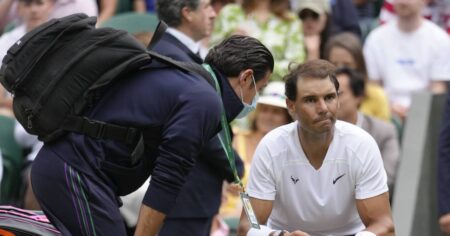
WIMBLEDON, England — Rafael Nadal withdrew from Wimbledon a day before he was supposed to play in the semifinals because of a torn abdominal muscle.“Unfortunately, as you can imagine, if I am here, it’s because I have to pull out from the tournament,” Nadal said during a news conference at the All England Club on Thursday.AdvertisementThe 22-time Grand Slam champion was scheduled to face Nick Kyrgios for a berth in the final on Friday.Kyrgios advanced to his first final at a major tournament. He will meet either Novak Djokovic or Cam Norrie for the championship on Sunday.

Mayor Lori Lightfoot should consider renaming Soldier Field to raise money and “explore the feasibility” of enclosing the stadium with a dome or roof, an advisory…
Mayor Lori Lightfoot should consider renaming Soldier Field to raise money and “explore the feasibility” of enclosing the stadium with a dome or roof, an advisory panel she appointed to study Chicago’s museum campus recommended.AdvertisementThe panel’s work marks Lightfoot’s attempt to keep the Chicago Bears, who are exploring a possible move to Arlington Heights, deflect blame if the venerable sports team leaves, and identify potential ways to improve a stretch of land that also includes the Adler Planetarium, the Field Museum, the Shedd Aquarium and the McCormick Place lakefront building.Lightfoot’s panel recommends transforming Solidarity Drive into a year-round plaza, creating educational programs for kids and adding large-scale art to rejuvenate the campus. For the museum campus, it recommends improving CTA service and adding a trolley and improving traffic around the area. Many of the report’s ideas are likely to run into financial or political challenges as officials wait for the Bears to make a decision and sort out their next steps.Advertisement[ The Arlington Heights Bears? Here’s what to know about the team’s possible move from Chicago’s Soldier Field. ]“Our beloved Museum Campus is an essential part of this city and requires special attention and care,” Lightfoot said in a statement. “The Museum Campus working group has provided us with a useful framework to guide that work, as well as to enhance the (campus) overall.”Although Lightfoot has made a point of emphasizing the broader museum campus, it’s the report’s recommendations involving Soldier Field that will draw the most attention.“To better utilize Soldier Field year-round, the City should also explore the feasibility of enclosing the stadium. From May to December, Soldier Field is a lively, highly utilized venue. During this time, the stadium is estimated to host anywhere from 96,000-240,000 people each month. However, the arena’s usage is much lower from January to April when the weather limits use of the stadium’s outdoor areas,” the panel said.“During these colder months, it is estimated that stadium attendance ranges from 1,200 to 66,800 people per month. Although an enclosed venue is unlikely to attract many more major concerts due to limited touring windows among other reasons, it would negate inconsistent weather conditions and allow Chicago to host coveted one-off events such as the Super Bowl and the NCAA Final Four Championship.”The report stops short of recommending the roof, though, saying “further analysis is required to fully understand the specific costs, the potential direct and indirect economic impacts, and the full range of potential funding sources available to determine options that are respectful to Chicago taxpayers.”It does note that the city should consider a sponsorship agreement with naming rights for Soldier Field, which was dedicated to soldiers in the 1920s. Sponsorship agreements at other stadiums, including SoFi Stadium in California and MetLife Stadium in New Jersey, have brought in $400 million each, the panel said. Other arenas — like the Caesars Superdome in New Orleans — show that you could keep “Soldier Field” in the name and continue respecting its legacy as a tribute to American soldiers while also bringing in revenue, the panel said.The Bears have played at Soldier Field since moving from Wrigley Field in 1971. They played the 2002 season at Champaign’s Memorial Stadium while Soldier Field underwent a $690 million renovation. The stadium, which is owned by the Chicago Park District, holds 61,500 fans, the smallest capacity in the NFL. It can be difficult to reach and is out of date compared with newer football stadiums.[ [Don’t miss] Could the site of a proposed Chicago Bears stadium in Arlington Heights also include a minor league baseball complex? ]The Bears signed a purchase agreement for Arlington International Racecourse last fall, which won’t close until later this year at the earliest. Though it is not a done deal, the Bears’ interest in Arlington Heights sparked a rigorous debate over whether Chicago should attempt to keep the team and at what cost. One advantage for the Bears of moving to Arlington Heights is they would be able to develop the 326-acre property around the stadium with shopping, dining and entertainment.AdvertisementWhile she tries to determine if it’s possible to keep the team in Chicago, the mayor also needs to prepare for a post-Bears future at the lakefront so she can present a forward-looking plan to try to defray the loss of revenue and civic prestige if they leave.Afternoon BriefingDailyChicago Tribune editors’ top story picks, delivered to your inbox each afternoon.Other recommendations include a suggestion that the city and other agencies “carefully evaluate” future options for Lakeside Center, a part of the McCormick Place center that faces “lagging utilization and significant maintenance requirements.” But any attempt to modernize the facility is likely to be costly and the 51-page report doesn’t generally address funding.The panel also recommends implementing a free or low-cost trolley, citing a program that ran in Chicago during the early 2000s but was discontinued in 2009 when its federal and corporate funding dried up. How a similar program could avoid the same fate is unclear, though the report said it “should ultimately grow to be self-sustaining through revenue from campus specific sources.”Another proposal is the creation of a pedestrian bridge connecting to Northerly Island.“During the 1933-34 Century of Progress World’s Fair, which was held on both sides of Burnham Harbor, the island was connected to the mainland by three bridges: one at today’s Solidarity Drive, another at 16th Street, and one at the southern end of the peninsula,” the report said. “In this spirit, the working group recommends that a new pedestrian bridge be created to connect Northerly Island either at the latitude of approximately 16th or 18th Street or at the southern end of the peninsula.”Further study would be needed, though, to recommend the most appropriate design and accommodate existing boats in the harbor and their access to Lake Michigan, posing logistical challenges.AdvertisementOther proposals deal with transportation to the campus and Soldier Field, which can be a real challenge. Proposals include improving CTA bus service and making other infrastructure changes.For next steps, the task force recommends Lightfoot establish a “stakeholder coordinating body” to work with the Park District, campus museums, city departments and others “to advance the execution of the recommendations outlined in this report.”
Mayor Lori Lightfoot should consider renaming Soldier Field to raise money and “explore the feasibility” of enclosing the stadium with a dome or roof, an advisory…
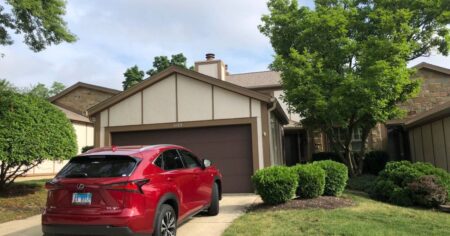
The three-bedroom, 1,820-square-foot Wheaton town home that former Major League Baseball player, former Chicago White Sox broadcaster and former Chicago Cubs minor league coach Jimmy Piersall owned until his death in 2017 has been listed for $345,000.Piersall, who died at age 87 in 2017, played for 17 years in the major leagues — though not for either Chicago team — and retired in 1967. For the final 40 years of his life, Piersall was a familiar figure in Chicago, including as a TV broadcaster for White Sox games for four years with Harry Caray in the late 1970s and early ‘80s and then remaining as a pregame and postgame analyst for two more years. Piersall later was a baseball analyst for WSCR-AM and WMVP-AM and also was a minor league coach for the Cubs for 14 seasons.AdvertisementPiersall had owned the eight-room Wheaton town home with his third wife, Jan, whom he married at an Oak Brook restaurant in October 1982. Records show that in August 1978, she paid $91,500 to buy the town home from its builder.Located in the Wheaton Oaks development, the two-story town home has three bathrooms, a vaulted living room with a fireplace, a dining room with crown moldings, and a kitchen with white cabinetry, under-cabinet lighting, white appliances, a tile backsplash and a walk-in pantry. Other features include a second-floor loft with a fireplace, a partially finished basement, a new roof, a new furnace and a primary bedroom suite with a walk-in closet and a remodeled bathroom.AdvertisementListing agent Joanne Spagnola of Baird & Warner Fox Valley told Elite Street that the town home is located “in a gem of a neighborhood.”“The neighborhood (is) complete with a swimming pool and a clubhouse, and residents walking their dogs or having joyful conversations with one another,” she said in a text message. “(This town home) is beautifully designed…with a private courtyard, desired floor plan, spacious kitchen plus (a partially) finished basement.”The town home is just two blocks from the place where Piersall and his wife met. The couple first ran into one another at a women’s racquetball demonstration at the nearby Wheaton Sport Center in 1979, Jan Piersall told the Tribune in 1992.Jan Piersall died after her husband, and her children from a previous marriage first listed the town home in early June for $350,000. They cut the asking price to $345,000 on June 27.The town home had a $4,918 property tax bill in the 2021 tax year. Owners also must pay $400 a month in homeowners association dues.Goldsborough is a freelance writer.Join our Chicago Dream Homes Facebook group for more luxury listings and real estate news.
The three-bedroom, 1,820-square-foot Wheaton town home that former Major League Baseball player, former Chicago White Sox broadcaster and former Chicago Cubs minor league coach Jimmy Piersall…
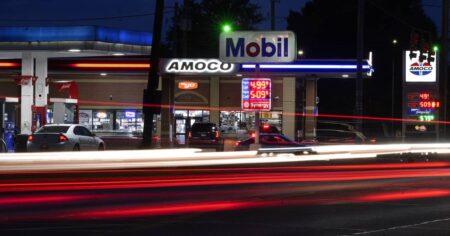
As Congress and now the Supreme Court stymie the Biden administration’s efforts to curb climate change, one thing the president doesn’t want — sky high gas…
This interview is being co-published with The TRiiBE, a digital media platform that is reshaping the narrative of Black Chicago. After enduring pretrial electronic monitoring (EM)…