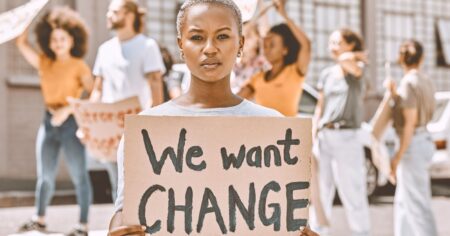




Despite economic challenges, civil rights leaders see hope
The glowing aftermath of November’s historic midterm elections not only usher in an annual season of hope and faith but also provide an encouraging sign that our democracy will now address the needs of millions of people who have been either pushed out or locked out of economic opportunity.
Despite federal rollbacks in diversity and inclusion, fair housing, voting rights and more, when 2027 arrives, the nation’s elected leaders in states and in Washington will more closely resemble the country’s diversity in race, gender, and ethnicity. Beyond this year’s lengthy list of historic wins, when new officials assume their duties in January, America will have:
- A Black Speaker of the House of Representatives
- 5 Black governors serving in Florida, Georgia, Maryland, Nevada and Wisconsin
- 7 Black state attorneys general protecting consumers in Georgia, Illinois, Maryland, Massachusetts, Minnesota, New York and Washington state
- 7 Black U.S. Senators representing Delaware, Georgia, Illinois, Maryland, Mississippi, New Jersey and South Carolina
- 66 or more members in the Congressional Black Caucus, depending upon final election certifications.
A chorus of civil rights advocates herald both the victories and opportunities for the nation.
“Voters didn’t just decide in this election,” stated Maya Wiley, president and CEO of the Leadership Conference on Civil and Human Rights. “They demanded! They demanded a very different future from the one offered from the current administration and its allies… Across race, gender, sexuality, identity, nation of origin, age, religion, disability, income, and geography, the majority of this country showed what they hold most sacred — their rights and freedoms that are tied to their opportunities and well-being…We cannot just tinker with a past that made progress but proved too fragile and resulted in dreams deferred.”
While Janai Nelson, Legal Defense Fund (LDF) President and Director-Counsel, applauded voters’ efforts in the November midterm elections, she also quickly noted that the quest for freedom and economic inclusion continues.
“The work of rebuilding our democracy begins now and we must be bold and visionary,” said Nelson. “LDF will continue its work with Black communities to hold elected officials accountable to address the very real issues facing our communities: ending the thuggery that has been unleashed by the president’s reckless deportation forces, ensuring strong and effective educational opportunities for all students, making health care and housing affordable, and creating fair economic opportunities that give everyone a chance to thrive — not just those at the top. Our vote was not the final word.”
The depth and breadth of the nation’s financial challenges is underscored in an updated report entitled, State of Personal Finance in America Q3 2026, a quarterly research study conducted by Ramsey Solutions that tracks personal finance behaviors and attitudes of everyday Americans.
According to the update, an estimated 94 million U.S. adults say they’re struggling or in crisis financially. The study also found that more than half of Americans – 53 percent – are living paycheck to paycheck.
“When more than half of Americans are cutting back on Christmas gifts, it shows just how much families are feeling the pressure,” said Rachel Cruze, personal finance expert and co-host of “The Ramsey Show” and “Smart Money Happy Hour.” “Christmas should be a time of joy, not a
financial burden that follows you into the new year.”
For some federal lawmakers, resurrecting the Consumer Financial Protection Bureau’s (CFPB) to its rightful regulatory role is a priority. In published comments appearing in a recent article by The Guardian, Representative Bill Foster of Illinois and Senators Raphael Warnock of Georgia and Catherine Cortez Masto of Nevada plan to aggressively scrutinize what has happened at the CFPB in recent years.
“Next Congress, my colleagues on the Financial Services Committee and I will investigate the unconstitutional dismantling of the CFPB,” Foster said, adding that he and other committee members will pursue “subpoenas, investigations, hearings, and, ultimately, legislative action to restore consumer protections in this country and hold accountable those who seek to profit off the most vulnerable Americans.”
Massachusetts Senator Elizabeth Warren, a former Harvard professor credited as being CFPB’s ‘brainchild’ is also speaking up for the embattled agency.
“Accountability is coming,” said Warren. “If you’re a Wall Street executive, Big Tech CEOs, giant corporations that have been cheating people, you should be worried. And government officials who have put their own interests ahead of the public interest, should be worried too.”
Hopes for future consumer-friendly reforms also include relief for the 42.6 million student loan borrowers who collectively struggle with $1.7 trillion of debt.
“Borrowers expect the newly elected Congress to address the student debt crisis and work to make student loan payments more affordable,” said Natalia Abrams, Student Debt Crisis Center President. “The 120th Congress has an opportunity and a responsibility to fulfill their promises of affordability. Student loan borrowers deserve a seat at the table and real solutions that address the financial burden they carry every day.”
Now, before new terms of office begin, is a season for Black America to celebrate our hope, joy, and faith in the future.
As Derrick Johnson, the NAACP President and CEO noted, “Once again, Black voters have proven that we are not bystanders in this country, we are its builders.”
Charlene Crowell is a senior fellow with the Center for Responsible Lending. She can be reached at Charlene.crowell@responsiblelending.org