


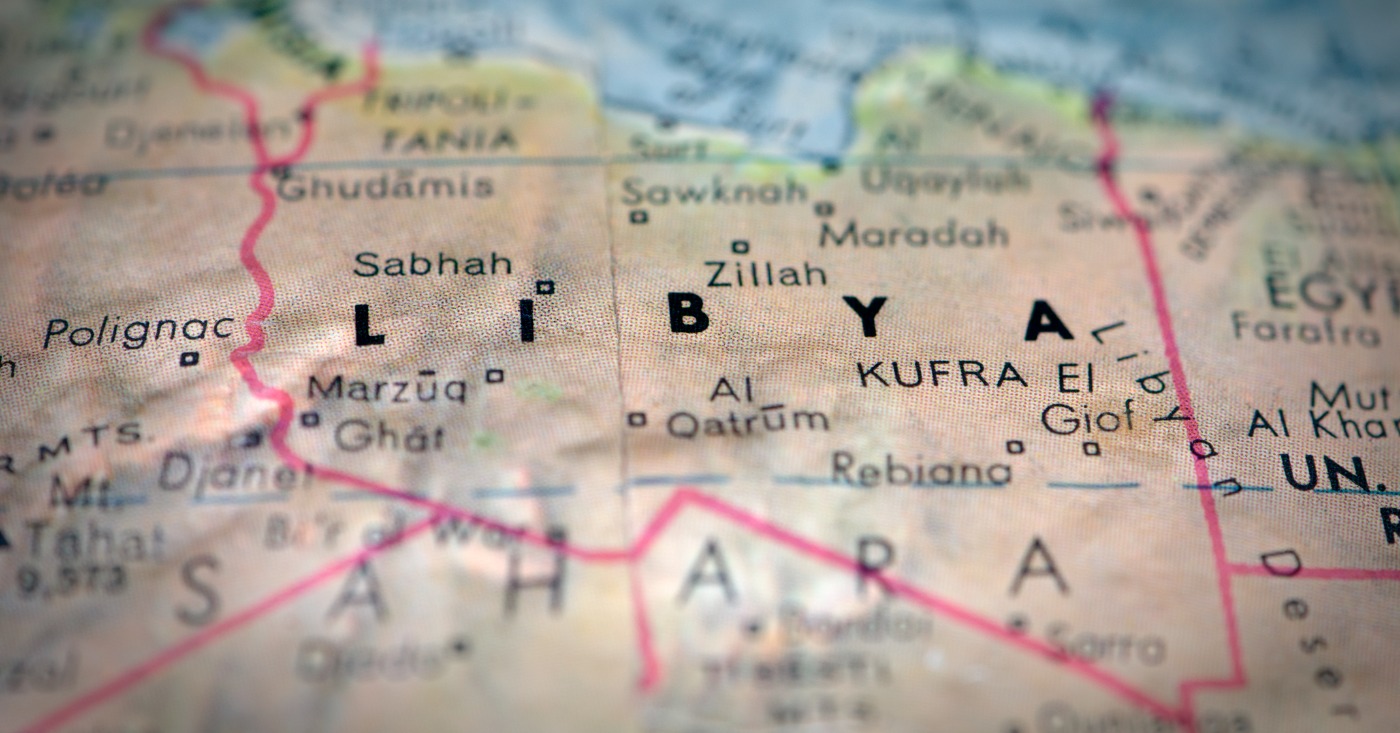
Fifteen years after NATO warplanes went up over Libya, the country still has no single government, no national elections, and no agreed-upon constitution. That outcome deserves more attention than it usually receives in American political discussions, because it is the most telling lesson about what happens when a military intervention succeeds at its stated objective but fails at everything that follows.
The Western intervention itself was brief. Between March and October 2011, a NATO-led coalition operating under a United Nations mandate to protect civilians conducted an air campaign that NATO’s own account frames as a civilian-protection mission tied to the withdrawal of regime forces. In practice, the mandate expanded. Muammar Qaddafi, who had ruled for forty-two years, was driven from power and killed by opposition fighters. A British parliamentary inquiry later concluded bluntly that a limited intervention to protect civilians later drifted into a policy of regime change by military means. Moreover, the inquiry concluded the policy was not underpinned by any strategy to support and shape post-Qaddafi Libya.
Qaddafi’s demise is not the most fascinating question to consider. He was a brutal and eccentric ruler. Few Libyans mourned the end of his rule. The interesting question is what the intervening powers assumed would take his place. The sad reality is authority did not pass to any Transitional National Council but onto the hundreds of armed brigades that physically held territory and institutions – a fragmentation of legitimate force that the coalition’s refusal to deploy any stabilization presence made irreversible. President Obama himself, asked in 2016 to name the worst mistake of his presidency, cited “failing to plan for the day after” in Libya.
There was a moment when American institutions might have conducted a serious public reckoning with that failure. Instead, Congress wasted its energy on a narrower question. After the September 2012 attack on the U.S. diplomatic compound in Benghazi, which killed Ambassador Chris Stevens and three other Americans, the House created a select committee that held pointless hearings for more than two years and cost taxpayers roughly $7 million. The committee interviewed some eighty new witnesses. Its centerpiece was an eleven-hour televised session with Secretary of State Hillary Clinton in October 2015 that, according to reporters present, produced little new information but generated fierce partisan arguments.
The committee’s final report faulted the military response and intelligence handling but found no new evidence that Clinton was personally at fault. Whatever Congress learned about consulate security, the exercise’s political character had already been conceded by the House majority leader. He credited the committee with driving down Clinton’s poll numbers, which apparently was the real purpose of this mind-numbing exercise. He later tried to walk back that embarrassing remark. The larger question – whether the United States should have helped dismantle a state without any plan for its replacement – went unexamined.
Libya has lived with the consequences. The country still operates under two rival administrations. There is a UN-recognized Government of National Unity in Tripoli, formed in 2021 to hold elections that never took place, and an eastern authority aligned with the House of Representatives and with Khalifa Haftar’s forces. Human Rights Watch describes the two entities as competing for territory, resources, and legitimacy amid rising repression and armed confrontation. Elections scheduled for December 2021 remain indefinitely postponed.
Some movement has occurred. In April 2026, the rival authorities approved Libya’s first unified national budget since 2013, worth roughly $30 billion, and in June the main political bodies signed a power-sharing arrangement geared toward holding elections before February 2027. But the arrangement functionally distributes power between the Dbeibah and Haftar families rather than to Libyan voters, and the UN’s own envoy has repeatedly told the Security Council that state institutions remain divided with insufficient progress toward a vote.
Meanwhile, the economy depends almost entirely on oil, which accounted for about 97.5 percent of public revenue in early 2026, and the nation’s currency (the “dinar”) has been devalued twice in under a year.
The lesson is not that intervention is always wrong. It is that the “day after” is the policy. Democracies which cannot debate the “day after” honestly will keep paying for it in places whose names they eventually stop mentioning.
Muammar Qaddafi ruled Libya as an eccentric autocrat from 1969 to 2011. He often acted as if he were insane, wasted Libya’s national treasures, and destroyed many lives. At the same time, the way he was removed provided important lessons that are not being heeded by the U.S. government in places like Iran today.
Based on reporting by Jackson Advocate.
The post Libya Fifteen Years Later: the Long Cost of an Unfinished Intervention appeared first on BlackPressUSA.