



By Danielle Bess
Danielle Bess is a trial attorney based in the Clayton Judicial Circuit of Georgia.
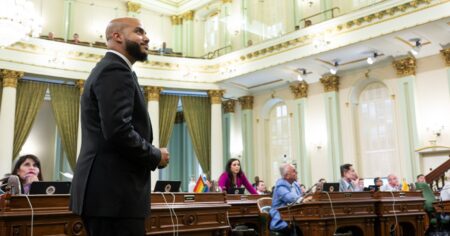
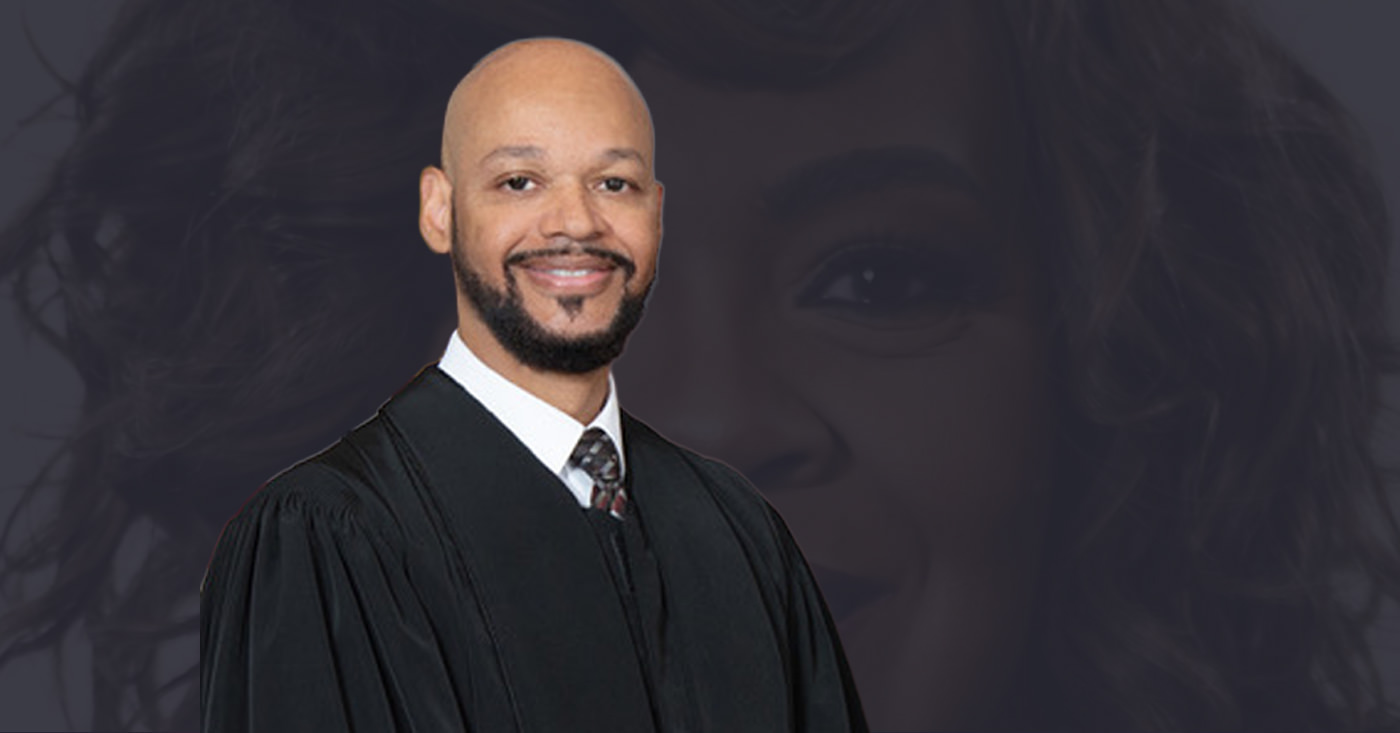
Three days after Clayton County voters removed Judge Aaron Mason from the Superior Court bench in a nine-point loss, he filed a lawsuit asking a court to disqualify the winner, Judge-elect Deitra Burney-Butler, and to throw out the more than 25,000 votes cast for her and declare him the winner instead.
He filed it in the Superior Court of Clayton County, where Judge Mason presides.
Over the past ten weeks, no news outlet has reported that the case exists.
That points to a second problem, one that affects anyone who uses Georgia courts. The Petition, the only document that explains what the case is about, has never been publicly viewable. It appears on re: SearchGA, Georgia’s statewide court-records portal, but that listing shows only the lawyers’ entries of appearance, even though later filings in the same case were promptly posted.
To get a copy, I went to the Clayton County Superior Court Clerk’s office in person. The clerk could not find the Petition; a search for the paper file came up empty. Only after a supervisor stepped in did a clerk locate the case in an internal system and print a copy, minus the exhibits it references. No one explained to me why I couldn’t have it or why it wasn’t online.
“Weird” is how Bryan Sells, an Atlanta election law attorney who has practiced in this field for 28 years and litigated candidate-eligibility cases, described the Petition’s absence from the public docket.
A judge’s lawsuit, filed from a judge’s chambers
The Petition to Contest Election was filed pro se by Judge Mason on May 22, 2026. It lists his address as 9151 Tara Boulevard, the Clayton County Judicial Complex, where he keeps his chambers. The email address on the filing is his official judicial email. And the sworn verification at the back was notarized by an employee of the Clayton County court administration office. Records produced by the Secretary of State show the same court administration employee also notarized Judge Mason’s own qualifying paperwork when he entered the race back in March.
Mason has been a judge for 16 years. He was appointed to the State Court of Clayton County in 2010 by Governor Sonny Perdue, a milestone his campaign website says made him “the first African American to serve on that bench.” In December 2016, Governor Nathan Deal elevated him to the Superior Court, where he ran unopposed in 2018 and 2022. May 19, 2026, was the first time Clayton County voters were ever offered a choice about Judge Aaron Mason.
They chose someone else.
Deitra Burney-Butler spent 14 years on the Clayton County juvenile court bench and, before that, prosecuted cases in the Clayton County District Attorney’s and Solicitor’s offices. In 2023, Judge Robert Mack rescinded her reappointment, ending her tenure. Reporting at the time said the rescission cited concerns about her ability to serve. Burney-Butler has received no public discipline by the State Bar or the Judicial Qualifications Commission. Eight months after her removal, she challenged Judge Mack at the polls and lost. She came back in 2026, ran against Judge Mason, and won 25,414 votes to his 20,948.
Judge Robert Mack, who now serves as Chief Judge, will be the only man on the Clayton County Superior Court bench if the election results stand.
The theory: Her State Bar Status
The Petition alleges that Burney-Butler was never qualified to run at all. Georgia law, at O.C.G.A. § 15-6-4(a), requires that a Superior Court judge “is a member in good standing with the State Bar of Georgia.” According to the Petition, at the time of her candidacy, the State Bar directory listed Burney-Butler as an “Inactive Member in Good Standing,” a status that does not permit the practice of law. From there, the Petition reasons: she could not practice, so she was ineligible; her candidacy affidavit was false; the votes cast for her were void; and because Mason was the only other candidate on the ballot, he received the only legal votes and should be declared the winner.
For that last step, Mason cites Haynes v. Wells, a 2000 Georgia Supreme Court case that itself originated in Clayton County, holding that votes cast for an ineligible candidate are “void and ineffective.”
“Usually, people challenge during the qualification period,” Sells told me. Georgia law gives any constituent a window of roughly 10 days after qualifying to challenge a candidate’s eligibility. Waiting until after the election, he said, is unusual but not unheard of.
The bigger problem, in Sells’s view, is the theory itself. “I don’t see any requirement in the qualification statute that someone be an active member,” he said. The statute requires good standing, and as Sells put it, “there is no dispute that she is in good standing.” The difference between active and inactive status, Sells explained, largely comes down to dues and continuing education: inactive members pay less, skip the CLE requirements, and cannot practice law. Returning to active status requires little more than filing a form with the State Bar and paying fees.
The State Bar’s own rules back that up. The Bar officially publishes counts of “inactive members in good standing” as a category, and Bar Rule 1-204 defines good standing in terms of being current on fees and free of suspension or disbarment, not by whether a member is actively practicing.
A check of the Georgia State Bar directory on August 5, 2026, shows Deitra Burney-Butler as an Active Member in Good Standing.
What the affidavit actually says
I have now read the affidavit that Judge Mason’s lawsuit condemns as false. The Secretary of State produced it in response to my open records request, and it never mentions the State Bar at all. The sworn Notice of Candidacy and Affidavit Burney-Butler signed on March 5, 2026, is a standard state form. It attests to her name, residence, citizenship, the absence of disqualifying convictions and tax defaults, and to one general statement: “I am eligible to hold such office.” There is no line about bar membership, active status, or good standing. Her occupation is disclosed in her handwriting: “Hearing Officer.”
Whether a general oath of eligibility can be “false” when the State Bar itself classified her as a member in good standing is precisely the question Mason’s theory must survive.
‘He started too soon, a race against time
Mason brought his case under O.C.G.A. § 21-2-524(a), which gives a defeated candidate five days to file, beginning after the election results are certified.
Mason did not wait for the clock to start, and records from the Secretary of State laid out his morning, timestamp by timestamp. At 10:37 a.m. on May 22, Mason submitted his own open records request to the Secretary of State, asking for Burney-Butler’s Notice of Candidacy, affidavit, and complete qualifying file. At 11:45 a.m., 68 minutes later, his Petition was stamped in at the Clayton County Clerk’s office. The Petition promises to supplement with the affidavit itself “upon receipt.” Ten weeks later, nothing in the accessible court record shows that the supplement was ever filed. And at 5:30 that evening, the Board of Elections convened to certify the election results that Mason was already contesting.
The government’s own inboxes also document the afternoon as part of the same open records response. A copy of the Petition bearing a second stamp shows it reached the county elections office at 1:21 p.m. Three minutes later, Clayton County Elections Director Shauna Dozier sent it to Blake Evans, the Elections Director for the Georgia Secretary of State. Evans asked when the county planned to certify. “We are set to certify today at 5:30 PM,” Dozier replied. At 1:36 p.m., Evans forwarded the petition to the Secretary of State’s general counsel with his read: because a Superior Court judgeship is a state-level office, Mason “needs to wait until after state certification” to file a contest, a certification even further away than the county vote scheduled for that evening.
At 6:58 that night, about an hour and a half after Clayton certified, General Counsel Charlene McGowan responded. “I believe you are correct that this is premature,” she wrote. But because Mason had not named the Secretary of State as a respondent, there was “nothing for us to do at this point.” The state’s top election lawyer identified a possible defect the day the case was filed, concluded it was not the state’s problem, and moved on. Nothing in the records suggests anyone ever told Judge Mason or the court.
The contest statute is built for speed: the clerk is directed to issue process immediately, the defendant must answer within days of service, and the State Election Board must be notified. Mason did prepare that certificate. The elections office’s copy of the Petition includes a certificate of service addressed to the State Election Board’s chairman and recites that a copy was mailed to Burney-Butler. But that page was not in the copy of the court file the clerk’s office produced to me, and nothing in the accessible court record shows it was ever filed. More than 10 weeks after the filing, the accessible court file reflects that essentially nothing has happened.
“I would have expected it to be done by now. It should be done,” Sells said.
When I returned to the clerk’s office for a second look at the file, the answers got stranger. The “-99” now attached to the case number, a deputy clerk explained in a recorded conversation, is “just the judge code”: every judge of the Clayton Judicial Circuit had recused. Mason is their colleague; Chief Judge Mack removed Burney-Butler from her judgeship, and she challenged him just two years ago. The case now awaits a judge of the Sixth Judicial Administrative District, one who, as far as the public record shows, has not been appointed. “It’s not, like, one of our normal cases,” she told me.
Then I asked for the rest of the file: a sheriff’s entry of service, exhibits, certificates of service, anything beyond the petition, and the three entries of appearance. There was nothing else they could provide, I was told. When I pressed, the deputy clerk offered an explanation: “Certain things are sealed. And when it’s sealed, we are unable to see certain stuff.”
But “sealed” is a legal term with specific implications. It means a judge held a hearing and signed an order. So I asked to see the sealing order, and to the staff’s credit, they corrected themselves. There is no order. What they meant, they explained, is that when a case goes to the Sixth District after a bench-wide recusal, it is “automatically under lock and key under administration.” Even the clerk’s own staff can see only “the bare minimum”: party names, attorneys, and what appears online.
The court file in an active election contest, which seeks to overturn the votes of more than 25,000 Clayton County citizens, is locked away not by any judge’s order but automatically by administrative default, so thoroughly that the office legally responsible for maintaining the record cannot open it. Despite asking, I was not told what policy supports this process. As of this reporting, the most important document in this case cannot be read on any website, and the file cannot be inspected at any courthouse counter in Clayton County.
This administrative rule appears to contradict Georgia law. Under the Uniform Superior Court Rules, every court record is presumed public, and access can be restricted only by a judge’s order after a hearing, supported by written findings that privacy clearly outweighs the public’s interest. The clerks confirmed that no such order was issued in this case. No judge has entered any publicly available order. Indeed, based on the public record, no judge has even been assigned. Sells said a delay in designating a judge when a full bench recuses is normal. “But that shouldn’t explain all this.”
County residents weigh in
Clayton County voters have had no way of knowing about the lawsuit except through rumors circulating in the community. I spoke to Clayton County resident Timothy Vondell Jefferson, who calls himself ‘Mr. Clayton County’ and describes himself as a supporter of Judge Mason. He had heard a rumor that someone was contesting an election, but he did not know who it was or any of the details. “Voters in Clayton County should know about this lawsuit,” Jefferson said.
When asked if he agreed with Judge Mason trying to have Burney-Butler disqualified and himself declared the winner, he stated, “If there is a valid reason, she should be removed, but if it’s just throwing mud against the wall hoping it will stick, I don’t agree with that, or if he is coming from a sore loser’s point of view, I don’t agree with none of that.”
Other members of the community expressed disappointment that Judge Mason filed a lawsuit. “It’s really disappointing that he would file a lawsuit to get a position back that he was clearly voted out of,” said Attania Jean-Funny, a Clayton County resident and former candidate for county commission. She described the inability to access this lawsuit as the “type of underhanded things we are trying to get out of our political system.”
When I described the petition to another Clayton County voter who asked to be identified only by her last name, Chambers, her reaction was to first process it. “We want people to operate within a process,” she said. “The process allowed for questions about her eligibility at the very beginning. It would be different if there were no other avenue—but there was.” Mason waited until three days after he lost. Chambers suspects she knows why: “He probably operated from some degree of arrogance—to think this woman could not unseat you.”
Chambers expressed concern that this case could affect voters’ willingness to engage in the electoral process in the future. “Voters served their civic responsibility,” she said, “and to now make it seem like that’s all for naught—it just concerns me about the precedent it sets,” particularly with midterm elections approaching and particularly in a predominantly Black county whose votes are the ones a court is being asked to void.
Chambers summed up her feelings in one sentence, “Don’t have me as a voter go through this whole process, and then with the stroke of a pen, you call it into question—when you didn’t do that in the beginning.”
The lawyers arrive
The docket does reveal some movement. A lawyer for Burney-Butler, Aryka Moore, entered an appearance on July 2. Then, on July 28, with an updated filing on July 30, Judge Mason went from pro se to retaining Ronald Freeman and Patrise Perkins-Hooker. Perkins-Hooker is a former president of the State Bar of Georgia. To argue about what State Bar membership means, Judge Mason has hired the woman who once ran the State Bar.
Moore said her client had no comment at this time. Attorneys for Judge Mason did not respond to detailed written questions by the deadline. Neither did Clerk of Superior Court Chanae Q. Clemons, who received written questions about the handling of the file. This story will be updated if they do.
The clock is running
Judge-elect Burney-Butler’s term begins January 1. Litigation may yet answer the question of whether an attorney who is an Inactive Member in Good Standing can be elected to the Superior Court bench in Georgia. But somewhere between Jonesboro and McDonough sits a case with no assigned judge, no hearing date, and no public paper trail, a case that was supposed to be decided in days but has now drifted for months, waiting to determine whether the choice made by more than 25,000 Clayton County voters will stand.
The statute’s clock was designed to run in days. It has been running since May.
The post An Ousted Clayton County Judge Is Suing to Throw Out 25,000 Votes—and Declare Himself the Winner appeared first on BlackPressUSA.