





The national conversation about Black economic progress has long been defined by access. We measure advancement through educational attainment, professional achievement, political representation, and civic participation, and rightly so. Each represents a victory over barriers that once seemed permanent. Yet beneath those visible markers of progress lies a quieter question, one that has shaped the American economy since its founding. Who owns the assets that appreciate while everyone else is working? More than a century ago, Booker T. Washington believed he knew the answer; his insight was not merely about economics; it was about power, it was about permanence. And it remains strikingly relevant in an era when conversations about racial equity often emphasize representation while giving far less attention to ownership.
In 1905, America was only forty years removed from emancipation, but freedom remained profoundly incomplete for millions of Black Americans across the South; voting rights were being systematically stripped away. Jim Crow laws had become entrenched; lynching was used to terrorize Black communities, and economic opportunity was intentionally constrained through law, custom, and violence. Against that backdrop, Booker T. Washington traveled the country delivering a message that many found controversial not because he rejected political rights, but because he argued that political freedom, standing alone, could not secure lasting independence. Economic ownership, he believed, was the indispensable foundation upon which genuine freedom would rest.
George Washington’s philosophy is often misunderstood as accommodation or political retreat. It was neither. It was an argument about sequence. “It is at the bottom of life we must begin, and not at the top,” he told audiences, insisting that no people could sustain political influence without first establishing an economic foundation. He worried that Black Americans, understandably eager to secure civil and political rights after centuries of oppression, might overlook the enduring power of ownership. In one of his most remarkable observations, he lamented that “… a seat in Congress or the State Legislature was more sought than real estate or industrial skill.” More than 120 years later, that sentence still carries unusual force. America continues to debate representation with great intensity yet often pays comparatively little attention to the question Washington believed would ultimately determine whether that representation translated into lasting prosperity.
Washington was not dismissing politics; he understood the importance of the ballot box as well as anyone of his era. His point was subtler: political influence without an economic foundation is inherently fragile; laws can change, administrations come and go, courts reverse precedent, majorities shift. But families who own productive assets possess something that is less vulnerable to the changing winds of politics; they possess leverage.
By 1903, speaking before the Brooklyn Institute in New York, Washington expanded this argument even further. Reflecting on the American founding, he observed that one of the nation’s defining aspirations had been to secure “the most complete guarantee of the safety of life and property.” The pairing of those words was deliberate to Washington; liberty and property were inseparable. A society that protected freedom while leaving large segments of its population without meaningful opportunities to own productive assets had fulfilled only part of its democratic promise.
That observation speaks directly to the present moment.
Today’s conversations about racial inequality often focus on disparities in income, educational attainment or employment. Those discussions are essential, but they sometimes obscure a more fundamental distinction: the difference between earning and owning. Income provides stability and ownership creates permanence. Wages finance today’s expenses but appreciating assets finance tomorrow’s opportunities. The American economy has always rewarded ownership more generously than labor because assets compound while wages are spent. That is why the story of wealth in America is, at its core, a story about property.
Washington understood this intuitively long before economists could measure it. Throughout his speeches across Alabama, Georgia, Mississippi, Virginia, Tennessee, the Carolinas and major Northern cities including New York, Boston, Philadelphia and Chicago, he returned repeatedly to the same themes. He urged Black families to purchase homes rather than remain lifelong tenants. He encouraged Black farmers to own the land they cultivated rather than simply work it; he promoted saving capital, mastering trade, building businesses, and establishing institutions rooted in ownership rather than dependence. No race, he argued, could achieve lasting independence while remaining economically dependent on others.
To Washington, land was never simply acreage it represented security, leverage, education, citizenship and inheritance. A farm was not valuable merely because it produced crops. It could finance a child’s future, provide collateral for investment, create stability during economic hardships and become an asset passed from one generation to the next. Likewise, a home represented far more than shelter. It symbolized permanence, civic participation and confidence in the future of a community.
Modern research has largely confirmed what Washington understood through observation: for most American families, homeownership remains the single largest source of household wealth. Equity accumulated over decades finances higher education, entrepreneurship, retirement, and intergenerational transfers of wealth. Property becomes capital, and capital creates choices that wages alone rarely can.
This reality carries particular significance for Black America because the wealth gap has always been, in important respects, an ownership gap. The Black middle class has never been more educated or professionally accomplished than it is today. Black Americans lead major corporations, serve in Congress and on federal courts, teach at leading universities and build successful businesses across nearly every sector of the economy. These achievements deserve recognition; they represent extraordinary progress, yet the racial wealth gap remains considerably wider than the income gap, a reminder that educational success and professional advancement, while essential, do not automatically produce wealth.
The explanation is neither mysterious nor accidental: wealth accumulates primarily through appreciating assets. Families who own homes, businesses, commercial real estate, and investment portfolios generally experience compounding gains across generations. Families excluded from those opportunities often begin each generation from a similar starting point, regardless of improvements in income. Ownership changes the trajectory because ownership allows time to work on behalf of the owner.
This is why the next chapter of Black economic progress should not abandon the pursuit of equal opportunity but rather expand it. Access remains indispensable; strong schools, fair lending, civil rights protections, political participation, and equal treatment under the law remain foundational commitments of a democratic society, but access alone has never guaranteed wealth ownership has.
Perhaps that is Booker T. Washington’s most enduring lesson. He challenged a generation emerging from slavery to think beyond immediate survival and toward permanent economic citizenship. More than a century later, the challenge is different, but the principle remains remarkably similar. The question is no longer whether Black Americans can enter institutions that once excluded them. It is whether they are building ownership within the economy.
That is the philosophy behind Property is Power! It is not merely a slogan about real estate. It is a broader argument about how durable wealth is created, preserved and transferred. It recognizes that governments change, policies evolve and markets fluctuate, but families who own appreciating assets possess something that extends beyond a single election cycle or economic moment. They possess leverage, stability and the ability to transfer opportunities to the next generation.
Booker T. Washington understood that freedom without ownership remained incomplete more than a century later; his observation still challenges us. If the twentieth century expanded access, perhaps the defining work of the twenty-first century is to expand ownership. History suggests that while access may open the door, ownership builds the house and gives future generations the keys.
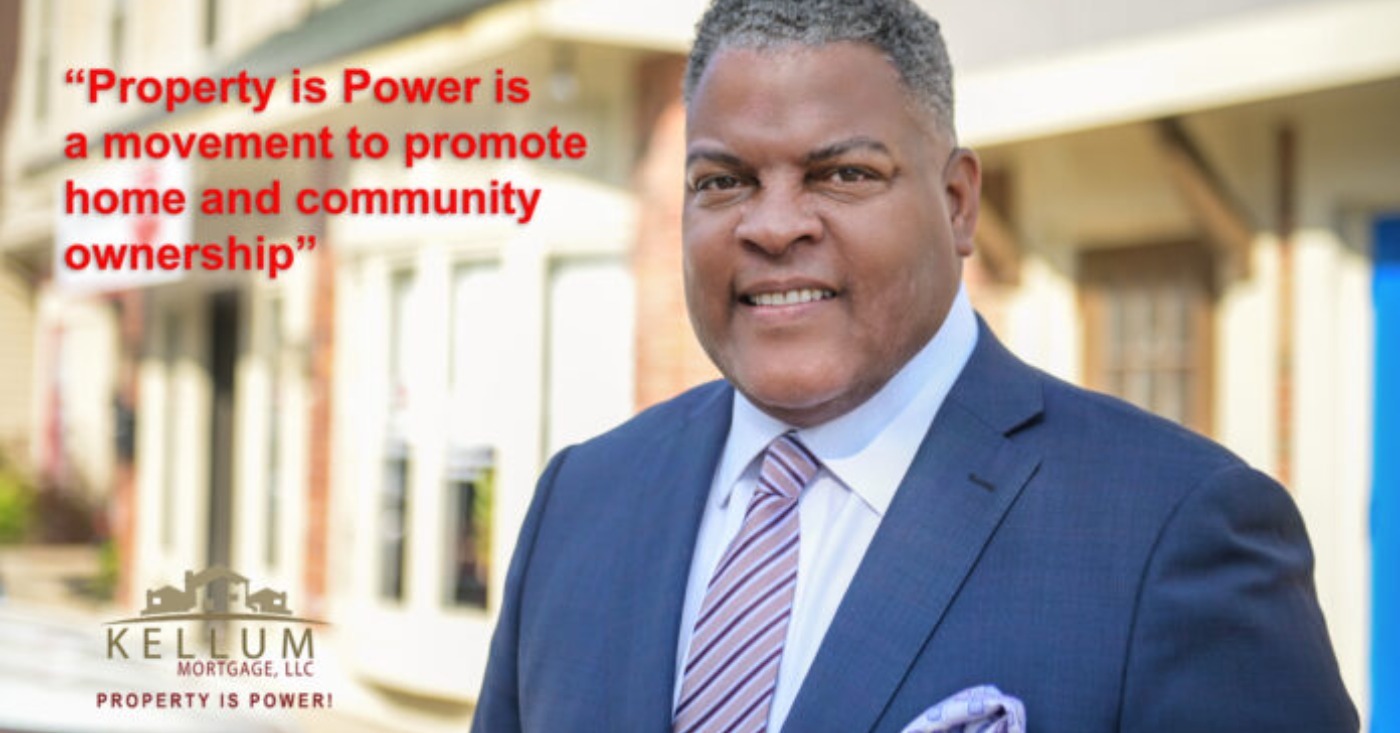
Property is Power! is a movement to promote home and community ownership. Studies indicate homeownership leads to higher graduation rates, family wealth, and community involvement.
Based on reporting by Michigan Chronicle.
The post COMMENTARY: Property Is Power! Why the Dream Booker T. Washington Preached in 1905 Still Matters Today appeared first on BlackPressUSA.