





For much of the developed world, childbirth has become safer with each passing generation. Medical advances, better prenatal care, and stronger public health systems have dramatically reduced the chances that bringing a child into the world would cost a woman her life.
Unless she’s Black American.
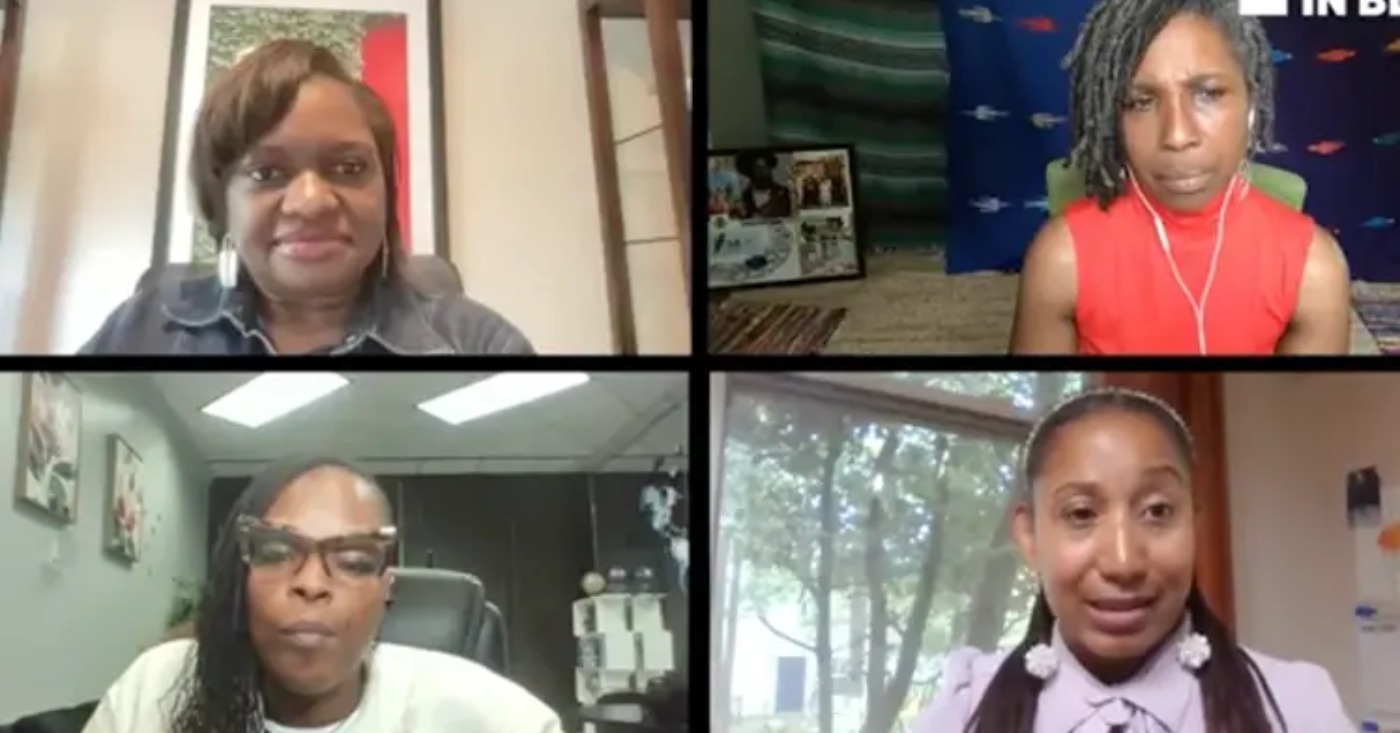
That stubborn contradiction framed a Word In Black panel discussion last week, where physicians, researchers, and community health leaders explored why members of the African diaspora still die from pregnancy-related complications at disproportionately high rates—even as maternal mortality falls in developed nations.
Their conclusion was unequivocal: the disparity is not about biology but about lack of access and opportunity–along with unequal systems. The issues that jeopardize Black women’s maternal health happen long before she goes into labor.
Moderated by Jennifer Porter Gore, Word In Black’s health correspondent, the livestreamed conversation brought together three panelists whose focus is confronting the maternal health crisis using community-based solutions.
‘I Knew It Wasn’t Biological’
Tamara Mason, director of Maternal and Child Health Collective Impact at the March of Dimes in Atlanta, discussed the policy and public health barriers that continue to drive disparities. Kay Matthews, founder and executive director of the Shades of Blue Project, spoke about the lived experiences of Black mothers’ mental health needs while navigating pregnancy, loss, and the postpartum period.
And Dr. Kaytura Felix, host of the Deep Care podcast and a distinguished scholar at the Johns Hopkins Bloomberg School of Public Health, explained why improving outcomes requires expanding the definition of maternal care to include entire communities in which Black families live.
When she decided to investigate the Black maternal health crisis, “I knew it was not genetics. I knew it wasn’t biological,” said Felix. She began researching the crisis after noticing that Black women in her native Dominica, a small island in the Caribbean, weren’t dying in childbirth as often as in the U.S.
That’s despite both groups sharing the “same genetic pool,” Felix said, noting that the ancestors of Black Dominicans also have endured the transatlantic slave trade.
The difference between the U.S. and Dominica was the system, Felix said.
“I knew that there had to be racism in the [American] medical establishment,” she said. “And so, the question I asked myself is, ‘What is the Black community doing about the black maternal health crisis?’”
Midwives a ‘Game-Changer’
Felix’s research uncovered the extensive role of midwives and led to the launch of the Black Birthing Future Study, through which she learned more about a model of care that differed greatly from one she’d seen as a medical doctor. The study is built on interviews with community midwives, doulas, mental health therapists, and their clients.
The solutions are already in the community. Collectively putting aside our egos, how can we do this bigger but address what’s happening in our community now? Because we can’t wait.
Tamara Mason, March of Dimes, Atlanta
Midwives, she said, treat childbirth as “a community and family event,” in which the pregnant woman is “the sun” and all care and support decisions revolve around her needs.
“Client after client after client told us, ‘My midwife loves me,’” Felix said. “And that is not just a ‘nice-to-have.’ That’s a game changer” that can drive better outcomes for Black women in the U.S.
‘Mental Health is Maternal Health’
Black midwives “are working really hard to make sure that the family is supported,” she said. They also connect their clients to doulas, lactation specialists, and neighbors who show up with diapers and food.
Matthews founded the Shades of Blue Project in Houston — and later, Black Maternal Mental Health Week — after her daughter was stillborn. Amid a devastating tragedy, she said, she experienced racism in the healthcare system first-hand.
“My mental health [struggle] is what had me out here saving myself,” she said. “That is no way to live.”
Yet the trauma she experienced, Matthews said, went unnamed for years: “There was no correlation being made to infant loss and postpartum depression, which I was clearly going through… I did have to save myself with no guidance.”
Today, she says, her organization argues that mental health is as important as prenatal care and care during childbirth: “Mental health is a part of maternal health.”
Pregnancy and Finances
While it may seem obvious that a pregnant person’s economic condition is important, panelists said there’s not enough understanding about how drastically financial stability can affect physical and emotional health.
Mason of the March of Dimes in Atlanta said data from her city illustrate the point.
Atlanta is “the number one income inequality city in the country,” she said, adding that the gap between the haves and have-nots is so great that a child born into a low-income family has only a 4% chance of escaping poverty in her lifetime.
“Who is in poverty?” she said. “Black women of reproductive age.”
Mason went on: “Pregnant women do not live in a vacuum. If we have a mom that is poor, if we have a mom who is food insecure, who’s housing insecure, all of these outcomes are going to impact her pregnancy journey.”
Matthews agreed, pointing out that financial insecurity often keeps women from seeking help in the first place — even help that’s free. Her organization began offering diapers and wipes at its emotional support groups because so many mothers otherwise couldn’t afford to attend.
“I’ll never have someone sit across my desk and need diapers, because diapers start right now at about $25 a case,” she said, recalling her own experience being told she “made 73 cents [per hour] too much” to qualify for temporary public assistance.
‘Poor People Know What to Do’
To address those root economic pressures, Mason’s organization piloted a guaranteed basic income program in two high-poverty Atlanta ZIP codes. The idea, she said. traces back to a quote attributed to Rev. Dr. Martin Luther King Jr.
“Give them money to start to pull themselves out of poverty. And poor people know what to do… they’re making it happen,” Mason quoted King as saying. The program gave 25 pregnant women $1,000 a month for a year, no strings attached.
“The premise is that we know we’re not going to be able to make a change in that indicator in one year,” she said. “But if we start there, right, that’s the gold standard — high rates of preterm birth — if we start to reduce the stress and strain of these moms, then eventually they will have better birthing outcomes.”
Still, the panelists agreed that even where community solutions exist, policies and institutional barriers often stand between pregnant women and the help they need.
For example, Felix said, most insurance still doesn’t cover midwifery care, and many states require midwives to practice only under a physician’s supervision. When midwives refer patients to hospitals for a higher level of care, as they are trained to do, they are often met with hostility rather than cooperation.
She described one case in which a midwife rushed a client to the hospital due to complications–only for hospital staff to throw shade on the client: “So that’s the girl that tried to have the baby at home.”
Reforming the System
Felix called for insurance reform, less restrictive licensing laws, and broader physician education about the different types of midwifery care.
“All states should allow midwifery and all paths to midwifery,” she said. “Not just nurse midwifery and certified community midwifery, but also traditional midwifery and apprenticeship.”
Ultimately, panelists agreed that no single organization can solve the crisis alone and that trying to do so only slows progress. “We should not all be doing ‘all the things,’” Matthews said. “We have to start leaning into accountability for the roles that we play.”
Mason, who is also a certified doula, echoed the point.
“The solutions are already in the community,” she said. “Collectively putting aside our egos, how can we do this bigger but address what’s happening in our community now? Because we can’t wait.”
For Felix, the path forward also means reconnecting with practices Black communities relied on for generations before they could access the modern medical system.
“We need to go back and reclaim some of the ancestral knowledge that we’ve had,” she said, describing midwifery as one way to restore what she called “mothering the mother” — the community support many new parents, including herself, have had to go without.
“I lost my mother four months before I had a baby, and I was a mother,” she said. “I did it by myself.”
By reviving that collective care, so prevalent in Black communities, it is possible to reverse the crisis: “We can address it in a collective way, and tap into the collectivist mindset that is part of African descended people. We are collectivist and communal, and we are really tapping into those superpowers that we have.”
Based on reporting by Seattle Medium.
The post Saving Black Mothers Starts Outside the Hospital appeared first on BlackPressUSA.