




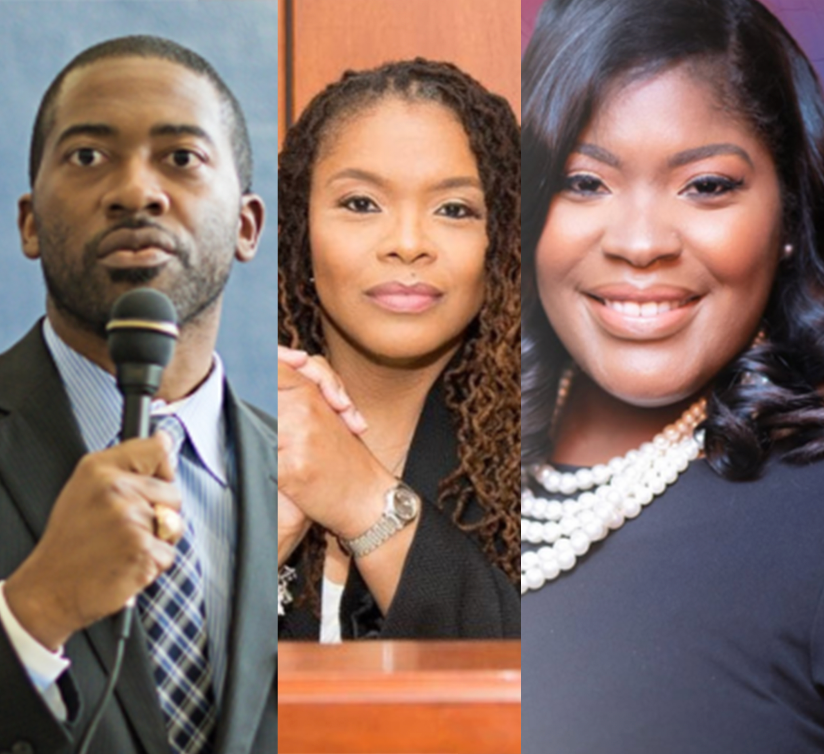

The loudest arguments about fairness in the American justice system tend to occur outside courthouses, at protests, or on social media. But some of the most consequential decisions shaping whether the system is actually fair happen inside it, including how a judge sets bail, reviews a plea agreement, schedules a docket, or builds a program from scratch.
In Harris County, a group of Black judges has spent the better part of a decade doing exactly that work, navigating the space between what the law allows and what their communities need. Their experiences reveal that institutional change is slower and more constrained than advocacy from the outside. Often, it is invisible.
“While there is a lot of advocacy work and work that can be done from the defense bar, it takes the judges and their role as the leaders to make those initial steps and take those initial risks,” said Tonya Jones, a Harris County Criminal Court Judge at Law No. 15. “These are things outside of the norm in addressing some of the systemic issues that we have dealt with.”
Representation without power is not enough
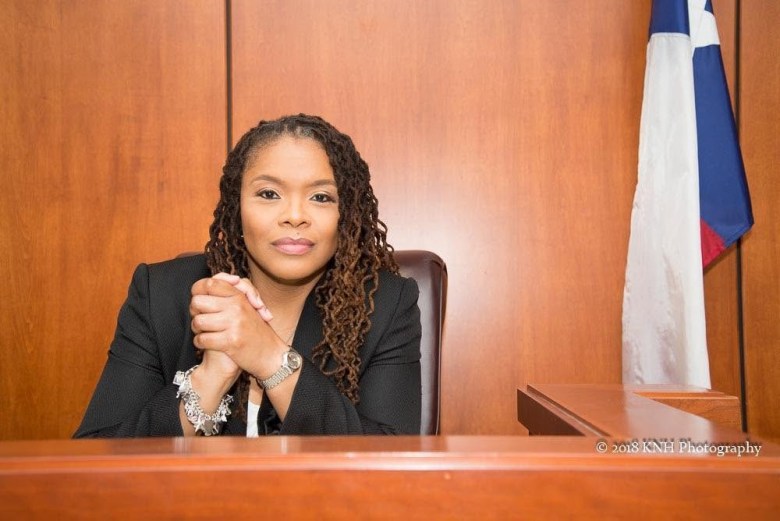
When Judge Shannon Baldwin of Harris County Criminal Court at Law No. 4 ran for the bench in 2018, she was told by nearly everyone she spoke to not to bother.
Democrats did not win judicial elections in Texas, she was told. She ran anyway and swept into office alongside fifteen like-minded colleagues in what became a watershed moment for the county’s misdemeanor courts.
But winning a seat, she quickly learned, is different from wielding power.
“For judges, our real power lies within the courtroom itself, meaning we can set policies and procedures where we can see the most change within our individual courts,” Baldwin said.
That courtroom-level influence turned out to be more consequential than it first appeared, Baldwin recalled. She referred to her colleagues’ success in negotiating a consent decree that became the foundation for Rule 9, a policy that makes pretrial detention in misdemeanor cases the exception rather than the rule.
“The jails are literally empty for misdemeanor courts,” Baldwin said. “We are a very small percentage of people having to fight their cases while they’re in custody.”
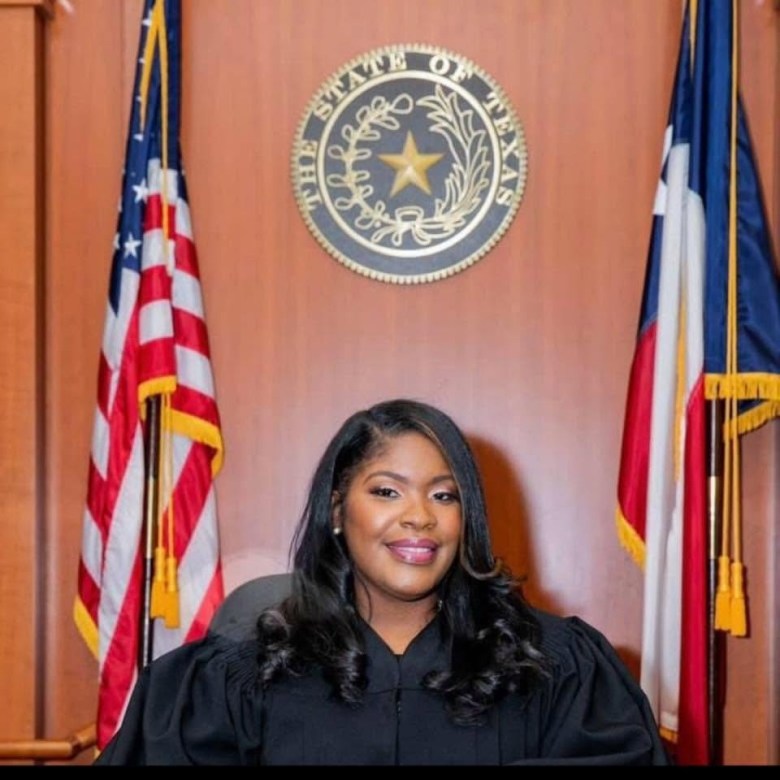
On the other hand, Jones, who was 32 when she was first elected, said that getting elected brought additional challenges.
“It is one thing to be the first African American in this seat, but it is an entirely different thing to address being in this position and doing something different outside of what’s always been done,” Jones said.
She describes her work as fighting against deep-seated institutional momentum.
“If we’re just shuffling people through the system and we’re not really addressing the underlying needs, we’re not getting to the root, then the possibility for recidivism increases, especially in some of our most vulnerable and our younger population,” Jones explained. “You’re fighting against the way it’s always been. Trying to get people to understand a new way of doing things can sometimes be a challenge.”
The work nobody sees
Much of what these judges do to advance fairness never makes headlines, they said.
Jones described how she scrutinizes plea agreements, a discretionary function most people do not realize judges have.
When she sees an offer that seems inconsistent with how similar cases have been handled, or one that carries long-term consequences a defendant may not fully understand, she pushes back.
“I always inquire about what the offers are because I’m also ensuring that everybody is informed of what’s going on and that the offers that are being made are equitable, just, and fair,” she said. “That’s a checks and balances situation where the judge can exercise some discretion. I can also say, ‘I do not think that this agreement that you all have reached is appropriate, so I’m going to reject the plea agreement that you have come to.’”
Jones explained that the stakes extend beyond the courtroom. A misdemeanor conviction can affect an individual’s entire life trajectory, including housing and professional licensing.
“I have unfortunately seen instances where people have accepted plea agreements that prove to be barriers for them moving forward,” she added.
Judge Sedrick Walker of Criminal Court at Law No. 11 frames his discretionary power similarly.
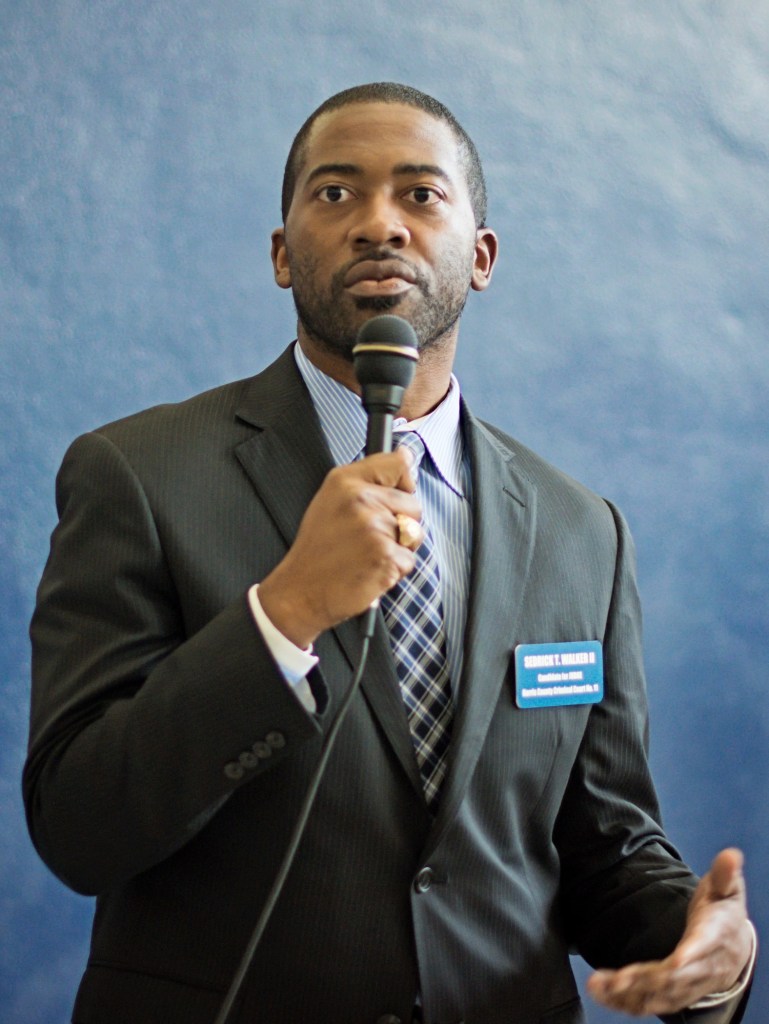
“If the law says the minimum punishment for a certain crime is 10 days, I cannot do less than 10 days,” he said. “But I certainly don’t have to go way above…I can’t exceed the maximum, but I don’t have to go all the way, even near the maximum. I take into account that person’s backstory, life story, employment situation, family situation, any substance abuse or mental health issues. Within my discretion, I may be able to do a sentence or probation that is more productive for them to complete than just a high jail sentence.”
All three judges pointed to the Fresh Start program, a quarterly initiative run through the Bayou City Community Court and funded by the judges, that allows residents to have their criminal records sealed free of charge. The event’s application portal fills up within 30 minutes of opening, Baldwin said, and the line wraps around the building.
“Clearing their records opens them up for housing, student loans, grants for education, and the ability to get jobs,” Baldwin said. “If you really want to lower crime, you’ve got to get people up and working so that they can be independent and actually be productive citizens. If we always have their criminal histories hanging on their necks like a ball and chain, they can’t be as productive as we would want them to be.”
Where the system falls short
Baldwin cited underfunded language access programs as a persistent barrier to equal justice.
“If someone were to create a restorative justice outcome for a case, but the individual does not speak English,” she said, “that person won’t have access to it.”
Change one person at a time
Asked where the most meaningful progress comes from, Baldwin said they stem from small reforms that people do not always see.
“It really is one person at a time. What impact can I have with this person standing in front of me? Have we made bigger impacts? I can honestly say yes, because I know that the county criminal courts… we’re the only ones that have a program that funds the cleaning of criminal histories. We’re the only ones that did bail bond reform.”
Jones offered a similar reflection, one rooted in discomfort.
“Sometimes the courtroom can be very intimidating, especially for communities of color where there may be a history of distrust or prejudice and discrimination. They tend to be a little bit more leery of believing that they can access this place and that it can be fair. Sometimes it looks like taking the courtroom to them in a less intimidating environment and being able to have them receive the resources that they need.”
Tonya Jones, Judge at Harris County Criminal Court at Law No. 15
“If you are uncomfortable, you’re in the right place,” she said. “If I’m going along with the status quo, then nothing changes. But if I’m going against the grain, even in the smallest of ways, I’m going to feel it. And if I feel that discomfort, I know I’m in a good place.”
Walker’s message to young Black attorneys and law students entering the system is to come with a clear vision and find like-minded partners.
“So change is definitely possible, especially if it can be done individually to a certain extent, but try to get other people on board with a similar vision and increase those numbers, whether that’s a smaller group of attorneys and judges to put your position out to the public,” Walker said.
Based on reporting by Houston Defender.
The post Inside the Bench: Black Harris County Judges Drive Reform appeared first on BlackPressUSA.