
Close Menu
  • Home
  • News
    • Local
  • Opinion
  • Business
  • Health
  • Education
  • Sports
  • Podcast

Subscribe to Updates

Get the latest creative news from FooBar about art, design and business.

What's Hot

Remembering Moses Newson and the Power of the Black Press During the Civil Rights Movement

An HBCU Is Training Doulas to Help Combat Childbirth Risks

An HBCU Is Training Doulas to Help Combat Childbirth Risks

Facebook X (Twitter) Instagram
  • Lifestyle
  • Podcast
  • Contact Us
Facebook X (Twitter) Instagram Pinterest Vimeo
The Windy City Word
  • Home
  • News
    1. Local
    2. View All

    Youth curfew vote stalled in Chicago City Council’s public safety committee

    Organizers, CBA Coalition pushback on proposed luxury hotel near Obama Presidential Center

    New petition calls for state oversight and new leadership at Roseland Community Hospital

    UFC Gym to replace shuttered Esporta in Morgan Park

    An HBCU Is Training Doulas to Help Combat Childbirth Risks

    5 Self-Care and Wellness Gift Ideas for the Women in Your Life

    Native American Health Center Connects 140 Community Members to Career Opportunities During Native American Heritage Month

    UC Doctors, Nurses and Community Rally to Demand ICE Out of UC Hospitals

  • Opinion

    Rep Davis, Olive Post CDR., Call on Trump to Restore file of Black Vietnam War Hero to Website

    Capitalize on Slower Car Dealership Sales in 2025

    The High Cost Of Wealth Worship

    What Every Black Child Needs in the World

    Changing the Game: Westside Mom Shares Bally’s Job Experience with Son

  • Business

    Illinois Department of Innovation & Technology supplier diversity office to host procurement webinar for vendors

    Crusader Publisher host Ukrainian Tech Businessmen eyeing Gary investment

    Sims applauds $220,000 in local Back to Business grants

    New Hire360 partnership to support diversity in local trades

    Taking your small business to the next level

  • Health

    An HBCU Is Training Doulas to Help Combat Childbirth Risks

    5 Self-Care and Wellness Gift Ideas for the Women in Your Life

    Native American Health Center Connects 140 Community Members to Career Opportunities During Native American Heritage Month

    UC Doctors, Nurses and Community Rally to Demand ICE Out of UC Hospitals

    Hypertension and Heart Disease: Doctors, Advocates and Patients Are Tackling the Leading Cause of Death for Black Californians

  • Education

    PRESS ROOM: Delaware State University Certifies Record Fall 2026 Enrollment of 7,407 Students

    Black Barbershops Have Long Given Neighborhood Politics a Place to Unfold.

    Ramon G. Griffin: A Morehouse Man on a Mission

    Wichita’s Only Black-Owned Bookstore Seeks $90,000 to Secure Its Future

    BOO REVIEW: Upcoming Book Revisits Dr. King’s 1957 Visit to St. Paul

  • Sports

    NFL: Carolina now has 2-game lead in NFC South after win against Ravens

    Georgia Clinches 6th Straight SEC Championship Game Berth; 3 Teams Chase Final Spot

    Las Vegas GP: Ferrari Struggles During Qualifying; Verstappen Captures Pole

    NBA: 3 Teams Flying Under the Radar in the East

    DJ Cut Creator to Attend 7th Annual African American Golf Expo & Forum

  • Podcast
The Windy City Word
Featured

OP-ED: We Must Work Together to Support the Sustainability of HBCUs in America

staffBy staffUpdated:No Comments4 Mins Read
Facebook Twitter Pinterest Telegram LinkedIn Tumblr Email Reddit
Share
Facebook Twitter LinkedIn Pinterest WhatsApp Email

By Dr. Benjamin F. Chavis Jr.

Earlier this year the U.S. Department of Education sent all colleges and universities across the nation a notice, reminding them that they need to comply with the newly updated cybersecurity regulations published by the Federal Trade Commission (FTC).

The regulations – which include specifications such as implementing critical controls for information security programs, maintaining oversight of service providers and designating an individual to oversee a school’s cybersecurity infrastructure – came in response to an uptick in ransomware attacks on schools around the United States.

While these regulations are certainly warranted in an age where personal data is becoming increasingly vulnerable to cyber-criminals, the penalties for failing to comply with the regulations – especially the withholding of federal needs-based funding under Title IV – pose an existential threat to schools operating under tight budgets.

Sign up for our Daily eBlast to get coverage on Black communities from the media company who has been doing it right for over 130 years.

Take historically Black colleges and universities (HBCUs), which have throughout their existence struggled to find the substantial funding that many state and private predominantly White institutions (PWIs) of higher education enjoy and who are already steeling themselves to deal with an expected surge of applicants following the Supreme Court’s regressive decision to effectively end affirmative action admission programs.

The loss of Title IV funding would drastically affect around 80 percent of the student bodies at HBCUs and would have a consequential negative impact on the future of these vital institutions of higher education.

Endowments at HBCUs pale in comparison to those at the U.S.’s top ranked colleges and universities, with the overall endowments at all the country’s HBCUs accounting for less than a tenth of Harvard’s.

The gap in funding between PWIs and HBCUs isn’t just because of smaller endowments, it’s also because state lawmakers keep funds off HBCU campuses – in North Carolina, for example, legislators awarded N.C. State an extra $79 million for research while N.C. A&T – the nation’s largest HBCU – was given only $9.5 million.

When it comes to access to technology, HBCUs also face an uphill battle with 82 percent of HBCUs being located in so-called “broadband deserts.”

Despite their struggles with funding, and the fact that these schools constitute only 3 percent of four-year colleges in the country, HBCU graduates account for 80 percent of all Black judges, 50 percent of Black lawyers, 50 percent of Black doctors, 40 percent of Black members of Congress and our country’s current vice president.

HBCUs truly know how to do more with less, but they cannot be saddled with costly regulations that pose an existential crisis to their ability to operate and be given no help to deflect some of the costs. Fortunately, however, there are businesses and individuals who see the importance of HBCUs to the Black community and are willing to lend their hands – and their dollars – to support them.

The Student Freedom Initiative (SFI), a non-profit chaired by philanthropist and entrepreneur Robert F. Smith and funded by major tech companies like Cisco, has raised millions of dollars to help HBUs comply with the Education Department’s mandates. Cisco alone donated $150 million to the SFI with $100 million allocated to bringing HBCU cybersecurity system upgrades and $50 million going to establish an endowment to offer alternative student loans.

With $89 million already distributed to 42 HBCUs across the nation, the initiative has already saved around $1.5 billion in needs-based funding to these colleges and universities and is making strong inroads to helping these institutions meet the new cybersecurity regulations, but more is required if all HBCUs are to be saved.

Given the empowering impact HBCUs have on the nation’s Black community and the future promise of a more inclusive America, it is imperative that more companies support the work the Student Freedom Initiative is doing to ensure these vital higher education schools can continue to educate and inspire future generations.

As Vice President Harris said, “What you learn at an HBCU is you do not have to fit into somebody’s limited perspective on what it means to be young, gifted and Black.”

We in the National Association for Equal Opportunity in Higher Education (NAFEO) https://www.nafeonation.org/ stand in strong support of the Student Freedom Initiative. We all should work together to ensure the sustainability of HBCUs in America.


Share. Facebook Twitter Pinterest LinkedIn Reddit WhatsApp Telegram Email
Previous ArticleEmbracing Home Visits: Honoring Parents and Strengthening Communities
Next Article OP-ED: We Must Work Together to Support the Sustainability of HBCUs in America
staff

Related Posts

Remembering Moses Newson and the Power of the Black Press During the Civil Rights Movement

An HBCU Is Training Doulas to Help Combat Childbirth Risks

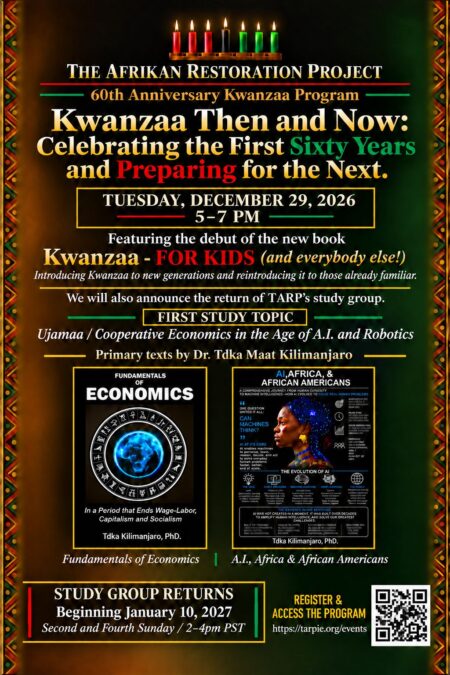
The Afrikan Restoration Project Marks 60 Years of Kwanzaa With New Book and Expanded Focus

Leave A Reply Cancel Reply

Video of the Week
https://www.youtube.com/watch?v=AxFXtgzTu4U
Advertisement
Video of the Week
https://www.youtube.com/watch?v=OjfvYnUXHuI
ABOUT US


The Windy City Word is a weekly newspaper that projects a positive image of the community it serves. It reflects life on the Greater West Side as seen by the people who live and work here.

OUR PICKS

Toyota Safety Sense 3.0 Ultimate Family Car Safety Explained! #shorts

Mayor Tiffany Henyard’s alleged misappropriation of Public Money

2026 Lincoln Navigator Black Label Worth the Test Drive? #shorts

MOST POPULAR

An HBCU Is Training Doulas to Help Combat Childbirth Risks

5 Self-Care and Wellness Gift Ideas for the Women in Your Life

Native American Health Center Connects 140 Community Members to Career Opportunities During Native American Heritage Month

© 2026 The Windy City Word. Site Designed by No Regret Medai.
  • Home
  • Lifestyle
  • Podcast
  • Contact Us

Type above and press Enter to search. Press Esc to cancel.