
Close Menu
  • Home
  • News
    • Local
  • Opinion
  • Business
  • Health
  • Education
  • Sports
  • Podcast

Subscribe to Updates

Get the latest creative news from FooBar about art, design and business.

What's Hot

Rights & Rituals: Black Women and the Sage We Breathe

Tasia Fortune’s Death in Jackson Remains Unexplained as Police Withhold Records

COMMENTARY: Money Matters — Why the Detroit Pistons Are Investing in Detroit Entrepreneurs

Facebook X (Twitter) Instagram
  • Lifestyle
  • Podcast
  • Contact Us
Facebook X (Twitter) Instagram Pinterest Vimeo
The Windy City Word
  • Home
  • News
    1. Local
    2. View All

    Uncle Remus Says Similar Restaurant Name Is Diluting Its Brand and Misleading Customers

    Youth curfew vote stalled in Chicago City Council’s public safety committee

    Organizers, CBA Coalition pushback on proposed luxury hotel near Obama Presidential Center

    New petition calls for state oversight and new leadership at Roseland Community Hospital

    COMMENTARY: Money Matters — Why the Detroit Pistons Are Investing in Detroit Entrepreneurs

    Bill Barring Police from Blocking Emergency Medical Care Stalls in Legislature

    Donavan Mckinney Unseats Shri Thanedar, Putting Detroit Closer to Restoring Black Representation in Congress

    Lupus Did Not Defeat My Cousin (My Truth)

  • Opinion

    Rep Davis, Olive Post CDR., Call on Trump to Restore file of Black Vietnam War Hero to Website

    Capitalize on Slower Car Dealership Sales in 2025

    The High Cost Of Wealth Worship

    What Every Black Child Needs in the World

    Changing the Game: Westside Mom Shares Bally’s Job Experience with Son

  • Business

    Illinois Department of Innovation & Technology supplier diversity office to host procurement webinar for vendors

    Crusader Publisher host Ukrainian Tech Businessmen eyeing Gary investment

    Sims applauds $220,000 in local Back to Business grants

    New Hire360 partnership to support diversity in local trades

    Taking your small business to the next level

  • Health

    Bill Barring Police from Blocking Emergency Medical Care Stalls in Legislature

    Donavan Mckinney Unseats Shri Thanedar, Putting Detroit Closer to Restoring Black Representation in Congress

    Lupus Did Not Defeat My Cousin (My Truth)

    Talarico Pitches ‘a New American Dream’ as Economic Agenda Centers Workers, Affordability

    5 Deaths, 9 Cases: Louisiana Issues Flesh-Eating Bacteria Warning

  • Education

    Alphas Use Mentorship to Prepare Jacksonville Youth for Manhood

    COMMENTARY: You Are Already Paying for the AI Boom

    COMMENTARY: We Lived It: Why a Different World Still Matters Today — an Ode to HBCUs

    A Legacy Written in Faith Now Written on the Streets of San Diego

    Arabia Mountain Alum Selected for USTA Coaching Program

  • Sports

    COMMENTARY: Money Matters — Why the Detroit Pistons Are Investing in Detroit Entrepreneurs

    100 Black Wings’ Team Oakland Youth Athletes Heading to Taiwan for 2026 International Children’s Games

    Nurture, Inc., Negro Southern League Museum Look to Preserve History While Healing the Community

    OP:ED How Black WNBA Players Became Collateral in the Caitlin Clark Culture War

    U.S. Men’s National Team Names its Roster for World Cup 2026

  • Podcast
The Windy City Word
Local

They met and became friends as neighboring season ticket holders for the White Sox. Years later, he donated a kidney to her.

staffBy staffUpdated:No Comments5 Mins Read
Facebook Twitter Pinterest Telegram LinkedIn Tumblr Email Reddit
Share
Facebook Twitter LinkedIn Pinterest WhatsApp Email

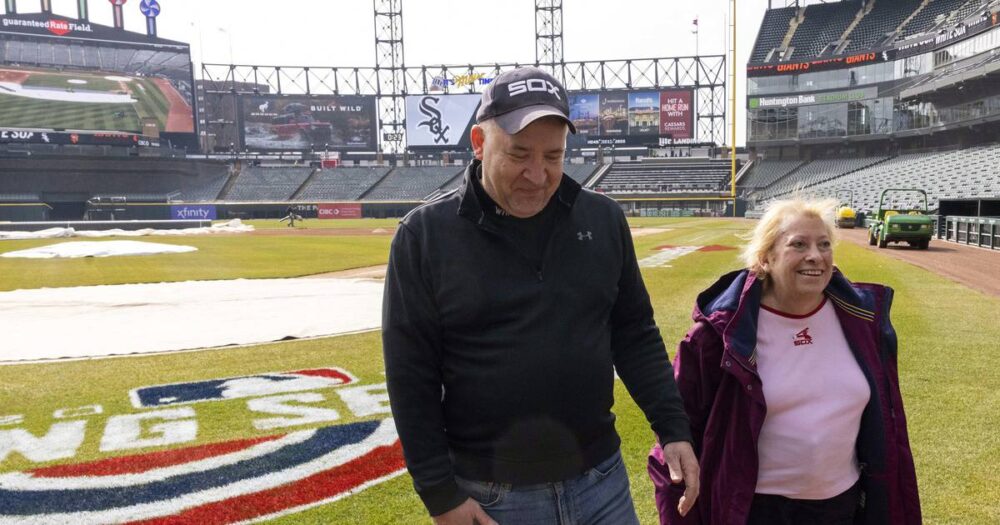
One rainy day in the spring of 2021, longtime friends Lisa Polk and Kevin Fuller got to talking while shielding themselves from the elements on the 300-level concourse of the Chicago White Sox’s Guaranteed Rate Field.

They had met over 20 years ago and became friends as neighboring season ticket holders. Their casual conversation soon turned serious as they started discussing Polk’s health condition — she had a kidney disorder and was about to start dialysis. But she was also looking for a compatible, live donor she could receive a kidney transplant from. Fuller mentioned he, like Polk, was O positive.

Advertisement

“I don’t suppose you’d care to give me your spare?” Polk asked her fellow baseball fan. It was a life-changing question softened by her playful tone. After giving it some thought and undergoing various compatibility tests, Fuller decided to go through with the organ transplantation, which took place last September. “I knew her well enough that this was something I wanted to do for a friend,” he said.

“When you’re looking for a living kidney, you literally can’t be bashful. So you ask everybody that you know,” Polk told the Tribune over the phone, recalling the pivotal conversation she had with her fellow White Sox fan. “I was determined that I was going to try for a live kidney transplant because your chances of rejection are, like, 1%, as opposed to cadaver kidneys.”

Advertisement

And that’s not the only factor that prospective recipients take into consideration. According to the National Kidney Foundation, the average wait time for a kidney transplant from a nonliving donor is three to five years.

Polk, 64, a Park Ridge resident, had been diagnosed with a congenital bladder defect four decades ago. “I basically knew, 40 years ago, that if I lived long enough, somewhere down the line, I would need a kidney transplant. So it was always in the back of my mind,” she said.

Fuller, 55, a River North resident, said he felt confident in his decision to become a living donor when he realized the transplant would be like any other surgery and that the positives would outweigh the negatives. His mother, he said, is a nurse and was “all for it.”

“I think the main thing was understanding that complications afterward, just like any surgery, exist, but they’re rare,” he said. “A large part of it is just taking care of yourself afterward, because anybody — even with two kidneys — can end up with kidney disease as they get older, if they have diabetes or they smoke or they don’t take care of themselves.”

After the mid-September surgery at the University of Illinois Hospital, Polk said, she felt no pain whatsoever. Now six months after the transplant, she’s still on a straight path to recovery — as is Fuller. But postsurgery isolation meant Polk was unable to get out of the house much, so she missed the White Sox’s spring training.

With Living Donor Day (April 5) on the horizon, however, Polk will get to celebrate and reunite with the man who changed her life at the White Sox’s home opener Monday. There, the pair will meet Harold Baines, Hall of Famer and White Sox great, who received a lifesaving dual heart and kidney transplant last year.

After Harold Baines was diagnosed with heart and kidney failure, only a dual transplant could save his life.

114 days later, Harold was able to leave the hospital thanks to a donor family and Johns Hopkins Medicine. We are forever grateful. ❤️ pic.twitter.com/FWbWrEfXxQ

— Chicago White Sox (@whitesox) April 11, 2022

“It’s amazing how many people I know who are either on dialysis or have had a kidney transplant in some way, shape or form,” Polk said. “Because nobody talks about it. And I think that you need to talk about it.”

Fuller said he hopes sharing their story will let more people realize they can donate organs or tissue to an acquaintance or loved one while they’re alive.

Advertisement

“I hope everybody who gets their driver’s license becomes an organ donor, because Lord knows you don’t need (organs) in death,” Fuller said. “There’s always things down the line that I can’t foresee, but it’s been surprisingly — painless is the wrong word — it’s been surprisingly un-difficult, or not difficult … You’d be surprised how well it can go, particularly if you have good medical care and good support.”

According to the Health Resources and Services Administration, living donors can donate one of their kidneys, a part of their liver, one lobe of the lung, part of their pancreas or part of their intestine. They can also donate other tissues such as skin, bone, bone marrow, umbilical cord blood, amnion and blood.

“I would like for people in Lisa’s situation to get a better shot at the rest of their lives,” Fuller said. “One thing I find amazing is how something as simple as going to baseball games sort of brought us together. Pay attention to the world around you. You never know where you might plug into someone’s life.”

adperez@chicagotribune.com

Share. Facebook Twitter Pinterest LinkedIn Reddit WhatsApp Telegram Email
Previous ArticleThey met and became friends as neighboring season ticket holders for the White Sox. Years later, he donated a kidney to her.
Next Article Chicago Bulls center Andre Drummond advocates for vulnerability in mental health conversations: ‘That superhero cape has to come off’
staff

Related Posts

Uncle Remus Says Similar Restaurant Name Is Diluting Its Brand and Misleading Customers

Youth curfew vote stalled in Chicago City Council’s public safety committee

Organizers, CBA Coalition pushback on proposed luxury hotel near Obama Presidential Center

Leave A Reply Cancel Reply

Video of the Week
https://www.youtube.com/watch?v=AxFXtgzTu4U
Advertisement
Video of the Week
https://www.youtube.com/watch?v=OjfvYnUXHuI
ABOUT US


The Windy City Word is a weekly newspaper that projects a positive image of the community it serves. It reflects life on the Greater West Side as seen by the people who live and work here.

OUR PICKS

We Need More Black Wealth – Here’s Why

Saloon Doors: How Black Bars are Reclaiming Western Style

Jonathan India Traded, Power Bat Needed

MOST POPULAR

Bill Barring Police from Blocking Emergency Medical Care Stalls in Legislature

Donavan Mckinney Unseats Shri Thanedar, Putting Detroit Closer to Restoring Black Representation in Congress

Lupus Did Not Defeat My Cousin (My Truth)

© 2026 The Windy City Word. Site Designed by No Regret Medai.
  • Home
  • Lifestyle
  • Podcast
  • Contact Us

Type above and press Enter to search. Press Esc to cancel.