



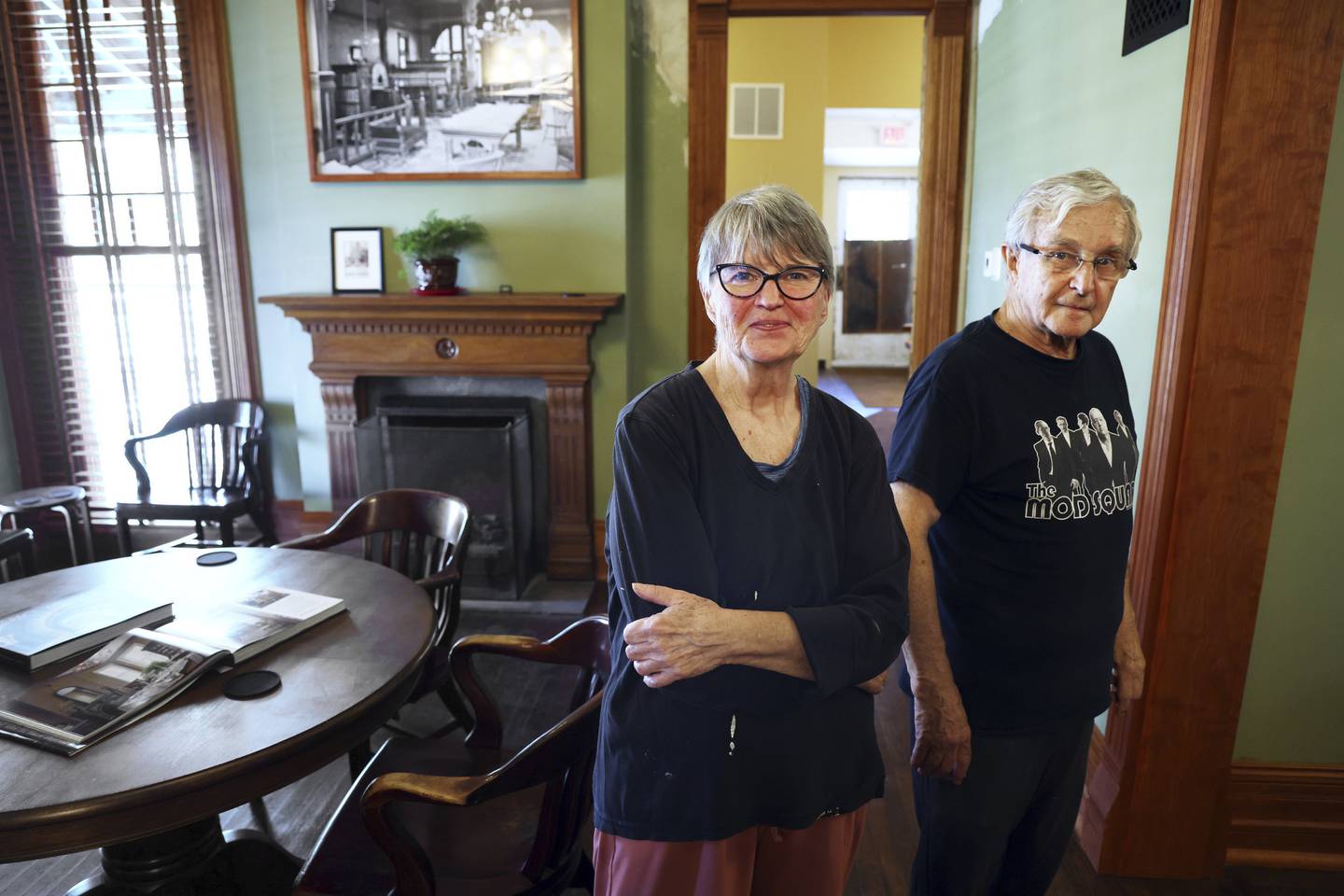
In the late 19th century, the house at 1 Florence Blvd. belonged to a man named H.H. Sessions, the general manager of George Pullman’s eponymous company 15 miles south of downtown Chicago.
Since then it’s been a private club, a series of restaurants and, most recently, vacant.
Advertisement
The airy, wood-floored mansion won’t be empty much longer. The Bielenberg Historic Pullman Foundation, one of the civic organizations dedicated to preserving the neighborhood’s history, plans to open a coffee shop there later this year, a small step in ongoing efforts to develop the neighborhood into a tourism destination.
In the back of the house, where Sessions’ household staff once prepared his dinners, is a small coffee bar equipped with an espresso machine and a kegerator used to make nitro brews. A display case on the counter will hold cookies and muffins for sale. In late August, it held a packet of poppy seed hot dog buns, for the workers finishing the building’s rehabilitation.
Advertisement
Company town no longer, Pullman has a future bound up in its past, one rich in labor, civil rights and railway history. Neighborhood residents worked for years to give the neighborhood its due, and in 2015, President Barack Obama declared the Pullman Historic Site a national monument.
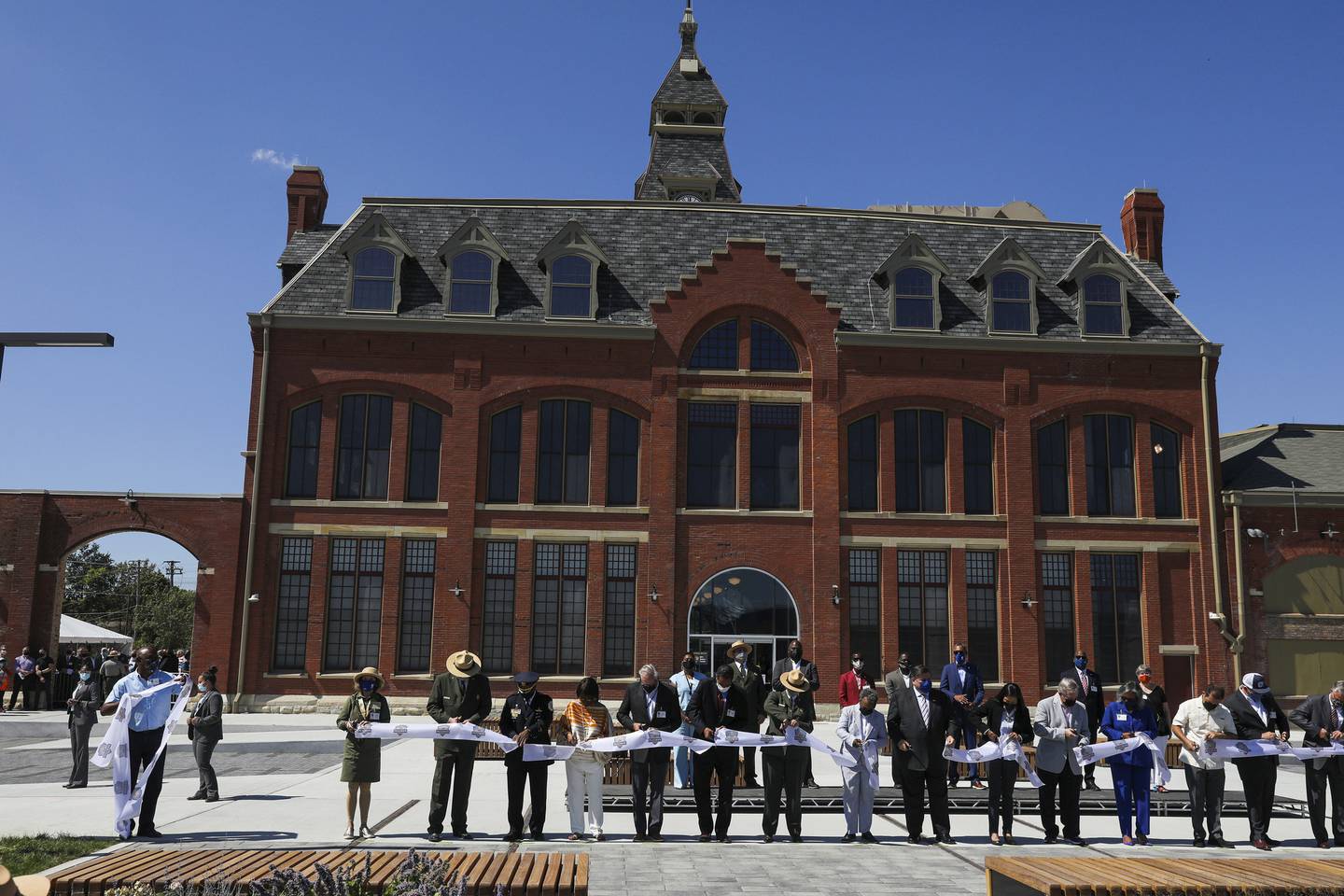
Last summer, the monument’s visitor center officially opened in a Labor Day ceremony attended by Gov. J.B. Pritzker and U.S. Interior Secretary Deb Haaland. Residents and elected officials said they hoped the monument would bring not just national recognition but also development to the Far South Side.
“National Parks can be an economic engine in their gateway communities, and we certainly hope that will happen for Pullman,” said Teri Gage, the parks superintendent at the monument. “But we do know that it doesn’t happen overnight.”
Bielenberg Foundation President Pat Shymanski and her husband, Mike, Pullman residents of more than five decades, purchased the Sessions house for $80,000 in 2011 in hopes of keeping it under local ownership.
The restoration of the building, which is across the street from the monument grounds at the modern-day address of 605 E. 111th St., is a painstaking process. Two dramatic stained glass panels from the building’s era as a private club have been taken apart and put back together again; the panels were in such bad shape that restoration workers had to sandwich them between pieces of plywood just to keep them intact during transport. The coffee shop seats are elegant Bank of England chairs, some of which the Shymanskis whisked away from a members’ sale at the Chicago Athletic Association. The building needed new HVAC, new plumbing and new wiring.
The city awarded the project more than $190,000 in funding from its Neighborhood Opportunity Fund, which uses money generated by downtown development to fund commercial projects in the city’s underserved neighborhoods, in 2020.
Advertisement
Shymanski said the group plans to hire the equivalent of seven full-time workers. That includes coffee shop employees as well as staff for the foundation and its house tour project, which will allow visitors to tour the real homes of Pullman families from the company town period. The foundation will look first for workers from Pullman and surrounding neighborhoods, Shymanski said; the city grant stipulates the hiring of two or more employees from Neighborhood Opportunity Fund areas, which are largely on the West, Southwest and South sides.
The coffee shop will help fund operations and capital repairs of homes in the house project. What used to be the Sessions home’s double parlor will serve as a welcome center for the house tours.
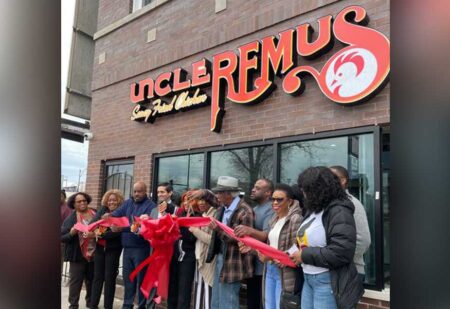
That’s a recurring theme in Pullman, where tourism and development feed each other. “When the monument is busy, the restaurant is busier,” said Dominique Leach, chef and owner of the Lexington Betty Smokehouse on 111th Street, which first opened as part of a food hall there in 2020.
A new 101-room Hampton by Hilton Hotel is planned for vacant land owned by nonprofit developer Chicago Neighborhood Initiatives. Brian Berg, a spokesperson for the group, said the hotel’s developer, the Pullman Hotel Group, applied for $5 million in city funding this August under the Chicago Recovery Plan, a program that includes funding from both the American Rescue Plan Act passed by Congress and local bond funds. Chicago Neighborhood Initiatives is also in talks about a microbrewery.
Since Labor Day 2021, the neighborhood has seen the addition of a Culver’s, its first new stand-alone restaurant in three decades, and a Wing Stop. Leach expanded her barbecue operations this spring to take over the entire former food hall space on 111th Street.
Advertisement
Gotham Greens, a New York-based indoor farming company with 175,000 square feet of hydronic greenhouse facilities in the neighborhood, is undergoing an expansion that will add another 55,000 square feet and an unspecified number of jobs in 2023. (The company employs about 100 people now).
Culver’s opened with the help of a $250,000 Neighborhood Opportunity Fund grant; Chicago Neighborhood Initiatives received $3.4 million in tax increment financing from the city to remediate the Gotham Greens land.
On the tourism side, the National A. Philip Randolph Pullman Porter Museum is closed while it undergoes a $5.3 million expansion to double its size, which Executive Director David A. Peterson Jr. said will give the museum space to tell more stories about the porters’ role in the civil rights movement. The museum has locked down about $4.5 million in funding from the state and federal sources and is hoping close the gap with city and private funding, Peterson said.
The Illinois Department of Natural Resources has secured $5 million from the state Capital Development Board to begin work on the rear erecting shop on the monument grounds, where workers once put the finishing touches on palace cars; the IDNR hopes to one day display genuine Pullman railcars there.
Advertisement
Chief of parks and recreation Ryan Prehn said the department expects to receive an additional $21 million from the state to rehabilitate the Hotel Florence, another iconic Pullman landmark that has remained mostly closed to the public in recent years.
These days, about 500 people a week come through the visitor center at the monument, Gage said. That’s fewer than the 750 to 1,000 she’d anticipated, though she expects to see the monument reach that bench mark within the next year.
A National Parks Conservation Association study from 2013 found that a National Historical Park in Pullman could attract 300,000 visitors each year by its 10th year of full operation.
Legislation to designate the monument as a National Historical Park rather than a monument, sponsored by Sen. Dick Durbin and Rep. Robin Kelly, cleared a Senate committee in July, according to Durbin’s office. The office is hopeful the legislation will pass the full Senate by the end of the year. Such a change in designation doesn’t typically lead to a change in funding or programming, Gage said, but a park designation could help visitors who sometimes come expecting to see a statue better understand the nature of the park.
“We are trying to change fairly well-established patterns of visitation to Chicago, and really establish an anchor on the Far South Side for that tourism,” said Julian Jackson, executive director of the Historic Pullman Foundation.
“We still have a cake that is half-baked,” said Ald. Anthony Beale, whose 9th ward includes Pullman and neighboring Roseland. “We need a lot more resources in order to finish the true dream in preserving and promoting what we have here.”
Advertisement
Across 111th Street from the soon-to-be Pullman Club Coffee Shop are the grounds of the Pullman National Monument, where factory workers, many of them immigrants, built Pullman’s luxurious palace cars.
In the 1890s, when Pullman cut wages but not rents in the middle of an economic downturn, those workers struck in the thousands, bringing the railways into Chicago to a halt and cementing Pullman’s place in American labor history. The strike was brutally crushed by U.S. Army troops; about two dozen people died. The strike led to the national recognition of Labor Day, but in the short term, it didn’t do much to better the workers’ conditions.
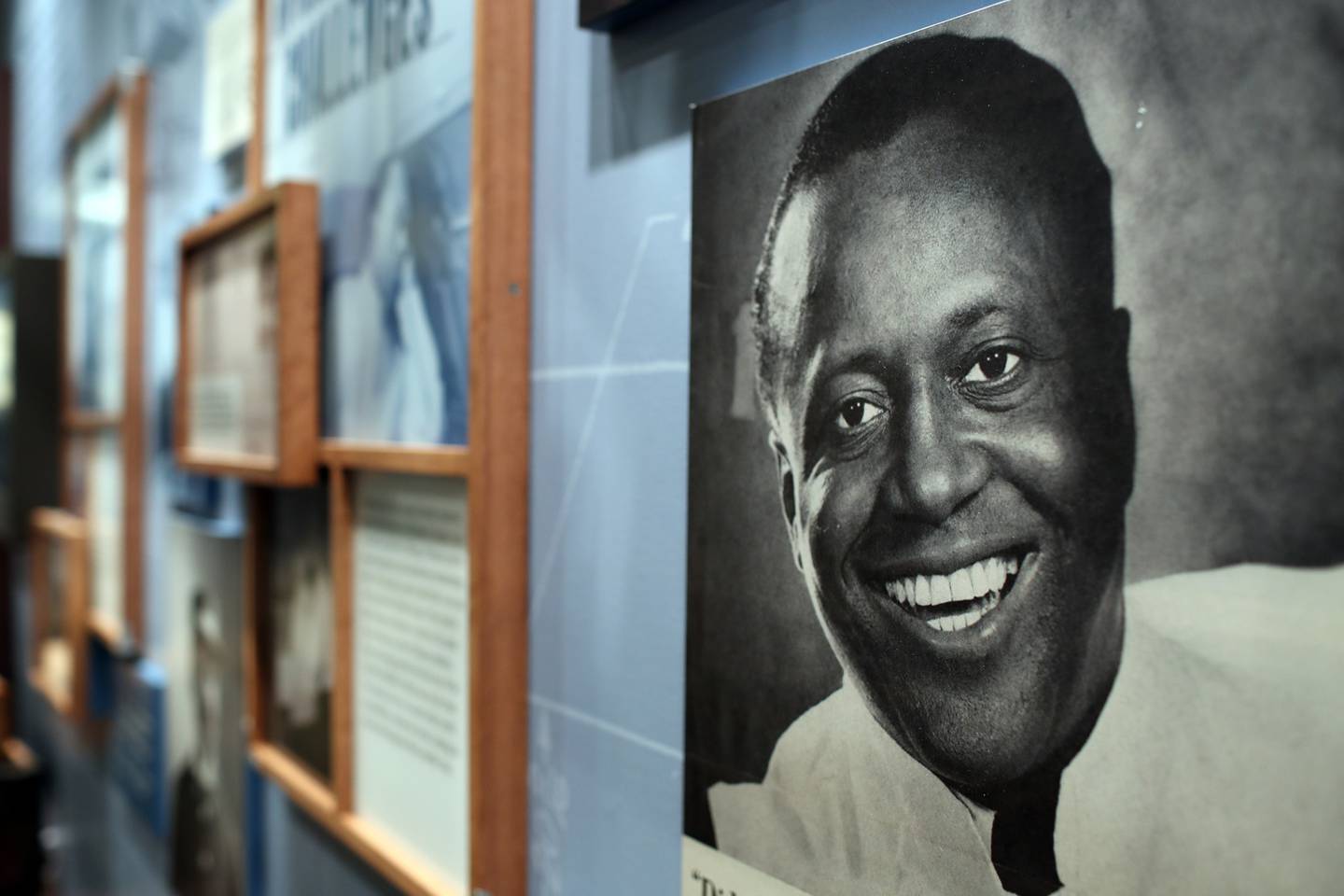
The Pullman porters — Black men who worked on Pullman’s palace cars, carrying Black newspapers such as the Chicago Defender to distribute in secret along their routes — had been excluded from the railway union by the white workers. In 1925, the porters formed their own union, the Brotherhood of Sleeping Car Porters. About a dozen years later, the porters became the first Black union to reach a collective bargaining agreement with a major U.S. corporation.
The role of the neighborhood in American labor and civil rights history is a point of pride for residents.
“It started all in here, in Pullman,” said Felipe Granados, an aluminum worker who has lived in the neighborhood since 1990. He didn’t know the history then, but he’s proud of it now. On a recent Friday, he visited the center with his granddaughter Lillian, who is two.
Many residents say that in Pullman, everyone knows everyone, and everyone knows everyone’s business. Visitors are still welcome, said Melva Jean Tate, a retired teacher who has distributed free groceries at the House of Chloe Inc. on South Champlain Avenue for more than 15 years.
Advertisement
“You come into some communities and they look at you funny when you come into their church,” Tate said. “With precaution, this is an open community. There’s room for everyone to join in.”
Monument and community leaders said they’re working hard to bridge the gap between North and South Pullman, two demographically disparate areas. In South Pullman, the average annual household income is more than $44,000 and the neighborhood is racially diverse. About half the residents there are white, a third are Black and 16% are Hispanic, according to 2020 U.S. census data.
In North Pullman, 93% of residents are Black and the median household income is $34,000 a year. Fewer than half as many residents have college degrees as do those in South Pullman.
Peterson, whose Pullman porter museum sits in North Pullman, said it’s important for leaders to show residents throughout the entire neighborhood that development is for them. Recently, rangers at the National Monument have focused on outreach in North Pullman.
Advertisement
“We don’t want our demographic to just be used as a demographic to get funding, we want to really, really genuinely care about our community, and make sure we increase their capacity as the capacity of the entire neighborhood increases,” Peterson said. “So that people aren’t frightened by development and thinking that is synonymous with gentrification.”
Joyce Chapman, president of the Far South Chicago Coalition, said she initially had reservations about the monument. She remembers thinking, “How’s it really going to pan out for the Black people, period? What will we get, period?” Chapman, who grew up in North Pullman and now lives in nearby Washington Heights, said her concerns have been assuaged.
“The olive branch has been passed out,” she said.
In 1969, three quarters of a century after the Pullman strike, the Pullman Palace Car Co. shut down. Its Chicago-based assets were sold the next year, Superintendent Gage said. In 2006, Ryerson Steel left the neighborhood, taking more jobs with it. Pullman’s population decreased about 24% in the first two decades of the millennium, though the decrease slowed over the last 10 years, when the population fell about 7%. (During the same period, Chicago’s population grew nearly 2%.)
Over the last seven years, Chicago Neighborhood Initiatives has helped secure nearly $380 million in development funding for Pullman, a mix of public and private dollars, said spokesperson Berg. The organization says it has helped create nearly 2,000 permanent jobs in the area.
Much of the development overseen by the organization has taken place at the 180-acre former Ryerson Steel site off 111th Street and I-94. Those projects include a Walmart Supercenter, an Amazon fulfillment center, the Method soap factory, a Whole Foods distribution center and Gotham Greens.
Advertisement
Chicago Neighborhood Initiatives has developed almost 300 units of single-family and multifamily affordable housing in Pullman in the last decade, Berg said.
Funding the monument grounds, visitor center and clock tower restoration was itself a $35 million project, funded by a mix of public and private funds. The base operating budget for the monument is $1.1 million, Gage said, with a possible increase of $333,000 next fiscal year depending on the Congressional appropriations process.
Residents hope for development to keep rolling.
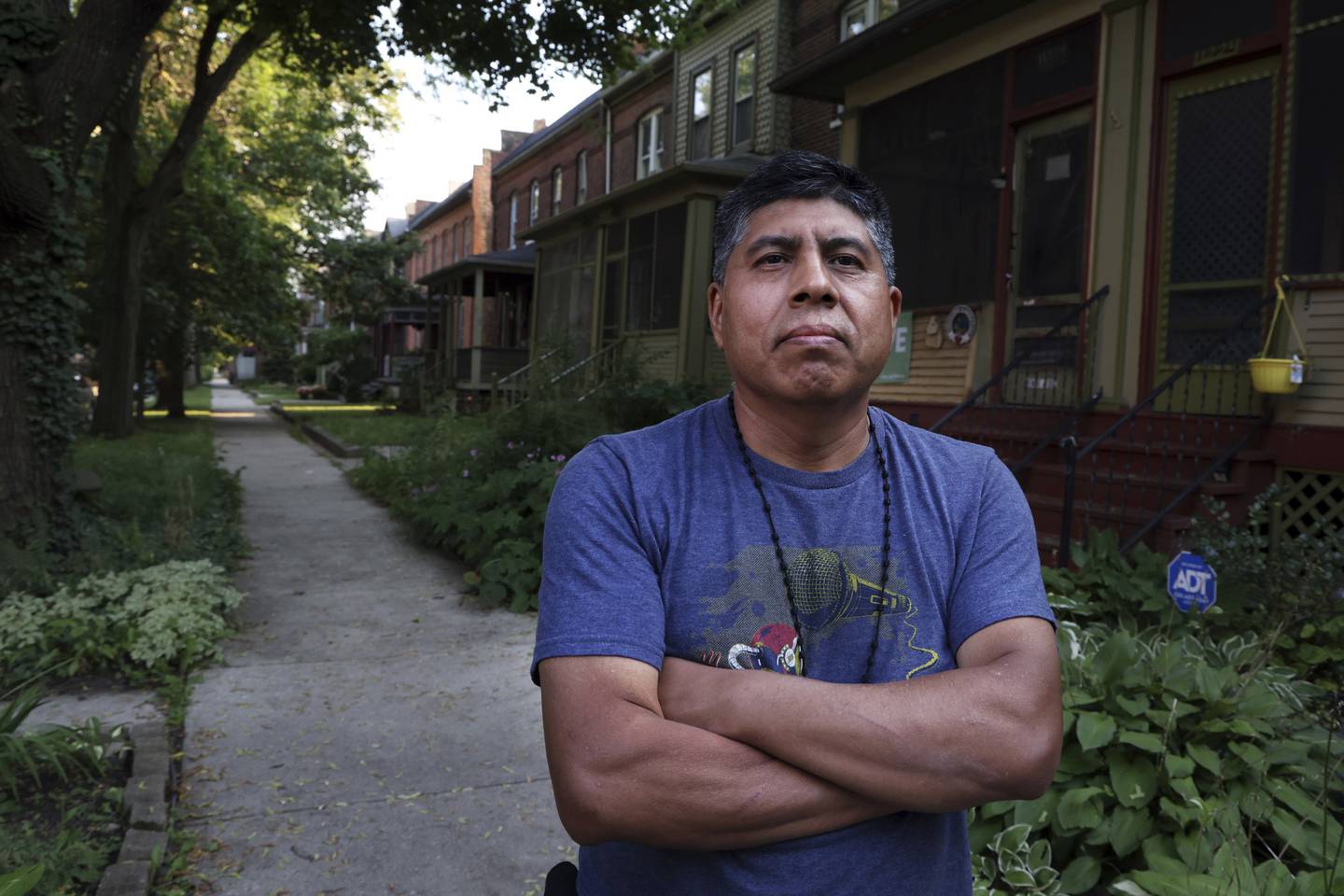
“Years from now, we’re going to see a lot of businesses,” Granados said. He’d like to see more restaurants, a shopping center, a hotel. “Almost like you see in Hyde Park,” he said.
Chapman said she’d like to see more sit-down dining in Pullman and in neighboring communities, and more grocery options other than Walmart. The Far South Side also needs an urgent care, she said. The Far South Chicago Coalition’s sweeping quality-of-life plan, launched last year, calls for strategies to increase Black homeownership in the area, support for local entrepreneurs and job training, and mental health facilities and support for youth.
If all goes as planned at the Pullman Club Coffee Shop, next summer’s customers will drink lattes from porch rockers on a front deck overlooking the monument grounds. The Shymanskis, who chose to live in Pullman after a visit on a “London kind of day” half a century ago — Mike remembers the Hotel Florence in the fog — hope it will be a place for residents and visitors alike.
Advertisement
“It’s a place that people live, it’s a place that people work,” Pat Shymanski said. “It’s a piece of history.”