

Close Menu
  • Home
  • News
    • Local
  • Opinion
  • Business
  • Health
  • Education
  • Sports
  • Podcast

Subscribe to Updates

Get the latest creative news from FooBar about art, design and business.

What's Hot

24th Annual Hot Wing Festival Celebrates Wings, Memphis and Families in Need

American College of Physicians Names First Black EVP & CEO, LeRoi Hicks

American College of Physicians Names First Black EVP & CEO, LeRoi Hicks

Facebook X (Twitter) Instagram
  • Lifestyle
  • Podcast
  • Contact Us
Facebook X (Twitter) Instagram Pinterest Vimeo
The Windy City Word
  • Home
  • News
    1. Local
    2. View All

    Uncle Remus Says Similar Restaurant Name Is Diluting Its Brand and Misleading Customers

    Youth curfew vote stalled in Chicago City Council’s public safety committee

    Organizers, CBA Coalition pushback on proposed luxury hotel near Obama Presidential Center

    New petition calls for state oversight and new leadership at Roseland Community Hospital

    American College of Physicians Names First Black EVP & CEO, LeRoi Hicks

    Dads, Kids & Community Clean with a Purpose

    Building Bridges of Support: How AAPI Equity Alliance Is Strengthening California’s Anti-Hate Network

    WNBA Draft 2026 Explained

  • Opinion

    Capitalize on Slower Car Dealership Sales in 2025

    The High Cost Of Wealth Worship

    What Every Black Child Needs in the World

    Changing the Game: Westside Mom Shares Bally’s Job Experience with Son

    The Subtle Signs of Emotional Abuse: 10 Common Patterns

  • Business

    Illinois Department of Innovation & Technology supplier diversity office to host procurement webinar for vendors

    Crusader Publisher host Ukrainian Tech Businessmen eyeing Gary investment

    Sims applauds $220,000 in local Back to Business grants

    New Hire360 partnership to support diversity in local trades

    Taking your small business to the next level

  • Health

    American College of Physicians Names First Black EVP & CEO, LeRoi Hicks

    Building Bridges of Support: How AAPI Equity Alliance Is Strengthening California’s Anti-Hate Network

    Revolve Fund to Provide $20,000 to Support Food Access Efforts in Alabama Black Belt

    Mamdani Plans City Grocery Store in East Harlem 

    New CalFresh & Medi-Cal Rules Start Soon

  • Education

    PRESS ROOM: Southern University Just Made HBCU History. The National Championship Is Next.

    Delaying Kindergarten May Have Limited Benefit

    The Many Names, and Many Roles, of Grandparents Today

    PRESS ROOM: PMG and Cranbrook Horizons-Upward Bound Launch Journey Fellowship Cohort 2

    Poll Shows Support for Policies That Help Families Afford Child Care

  • Sports

    Dads, Kids & Community Clean with a Purpose

    WNBA Draft 2026 Explained

    WAVE – Jax Unveils New Women’s Pro Basketball League

    A DREAM COME TRUE: Angel Reese is traded to the Atlanta Dream

    NBA: Hawks’ CJ McCollum made it work during a “storm”

  • Podcast
The Windy City Word
Lifestyle

Viburnum leaf beetle is a relatively new pest to Chicagoland gardens. Here’s how to treat an infestation.

staffBy staffUpdated:No Comments4 Mins Read
Facebook Twitter Pinterest Telegram LinkedIn Tumblr Email Reddit
Share
Facebook Twitter LinkedIn Pinterest WhatsApp Email

“The leaves of my arrowwood viburnums look like they have been shredded, and the small pieces of leaves that remain have turned completely brown. This has not happened in previous years. I had always thought that this viburnum was trouble-free and easy to grow. What is this problem and what should I do?”

— Gail Westerman, Highwood

Advertisement

Your description sounds like your viburnums have been attacked by the viburnum leaf beetle, a relatively new insect pest for the Chicago region.

I have been seeing lots of arrow wood viburnums in home gardens, with lots of damage this year, including my own plants, since the arrowwood viburnum is a favorite of this insect. The Chicago Botanic Garden monitors its viburnum collection for this pest each year now and treats it as needed.

Advertisement

You will need to control the insect on your viburnums, as well as provide supplemental water during dry periods this summer if you want to save them. The plants should leaf back out this year if they were healthy before being damaged.

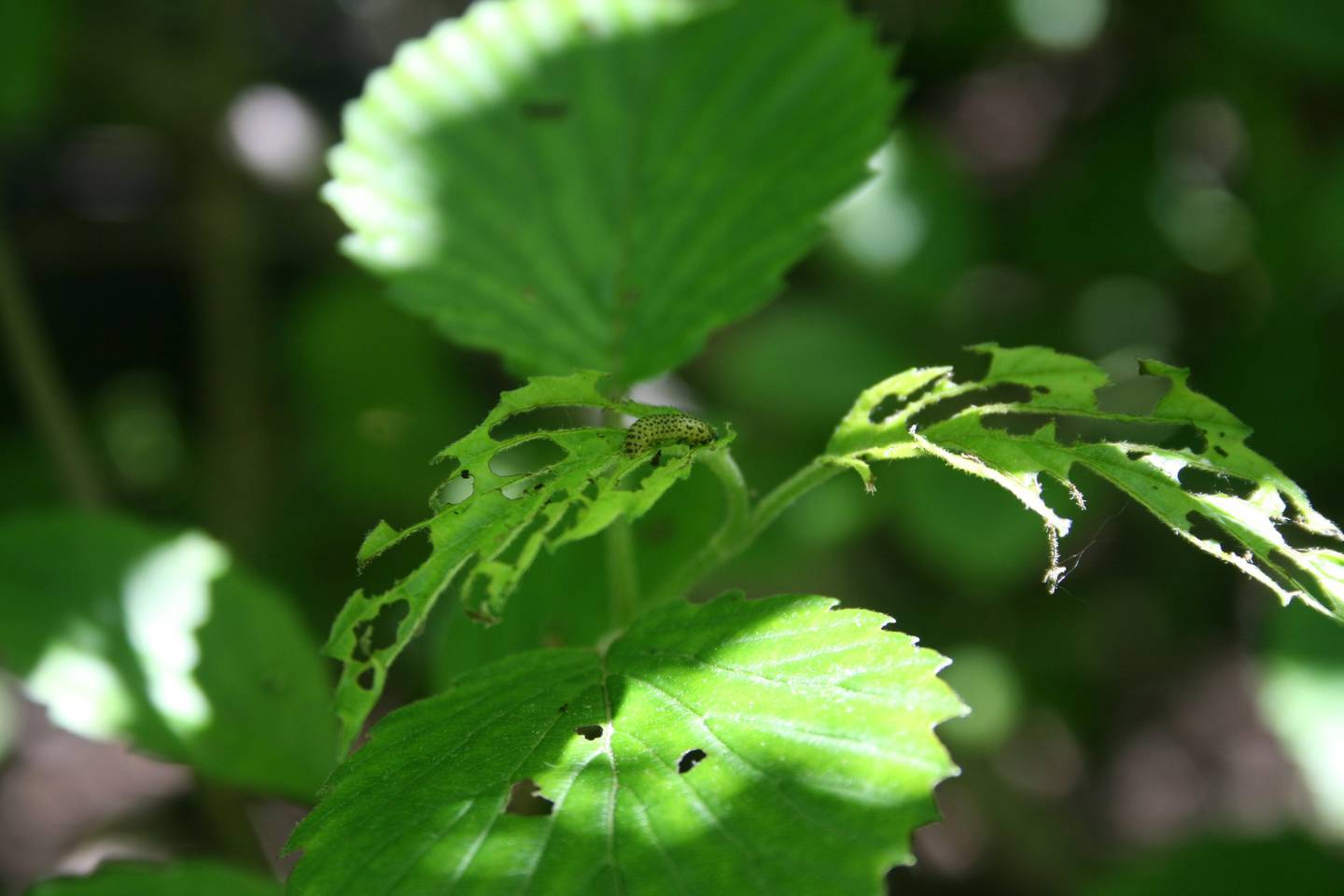
Damage from viburnum leaf beetles, a relatively new insect pest for the Chicago region. (Tim Tiddens/Chicago Botanic Garden)

The viburnum leaf beetle is a heavy feeder that can completely defoliate viburnums. It happened very quickly on the viburnums in my garden. Both larvae and adults feed on the leaves and remove leaf tissue between the midrib and larger veins. The leaves will then have a skeletonized appearance, which will look like they have been shredded.

Plants may die after two or three years of damage from very heavy infestations. This insect’s feeding is limited to viburnum species, so you do not have to treat other plants in your garden. Monitor any other viburnums that you are growing, though, for this insect.

The viburnum leaf beetle prefers viburnums with smooth leaves (little hair or pubescence). Arrowwood viburnum (Viburnum dentatum) and American cranberrybush viburnum (Viburnum trilobum) are commonly planted viburnums that are preferred hosts and will likely be killed over a course of two to three years if no control treatments are made.

Other widely planted viburnums such as burkwood viburnum (Viburnum burkwoodii), blackhaw viburnum (Viburnum prunifolium) and fragrant snowball viburnum (Viburnum carlcephalum) have varying degrees of susceptibility to damage but generally are not destroyed. Koreanspice viburnum (Viburnum carlessii), Judd viburnum (Viburnum juddii) and doublefile viburnum (Viburnum plicatum) tend to be resistant to feeding. There generally will be more damage on any viburnums that are grown in the shade.

Viburnum leaf beetles overwinter as eggs on twigs of the host plant. In May, larvae hatch from the overwintered eggs and begin feeding on the host plants — this is the damage you have recently noticed on your plants.

The larvae are greenish-yellow and develop dark spots as they age. They are usually found feeding in groups on the leaves. The larvae drop to the ground and pupate between early and mid-June and remain in the ground for about 10 days before emerging as adults in mid- to late July, so you may not see them at this time.

The adult beetle is small, ½ to ⅜ of an inch long and is a golden-brown color with sheen when in the sunlight. Adults will remain active until the first frost. Development from egg to adult takes eight to 10 weeks.

Advertisement

In late summer and fall, females will begin laying eggs. They chew holes in the bark of twigs to deposit eggs and then cover them with excrement and fragments of chewed bark. A female can lay up to 500 eggs.

One effective way to control viburnum leaf beetle is to prune and destroy infested twigs after egg laying has ceased in the fall in October, up until April. But pruning alone will not be enough. You will need to spray an insecticide such as spinosad, acephate, carbaryl or malathion when larvae first appear in early May for good control. Acephate will have a degree of residual activity, as it will move into the leaves.

A second application in mid- to late summer on feeding adults may be helpful if damage is excessive, but a strategy of just treating adults will not provide effective control. You should only spray your viburnums if you find this insect and follow all directions for proper and safe use of the product that you are using. Provide supplemental water to the affected viburnums during any dry periods for the rest of this year to help reduce stress on the plants.

For more plant advice, contact the Plant Information Service at the Chicago Botanic Garden at plantinfo@chicagobotanic.org. Tim Johnson is senior director of horticulture at the Chicago Botanic Garden.


Share. Facebook Twitter Pinterest LinkedIn Reddit WhatsApp Telegram Email
Previous ArticleMan charged with attempted murder in connection to officer shot early Friday
Next Article With USC and UCLA joining the Big Ten, conference realignment makes another seismic shift in college sports
staff

Related Posts

24th Annual Hot Wing Festival Celebrates Wings, Memphis and Families in Need

American College of Physicians Names First Black EVP & CEO, LeRoi Hicks

Dads, Kids & Community Clean with a Purpose

Comments are closed.

Video of the Week
https://www.youtube.com/watch?v=AxFXtgzTu4U
Advertisement
Video of the Week
https://www.youtube.com/watch?v=OjfvYnUXHuI
ABOUT US


The Windy City Word is a weekly newspaper that projects a positive image of the community it serves. It reflects life on the Greater West Side as seen by the people who live and work here.

OUR PICKS

Michael: The King of Pop’s Story Returns to the Big Screen

Power, Oppression, and Expression: The Arts and The Fight for Justice in Prisons

Unleashing the Power of the Mach E GT: A Stylish and Sophisticated Electric SUV

MOST POPULAR

American College of Physicians Names First Black EVP & CEO, LeRoi Hicks

Building Bridges of Support: How AAPI Equity Alliance Is Strengthening California’s Anti-Hate Network

Revolve Fund to Provide $20,000 to Support Food Access Efforts in Alabama Black Belt

© 2026 The Windy City Word. Site Designed by No Regret Medai.
  • Home
  • Lifestyle
  • Podcast
  • Contact Us

Type above and press Enter to search. Press Esc to cancel.