





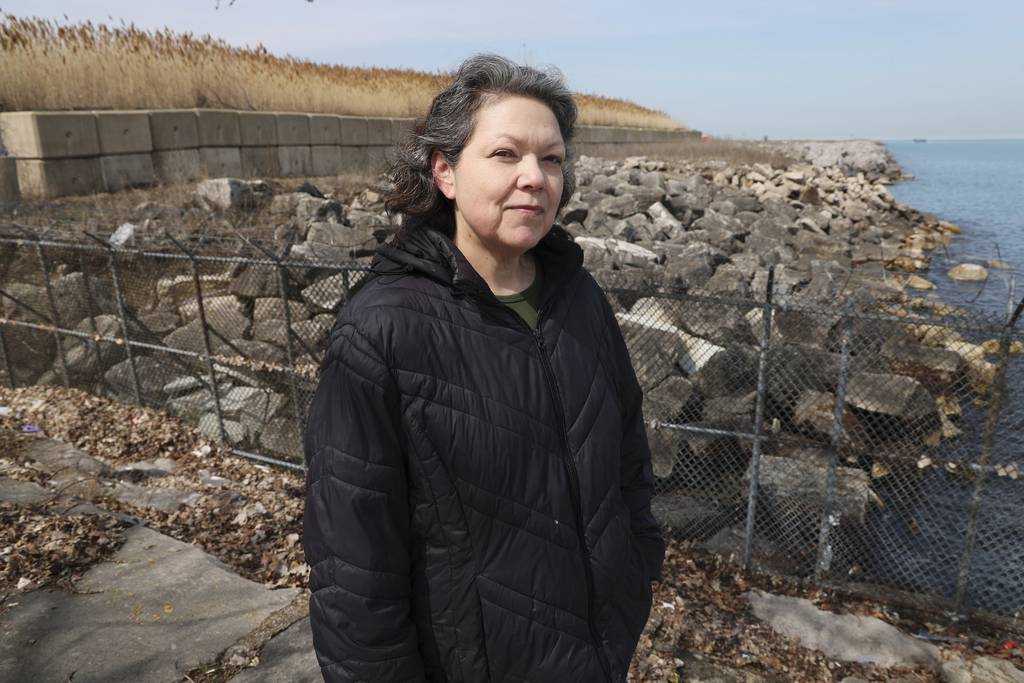
Linda Gonzalez grew up swimming in the Lake Michigan and playing softball on the fields at Calumet Park, but today, the lifelong Southeast Side resident thinks twice before dipping her toes in the water.
“It’s difficult to try to enjoy some of these things now. I find myself, when I go to the beach, looking at the sand and looking to see what’s washed up,” said Gonzalez, 53. “I think it’s really just been a change from a time of innocence where maybe things were not so apparently risky as they are now.”
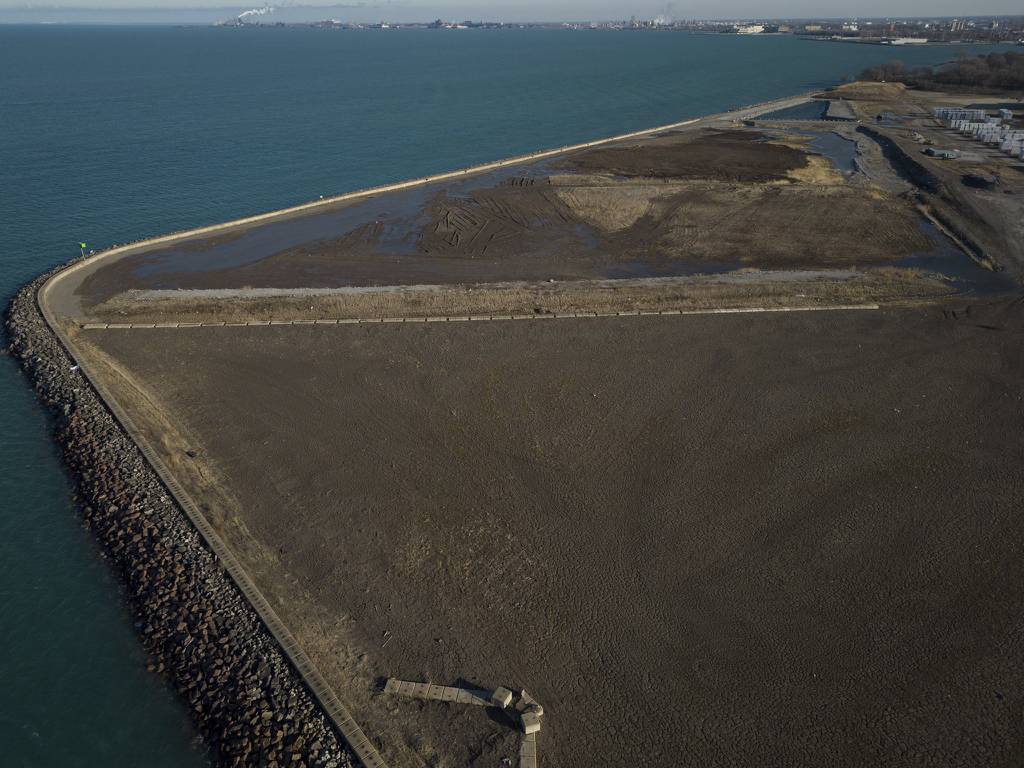
Directly north of Calumet Park and along Lake Michigan sits a 45-acre site where toxic sediment dredged from the Calumet River and the Cal Sag Channel has been dumped for 39 years. Known as a Confined Disposal Facility, the area was supposed to be turned into a public park, not once but twice. In the latest shift, instead of closing the facility now that it’s full, the U.S. Army Corps of Engineers plans to add 25 feet to its height and extend it another 4 acres along the shoreline.
The expansion would allow approximately 1 million cubic yards of additional dredged materials containing toxic pollutants to be stored at the site for at least another 20 years, according to the Illinois Environmental Protection Agency.
Earlier this month, two community organizations — Alliance of the Southeast and Friends of the Park — filed a lawsuit in U.S. District Court against the Army Corps to stop the expansion. The suit alleges the Army Corps did not receive necessary legislative permission to expand the disposal facility and failed to adequately consider the environmental impacts.
Home to Chicago’s largest Industrial corridor zoned for manufacturing, the Southeast Side has a high concentration of polluting industries. Residents breathe some of the city’s dirtiest air, and more than 75 companies in the area have been investigated for Clean Air Act violations since 2014.
“(The disposal facility expansion) is just the continuation of policies to keep locating toxic development in overburdened communities. The lawsuit, for us and for a lot of residents, is saying: ‘Enough is enough. We’re tired of being the dumping ground for all these sorts of developments for the city,’” said Alliance of the Southeast Executive Director Amalia NietoGomez.
As the mayoral election enters its final days, candidates Brandon Johnson and Paul Vallas have promised to help communities struggling with pollution concerns.
Earlier this week, in front of a standing-room-only crowd at Lincoln United Methodist Church in the Lower West Side neighborhood, both pledged to reestablish a Department of Environment and fight industrial polluters.
They called for community-based activist groups to have a seat at the table in the resurrected department, which was disbanded under former Mayor Rahm Emanuel. Mayor Lori Lightfoot chose not to bring back the department despite campaign promises to do so.
“The people who are impacted by the waste that takes place in our communities really have to have real agency and leadership in identifying people and policies that can actually help us move forward,” Johnson said.
Vallas suggested creating an oversight board for the Department of Environment with representatives from community advocacy groups and said he would have “zero tolerance” for polluters.
“We don’t want to move polluters to the poor communities. We don’t want polluters anywhere in the city at all,” Vallas said. “You need a department that can issue an environmental report card and that environmental report card can guide the city when it comes to permitting expansion, or for that matter, when it comes to vendors or contractors that are seeking to have financial relationships with the city.”
While Southeast Side residents welcomed the focus on an issue that intimately affects their well-being, they are skeptical they will see improvements.
“I can’t say that I’m hopeful, only because what (Vallas and Johnson) are talking about is just pushing this off onto the Department of Environment,” Gonzalez said. “I would like to see more concrete examples of what exactly the city is committed to do right now.”
Gonzalez was part of the successful community-led effort to stop Reserve Management Group from opening a scrap shredder on the largely Black and Latino Southeast Side. RMG took over and closed General Iron’s scrap shredder in the wealthy, mostly white neighborhood of Lincoln Park, planning to open a new operation in the East Side neighborhood.
[ Mayor Lightfoot denies permit to Southeast Side scrap shredder ]
“Unfortunately, after having been involved in the fight to stop General Iron … I see how a lot of it is just decisions made by insiders, consultants and intergovernmental agency agreements,” Gonzalez said.
She said it felt like deja vu when she heard about the disposal facility expansion plans. To fight this next battle, Gonzalez recently became vice president-elect of the Calumet Park Advisory Council, a volunteer group that serves as a liaison between park patrons and the Chicago Park District.
“I was just fearful,” she recalled. “Every time I hear that (the Calumet River or Cal Sag Channel) might need to be dredged, I think, ‘Oh, no, what are they going to do with it? Where are they going to put it?’”
The state deeded the parcel of land where the disposal facility is located to the Park District in 1982 but permitted the Army Corps to operate an in-water disposal facility there for up to 10 years.
The state later authorized the Army Corps to continue using the disposal facility until full, at which point the land was supposed to be returned to the Park District and converted into a park. However, construction of the expansion, which is slated to begin this spring and be completed before the end of the year, would enable the Army Corps to use the land for at least another 20 years.
The Army Corps and the Park District declined requests for comment.
The Army Corps has until May to respond to the lawsuit and their application to expand the dump site is currently under review by the state EPA’s Bureau of Water.
Southeast Side resident Freddie Batchelor, 63, remembers being concerned during the construction of the original disposal facility in the 1980s.
“As a child, I loved to go to the beach and walk in the park along the water,” she recalled. “But, over the years, that became not possible because even the smell when you go to the water is really horrid.”
Odors from industrial sites that hug the park on the north and south are common, especially in the summer. The sediment collected at the disposal facility contains high concentrations of arsenic, cadmium, lead, mercury, and polychlorinated biphenyls, known as PCBs.
“It makes me feel bad and sad, honestly, because I lived in the area when it was very vibrant in every way. Now, to see it now …” she mourned.

Batchelor said she believes her chronic pulmonary problems, which she said her doctors attribute to environmental pollutants, are from living on the Southeast Side. In 2009, at the suggestion of an immunologist, she moved out of Chicago. Batchelor said her health improved during this time, but she had to come back during the pandemic to attend to family obligations.
Residents across the Calumet Industrial Corridor have a disproportionately higher rate of coronary heart disease and chronic obstructive pulmonary disease compared with the rest of Chicago, according to a study by the nonpartisan Alliance for the Great Lakes.
According to the lawsuit, the Army Corps is not considering how the disposal of more pollutant-filled sediment on the Southeast Side will affect community health. The Army Corps is also failing to weigh the potential benefits that green space could afford the community.
“It would open up all that land to people who like to fish … so that in time, perhaps in generations, all that opened up shoreline could be a viable fishing territory. People could actually provide food for their families with the salmon runs and the trout runs,” said Mark Banks, a lifelong resident and local artist. “The water is a resource for the community. Not to mention the enjoyment of it, not to mention the beauty of it.”

Banks, 41, draws environmental justice themes in his artwork to express how the Southeast Side has and continues to be affected by polluters. His current project, “In the Field of Rotting Giants,” is a collection of photographs and paintings that capture the remains of abandoned industrial sites to show the enduring scars that years of industry have left on the community.
The shoreline dump is just one of the constant reminders of the broken promises that have plagued the neighborhood for decades, he said.
“You can’t walk by the place without getting that sour taste in your mouth just because you know that it’s not supposed to be there,” Banks lamented. “You know that it’s supposed to be public land, but instead it’s still just this warehouse of toxicity and danger.”
The decision to build on top of the existing disposal facility came as a surprise to many residents and community groups.
“We were shocked when they announced that they were going to expand on the site, because when they did the public participation process about alternatives, they did not mention that if they couldn’t find another site, they would just expand in the existing location,” said Juanita Irizarry, executive director of Friends of the Parks. “We very much saw it as a bait-and-switch.”
The Army Corps is required to weigh the cumulative adverse environmental effects of the expansion against an array of alternative options, according to federal law. But the only alternatives explored were also in the Southeast Side’s 10th ward.
The Army Corps’ required environmental justice analysis of the proposed expansion reasons that since 97% of projected dredging in the Chicago Area Waterway System over the next 20 years will be in Calumet Harbor and Calumet River, the 10th Ward is the “most logical and efficient” location for the facility.
The Illinois International Port District, which includes Calumet Harbor, is vital to the city’s maritime commerce industry. The port district has created thousands of jobs and brought millions of dollars to the city, according to a 2017 report.
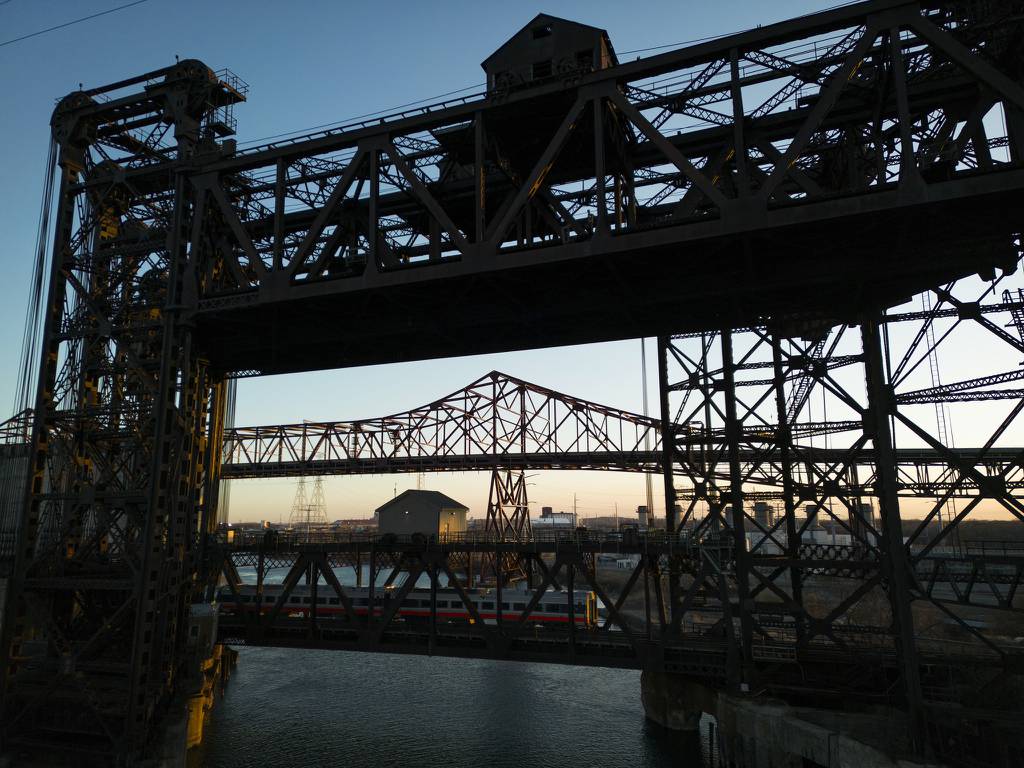
Dredging makes all these cargo voyages more efficient, leading to less ship traffic and reducing the risks associated with increased truck and rail traffic. It also removes contaminated sediment that would otherwise be floating in the lake unconfined and in proximity to the community, according to the analysis.
[ Moving hazardous chemicals by train is far safer than trucks, says top regulator ]
But residents say dredging shouldn’t come at their expense. As a low-income community disproportionately overburdened by environmental hazards, they say disposal sites outside their ward should have been explored.
“It’s just evidence of this continued idea that (the Southeast Side) is a sacrifice zone,” Gonzalez said.
Afternoon Briefing
Daily
Chicago Tribune editors’ top story picks, delivered to your inbox each afternoon.
Southeast Side residents are also worried about how an expanded disposal facility will withstand the effects of climate change.
A review prepared by Battelle Memorial Institute, a nonprofit science and technology research organization, found that the Army Corps did not comprehensively consider how climate change will affect the expansion project over the next 20 years. The Army Corps’ evaluation only looks at greenhouse gas pollution. The review raised concern that the Army Corps stopped short of investigating the effects of rising lake levels, increased wave action and intensifying storms on the site walls.
Lake Michigan reached near-record highs in 2020, and lake levels currently are about average. Residents say large waves sometimes reach the Calumet Park beach house, engulfing its wooden platform. They worry these severe water patterns will pound the shoreline around the disposal facility, creating erosion and causing toxic materials to spill into Lake Michigan.
Community groups have been calling for further examination of erosion along the lakeshore before any further construction is undertaken.
After not including the Southeast Side in its original study on lakeshore erosion, a move which residents say exemplifies how they are often an afterthought, the Army Corps is preparing to conduct a $3 million study on the effects of erosion in the area, with the help of the city and Park District. However, the new study will not be completed until 2025 and the disposal facility expansion is expected to begin this spring.
In the meantime, residents are cautiously optimistic that, with representation from the nonprofit Environmental Law and Policy Center, the lawsuit will put a halt to the dump expansion. But they also worry about what will happen with the next polluter and whether the next mayor will hold them accountable.
“Once we’re stuck in legalese and litigation, we have to be very specific about the thing that’s bothering us,” said Banks, the artist, referring to the disposal site. “We might win that battle. But what if right across the river, some other gross thing pops up? We can’t get too stuck in a game of whack-a-mole here.”


